Emma Oliver
Murderer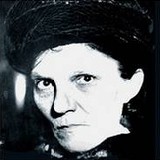 Martha Wise
Murderer · USA · 1924
Martha Wise (born 1885; died June 28, 1971), also known as “the Borgia of Ameri…
3 victims
Martha Wise
Murderer · USA · 1924
Martha Wise (born 1885; died June 28, 1971), also known as “the Borgia of Ameri…
3 victims
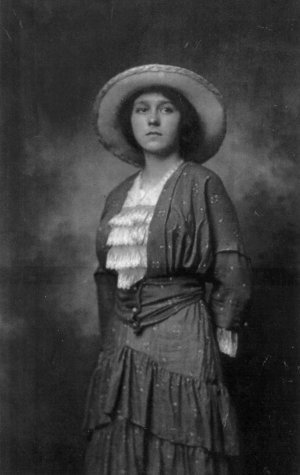 Inez Palmer
Murderer · USA · 1926
Inez Palmer — defendant; lived at the Stout farmhouse and pleaded guilty to a f…
2 victims
Inez Palmer
Murderer · USA · 1926
Inez Palmer — defendant; lived at the Stout farmhouse and pleaded guilty to a f…
2 victims
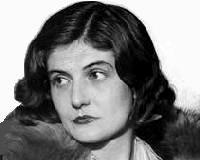 Winnie Ruth Judd
Murderer · USA · 1931
Winnie Ruth Judd (January 29, 1905 – October 23, 1998) was a Phoenix, Arizona m…
2 victims
Winnie Ruth Judd
Murderer · USA · 1931
Winnie Ruth Judd (January 29, 1905 – October 23, 1998) was a Phoenix, Arizona m…
2 victims
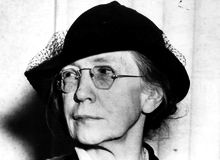 Alice Wynekoop
Murderer · USA · 1933
Name: Alice Wynekoop Alice Wynekoop was sentenced to 25 years in prison on Marc…
1 victim
Alice Wynekoop
Murderer · USA · 1933
Name: Alice Wynekoop Alice Wynekoop was sentenced to 25 years in prison on Marc…
1 victim
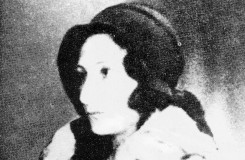 Anna Antonio
Murderer · USA · 1932
Anna Antonio, “Little Anna,” was an Italian woman who was 28 years old. She had…
1 victim
Anna Antonio
Murderer · USA · 1932
Anna Antonio, “Little Anna,” was an Italian woman who was 28 years old. She had…
1 victim
 Yevgeny Krasnoshchok
Murderer · Ukraine · 2012
Oksana Makar (Oksana Serhiyivna Makar) was born on 11 June 1993 and died on 29…
1 victim
Yevgeny Krasnoshchok
Murderer · Ukraine · 2012
Oksana Makar (Oksana Serhiyivna Makar) was born on 11 June 1993 and died on 29…
1 victim
 Eugene de Kock
Murderer · S outh Africa · 1970
Eugene de Kock was a former assassin for the apartheid government in South Afri…
6 victims
Eugene de Kock
Murderer · S outh Africa · 1970
Eugene de Kock was a former assassin for the apartheid government in South Afri…
6 victims
 Robert Moormann
Murderer · USA · 1984
Robert Henry Moormann was convicted in Arizona of the first degree murder of hi…
1 victim
Robert Moormann
Murderer · USA · 1984
Robert Henry Moormann was convicted in Arizona of the first degree murder of hi…
1 victim
 Gregory Kokal
Murderer · USA · 1983
Gregory Alan Kokal was convicted of first-degree murder and was sentenced to de…
1 victim
Gregory Kokal
Murderer · USA · 1983
Gregory Alan Kokal was convicted of first-degree murder and was sentenced to de…
1 victim
 Elfriede Blauensteiner
Serial killer · Austria · 1981
Elfriede Blauensteiner (born 22 January 1931 in Vienna; died 18 November 2003)…
5 victims
Elfriede Blauensteiner
Serial killer · Austria · 1981
Elfriede Blauensteiner (born 22 January 1931 in Vienna; died 18 November 2003)…
5 victims
- Gender
- female
- Country
- USA
- Location
- San Antonio, Texas, USA
- Date of birth
- ????
- Characteristics
- disputes, alcohol
- Victim profile
- ???? / Herman Cohn, 40
- Method of murder
- Stabbing with knife
- Date(s) of murder
- 1934 - 1949
- Years active
- 1934–1949
- Date of arrest
- —
- Status
-
Died in custody
Sentenced to death in February 1949; commuted to life imprisonment on June 29, 1951; died in prison in February 1963
Background
Emma Oliver had a lengthy criminal history beginning in May 1934. Her history included charges of vagrancy and prostitution and acts of violence, including four arrests for murder, seven for aggravated assault, and one for attempted murder.
The offence
Emma Oliver was convicted and assessed the death penalty for the murder with malice of Herman Cohn.
The police officers in response to a call went to a two-story building in the 2300 block of East Commerce Street in the city of San Antonio. The building consisted of some ten apartments, three of which were on the ground floor, and the officers were looking for a dead body. They looked through the upstairs apartments, and upon coming downstairs they met appellant. They went into one of the downstairs apartments, but did not enter another where a light was seen because appellant told them that the light they saw was in the same room they had previously entered. They returned to headquarters without finding the corpse, but returned shortly in response to a second call. On this occasion they found in the room of the building where the light had been seen, the dead body of the deceased.
The deceased was described as "a well developed and well nourished colored male about 40 years of age." There was found on the body a penetrating wound in the left chest which penetrated the pericardium (the sack that contains the heart). The wound was, in the opinion of the county health officer, such a wound as could have been caused by the knife which was taken from appellant. The doctor testified that the wound caused the death of the deceased.
In deceased's pockets were found only a pocket book with 51 cents in money, and a check payable to the L & M Lumber Company for $510.00, signed by Mr. T. E. Barnes of the Austin or East End Lumber Company.
The bed in the room where the body was found was disarranged and had the appearance of having been occupied.
A red truck with a long bed and trailer was parked a few doors from the house. Officers had made inquiry of appellant and others about it.
Investigation
Shortly after midnight two police officers in response to a call went to the building. Millard O'Conner was at the house when the officers returned, and showed them where the body was. He testified that he discovered the body when he went to appellant's room to await her return.
After discovery of the body, Officer Fest went to a place across the street and found appellant standing there. Officer Fest testified that appellant said: "Here I am * * * I killed him."
Officer Fest testified that he took from her a knife which was identified and offered in evidence. The knife was described as a deadly weapon by witnesses. No knife or weapon was found on the floor near the body.
Trial
Court and decision
Emma Oliver appealed her conviction and death penalty. The case was heard by the COURT OF CRIMINAL APPEALS OF TEXAS (Decided: December 13, 1950).
The appeal was an appeal from criminal district court of Bexar County; penalty, death. Hon. W. W. McCrory, Judge Presiding.
Counsel
Sam L. Harrison and Theo P. Henley, San Antonio, appeared for appellant. George P. Blackburn, State's Attorney, Austin, appeared for the state.
Prosecution and defence evidence
Mary Williams testified as an eye witness to the killing. She said that appellant called her and told her to stay with "the man who was locking the truck up." She said that the man came into the room where appellant was living, and that she talked to him while appellant left for a time, presumably to make a telephone call.
She testified that when appellant returned, the deceased was lying on appellant's bed and that she, the witness, was sitting on a box by the dresser. Appellant remarked that "the cab will be here in a few minutes," and demanded that the deceased pay her three dollars. When deceased failed to comply with such demand she repeatedly demanded that he pay her three dollars. The deceased either ignored the demand, agreed to pay her when the cab arrived, or said that he did not have three dollars, and finally giving her one dollar. She then repeatedly demanded an additional two dollars.
Mary Williams described the actual killing and the events thereafter as follows:
"She said 'give me two more dollars' and he said he did not have two more dollars. Emma Oliver grabbed Herman Cohn by the shirt with her left hand and she reached in her hip pocket like that and she struck him with the open knife. In a minute or two I heard something running like water from a hydrant and I looked and I could see blood running from his chest down to his britches and he grabbed his stomach, and he didn't say anything and then he walked to the dresser and laid his head on the dresser and he said 'Oh Lord, Oh Lord.' Then Emma Oliver looked at him for a minute and she raised his head off the dresser and said, 'Don't die on my dresser m r f r' and he fell off the box to the floor and she started out the door and I started out the door with her and she pushed me back and said, 'I will kill you too' and told me I had better stay there and I went back in. She left and came back and went in the room and said 'Let's go' and we left and went to a beer tavern where she bought me and her a bottle of beer."
"She told me not to say anything about it. She said 'You had better not say anything about it, or I will kill you' and I said I would not say anything about it."
"Later on that night she said she would put him in the truck and drive down the road. She said I know that you can drive and I am going to put him in the truck and take him down the road. I told her I would take the truck. That was discussed outside the room at 2320 East Commerce Street. The stabbing I have described occurred in that room. "
At the time of the stabbing Emma Oliver appeared to Mary Williams to be sober and in her right mind. At the time of the stabbing there was no one present but Emma Oliver, Herman Cohn and Mary Williams. Emma Oliver did not testify.
Contentions and rulings
The court held that the facts were sufficient to support the conviction for murder with malice, and that the punishment was within the province of the jury.
The court overruled appellant's contention that no malice was shown. It held that the statements and conduct attributed to appellant after she stabbed the deceased were evidence tending to show that appellant acted with malice. It stated:
Malice is a condition of the mind which shows a heart regardless of social duty and fatally bent on mischief. Its existence is a question of fact inferable from the circumstances.
Bill of Exception No. 2 complained that no member of the Negro race was appointed or served on the jury commission that selected the grand jurors, nor on the grand jury that indicted appellant. The court held that the bill showed only that such contention was contained in appellant's motion for new trial and that there was no showing as to what facts were adduced upon the motion other than what appeared to be a statement of facts in question and answer form as prepared by the court reporter. The court stated that the statement was not approved by the trial judge and could not be considered for both reasons, citing Art. 760, C.C.P., Sec. 1; Gifford v. State, 101 Tex. Crim. 7, 274 S.W. 149. The court also said that no decision held that discrimination was shown by the mere fact that no person of the Negro race was appointed or served on the grand jury which indicted a member of that race or on the jury commission that selected such grand jury, and cited Cassell v. State, Weems v. State, and Ross v. State.
The court also stated that Bill of Exception No. 2 did not show that appellant was a Negro, or that appellant was prejudiced in any way. It said the bill merely stated a ground of objection, and no facts were certified to show that the grounds of objection were true.
Bill of Exception No. 3, as prepared by the court after his refusal to allow appellant's bill on the subject, complained of the argument of the district attorney and the demonstration of the audience in response thereto. The bill set forth the following remarks of the district attorney:
"That the colored man in the recent war, fought alongside the white soldiers, bleeding and dying and offering his all, and that a dead Negro's rights in the courts were to be protected the same as a white person's."
The court noted that it was shown by the bill that some members of the audience, composed largely of Negroes, said, "Amen, Amen," and appellant moved for a mistrial. The court declined to order a mistrial, then instructed the jury to base their decision solely on the evidence admitted and the law as given in the charge, and admonished the audience against any additional demonstration.
The court said it saw no harm to appellant in the argument and conduct of the audience, and no impropriety in the remarks as quoted.
Bills Nos. 4, 5 and 6 proffered by appellant were refused by the court as not sustained by any evidence.
Outcome of appeal
The court held that the evidence was deemed sufficient to sustain the verdict and that no error appeared. It affirmed the judgment.
Sentencing
In February 1949, Emma Oliver was charged with murder with malice and sentenced to die for killing a forty-year-old black male acquaintance in San Antonio in an apparent dispute over three dollars.
After her trial, she became the first woman in Texas to be sentenced to death by electrocution some twenty-five years after the statute was put in place.
Psychological report
Once Emma Oliver was admitted to death row, a psychological report was compiled, which read in part:
The test pattern presented here is indicative of a definite psychosis. There are signs of rather organic brain damage, and the Weschler points up a deterioration of 33% or greater... It can be definitely stated that this individual is psychotic and in only limited contact with reality... A delusional pattern is evidenced especially in the religious area... Word-salad and inappropriatenesses occur often enough to give suspicion of it being caused by more than limited intellectual powers. The state of mental confusion and type of symptomology seem to indicate definite schizoid typo of psychosis.
Appeals
On December 13, 1950, the Court of Criminal Appeals of Texas affirmed the judgment.
Outcome
Emma Oliver's death sentence was commuted to life imprisonment on June 29, 1951.
The reason given was:
"On file are letters and petitions signed by numerous citizens of Bexar County requesting a commutation of the Death sentence in this case."
Aftermath
Emma Oliver died in prison of cancer in February 1963.
Other details
Emma Oliver served one and one-half years in the penitentiary before her release. During the first year following her release she was arrested three times for aggravated assault.
Her conviction for one murder was in February 1947.


Spotted an error, or have more information about this case?