
Robert Charles Towery
Murderer Brian Kevin Rosenfeld
Murderer · USA · 1985
Brian Kevin Rosenfeld Brian Kevin Rosenfeld was sentenced to three concurrent l…
23 victims
Brian Kevin Rosenfeld
Murderer · USA · 1985
Brian Kevin Rosenfeld Brian Kevin Rosenfeld was sentenced to three concurrent l…
23 victims
 Russell Ellwood
Murderer · USA · 1991
Russell Ellwood was a former taxi driver. Authorities suspected him of killing…
20 victims
Russell Ellwood
Murderer · USA · 1991
Russell Ellwood was a former taxi driver. Authorities suspected him of killing…
20 victims
 Robert Martines Perez
Murderer · USA · 1994
Name: Robert Martines Perez · Other name used in proceedings: Robert Martinez P…
15 victims
Robert Martines Perez
Murderer · USA · 1994
Name: Robert Martines Perez · Other name used in proceedings: Robert Martinez P…
15 victims
 Billy Frank Vickers
Murderer · USA · 1993
Billy Frank Vickers Vickers was executed by lethal injection in Texas on Januar…
14 victims
Billy Frank Vickers
Murderer · USA · 1993
Billy Frank Vickers Vickers was executed by lethal injection in Texas on Januar…
14 victims
 Amy Grossberg
Homicide · USA · 1996
Amy Grossberg (born 1978) dated Brian C. Peterson while both were students at R…
1 victim
Amy Grossberg
Homicide · USA · 1996
Amy Grossberg (born 1978) dated Brian C. Peterson while both were students at R…
1 victim
 Charles William Yukl
Murderer · USA · 1966
Charles William Yukl was a piano teacher in New York City and also worked in mu…
2 victims
Charles William Yukl
Murderer · USA · 1966
Charles William Yukl was a piano teacher in New York City and also worked in mu…
2 victims
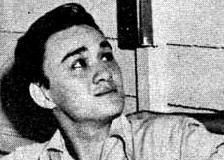 Narding Anzures
Murderer · Philippines · 1948
Bernardo “Narding” Anzures was a Filipino former child actor who was tried and…
2 victims
Narding Anzures
Murderer · Philippines · 1948
Bernardo “Narding” Anzures was a Filipino former child actor who was tried and…
2 victims
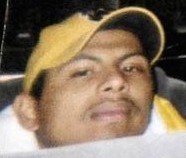 Ambrosio Analco Ramirez
Mass murderer · USA · 2007
Ambrosio Analco Ramirez was 23 years old at the time of the killings. The killi…
5 victims
Ambrosio Analco Ramirez
Mass murderer · USA · 2007
Ambrosio Analco Ramirez was 23 years old at the time of the killings. The killi…
5 victims
 Stephen Michael West
Murderer · USA · 1986
Stephen Michael West was sentenced to death in 1987. A jury in Union County fou…
2 victims
Stephen Michael West
Murderer · USA · 1986
Stephen Michael West was sentenced to death in 1987. A jury in Union County fou…
2 victims
- Gender
- male
- Country
- USA
- Location
- Maricopa County, Arizona, USA
- Date of birth
- J uly 20, 1964
- Age at first offence
- 27
- Characteristics
- armed robbery, kidnapping, abuse, drugs, motive unclear
- Victim profile
- Mark Jones, 68
- Method of murder
- Strangulation
- Date(s) of murder
- September 4, 1991
- Years active
- 1991
- Date of arrest
- —
- Status
-
Sentenced to death
Sentenced to death on November 20, 1992
Overview
Robert Charles Towery was convicted in Superior Court (Maricopa) of first-degree felony murder, armed robbery, first-degree burglary, kidnapping, theft, and attempted theft. He was sentenced to death for the murder.
Status
Towery was sentenced to death on November 20, 1992.
Background
Towery and Randy Barker went to the home of Mark Jones to rob him. Jones knew Towery and let Towery and Barker into the home.
Towery and Barker later unloaded Jones’s property at their home and left Jones’s car in a nearby parking lot. Jones’s body was discovered on September 5, 1991, and Jones’s car was recovered on September 12, 1993.
The offence
Towery and Barker planned to rob one of two possible victims known to Towery. On September 4, 1991, they decided to rob Mark Jones at his home.
Once inside, Towery pulled a pistol on Mark Jones and Barker handcuffed Jones. Towery took valuables from the house and loaded them into Jones’s vehicle. Barker took Jones to the bedroom.
Towery told Jones that he was going to give him injections with something that would make him sleep. Towery injected Jones with battery acid. Jones was not struggling because he trusted Towery. Towery then sought to strangle Jones to death. When the first try failed, he tried again and succeeded.
After the killing, Towery and Barker left in Jones’s car. They unloaded Jones’s property at their home, and they left the car in a nearby parking lot.
Investigation
Some of Jones’s property was recovered from Towery’s and Barker’s home. A tip given to the silent witness program led to Towery and Barker being later arrested.
Security guard identification also connected Towery to the offences after the men parked Jones’s car in a nearby parking lot.
Police later searched an area for the syringe used by Towery, but it was never found.
Arrest
Towery and Barker were arrested after a tip given to the silent witness program.
Trial
The trial judge granted Towery’s motion to sever about six months before trial.
Towery’s murder trial began on August 3, 1992. Eleven days later, the jury found him guilty of felony murder and all other counts.
During the trial, Barker testified against Towery and provided much of the State’s evidence. The State’s case rested on Barker’s testimony, but other witnesses corroborated some critical features of Barker’s story and connected Towery with the charged offences.
At a sentencing hearing, the trial judge sentenced Towery to death for the murder and to concurrent prison terms of five to twenty-one years for the other counts.
Proceedings and key personnel
- Presiding Judge: Cheryl K. Hendrix
- Prosecutor: John Ditsworth
- Start of Trial: August 3, 1992
- Verdict: August 14, 1992
- Sentencing: November 20, 1992
Sentencing
At the sentencing hearing, the trial judge sentenced Towery to death for the murder and to concurrent prison terms of five to twenty-one years for the other counts.
Aggravating circumstances found
The trial judge found three statutory aggravating factors.
- Prior convictions for which life imprisonment was imposable
- Pecuniary gain
- Especially heinous and depraved
The court’s special verdict and subsequent review also included findings under cruel, based on the victim’s consciousness during the attack and the victim’s mental anguish and physical pain.
Mitigating circumstances found
The trial judge found mitigating circumstances but held that none were sufficiently substantial to call for leniency:
- Impairment due to drug use
- Barker’s lenient plea-bargained sentence
The trial judge also considered difficult childhood/family history and found it not mitigating enough to warrant leniency.
Appeals
This was Towery’s automatic, direct appeal to the Arizona Supreme Court.
The Arizona Supreme Court affirmed the conviction and death sentence.
Prior convictions used in aggravation
It was undisputed that Towery was convicted of four counts of armed robbery committed while on parole, making him eligible for a life sentence. The court stated these facts supported findings under both (F)(1) and (F)(2), and also noted that a court may not give weight to both circumstances when each is supported by the same facts.
Court’s review of aggravation and cruelty
The Arizona Supreme Court upheld (F)(5) pecuniary gain and (F)(6) cruel factors. It recited that the victim was conscious during the confrontation and the strangling procedure and was subjected to mental anguish and physical pain. The court referenced the victim being conscious while bound and while injections were attempted, and that physical suffering was caused by the needle punctures and first strangulation.
Court’s review of mitigation
The Arizona Supreme Court independently weighed aggravating and mitigating evidence and affirmed the death sentence. It found the mitigating evidence “rather sparse” and insufficient to overcome the weight of the aggravating circumstances.
Trial issues raised and rulings
Towery challenged multiple procedural and constitutional issues, including:
- Limiting cross-examination of accomplice witness Barker, including limits tied to the attorney-client privilege and the admissibility of questions about Barker’s belief in satanism/occult beliefs.
- Denial of a request for a free transcript of a previous, unrelated trial.
- Issues involving Meacham’s testimony and the use of an inculpatory statement from a prior armed robbery trial, including judicial estoppel and prosecutorial misconduct arguments.
- Admission of late evidence related to blood stains on a glove and fingerprints on a compact disk player case.
The Arizona Supreme Court rejected the issues raised on appeal and found no reversible error, including finding that prosecutorial misconduct did not affect the verdict because any impeachment was effectively achieved.
Published opinions mentioned
- State v. Towery, 186 Ariz. 168, 920 P.2d 290 (1996)
- State v. Towery, et. al., 204 Ariz. 386, 64 P.3d 828 (2003)
- State v. Towery, 186 Ariz. 168, 920 P.2d 29 (listed as referenced in the record)
Outcome
Towery’s first-degree murder conviction and death sentence were affirmed.
Other details
Charging and verdict details
Towery was charged in Maricopa County on six counts: first-degree murder, armed robbery, first-degree burglary, kidnapping, theft, and attempted theft. The jury found him guilty of felony murder and all other counts.
Aggravating circumstances description at sentencing hearing
At the sentencing hearing, the trial judge found that Towery had:
- Been convicted of a crime for which a life sentence was imposable
- Committed the murder for financial gain
- Committed the murder in an especially cruel, heinous, or depraved manner
Defendant’s version and alibi evidence
Towery testified and offered an alibi. He described driving Barker to Denny’s in Barker’s car, meeting Tina Collins, and then returning home, claiming he later helped unload stolen goods after Barker arrived home with a stolen car and stolen property. He claimed he had bought the items from Barker to account for property police found in his possession.
Tina Collins testified by videotape about meetings on September 4 and described seeing a gun and a police scanner in Towery’s black TransAm. She stated she did not talk with Towery again until February 9, when she visited him in prison. The prosecutor suggested in closing argument that Tina had never met Towery until she visited him in prison after the murder and therefore fabricated her alibi testimony.
The jury apparently believed Tina and Towery less than Barker and found Towery guilty.
Barker’s account and key details
Barker testified that Towery, Barker, and John Meacham rented a three-bedroom house in Scottsdale, Arizona. Towery occupied one bedroom with his girlfriend, Diane Weber, and her infant daughter, and Barker occupied another bedroom with his then-girlfriend, Monique Rousseau.
Barker testified that they decided to rob Mark Jones at his home and that they drove in Barker’s car to a Denny’s Restaurant where they called a taxi. The taxi dropped them off near Jones’s home, and they walked to the house and knocked.
Barker testified that Towery told Jones his car had broken down and asked to come in to use the telephone, and that Jones invited them in. Barker testified that while Jones faked a telephone call, Towery opened his briefcase, pulled out a gun, and that the briefcase contained gloves, plastic tie wraps, handcuffs, and a large veterinary syringe apparently filled with battery acid.
Barker testified that Towery and Barker put on gloves, Barker handcuffed Jones, Towery loaded Jones’s Lincoln with items including a television, photocopy machine, cameras, jewelry, and other items, and that Towery removed Jones’s wallet containing about $200 and credit cards and took $1,000 from a desk drawer.
Barker testified that Towery and Barker took Jones to the master bedroom at gunpoint, uncuffing him while Towery used the bathroom along the way, and asked him whether he was expecting anyone soon. Jones said no. Barker testified that Towery offered Jones two choices: tying him up or introducing a drug to make him sleep. Jones chose to be put to sleep and was laid face down on the bed with his hands bound behind his back.
Barker testified that Towery made several attempts to inject the syringe contents into Jones’s arm, pushing the needle all the way through a vein, and that the drug had no effect. Barker testified that Jones pretended to sleep by snoring. Barker testified that Towery then made a noose out of plastic tie wraps from his briefcase, slipped it over Jones’s head, and strangled him, including a second attempt after he was believed not yet dead.
Barker testified that they loaded a large television into Jones’s other car, a Dodge convertible, and that Barker set off its alarm while trying to start the Dodge. Barker jumped into the Lincoln, and Towery drove away with Barker at the wheel. Barker allegedly threw the empty syringe out the window into an oleander hedge. They returned to their home, unloaded the goods, and removed a compact disk player from the Lincoln’s dash. The Lincoln was parked in a nearby apartment complex parking lot while Barker followed in his car. Barker testified that a security guard later identified Towery in a photo lineup.
Findings quoted from the appellate court’s description of cruelty
The appellate court’s quoted description included:
“conscious when the two men with a gun confronted him in his home, bound his hands behind his back, took him upstairs, asked him whether he wanted to be left tied up or put to sleep, placed him face down on his bed, and pushed his head down while pulling on the [plastic garbage container tie] to strangle him. He was conscious while defendant stabbed his arms several times to inject a mystery substance. Defendant believed [the victim] was conscious after the injections because he heard Jones snoring, pretending to be asleep, even though defendant had injected no sleeping medication. [The victim] was therefore conscious when he was strangled the first time. These events certainly caused [the victim] mental anguish about his fate . . . .”
The appellate court also included:
“the needle punctures and first strangulation caused [the victim] physical suffering.”
Transcript fragment included in the record (verbatim)
The appellate court included the following quoted questions and answers:
Q. Do you know for sure that [he was] talking about Mr. Jones [the victim]?
A. I thought [he was] talking about when [he] got busted before.
Q. So, in fact, you didn’t think [he was] talking about Mr. Jones?
A. No, sir, I didn’t.
And:
Q. Okay. The conversation that you overheard, was it before or after all of this property came into the house?
A. I believe it was after.
Q. And you don’t really know what the conversation that you heard pertains to, do you?
A. No, sir.
Other procedural notes
The appellate record described that Towery’s motion to sever was granted about six months before trial. It also described that the appeal was the automatic, direct appeal of the death sentence, and that the court found no fundamental error.

Spotted an error, or have more information about this case?