George Victor Townley
Murderer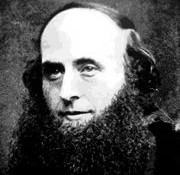 Edward Pritchard
Murderer · United Kingdom · 1865
Edward Pritchard was a Scottish doctor who was convicted of poisoning his wife…
2 victims
Edward Pritchard
Murderer · United Kingdom · 1865
Edward Pritchard was a Scottish doctor who was convicted of poisoning his wife…
2 victims
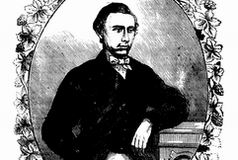 Frederick Baker
Murderer · United Kingdom · 1867
Frederick Baker was a solicitor’s clerk in Alton, Hampshire, England. On Saturd…
1 victim
Frederick Baker
Murderer · United Kingdom · 1867
Frederick Baker was a solicitor’s clerk in Alton, Hampshire, England. On Saturd…
1 victim
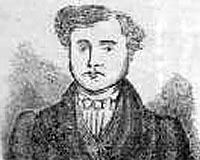 John Mapp
Murderer · United Kingdom · 1867
Name: John Mapp Catherine Lewis was the eldest of the five children of farm lab…
1 victim
John Mapp
Murderer · United Kingdom · 1867
Name: John Mapp Catherine Lewis was the eldest of the five children of farm lab…
1 victim
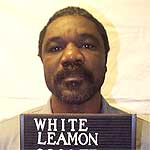 Leamon White
Murderer · USA · 1987
Leamon White was convicted of first-degree murder and sentenced to death by a M…
1 victim
Leamon White
Murderer · USA · 1987
Leamon White was convicted of first-degree murder and sentenced to death by a M…
1 victim
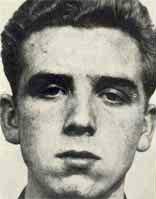 Alfred Burns
Murderer · United Kingdom · 1951
Beatrice Alice Rimmer was bludgeoned to death in her home in the Wavertree area…
1 victim
Alfred Burns
Murderer · United Kingdom · 1951
Beatrice Alice Rimmer was bludgeoned to death in her home in the Wavertree area…
1 victim
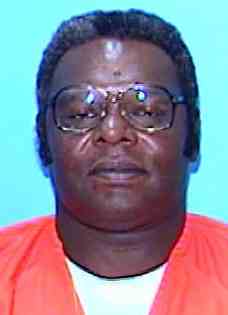 Johnny Robinson
Murderer · USA · 1985
Johnny L. Robinson was convicted of first-degree murder, kidnapping, armed robb…
1 victim
Johnny Robinson
Murderer · USA · 1985
Johnny L. Robinson was convicted of first-degree murder, kidnapping, armed robb…
1 victim
 Michael Wayne Hall
Murderer · USA · 1998
Michael Wayne Hall was tried in Texas state court for the murder of Amy Robinso…
1 victim
Michael Wayne Hall
Murderer · USA · 1998
Michael Wayne Hall was tried in Texas state court for the murder of Amy Robinso…
1 victim
 Johnny Lee Gates
Murderer · USA · 1976
Defendant: Johnny Lee Gates · Age: 41 · Court: Muscogee Superior Court · Judge:…
2 victims
Johnny Lee Gates
Murderer · USA · 1976
Defendant: Johnny Lee Gates · Age: 41 · Court: Muscogee Superior Court · Judge:…
2 victims
- Gender
- male
- Country
- United Kingdom
- Location
- Wigwell Grange, Derbyshire, England, United Kingdom
- Date of birth
- 1838
- Age at first offence
- 25
- Characteristics
- —
- Victim profile
- Miss Elizabeth Caroline Goodwin, 22 (his former fiancee)
- Method of murder
- St abbing with knife
- Date(s) of murder
- August 21, 1863
- Years active
- 1863
- Date of arrest
- Same day
- Status
-
Died in custody
Sentenced to death in 1865; he committed suicide at prison on 12 February 1865 by jumping over a staircase railing onto a stone floor about twenty-three feet below and was pronounced dead.
Case record
George Victor Townley was sentenced to death in 1865. After sentencing, he committed suicide at prison on 12 February 1865.
Timeline
- 1863 — George Victor Townley murdered Miss Elizabeth Caroline Goodwin at Wigwell Grange.
- February 1865 — George Victor Townley committed suicide at Pentonville prison by jumping over a staircase railing onto a stone floor about twenty-three feet below; he landed on his skull and was pronounced dead.
Background
George Victor Townley came from a respectable upper middle class family.
Miss Elizabeth Caroline Goodwin was known to her family as Bessie. She was 22 years old and lived with her 80-year-old grandfather at Wigwell Grange.
Townley had met Goodwin while paying an extended visit to Manchester, and after several meetings they became engaged. During the summer of 1863 Goodwin had second thoughts and wrote to Townley breaking off the engagement. There followed an exchange of letters, until with reluctance she finally agreed to meet Townley at Wigwell.
The offence
In 1863, at Wigwell Grange, located two miles east of Wirksworth on the old turnpike road to Alfreton, George Victor Townley murdered Miss Elizabeth Caroline Goodwin.
On the day of the meeting they spent some time in the house in earnest conversation before being seen to walk through the grounds and into the road. It was there, in a fit of rage, that Townley stabbed Bessie in the throat with fatal consequences.
Townley admitted the offence.
Investigation and detention prior to trial
Townley was held at the Old Lock Up in Wirksworth prior to his trial at Derby Assizes later in the year.
Trial
At the trial, a plea of insanity was put forward.
The jury found Townley guilty, but not insane.
Baron Martin gave Townley a very fair trial, and the jury took six minutes to find him guilty (but not insane).
Townley was represented by “Mr. Stephen”, the future Maybrick and Lipski Justice Stephen and father of James Kenneth Stephen.
Townley was also examined by Dr. Forbes Winslow.
Sentencing and reprieve
Although Townley was found guilty, the judge wrote to the Home Secretary and the Home Secretary granted a respite while enquiries were made into Townley’s sanity.
The case included a sanity hearing arranged on the basis that Townley was now insane, following actions by Townley’s family and influence.
The solicitor decided to take advantage of “Further Provision for the Confinement and Maintenance of Insane People - 3 & 4 Victoria, c. 54”. The law required, for prisoners under sentence of death, that with two Justices of the Peace and two doctors certifying the prisoner is insane, the Home Secretary must remove the prisoner to an insane asylum.
Though the Home Secretary later acted on the certificate and a technical error was subsequently discovered regarding where the magistrates were to come from, the Home Secretary acted on their certificate and respited Townley.
The sentence was eventually commuted to life imprisonment.
Outcome
Townley was sentenced to death in 1865, but his sentence was later commuted to life imprisonment.
On 12 February 1865, Townley committed suicide at Pentonville prison by jumping over a staircase railing onto a stone floor twenty-three feet below. He landed on his skull and was pronounced dead.
Aftermath and public reaction (as stated)
The decision to respire Townley upset the public and part of the legal community in Derbyshire, where the murder occurred.
It did not help matters that, at that time, a relatively poor man named Samuel Wright was hanged for his wife's murder despite better evidence that he was insane.
Sir George Grey dismissed objections relating to defects of the certificate and said that the date of the execution was approaching and he was concerned about saving the life of an insane man.
People felt Townley was saved by a trick.
Other details
A legal review of the case was referenced in NINE VERDICTS ON VIOLENCE by Jack Smith - Hughes (London: Cassell & Co., Ltd., 1958). The second chapter included an essay titled “The Broken Engagement: A Controvertial Reprieve” (p. 23 - 50) about Townley.
Arthur Conan Doyle wrote of the Wadsworth and Stepney Murders of 1860 in a series of essays on true crimes, and his third essay was about Townley, whom he renamed “George Victor Parker” because his relatives were still alive.
A dispute over “the bodies were never found” appeared in the allowed characteristics list, but no such fact was stated for this case record.

Spotted an error, or have more information about this case?