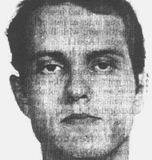
Jesse Tafero
Murderer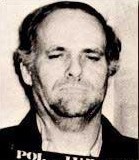 Ervil LeBaron
Murderer · USA · 1972
Ervil Morrell LeBaron (1925 to August 16, 1981) was the leader of a polygamous…
35 victims
Ervil LeBaron
Murderer · USA · 1972
Ervil Morrell LeBaron (1925 to August 16, 1981) was the leader of a polygamous…
35 victims
 Brian Kevin Rosenfeld
Murderer · USA · 1985
Brian Kevin Rosenfeld Brian Kevin Rosenfeld was sentenced to three concurrent l…
23 victims
Brian Kevin Rosenfeld
Murderer · USA · 1985
Brian Kevin Rosenfeld Brian Kevin Rosenfeld was sentenced to three concurrent l…
23 victims
 Marvin Gray
Murderer · USA · 1975
Marvin Gray was convicted killer who claimed responsibility for 23 slayings and…
23 victims
Marvin Gray
Murderer · USA · 1975
Marvin Gray was convicted killer who claimed responsibility for 23 slayings and…
23 victims
 Yahweh ben Yahweh
Murderer · USA · 1980
Yahweh ben Yahweh was born and legally named Hulon Mitchell Jr. (October 27, 19…
23 victims
Yahweh ben Yahweh
Murderer · USA · 1980
Yahweh ben Yahweh was born and legally named Hulon Mitchell Jr. (October 27, 19…
23 victims
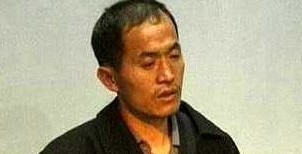 Yang Xinhai
Serial killer · China · 2000
Yang Xinhai (simplified Chinese: 杨新海; pinyin: Yáng Xīnhǎi; 17 July 1968–14 Febr…
67 victims
Yang Xinhai
Serial killer · China · 2000
Yang Xinhai (simplified Chinese: 杨新海; pinyin: Yáng Xīnhǎi; 17 July 1968–14 Febr…
67 victims
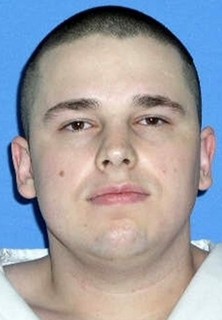 Ryan Dickson
Murderer · USA · 1994
Ryan Dickson was executed by lethal injection in Texas on April 26, 2007. Ryan…
2 victims
Ryan Dickson
Murderer · USA · 1994
Ryan Dickson was executed by lethal injection in Texas on April 26, 2007. Ryan…
2 victims
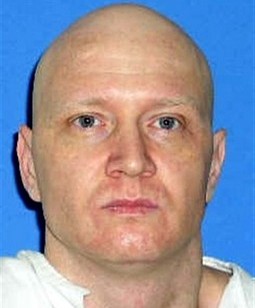 Newton Burton Anderson
Murderer · USA · 1999
Newton Burton Anderson was executed in Texas on February 22, 2007. Anderson was…
2 victims
Newton Burton Anderson
Murderer · USA · 1999
Newton Burton Anderson was executed in Texas on February 22, 2007. Anderson was…
2 victims
 Thomas Rung
Serial killer · Germany · 1983
Thomas Rung (born 3 January 1961) was considered one of the most dangerous seri…
7 victims
Thomas Rung
Serial killer · Germany · 1983
Thomas Rung (born 3 January 1961) was considered one of the most dangerous seri…
7 victims
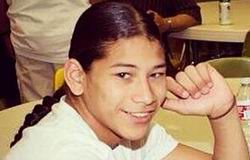 Jaylen Fryberg
Mass murderer · USA · 2014
Jaylen Fryberg Jaylen Fryberg committed suicide by shooting himself the same da…
4 victims
Jaylen Fryberg
Mass murderer · USA · 2014
Jaylen Fryberg Jaylen Fryberg committed suicide by shooting himself the same da…
4 victims
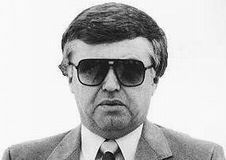 Wilbert Colin Thatcher
Murderer · Canada · 1983
Wilbert Colin Thatcher was convicted of the murder of his ex-wife, JoAnn Wilson…
1 victim
Wilbert Colin Thatcher
Murderer · Canada · 1983
Wilbert Colin Thatcher was convicted of the murder of his ex-wife, JoAnn Wilson…
1 victim
- Gender
- male
- Country
- USA
- Location
- Broward County, Florida, USA
- Date of birth
- October 12, 1945
- Age at first offence
- 31
- Characteristics
- abuser, convicted rapist, to avoid arrest
- Victim profile
- Phillip Black ( Florida highway patrolman) and Donald Irwin ( visiting Canadian constable friend )
- Method of murder
- Shooting
- Date(s) of murder
- February 20, 1976
- Years active
- 1976
- Date of arrest
- Same day
- Status
-
Executed
Executed by electrocution in Florida on May 4, 1990
Background
Jesse Joseph Tafero (October 12, 1945 - May 4, 1990) was an executed defendant in Florida. He was executed in the state of Florida in the electric chair.
Jesse Tafero was also associated with allegations and legal claims described as violations of his right to a fair and impartial trial and his right to be free from cruel and unusual punishment.
The offence
On the morning of February 20, 1976, Florida highway patrolman Phillip Black and visiting Canadian constable Donald Irwin approached a car parked at a rest stop for a routine check. Jesse Tafero, Sonia Jacobs, their two children (ages 9 years and 10 months), and Walter Rhodes were found asleep inside the car.
The prosecution’s theory described that Black saw a gun lying on the floor inside the car. Black woke the occupants and had first Rhodes then Tafero come out of the car. After that, both Black and the Irwin were shot. Rhodes forced Jacobs, Tafero, and their children into the police car, fleeing the scene.
The group kidnapped a man and stole his car. They were arrested after being caught in a roadblock.
The later scenario described that ballistic evidence indicated a bullet hole in the windshield post of the trooper’s car determined that the shooter was at the rear of the Camaro when firing, and that the later scenario corroborated Tafero’s account that Rhodes had shot the policemen and then handed Tafero the gun so that he could drive the car. At trial, there was conflicting eyewitness testimony about where Tafero and Rhodes were positioned during the shooting.
Investigation
Gunpowder residue and ballistic findings were described for Walter Rhodes, Jesse Tafero, and Sonia Jacobs:
- Walter Rhodes: gunpowder residue found consistent with “having discharged a weapon.”
- Jesse Tafero: gunpowder residue found consistent with “handling an unclean or recently discharged weapon, or possibly discharging a weapon.”
- Sonia Jacobs: residue found consistent with “having handled an unclean or recently discharged weapon.” Jacobs’s 9 year old son had the same result as she.
Ballistic tests indicated that one gun shot both police officers. The summary also described that Tafero was apprehended with the murder weapon in his possession, and that a matching 9mm gun belonged to Rhodes. A bullet hole in the windshield post of the trooper’s car determined that the shooter was at the rear of the Camaro when firing.
Arrest
All three—Rhodes, Tafero, and Jacobs—were arrested after being caught in a roadblock.
Trial
People
- Phillip Black (Florida highway patrolman; victim)
- Donald Irwin (visiting Canadian constable; victim)
- Sonia Jacobs (co-defendant)
- Walter Norman Rhodes (co-defendant)
- Walter Rhodes also served as a witness at both Tafero’s and Jacobs’s trials in exchange for a plea to second-degree murder
- Daniel Futch (trial judge), whose nickname was “Maximum Dan”
- Robert McCain (trial attorney for Tafero)
- Michael Satz (assistant DA at the time of the trial; State’s Attorney in Broward County since 1976)
- Craig Barnard and Richard Jorand (by of W. Palm Beach Public Defender’s Office)
- Mark Olive and Jenny Greenberg (Tallahassee, Capital Collateral Counsel)
- Michael Tarre (Coral Gables, Fl, and Bruce Rogow, Nova University, Ft. Lauderdale)
- Ellis Marlowe Haskew (jailhouse snitch witness at trial)
- Pierce Hyman (truck driver; eyewitness)
- Robert McKenzie (truck driver; eyewitness)
- Jowers (a prison guard named as a witness relating to Rhodes’s 1977 confession)
Jury and verdict
The jury was described as un-sequestered.
Tafero was convicted of First Degree Murder / Felony Murder. The theory described was that the police were killed so they could steal the trooper’s gun and trooper’s car for getaway. The record stated it was unclear whether Tafero was convicted on felony murder theory or because the jury believed he was the triggerman.
Evidence at trial
A jailhouse informant, Ellis Marlowe Haskew, testified that he heard Tafero say at a New Year’s Eve party 5 weeks before the murders that he would never go back to prison, and that he owned a lot of guns. The disclosure described that the fact that Haskew was testifying in many federal drug cases was not disclosed, and the fact that Haskew’s lawyer’s fees were paid by the Florida Department of Criminal Law Enforcement was not disclosed.
Two truck drivers watched events from a distance of 150 to 200 feet away: Pierce Hyman and Robert McKenzie. Neither truck driver could say who the shooter was, but both said in their first statements to the police that Tafero was pinned over the hood of the police car during all the shots. The account also described that Hyman’s story changed slightly only after several discussions with the police. Hyman then said Tafero might have gotten up off the hood of the car before the shooting stopped, but almost when it was over.
The two truck drivers differed about where Rhodes was standing during the shots:
- Hyman said Rhodes was always standing in front of the car.
- McKenzie said Rhodes moved to the rear of the car as the shots were fired. McKenzie’s statement was described as significant because ballistics required the shooter to have shot from the rear of the car. The account described that Hyman thought Rhodes never moved from the front of the car because McKenzie moved his truck toward the exit blocking Hyman’s view at the exact time Rhodes moved to the back of the car.
The trial also included co-defendant testimony. Star witness Walter Rhodes testified at both Tafero’s and Jacobs’s trials in exchange for a plea to second-degree murder, escaping the capital charge. Rhodes’s testimony was described as:
- Jacobs fired first from the back seat of the car.
- Tafero got away from the officer holding him, grabbed the gun from Jacobs, and shot the two police officers.
At sentencing and in relation to exculpatory material, the record described that:
- Tafero always maintained his innocence.
- Both eyewitnesses had said in their first statement to police that Tafero was held over the hood of the police car during all the shots.
- Tafero did not have enough gunpowder on his hands to prove conclusively he fired a gun.
- Hyman saw Rhodes move from the front to the back of the car to put him into position for shooting the police officers, directly contradicting his trial testimony.
Eyewitness testimony was described as unable to identify which man was the shooter:
- In one account, one eyewitness testified he saw “a man in brown, Tafero, spread eagle on the hood of the police car when the shots were fired,” while a second eyewitness testified he saw “a man in blue, Rhodes, move from the front of the car to the rear just before the shooting.”
- Neither witness could identify which man was the shooter.
A gunpowder and ballistic framework also included that one gun shot both police officers, and Rhodes and Tafero had residue findings that were described as consistent with the activities alleged by the prosecution and contested in later proceedings.
Court, judge, and counsel
Judge Daniel Futch displayed a miniature electric chair on his desk. Futch was a former highway patrolman and had retired from the police force three years prior to the trial. It was described that he wore his police hat to work as a judge.
The record described that Judge Futch did not allow Tafero to call witnesses and would not allow hearings on that decision. Defense counsel asked for a continuance to investigate Haskew’s background and claims after Haskew was named only on the first day of trial, but the request was denied. Defense counsel had only 30 minutes to interview Haskew before his testimony.
Trial attorney Robert McCain later was disbarred.
Sentencing
Tafero was sentenced to death.
Sentencing authority and aggravating factors
The sentencing authority was described as Judge—according to Florida Statutes.
The statutory aggravating factors described were:
- Double murder and Felony murder.
- Found crime to be especially heinous, atrocious or cruel.
- Used the statutory factor that defendant knowingly created a great risk of death to many persons (based on the kidnapping and running of a roadblock after the murders).
- Judge used Tafero’s prior conviction for violent crimes.
- Judge found the killings were done to avoid arrest (and to be returned to prison as both Tafero and Rhodes were on parole) and to hinder the enforcement of laws.
- Judge found the murders were committed by a person under sentence of imprisonment (the judge used the fact Tafero was on parole).
Non-statutory factors and mitigation
The record described that there were no mitigating factors.
Penalty phase statement
The penalty phase consisted of a 30-second closing statement by Attorney McCain insulting the jury.
The record also described that the penalty phase consisted of a 30-second argument by defense counsel who said: “the defendant feels he did not receive a fair trial, the verdict is not fair, and he will not beg for his life or ask for mercy.” It was later described that at the state evidentiary hearing on habeas, McCain testified Tafero forced him to make this argument.
Appeals
Tafero exhausted all his state and federal appeals.
- Tafero’s conviction was affirmed on June 11, 1981.
- A motion for error coram nobis failed in 1983.
- In 1988, the Florida Supreme Court denied state habeas relief.
- Other state appeals were also denied in 1984, 1987, and 1990.
- The Eleventh Circuit Court of Appeals reviewed the case twice, in 1986 and 1989, and affirmed the conviction.
- In Sonia Jacobs’ 1992 appeal, evidence of the suppressed polygraph test, the prison guard’s suppressed statement, and a physical re-creation of the crime scene presented a convincing scenario that Rhodes was the sole shooter, resulting in reversal of Jacobs’ conviction.
The record also described that if evidence had been found prior to Tafero’s execution, it would have been highly probable his conviction would have been likewise overturned.
Outcome
Execution
Jesse Tafero was executed in Florida’s electric chair on May 4, 1990.
During the execution, Tafero’s head seemed to catch on fire. Flames and smoke were seen shooting out of his head, causing the state to interrupt the electric current three times. Witnesses claimed that Tafero continued to breathe and move after the first charge was interrupted. Three jolts of electricity were required to pronounce Tafero dead, and it took him 13 1/2 minutes to die.
Co-defendant outcome and related developments
The record described that Walter Rhodes was sentenced to a life sentence and was released early for good behavior; it later described that in 1982 Rhodes recanted his prior statement and confessed that it was he, not Tafero or Jacobs, that had pulled the trigger and killed the two police men. This and other evidence prompted courts to commute Jacobs’s sentence to life in prison, but Tafero was not granted the same.
After Tafero’s execution, evidence that had been suppressed and pointed to both Jacobs’s and Tafero’s innocence was described as discovered. The record stated that the eleventh U.S. Circuit Court found evidence compelling enough to overturn the conviction of co-defendant Sonia Jacobs. Jacobs was released after accepting a plea bargain, reaffirmed her innocence immediately upon release, reunited with her children, and became outspoken against the death penalty. Jacobs remarried and became outspoken against the death penalty, and now teaches yoga.
Other legal outcomes referenced
Tafero’s court-appointed trial lawyer was subsequently convicted of bribing a jury and sent to prison. The record also described that McCain was convicted of obstruction of justice for bribing a witness in another case and for narcotics conspiracy.
Other details
Family and children
Jacobs’s and Tafero’s children were placed in the care of Jacobs’s parents until Jacobs’s parents were killed in a plane crash in 1982. The children were then separated, lived with relatives and family friends, and grew to be strangers to Tafero and Jacobs. Tafero and Jacobs continued their relationship through letters while serving time in prison.
The record described that they learned some Japanese and used that to continue their sex life without bringing attention of the guards who read their mail.
Criminal history
When Tafero was 20 years old, he went to prison for attempted robbery and crimes against nature.
Exculpatory and contested issues
- The record described that Tafero was convicted and sentenced to death largely on the testimony of co-defendant Walter Rhodes.
- It described that Rhodes was allowed to plead guilty to second-degree murder in exchange for his testimony, and that the prosecutor justified Rhodes’s plea bargain based on a polygraph test.
- It described that the summary of Rhodes’s polygraph test was withheld from the defense by the state.
- It described that a federal appeals court found that withholding the polygraph test was unconstitutional in Jacobs’s legal challenge.
- It described that Rhodes recanted his testimony on three separate occasions in 1977, 1979, and 1982, stating that he, not Tafero, shot the policemen.
- It described that Ultimately Rhodes reverted to his original testimony.
- It described that a statement from a prison guard corroborating Rhodes’s recantations was suppressed and found years later.
- It described that at Tafero’s trial and sentencing hearing, Tafero’s lawyer failed to call or question witnesses on Tafero’s behalf.
- It described that evidence of mental illness, retardation, and/or neurological damage was stated as none.
Prosecutorial and police misconduct allegations
The record included allegations of:
- Brady suppression relating to the polygraph summary report and guard overheard statement in connection with Rhodes’s confession.
- Prosecutorial misrepresentation in relation to Rhodes’s polygraph exam.
- Use of jailhouse snitches and failures to disclose information related to those snitches.
- Miranda-related issues mentioned in connection with Jacobs’s trial, with the court found confessions ludicrous based on circumstances but threw only one out on Miranda grounds.
Trial by jury and theory
The record described that the theory was that they killed the police so they could steal the trooper’s gun and trooper’s car for getaway, and it stated uncertainty about whether Tafero’s conviction rested on felony murder theory or on belief he was the triggerman.
Clemency/commutation and related comparisons
The record described that courts commuted Jacobs’s sentence to life in prison but Tafero was not granted the same after Rhodes recanted in 1982.
Identification details
- Name/DOC # 020285
- Address: Florida State Prison
- Race: White
- Date of birth: October 12, 1945
- Date of crime: February 20, 1976
- Age at time of crime: 29
- Date sentenced: May 20, 1976
- Victims: Highway Patrolman Phillip Black and Canadian Constable Donald Irwin
- Relationship to defendant: No relationship
- County where tried: Broward County, Florida
- Trial judge: Judge Daniel Futch
- Trial attorney: Robert McCain
- A day after securing death penalty convictions for Tafero and his co-defendant Sonia Jacobs, Michael Satz announced he was running for DA and was elected largely on this high profile case and served as State’s Attorney in Broward County since 1976.
Spotted an error, or have more information about this case?