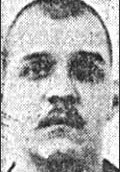
William Boyd Tucker
Murderer Ervil LeBaron
Murderer · USA · 1972
Ervil Morrell LeBaron (1925 to August 16, 1981) was the leader of a polygamous…
35 victims
Ervil LeBaron
Murderer · USA · 1972
Ervil Morrell LeBaron (1925 to August 16, 1981) was the leader of a polygamous…
35 victims
 Brian Kevin Rosenfeld
Murderer · USA · 1985
Brian Kevin Rosenfeld Brian Kevin Rosenfeld was sentenced to three concurrent l…
23 victims
Brian Kevin Rosenfeld
Murderer · USA · 1985
Brian Kevin Rosenfeld Brian Kevin Rosenfeld was sentenced to three concurrent l…
23 victims
 Marvin Gray
Murderer · USA · 1975
Marvin Gray was convicted killer who claimed responsibility for 23 slayings and…
23 victims
Marvin Gray
Murderer · USA · 1975
Marvin Gray was convicted killer who claimed responsibility for 23 slayings and…
23 victims
 Yahweh ben Yahweh
Murderer · USA · 1980
Yahweh ben Yahweh was born and legally named Hulon Mitchell Jr. (October 27, 19…
23 victims
Yahweh ben Yahweh
Murderer · USA · 1980
Yahweh ben Yahweh was born and legally named Hulon Mitchell Jr. (October 27, 19…
23 victims
 Pleasant Armstrong
Murderer · USA · 1902
Pleasant Armstrong was hanged on January 22, 1904. He was convicted of murder i…
1 victim
Pleasant Armstrong
Murderer · USA · 1902
Pleasant Armstrong was hanged on January 22, 1904. He was convicted of murder i…
1 victim
 Muzzammil Hassan
Murderer · USA · 2009
Muzzammil Syed Hassan, also known as Mo Steve Hassan, was a Pakistani-American…
1 victim
Muzzammil Hassan
Murderer · USA · 2009
Muzzammil Syed Hassan, also known as Mo Steve Hassan, was a Pakistani-American…
1 victim
 Constance Kent
Homicide · United Kingdom · 1860
Constance Kent was named Constance Emily Kent and was born 6 February 1844. She…
1 victim
Constance Kent
Homicide · United Kingdom · 1860
Constance Kent was named Constance Emily Kent and was born 6 February 1844. She…
1 victim
 Angela Garcia
Murderer · USA · 1999
Angela Garcia was convicted in 2001 of setting a fire that killed her two young…
2 victims
Angela Garcia
Murderer · USA · 1999
Angela Garcia was convicted in 2001 of setting a fire that killed her two young…
2 victims
- Gender
- male
- Country
- USA
- Location
- Muscogee County, Georgia, USA
- Date of birth
- 1956
- Age at first offence
- 21
- Characteristics
- robbery, rape, drugs, kidnapping
- Victim profile
- Kathleen Parry, 19 ( pregnant store clerk)
- Method of murder
- St abbing with knife
- Date(s) of murder
- August 20, 1977
- Years active
- 1977
- Date of arrest
- Same day
- Status
-
Executed
Executed by electrocution in Georgia on May 29, 1987
Names and identifying information
- William Boyd Tucker: defendant
Timeline
- August 20, 1977 — Tucker drank heavily during the day and evening and smoked several joints of marijuana before going to a Majik Market.
- Around 11:00 p.m. on August 20, 1977 — Tucker went to a Majik Market, where he drank two more beers and played pinball.
- About 45 minutes after waiting at the store — Tucker sneaked behind the operator and sole occupant, Kathleen Perry, and stuck his finger in her back.
- Shortly thereafter — Kathleen Perry began putting money from the cash register into a paper bag.
- After the robbery — Tucker forced Kathleen Perry into his red Volkswagen and drove to Pierce Chapel Road.
- During the killing — Tucker killed Kathleen Perry by stabbing her four times.
- August 21, 1977 at approximately 1:00 a.m. — Three Columbus residents driving on a pick-up truck passed a red Volkswagen parked in the road with its lights on, and saw Tucker in the car and a woman's shoe on the pavement.
- Shortly after passing, while returning — The three decided to return to investigate; on return they found the shoe, a Majik Market vest, a bra, and the body of Kathleen Perry face-down in a ditch about 10 feet from the road.
- After discovery — The three left, called the police, and then returned to Pierce Chapel Road to await the police arrival.
- Shortly after the police reached the scene — The police saw Tucker returning in the same red Volkswagen; they identified the car and driver, and Tucker was immediately taken into custody.
- Shortly thereafter (after custody) — Tucker made an incriminating statement admitting the robbery by intimidation and the kidnapping.
- May 29, 1987 — Tucker was executed by electrocution in Georgia.
- May 30, 1987 — The New York Times reported that Tucker was executed in Georgia's electric chair and was pronounced dead at 7:29 P.M.
Background
William Boyd Tucker was tried in the Superior Court of Muscogee County, Georgia, for the August 1977 murder of Kathleen Perry.
Kathleen Perry was working alone as a clerk in a Majik Market in Columbus, Georgia, on the night of August 20, 1977.
The state introduced no new evidence relative to punishment. Various defense witnesses testified to Tucker's previously peaceful nature and the stress placed upon him by the death of his father three months before the crime. Tucker and his mother explained that his use of drugs and marijuana had become a serious problem after his father's death. Tucker explained that he had been drinking and smoking heavily the day of the crime and continued to claim a lack of memory about the actual killing. He expressed remorse for the crime and hoped that he could rehabilitate himself while in prison. Tucker had never been in trouble with the law before.
The offence
Store robbery and abduction
The evidence introduced showed that after drinking heavily during the day and evening of August 20, 1977, and smoking several joints of marijuana, Tucker went to a Majik Market around 11 p.m. where he drank two more beers and played pinball.
After waiting at the store some 45 minutes, Tucker sneaked behind the operator and sole occupant, Kathleen Perry, and stuck his finger in her back. Kathleen Perry began putting money from the cash register into a paper bag.
Tucker forced Kathleen into his red Volkswagen and drove to Pierce Chapel Road.
Killing and immediate aftermath at the road
Tucker killed Kathleen Perry by stabbing her four times. Medical evidence suggested that she bled to death within 4 to 6 minutes.
Three people were driving on Pierce Chapel Road when they passed a red Volkswagen with its lights on, parked in the road. They saw Tucker in the car and a woman's shoe in the road beside the car.
Shortly after passing, they decided to return to investigate. When they returned, they found:
- a vest with a "Majik Market" insignia,
- a woman's shoe,
- a bra,
- and the body of Kathleen Perry, face-down in a ditch about 10 feet from the road.
The three left, called the police, and then returned to Pierce Chapel Road to await the arrival of the police.
Shortly after the police reached the scene, they saw Tucker returning in the same red Volkswagen. The three identified both the car and driver to the police, and Tucker was immediately taken into custody.
Sexual assault admission
In his statement to police, Tucker admitted to robbing and kidnapping Perry and forcing her to commit oral sex upon him.
Tucker testified at trial that he could not remember a knife or the murder, and also claimed lack of memory about the actual killing.
At trial, Tucker again confessed to robbery by intimidation and kidnapping, but testified that he could not remember a knife or the murder.
Although the indictment also charged Tucker with aggravated sodomy, a directed verdict was entered on that charge because Georgia law disallows convictions based solely on uncorroborated confessions.
Investigation and arrest
Witnesses placed Tucker in the Majik Market shortly before midnight on August 20, 1977.
Police were notified after the discovery of Kathleen Perry’s body.
After police reached the scene, they saw Tucker returning in the same red Volkswagen. Tucker was immediately taken into custody.
Tucker made an incriminating statement shortly after custody, admitting the robbery by intimidation and the kidnapping. In his statement to police, Tucker stated that he could not remember what happened after Perry got out of the car but did recall a knife with long brown handles and lots of blood.
Trial
Charges and convictions
Tucker was tried in the Superior Court of Muscogee County, Georgia.
He was convicted of:
- murder,
- kidnapping with bodily injury, and
- robbery by intimidation.
The jury sentenced Tucker to death for the murder and lesser terms for the other crimes.
The indictment also charged Tucker with aggravated sodomy, but a directed verdict was entered on that count because Georgia law disallowed convictions based solely on uncorroborated confessions.
Because the district attorney's office had chosen to seek the death penalty, the sentencing hearing required by the Georgia capital punishment statute commenced.
Sentencing procedure and deliberation
Defense witnesses testified about Tucker's previously peaceful nature and stress related to his father's death three months earlier. Tucker and his mother explained his drug and marijuana use after his father’s death and described his drinking and smoking heavily on the day of the crime.
After closing arguments, the jurors were instructed and began sentencing deliberation. After a short time, the jury returned a verdict of death.
Sentencing
The jury found as an aggravating circumstance that the murder was committed during the commission of another capital felony (kidnapping with bodily injury). After this finding, the jury had broad sentencing discretion to choose between death or life imprisonment.
The verdict returned was death.
Appeals
Direct appeals and certiorari
Tucker’s convictions and sentences were affirmed by the Georgia Supreme Court.
A petition for writ of certiorari to the United States Supreme Court was denied.
Tucker sought habeas corpus relief in the state courts but was unsuccessful. The state supreme court refused to hear an appeal. The United States Supreme Court denied Tucker’s second petition for writ of certiorari.
Tucker then filed an habeas corpus petition in federal district court. Relief was denied.
A panel of the Eleventh Circuit considered six constitutional claims and granted relief on the ground that improper prosecutorial argument had rendered Tucker's sentencing hearing "fundamentally unfair." The panel opinion was later vacated en banc on the prosecutorial argument issue; the Eleventh Circuit affirmed the district court’s denial of relief on the prosecutorial argument claim and reinstated the panel opinion in all other respects.
Federal appellate case details
The case was William Boyd Tucker v. Ralph Kemp, Warden, Respondent-Appellee, in the United States Court of Appeals, Eleventh Circuit.
The Eleventh Circuit opinion addressed prosecutorial argument made by prosecutor Gray Conger at the sentencing phase.
Outcome
Tucker’s death sentence was executed in Georgia on May 29, 1987.
The New York Times reported that Tucker was executed in Georgia's electric chair and was pronounced dead at 7:29 P.M.
A prior schedule and stays were described: Tucker’s death sentence had been postponed twice, and a stay of execution of 24 hours was granted so the full court could study the appeal. The Georgia Board of Pardons and Paroles had earlier denied Tucker’s petition for clemency.
Aftermath
During the period before execution, a large group of relatives visited Tucker in a holding cell near the death chamber at the Georgia Diagnostic and Classification Center. The relatives included Tucker’s mother and stepfather, George and Nancy Horan.
Other details
Confession details and trial handling of corroboration
Tucker was arrested and gave a confession admitting to robbing and kidnapping Perry and forcing her to commit oral sex.
He claimed not to remember anything else except that there had been a knife and much blood.
Even though the aggravated sodomy charge resulted in a directed verdict because Georgia law disallowed convictions based solely on uncorroborated confessions, the sentencing-phase court and appellate discussion addressed that Tucker’s confession admission was still considered at sentencing.
Evidence about stabbing and timing
Medical evidence suggested Kathleen Perry bled to death within 4 to 6 minutes.
Newspaper report details
The New York Times report stated that the United States Supreme Court voted 6 to 3 to reject a formal appeal aimed at overturning Tucker's conviction and death sentence. It stated that Justices William J. Brennan Jr., Thurgood Marshall and Harry A. Blackmun voted to spare his life.
Justice Lewis F. Powell acting only two hours before execution granted a 24-hour stay so the full court could study the appeal.
The report described that Tucker was 31 years old at the time of execution.
The report stated that the Georgia Board of Pardons and Paroles earlier denied Tucker’s petition for clemency, and it quoted Wayne Snow, Chairman of the parole board, stating that the decision was based on the terror inflicted on Mrs. Parry during the Aug. 20, 1977 robbery and abduction. It further stated that Mrs. Parry had been married two months and was one-month pregnant.
Prosecutorial argument at sentencing (verbatim quoted segments)
Prosecutor Gray Conger made the following remarks, which the appellate discussion considered:
Conger began his closing argument on the following note:
I've been here a number of years in the District Attorney's Office and I've tried a number of cases, many cases as a matter of fact, and the death penalty is seldom requested in Columbus, it's very infrequently requested. And since I've been here, it's been requested as a matter of fact, something less than a dozen times. It's not very often that we come in here and ask you to bring in a verdict of a death sentence on an individual.
Conger asserted personal opinion about rehabilitation and how he would feel if Tucker was executed:
I'd move to Russia before I'd live next door to this man.
[I]f he is executed, and if you bring in a verdict of guilty, I'll sleep just as good, or I'll sleep better knowing that one of them won't be on the street. Knowing that one of them will be gone. It's not all of them, but it's better than none.
Conger’s deterrence-related statement:
Well, Mr. Cain is probably going to get up here and tell you that he doesn't believe or the evidence is that punishment, or capital punishment, does not deter others from similar criminal activity. Well, to me ladies and gentlemen, I don't believe it. I don't believe that. You can count me as one of those people who believes that a person receiving a death sentence has got to have some effect on somebody. And ladies and gentlemen, when an execution occurs, whenever an execution occurs, it has got to have some effect on somebody who is planning some criminal activity somewhere. You can't tell me that if this man is executed some potential killer somewhere, maybe not in Columbus, maybe somewhere else, but it doesn't matter because it'll be somebody's daughter that's saved. You can't tell me that somebody ain't going to hear about that thing over there being punished, being executed, and is not going to say I'm not going to take the chance because the death sentence is enforced and they execute people for doing this kind of thing. There is no way it's not a deterrent.
Conger discussed deterrence as a personal sleep-related remark:
if he is executed, and if you bring in a verdict of guilty, I'll sleep just as good, or I'll sleep better knowing that one of them won't be on the street. Knowing that one of them will be gone.
Conger made the argument about jury responsibility:
[The defense attorney will] mention that, well, can you sleep well if this man is executed? Won't it bother you if you ever read about it or hear about it whenever it happens? But I for one want to tell you that you are not the ones who did it if he is executed. It does not rest on your shoulders, ladies and gentlemen. Policemen did their duty and they went out and made the case. The grand jury down there did its duty and it indicted him and charged him with these horrible offenses. The district attorney's office prosecuted the case, located the witnesses, and brought them in. The judge, the court came in and presided at the trial. And ladies and gentlemen, you are the last link in this thing, and if this man suffers the death penalty it's no more up to you than it is to anybody else, the grand jury or the police, or the district attorney's office. All of us are coming in and doing our duty.
Conger made statements about prison safety and guard/prisoner risk:
[I]f he goes to the penitentiary with his propensity to do what he's done, others will be placed in jeopardy, because he'll be in there with other young prisoners. He'll be in with people who might be in there for car stealing, or marijuana or something, lesser offenses like that, he'll be mixed in there with young kids and they'll be exposed to him, they'll get his influence. We know about his perverted sexual habits. Ladies and gentlemen, we know about his inability to control his desire to kill. Other prisoners will be in there and they will be subjected to him. Do we want to put young people in his presence as it could be done in Reidsville or wherever he goes to the penitentiary? He could kill them. I submit to you, ladies and gentlemen, that we can't afford to have this man in our society. Now, what about the guards who would be guarding him down there? The guards would be, of course, exposed to him. The guards would be in his presence, the guards would have to be letting him, letting him out.
Conger argued about costs to taxpayers:
[They would be] feeding him, taking care of him, spending thousands and thousands and thousands of taxpayers dollars to support him for the rest of his life, however long that would be, he'll probably live sixty more years.
And:
I submit to you, ladies and gentlemen, that we can't afford to have this man in our society.
In another quoted portion, Conger contrasted procedural protections for Tucker and for Kathleen Perry:
He's got a judge up there on the bench weighing the law on this case. He's got a jury coming in and listening to the evidence. He had policemen who advised him of his rights when he was arrested. And, ladies and gentlemen, if he's executed it will be humane, it won't be with knife wounds in the back and knife wounds in the chest. Did anybody advise Kathleen Perry of her rights when she was killed? I submit to you, ladies and gentlemen, that comparing Kathleen Perry with the execution of this man, there is no comparison that can be made. This man has a judge, he's got a jury, he's had policemen to advise him of his rights, he's had a jury to pass on his guilt or innocence, and he's got a jury to pass on his fate. Kathleen Perry had none of this. She had no judge, she had no jury, she had nothing but his lust and desire for money, and desire to go out and snuff out the only victim to his crime. She had nothing that he is receiving here today, and he asked for his life to be spared.... Give him the same mercy he gave her. She didn't have a judge or a jury, or a grand jury to indict her. She won't have a trip to Reidsville and back. She won't have any of the other benefits that this man got.
Conger made additional remarks about rehabilitation:
He's going to say, well, this is a young man, he's only 21 or 22, he can be rehabilitated.
Ladies and gentlemen, can you seriously believe that anybody who can do what he's done could ever be rehabilitated, that man rehabilitated. I'd move to Russia before I'd live next door to this man. Ladies and gentlemen, when you think about him think about rehabilitation, there is no way that this man can be rehabilitated, society can't afford to take the chance. He can't be in a position where he can do anymore damage.
Conger described his view of deterrence as protecting a daughter:
it'll be somebody's daughter that's saved.
Trial transcript handling of quoted material
The appellate decision included competing judicial opinions and dissents, with verbatim quotations from Conger’s argument as quoted above, alongside judicial discussion of impropriety and prejudice.
Spotted an error, or have more information about this case?