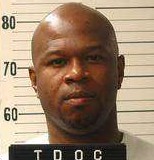
Tyrone Chalmers
Murderer Brian Kevin Rosenfeld
Murderer · USA · 1985
Brian Kevin Rosenfeld Brian Kevin Rosenfeld was sentenced to three concurrent l…
23 victims
Brian Kevin Rosenfeld
Murderer · USA · 1985
Brian Kevin Rosenfeld Brian Kevin Rosenfeld was sentenced to three concurrent l…
23 victims
 Russell Ellwood
Murderer · USA · 1991
Russell Ellwood was a former taxi driver. Authorities suspected him of killing…
20 victims
Russell Ellwood
Murderer · USA · 1991
Russell Ellwood was a former taxi driver. Authorities suspected him of killing…
20 victims
 Robert Martines Perez
Murderer · USA · 1994
Name: Robert Martines Perez · Other name used in proceedings: Robert Martinez P…
15 victims
Robert Martines Perez
Murderer · USA · 1994
Name: Robert Martines Perez · Other name used in proceedings: Robert Martinez P…
15 victims
 Billy Frank Vickers
Murderer · USA · 1993
Billy Frank Vickers Vickers was executed by lethal injection in Texas on Januar…
14 victims
Billy Frank Vickers
Murderer · USA · 1993
Billy Frank Vickers Vickers was executed by lethal injection in Texas on Januar…
14 victims
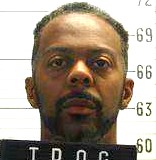 Michael Angelo Coleman
Murderer · USA · 1979
Michael Angelo Coleman appealed his conviction of murder in the first degree in…
1 victim
Michael Angelo Coleman
Murderer · USA · 1979
Michael Angelo Coleman appealed his conviction of murder in the first degree in…
1 victim
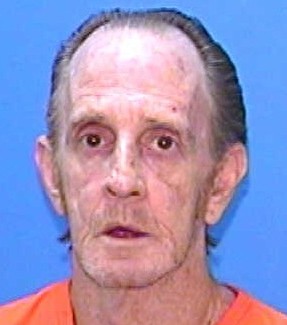 William Melvin White
Murderer · USA · 1978
William Melvin White was convicted of murdering Gracie Mae Crawford. White was…
1 victim
William Melvin White
Murderer · USA · 1978
William Melvin White was convicted of murdering Gracie Mae Crawford. White was…
1 victim
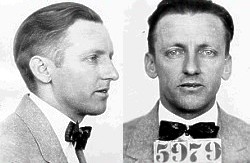 Paul Hadley
Murderer · USA · 1916
Paul V. Hadley was executed by hanging in Arizona on April 13, 1923. On Friday,…
2 victims
Paul Hadley
Murderer · USA · 1916
Paul V. Hadley was executed by hanging in Arizona on April 13, 1923. On Friday,…
2 victims
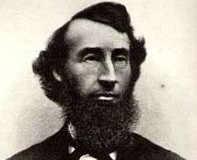 Nathaniel Gordon
Homicide · USA · 1860
Nathaniel Gordon (c.1834 – February 21, 1862) was the first and only American s…
29 victims
Nathaniel Gordon
Homicide · USA · 1860
Nathaniel Gordon (c.1834 – February 21, 1862) was the first and only American s…
29 victims
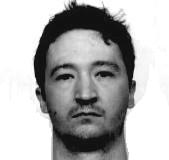 William Hamilton Little
Murderer · USA · 1983
December 3, 1983 — Michael John Rammel found the body of Marilyn Peter in her h…
1 victim
William Hamilton Little
Murderer · USA · 1983
December 3, 1983 — Michael John Rammel found the body of Marilyn Peter in her h…
1 victim
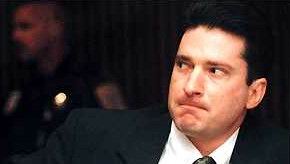 Lawrence Russell Brewer
Murderer · 1998
Lawrence Russell Brewer was a white male born 03/13/1967. His TDCJ number was 9…
1 victim
Lawrence Russell Brewer
Murderer · 1998
Lawrence Russell Brewer was a white male born 03/13/1967. His TDCJ number was 9…
1 victim
- Gender
- male
- Country
- USA
- Location
- Shelby County, Tennessee, USA
- Date of birth
- August 2, 1973
- Age at first offence
- 21
- Characteristics
- robbery, alcohol, drug addict
- Victim profile
- Randy L. Allen, 28
- Method of murder
- Shooting
- Date(s) of murder
- August 20, 1994
- Years active
- 1994
- Date of arrest
- 10 days after
- Status
-
Sentenced to death
Sentenced to death on July 18, 1997
Case details
Defendant: Tyrone Chalmers Case name: Tyrone Chalmers v. State of Tennessee Jurisdiction: Court of Criminal Appeals of Tennessee (Shelby County; C.C.A. No. 02C01-9711-CC-00449) and subsequent direct appeal affirmed by the Supreme Court of Tennessee Legal outcome: The defendant was convicted of one count of felony murder and one count of especially aggravated robbery and was sentenced to death.
Timeline
- August 20, 1994 — The body of Randy Allen was discovered lying face down on the sidewalk next to Netherwood Street in Memphis; he had been shot five times and his pants and underwear had been pulled down around his ankles.
- After ten days — The defendant admitted to Memphis police that he had killed Randy Allen during a robbery.
- July 8, 1996 — The Deputy Clerk for the Shelby County Criminal Court Clerk's Office testified that Tyrone Chalmers was convicted of attempted especially aggravated robbery and attempted first degree murder for offenses committed against Joseph Hunter on August 20, 1994.
- December 1998 — The Court of Criminal Appeals convened the December 1998 session.
- March 15, 1999 — The Court of Criminal Appeals filed its opinion, affirming.
- October 05, 2000 — The Supreme Court of Tennessee issued its opinion.
- July 18, 1997 — Sentenced to death.
- February 9, 2001 — The death sentence was to be carried out on this date unless otherwise ordered by the Court or proper authority.
Background
At approximately 5:00 a.m. on August 20, 1994, the body of Randy Allen, an African-American victim aged 28, was discovered lying face down on the sidewalk next to Netherwood Street in Memphis. His pants and underwear had been pulled down around his ankles, and he had been shot five times. Two wounds, one to the head and another to the back, were fatal.
Ten days after the shooting, the 21-year-old African-American defendant, Tyrone Chalmers, admitted to Memphis police that he had killed the victim during a robbery.
The defendant stated:
I met up with “Dre” and “Black” on Orleans and So. Parkway near the park. “Black” was driving something like a[sic] Oldsmobile, “Dre” was in the front passenger seat and I got in the back seat. We were just riding around looking for somebody to rob. I had some kind of automatic rifle, it had a clip in it, black and brown color. “Dre” had a .380 automatic or something, look [sic] black to me. I think “Black” had a shotgun. “Black” was driving down Netherwood, and me and “Dre” jumped out on two boys.2 We tried to rob them. We made them strip, then I had hit the one that was killed with the rifle and it went off, and I couldn't let the rifle go. Then me and “Dre” jumped in the car and left, with “Black” driving. Then “Black” dropped me and “Dre” off near a house, close to Southside School. The defendant, who robbed Murphy and the victim of $3.00, estimated that he had fired six times. The defendant concluded his statement by remarking, “I'm sorry it ever happened. If I could go through it again, I wouldn't.”
The jury convicted the defendant of felony murder and especially aggravated robbery.
The offence
The jury convicted the defendant of:
- Felony murder (based on the killing of Randy Allen during an attempt to commit an especially aggravated robbery).
- Especially aggravated robbery.
The convictions were supported by proof that the victim was shot five times, including fatal wounds to the head and the back, and that the defendant robbed the victim of $3.00.
Investigation
The defendant was interviewed by Memphis police after the killing.
A police interrogation resulted in a statement by the defendant that he said was made after receiving Miranda rights.
At the suppression hearing, Lt. James L. Nichols of the Memphis Police Department testified that he assisted Sergeant D.E. Woods in the August 20, 1994 interrogation. Nichols recalled that the defendant was informed of his Miranda rights before any questions were submitted. Nichols said the defendant understood his rights and wished to make a statement, and Nichols stated that neither he nor Woods coerced or threatened the defendant and never promised anything in exchange. Nichols described the statement as freely and voluntarily given and said it was made during a forty-five minute interview, reduced to writing, and signed by the defendant. Nichols did not remember whether the defendant signed a separate “advice of rights” document.
Elise Flowers, who transcribed the statement as Nichols and Sgt. Woods conducted the interview, testified that the defendant was advised of his rights before the interrogation. Flowers said the defendant acknowledged his rights, agreed to talk, and was not threatened, coerced, or promised anything for his answers. Flowers did not remember whether the defendant signed a separate “advice of rights” form or read the transcript in her presence.
The defendant claimed he had been questioned previously by officers and told them he did not want to give a statement. He asserted he had not been advised of his rights and did not understand why he was being forced to give a statement. He testified that Sgt. Woods and two other officers struck him on the head several times with a telephone book and that the officers forced the confession and written transcript. He insisted Flowers gave false testimony. On cross-examination, he admitted he was in custody at that time on an attempted robbery and attempted murder charge from a separate incident earlier on the same night, and he had pled guilty to those charges before the suppression hearing.
The defendant testified he was beaten and forced to talk during both interviews. He conceded he failed to bring these claims to the trial judge when the judge accepted the guilty pleas. He explained the omission by saying he was “stressed out” because his mother was having health problems. He acknowledged that he was advised of his rights before the statement on the prior charges and that he understood and voluntarily waived those rights. Sgt. Woods denied physically or verbally abusing the defendant before or during the interview for the felony murder.
The trial judge determined the statement was voluntarily and knowingly given and denied the motion to suppress, implying the defendant voluntarily and knowingly waived his rights.
Arrest
The record included custody on an attempted robbery and attempted murder charge arising from the separate incident earlier on the same night as the murder. The defendant admitted he was in custody at the time of the felony murder interrogation.
Trial
Charges and verdicts
- Felony murder
- Especially aggravated robbery
Sentencing proceedings
During sentencing, the State introduced evidence of the defendant’s previous convictions for:
- Attempted especially aggravated robbery
- Attempted first degree murder
The Deputy Clerk for the Shelby County Criminal Court Clerk's Office testified that court records showed Tyrone Chalmers was convicted on July 8, 1996 for offenses committed against Joseph Hunter on August 20, 1994.
During cross-examination, defense counsel contested the clerk’s identification of the defendant and asked:
[Y]ou have no way of knowing whether or not those documents that you have are in fact, belong to [sic ] Tyrone Chalmers, do you? You have no personal knowledge yourself, do you?
Joseph Hunter then testified that he was driving home at approximately 2:55 a.m. on August 20, 1994, when the defendant stepped in front of his car, pointed a rifle at him, and told him to “give it up.” Hunter testified that the defendant fired approximately fifteen rounds as Hunter drove away, striking Hunter in the leg and arm.
The defendant presented testimony from his mother and sister. The mother testified that the defendant was one of seven children, had graduated from high school, and had never given her any trouble. She testified that at the time of the offenses he was employed and caring for his mother, who suffered from diabetes.
The sister described the defendant as “a very caring person” and her best friend. She conceded he had been in juvenile court once, but claimed the victim of that offense “actually committed a crime” against the defendant.
The defendant testified that only hours before he committed the offenses in this case, he had been drinking alcohol and had smoked crack cocaine for the first time. He claimed he could not remember what happened but recalled that the gun he used belonged to one of the accomplices. He admitted having been in juvenile court but asserted that the only criminal charges he had faced were those arising from the events of the early morning hours of August 20, 1994. He told the victim’s family that he was sorry and expressed a desire to take the victim’s place if he could. On cross-examination, he admitted he tried to rob Hunter before he ever met up with Dre and Black.
Death sentence and findings
The jury sentenced the defendant to death after finding that an aggravating circumstance outweighed mitigating circumstances beyond a reasonable doubt. The aggravating circumstance was that the defendant was previously convicted of one or more felonies, other than the present charge, whose statutory elements involved the use of violence to the person. The decision references Tenn. Code Ann. § 39-13-204(i)(2) (Supp. 1994).
The trial judge imposed a sentence of twenty years for the especially aggravated robbery conviction. The sentence was ordered to run concurrently with the death sentence but consecutively to sentences previously imposed in another case.
Appeals
Issues raised and appellate holdings
On direct appeal, the Court of Criminal Appeals affirmed the convictions and sentences. The defendant then appealed to the Supreme Court of Tennessee, raising multiple issues. The Court designated these issues for oral argument:
- Whether plain error required reversal of the death sentence in light of State v. Bigbee, 885 S.W.2d 797 (Tenn. 1994) and Tenn. Code Ann. § 39-13-204(c) (Supp. 1998) when the prosecution introduced evidence concerning the facts and circumstances underlying the defendant’s prior violent felony convictions and when the prosecution referred to those circumstances during argument.
- Whether the sentence of death was excessive or disproportionate compared with penalties imposed in similar cases, considering both the crime and the defendant, under Tenn. Code Ann. § 39-13-206(c)(1) (Supp. 1994).
- Whether and how the factor of race should be considered when performing comparative proportionality review.
The Supreme Court concluded that the State’s introduction of evidence and subsequent argument concerning the specific facts and circumstances of the defendant’s prior violent felony convictions did not mandate reversal under Bigbee. The Court also concluded that the evidence supported the jury’s findings as to aggravating and mitigating circumstances beyond a reasonable doubt, and that the death sentence was not imposed arbitrarily and was not excessive or disproportionate to penalties imposed in similar cases. The Supreme Court clarified that race is considered during comparative proportionality review to ensure an aberrant death sentence was not imposed due to the defendant’s race.
Accordingly, the Supreme Court affirmed the Court of Criminal Appeals in all respects.
Prosecutorial misconduct / plain error analysis
The Supreme Court discussed that, following evidence of the defendant’s prior convictions for attempted especially aggravated robbery and attempted first degree murder of Joseph Hunter, the State presented Hunter’s testimony about the specific facts of those crimes. During argument, the State referred to the circumstances concerning the offenses involving Hunter.
The defendant did not object at trial and did not complain on appeal, so the Supreme Court evaluated whether plain error required reversal.
The Court stated that it reviewed the record and concluded that the prosecutor’s conduct did not mandate reversal under Bigbee. The Court found that Hunter’s testimony was relevant to respond to defense claims contesting identification of the defendant as the perpetrator of the prior offenses about which the clerk testified. The Court concluded it was inappropriate to introduce evidence of the facts and circumstances of the prior crimes that was not relevant to the identification issue.
Regarding closing argument, the Supreme Court contrasted the case with Bigbee. The Supreme Court quoted closing argument where the prosecutor stated:
This man before you has been convicted of a crime that involved violence prior to this particular trial. We not only put on the clerk to show that, we brought the victim to show you the nature of that offense. This is not a violence where somebody gets hit or slapped, pushed or knocked down. This violence involves an individual, Mr. Hunter, coming home, a man appears on the street, wants to take his car or whatever or his life. And, proceeds to shoot at him fifteen times and hit him two times. He gets away, barely. Less than two hours after that, this particular offense occurs. I submit to you that we have proven beyond a reasonable doubt that the defendant has been convicted of an offense of violence prior to this particular offense.
The Supreme Court concluded that while it was proper to argue that Hunter’s testimony had proven the aggravating circumstance beyond a reasonable doubt, the prosecutor engaged in improper argument by implying that the jury should consider the nature of the violence against Hunter. The Supreme Court concluded that the improper remarks were not extensive, that no curative measures were taken due to failure to object, that the intent was not improper because it responded to identification concerns, and that cumulatively the inadmissible evidence and improper argument did not affect the jury’s sentencing determination to the defendant’s prejudice. It held any constitutional error was harmless beyond a reasonable doubt.
The Supreme Court concluded it did not need to address the State’s assertion that reversal was not warranted under Tenn. Code Ann. § 39-13-204(c) (Supp. 1998).
Comparative proportionality review
The defendant contended his sentence was disproportionate.
The Supreme Court stated that comparative proportionality review was conducted pursuant to Tenn. Code Ann. § 39-13-206(c)(1)(D) (Supp. 1994) to ensure that no aberrant death sentence was affirmed, referencing State v. Blanton, 975 S.W.2d 269 (Tenn. 1998) and employing the precedent-seeking approach described in State v. Bland, 958 S.W.2d 651 (Tenn. 1997).
The opinion listed factors relevant to comparing the cases and factors relevant to comparing defendant characteristics, including motivation, place of death, means of death, manner of death, premeditation, provocation, justification, non-decedent victims, prior criminal record, age, race, gender, mental/emotional/physical condition, role in the murder, cooperation with authorities, remorse, knowledge of helplessness, and capacity for rehabilitation.
The Supreme Court stated the present case was similar to numerous cases in which death sentences were affirmed for shooting a randomly chosen victim during a robbery. It listed:
- State v. Smith, 993 S.W.2d 6 (Tenn. 1999)
- State v. Burns, 979 S.W.2d 276 (Tenn. 1998)
- State v. Howell, 868 S.W.2d 238 (Tenn. 1993)
- State v. Boyd, 797 S.W.2d 589 (Tenn. 1990)
- State v. Johnson, 762 S.W.2d 110 (Tenn. 1988)
- State v. Bobo, 727 S.W.2d 945 (Tenn. 1987)
- State v. Sparks, 727 S.W.2d 480 (Tenn. 1987)
- State v. Harries, 657 S.W.2d 414 (Tenn. 1983)
- State v. Coleman, 619 S.W.2d 112 (Tenn. 1981)
It also listed cases upholding death based on the sole aggravating circumstance of a prior violent felony conviction:
- State v. Adkins, 725 S.W.2d 660 (Tenn. 1987)
- State v. Goad, 707 S.W.2d 846 (Tenn. 1986)
The Supreme Court addressed the defendant’s argument that he should have received a life sentence because he committed an act “totally alien to his character” while under the influence of drugs. The Court stated the defendant’s witnesses established he had been in juvenile court before the incidents of August 20, 1994. It concluded the aggravating circumstance of prior violent felony convictions outweighed mitigating circumstances beyond a reasonable doubt and found the death sentence was not disproportionate.
Race in proportionality analysis
The Supreme Court stated that the defendant did not allege and there was no indication that the jury’s sentencing determination was based upon race. It then addressed clarification regarding the use of race in proportionality analysis, referencing State v. Bland and a discussion of State v. Pike.
The Supreme Court stated that race is considered when performing comparative proportionality review to ensure that an aberrant death sentence was not imposed due to the defendant’s race.
Dissenting views included in the record
The record also included a dissenting opinion discussing the role of race in comparative proportionality review and citing multiple studies and cases. It included quotations from:
- United States General Accounting Office (USGAO) and an internal statement that in 82 percent of the studies race of victim influenced the likelihood of being charged with capital murder or receiving the death penalty, and that more than half of the studies found race of defendant influenced the likelihood of being charged with a capital crime or receiving the death penalty.
- McCleskey v. Kemp and a dissent quote by Justice Brennan.
- State v. Harvey (Justice Handler dissent) and a quote.
- Callins v. Collins.
The dissent also quoted:
the record and briefs and consider all errors assigned. The Court may enter an order designating those issues it wishes addressed at oral argument․
and discussed concerns about “race-tainted” pools and comparative proportionality review procedures, concluding:
Therefore, although I concur in the majority's decision to affirm the defendant's conviction, I respectfully dissent from its decision to impose the death penalty in this case.
Outcome
- The Court of Criminal Appeals affirmed the convictions and sentences.
- The Supreme Court of Tennessee affirmed the Court of Criminal Appeals in all respects.
- The defendant’s sentence of death was affirmed and was to be carried out on the 9th day of February, 2001, unless otherwise ordered by the Supreme Court or proper authority.
- Costs of the appeal were assessed to the State of Tennessee because the appellant was indigent.
Other details
Photo admission in the Court of Criminal Appeals (appendix excerpts)
The Court of Criminal Appeals considered a challenge to admission of a photograph of the victim as he was found on the street, depicting the victim lying face down with his pants lowered to ankle level. The defendant argued the photograph was void of probative weight and packed with impermissible and inflammatory content.
The Court of Criminal Appeals discussed:
- Relevance under Tenn. R. Evid. 401
- Exclusion under Tenn. R. Evid. 403 (unfair prejudice, confusion, misleading the jury, undue delay, waste of time, needless presentation of cumulative evidence)
- That prejudicial evidence does not automatically require exclusion
- The factors in State v. Banks and admissibility within the sound discretion of the trial judge, with Banks and Bigbee referenced
The Court of Criminal Appeals concluded the photograph was clearly relevant because it corroborated details of the incriminating statement and suggested the victim was shot in the back causing him to fall face down. It stated the probative value outweighed any undue prejudicial effect and rejected claims that admission violated due process or constituted cruel and unusual punishment.
Witness context: Joseph Hunter
The prior offense testimony involved identification issues surrounding the clerk’s identification of Tyrone Chalmers in relation to the prior convictions involving Joseph Hunter.
Victim count / specific victims
- Present capital case killing: 1 victim, Randy Allen (age 28).
- Prior convictions for sentencing: offences involved Joseph Hunter. The trial record referenced that those prior offenses occurred against Joseph Hunter on August 20, 1994.
Tribunal composition and participation notes
The Supreme Court opinion included:
- “JANICE M. HOLDER, J., delivered the opinion of the court, in which E. RILEY ANDERSON, C.J., and WILLIAM M. BARKER, J., joined.”
- “ADOLPHO A. BIRCH, Jr., J., filed a concurring and dissenting opinion.”
- “FRANK F. DROWOTA, III, J., not participating.”
The Court of Criminal Appeals opinion was authored by GARY R. WADE, Presiding Judge, and it had concurrence listed as:
- “CONCUR: THOMAS T. WOODALL, JUDGE”
- “JOHN EVERETT WILLIAMS, JUDGE”

Spotted an error, or have more information about this case?