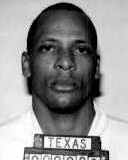
Elroy Chester
Spree killer Mark Barton
Spree killer · USA · 1999
Mark Orrin Barton (1955 – July 29, 1999) committed a spree killing in Stockbrid…
12 victims
Mark Barton
Spree killer · USA · 1999
Mark Orrin Barton (1955 – July 29, 1999) committed a spree killing in Stockbrid…
12 victims
 John Allen Muhammad
Spree killer · USA · 2002
John Allen Muhammad carried out the 2002 D.C. sniper attacks with his 17-year-o…
10 victims
John Allen Muhammad
Spree killer · USA · 2002
John Allen Muhammad carried out the 2002 D.C. sniper attacks with his 17-year-o…
10 victims
 Jeffrey Weise
Spree killer · USA · 2005
Jeffrey Weise, a 16-year-old student at Red Lake High School in Red Lake, an un…
9 victims
Jeffrey Weise
Spree killer · USA · 2005
Jeffrey Weise, a 16-year-old student at Red Lake High School in Red Lake, an un…
9 victims
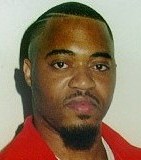 Christopher Dwayne Peterson
Spree killer · USA · 1990
Christopher Dwayne Peterson (born January 20, 1969, in Gary, Indiana, USA) was…
7 victims
Christopher Dwayne Peterson
Spree killer · USA · 1990
Christopher Dwayne Peterson (born January 20, 1969, in Gary, Indiana, USA) was…
7 victims
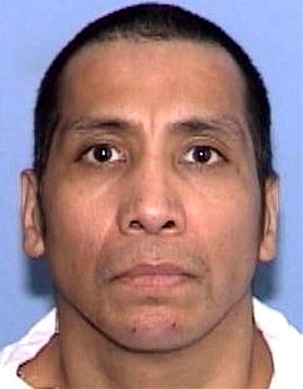 Luis Cervantes Salazar
Murderer · USA · 1997
Luis Cervantes Salazar was executed by lethal injection in Texas on March 11, 2…
1 victim
Luis Cervantes Salazar
Murderer · USA · 1997
Luis Cervantes Salazar was executed by lethal injection in Texas on March 11, 2…
1 victim
 Kenneth Eugene Bruce
Murderer · USA · 1990
Kenneth Eugene Bruce was convicted of capital murder in Texas and was executed…
1 victim
Kenneth Eugene Bruce
Murderer · USA · 1990
Kenneth Eugene Bruce was convicted of capital murder in Texas and was executed…
1 victim
 Jerome Butler
Murderer · USA · 1973
Jerome Butler was executed by lethal injection in Texas on April 21, 1990. · Ju…
2 victims
Jerome Butler
Murderer · USA · 1973
Jerome Butler was executed by lethal injection in Texas on April 21, 1990. · Ju…
2 victims
 Ervin Lupoe
Mass murderer · USA · 2009
Ervin Lupoe killed his wife, Ana Lupoe, and their five children, then killed hi…
6 victims
Ervin Lupoe
Mass murderer · USA · 2009
Ervin Lupoe killed his wife, Ana Lupoe, and their five children, then killed hi…
6 victims
- Gender
- male
- Country
- USA
- Location
- Jefferson County, Texas, USA
- Date of birth
- June 14, 1969
- Age at first offence
- 28
- Characteristics
- rape, robbery, drug addict, history of mental illness
- Victim profile
- John Henry Sepeda, 78 / Willie Ryman III / Albert Bolden,35 (his common-law brother-in-law) / Etta Mae Stallings, 87 / Cheryl DeLeon, 40
- Method of murder
- Shooting (.380 pistol)
- Date(s) of murder
- August 1997 - February 1998
- Years active
- 1997–1998
- Date of arrest
- February 8, 1998
- Status
-
Executed
Sentenced to death on September 26, 1998; executed by lethal injection in Texas on June 12, 2013
Background
Elroy Chester (TDCJ number 999280) was born on 6/14/1969 and was 29 at the time of the sentence received on 2/6/1998. He was described as Black male and had black hair. His height was 5 ft 10 in and his weight was 160. His eye colour was brown, and his native county was Jefferson County, in the state of Texas.
Chester had prior incarceration in Jefferson County and had been released multiple times before committing the offence that led to the death sentence.
Timeline
- 2/6/1998 — Chester broke into the residence of Kim Ryman Deleon in Port Arthur.
- 9/26/1998 — Chester was sentenced to death.
- 1/11/1994 — Chester was returned as a parole violator to Jefferson County.
- 2/13/1990 — Chester was released on parole to Jefferson County.
- 3/21/1997 — Chester was released on mandatory supervision to Jefferson County.
- 6/12/2013 — Chester was executed by lethal injection in Texas.
The offence
On February 6, 1998, in Port Arthur, Chester broke into the residence of Kim Ryman Deleon.
Chester raped Kim Ryman Deleon’s 14 year old and 16 year old daughters.
Willie Ryman III, the uncle to the girls, entered the home and was shot and killed by Chester. Chester took jewelry from the home and fled the scene.
Chester committed offences that were described as part of a six-month crime spree. Events around the Ryman, Deleon home were described as the culmination of a six-month spree during which Chester burglarized at least five residences, sexually assaulted two people, murdered at least five people, and fired shots at no fewer than five others.
Chester later confessed to other killings and attempted capital murders. The conduct described included burglaries, stalking, beatings, and shootings, alongside sexual assault.
Other offences Chester confessed to during the period described
Chester confessed to the burglary and homicide of John Henry Sepeda. He was described as being killed as he awoke in bed while Chester was robbing his home.
Chester confessed to the murder of Albert Bolden, described as his common-law brother-in-law. Chester stated reasons given to police for the motive included that Bolden had been beating his sister and/or that Bolden had set him up on a date with a woman who turned out to be a transvestite. The narrative also included Chester inviting Bolden to commit a burglary with him, taking him to a vacant home, directing him to walk through the door first, and shooting him in the back of the head.
Chester confessed to the burglary and homicide of Etta Mae Stallings. She was described as being shot to death in her bedroom while Chester robbed the home.
Chester confessed that he stalked Cheryl DeLeon, described as 40, then fatally beat her with his gun as she arrived home from work.
He also confessed to killing five people in southeastern Texas during the six-month crime spree. DNA evidence and ballistics testing were described as tying Chester to rapes and shootings.
Investigation
While in police custody, Chester confessed to the crime involving Willie Ryman III and also to other murders and attempted capital murders. Chester stated that he committed these offences because he was out his mind “with hate for white people” due to a disagreement with a white staff member over a disciplinary report during a previous TDCJ incarceration.
DNA evidence was described as tying Chester to the rapes, and ballistics tests were described as matching Chester’s gun to the slayings of Ryman and four others.
The narrative described that the gun was stolen in one of 25 burglaries in Port Arthur attributed to Chester.
Arrest and custody
After being asked to provide a blood sample, Chester told investigator Timothy Smith that he would take him to where the gun used in the crime was located.
Smith, two other investigators from the District Attorney’s office, and two local detectives accompanied Chester to his father’s house. Chester was wearing a jail jumpsuit and leg restraints attached by a chain to another chain around his waist, shackling his wrists to his waist such that his mobility was extremely limited.
Chester attempted to move ahead of the others. Smith admonished him that he would not be allowed to handle or touch the gun himself. Chester insisted that he needed to locate the gun personally because it was in a place that was difficult to reach. Chester assured the detective that the gun was unloaded and that he himself was the only one who could reach it.
Chester led the group to his bedroom, dragged a small nightstand directly underneath a hole in the ceiling, and began to climb on top of it. Chester was quickly told to stop. Reginald Rose climbed on top of the nightstand to look in the hole. Rose looked and reached inside the hole as directed by Chester but could not find the gun.
Chester then climbed on top of the same nightstand while Rose was standing and attempted to reach with his shackled hands in the opposite direction from where he had told Rose to look. Smith drew his gun and ordered Chester to stop moving. Chester was taken down and escorted to sit on a nearby couch. Smith then climbed on top of the nightstand himself, looked in the direction where Chester had attempted to reach, immediately saw the gun, and retrieved it. The gun was fully loaded.
Chester was described as having confessed to multiple murders and attempted capital murders while in custody.
Trial
Chester pleaded guilty to capital murder. Texas law required that a jury decide punishment in a case where death was possible.
At the punishment phase, the facts of the offence were described as undisputed. After hearing evidence of the offence and other evidence relevant to punishment issues, the jury returned findings that required the trial court to enter a sentence of death.
The jury deliberated 12 minutes before deciding Chester should be put to death.
Proceedings related to mental impairment claims
Chester’s attorneys argued that Chester was mentally retarded and should be spared a death sentence. Although investigators were described as agreeing that Chester had low-performing scores on some intellectual assessment examinations, a Jefferson County court opinion in 2007 addressed Chester’s adaptive functioning and the evidence of planning and execution.
Judge Edith Jones was referenced as having been in a 2-1 majority two years earlier that determined Chester was not mentally impaired and therefore eligible for execution. Chester’s attorneys argued Jones displayed bias after discussing the case during a February lecture on the death penalty at the University of Pennsylvania law school. Jones’ remarks in February were described as not recorded, but affidavits obtained by Chester’s attorneys backed an account of Jones’ reaction, including “outrage and incredulity” toward raising mental impairment claims in appeals. Attorney Susan Orlansky said the comments “infected” Jones’ judgment and called her impartiality into question.
Chester’s lawyers requested a reprieve to give new 5th Circuit judges time to study the allegations against Jones, and they did not contest guilt when taking the case to the Supreme Court.
A separate narrative described that the Texas Court of Criminal Appeals ruled that Chester was not mentally retarded and still faced execution after a hearing. It described discussion of whether Chester had deficits in adaptive behavior and referenced that the trial court, after an evidentiary hearing, ruled that mental retardation claims were not proved. The narrative also described Chester as having been on mandatory supervision when he committed the crime spree.
Facts described as showing planning and complex execution
The narrative described that the trial court found evidence insufficient to support the claim of mental retardation and found Chester capable of hiding facts and lying to protect his interests, including the episode with investigators to retrieve the gun.
The narrative also described that the specifics of the various crimes to which Chester confessed—use of masks and gloves, cutting exterior phone lines before entering homes to burglarize, and deliberate targeting of victims such as Cheryl DeLeon and Albert Bolden—showed persuasively that Chester was capable of forethought, planning, and complex execution of purpose.
Sentencing
Chester was sentenced to death on September 26, 1998.
After the jury returned findings requiring the trial court to enter a sentence of death, the sentence was carried out after multiple levels of appeal.
Appeals
The Supreme Court of the United States rejected Chester’s last-ditch plea to re-hear evidence related to his conviction and death sentence.
A narrative described the Texas Court of Criminal Appeals ruling that Chester was not mentally retarded and still faced execution, and said that his appeals would not keep him from lethal injection.
A narrative also described that federal appeals remained possible for Chester to try to keep him from lethal injection, but it also stated that he did not have an execution date at the time.
The record included discussion that in other similar cases, other condemned inmates were ruled mentally retarded and their sentences were reduced to life in prison.
Outcome
Chester was executed by lethal injection in Texas on June 12, 2013.
After 15 years, the outcome was described in reporting as a death sentence carried out. Chester said he did not want relatives of his victims to have “hate in your heart for me.” He also said:
“Don’t hate me. I’m sorry for taking your loved one,”
He said:
“Elroy Chester wasn’t a bad man, I don’t care what anybody says. A lot of people say I didn’t commit those murders. I really did it.”
Moments later, Chester told the warden to proceed with the execution and began humming what sounded like church hymn. He was pronounced dead at 7:04 p.m. CDT, 27 minutes after the lethal drug was administered.
Aftermath
Reporting after execution included statements from Barry Ryman, sister Kim Chiasson, and Port Arthur Police Chief Mark Blanton.
Barry Ryman said:
“After 15 years, it's a long time coming,”
and:
“It's not complete closure. Our brother's still not here. The other victims are not here.”
Kim Chiasson said:
“Justice has been done. It was carried out today,”
and:
“His reign of terror is over.”
Port Arthur Police Chief Mark Blanton said:
“In my 37 years as a policeman, I've never met a man so evil in my life,”
and:
“I will know he won't be able to prey on anybody ... or take somebody else's life.”
Chester was described as becoming the seventh convicted killer executed in Texas in that year and the 499th since Texas resumed carrying out capital punishment in 1982 after a hiatus. A separate individual, Kimberly McCarthy, was described as scheduled for execution on June 26.
Other details
Chester’s prior prison record in Jefferson County included:
- a 10 year sentence for 1 count of Burglary of a Building,
- a 13 year sentence from Jefferson County for 1 count of Burglary of a Habitation and 2 counts of Burglary of a Building,
- the 13 year sentence being served concurrently with the 10 year sentence,
- release on parole to Jefferson County on 2/13/1990,
- return as a parole violator on 1/11/1994,
- release on mandatory supervision to Jefferson County on 3/21/1997.
Chester’s prior occupation was described as a Texas laborer.
Chester was described as on probation at the time of the February 1998 killings and as having been arrested soon after.
A narrative described Chester as saying he confessed to killing Willie Ryman III because “you should know who killed your loved one.” It also described Chester as having taken several deep breaths, yawned, and began snoring as the lethal drug took effect.
A narrative included that Chester was described as now a Christian and provided interests from a profile listing for prison pen pals, including “music from the ’80s (rap and R&B) movies (drama, action and horror), basketball, checkers and dominoes.” It also included that he said he was “looking for a friend.”
The narrative included that Chester’s case involved allegations around Judge Edith Jones’ conduct and bias and that Chester’s attorneys sought a reprieve while new judges studied the allegations.
The narrative also described that Chester was held in the Polunsky Unit of the Texas Prison System in Livingston, Texas.
The narrative included that Chester was described as 44 at the time of execution.
Spotted an error, or have more information about this case?