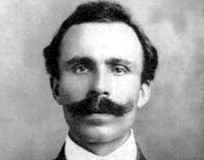
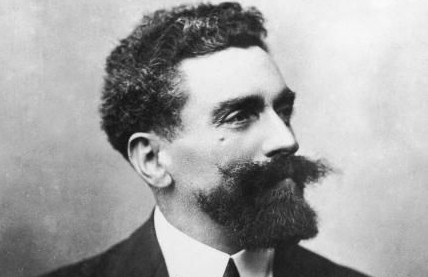
Bartolomeo Vanzetti
Murderer? Nicola Sacco
Murderer? · USA · 1920
Nicola Sacco Nicola Sacco and Bartolomeo Vanzetti were convicted of murdering t…
2 victims
Nicola Sacco
Murderer? · USA · 1920
Nicola Sacco Nicola Sacco and Bartolomeo Vanzetti were convicted of murdering t…
2 victims
 Leo Frank
Murderer? · USA · 1913
Leo Max Frank (April 17, 1884 – August 17, 1915) was an American man who became…
1 victim
Leo Frank
Murderer? · USA · 1913
Leo Max Frank (April 17, 1884 – August 17, 1915) was an American man who became…
1 victim
 Richard Allen Williams
Murderer? · USA · 1992
Boone County Prosecutor Kevin Crane dismissed the charges in August 2003 after…
10 victims
Richard Allen Williams
Murderer? · USA · 1992
Boone County Prosecutor Kevin Crane dismissed the charges in August 2003 after…
10 victims
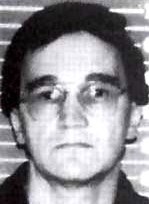 James DeBardeleben
Murderer? · USA · 1965
James DeBardeleben (James Mitchell “Mike” DeBardeleben), born March 20, 1940, w…
8 victims
James DeBardeleben
Murderer? · USA · 1965
James DeBardeleben (James Mitchell “Mike” DeBardeleben), born March 20, 1940, w…
8 victims
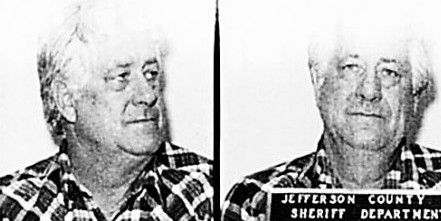 Thomas McCormick
Murderer? · USA · 1975
Thomas McCormick recruited homeless men from a Denver church mission to work on…
8 victims
Thomas McCormick
Murderer? · USA · 1975
Thomas McCormick recruited homeless men from a Denver church mission to work on…
8 victims
 Todd Warzecha
Murderer? · USA · 1972
Todd Warzecha was a prime suspect in two unsolved Mid-Michigan murders. Michiga…
6 victims
Todd Warzecha
Murderer? · USA · 1972
Todd Warzecha was a prime suspect in two unsolved Mid-Michigan murders. Michiga…
6 victims
 Kelly Ellard
Homicide · Canada · 1997
Kelly Ellard was a juvenile in the relevant period. She was born August 9, 1982…
1 victim
Kelly Ellard
Homicide · Canada · 1997
Kelly Ellard was a juvenile in the relevant period. She was born August 9, 1982…
1 victim
 Dorsie Leslie Jones
Murderer · USA · 1979
Dorsie Leslie Jones was an inmate on Oklahoma’s death row for the longest perio…
1 victim
Dorsie Leslie Jones
Murderer · USA · 1979
Dorsie Leslie Jones was an inmate on Oklahoma’s death row for the longest perio…
1 victim
 Harold McQueen
Murderer · USA · 1981
Harold McQueen, Jr. was executed by electrocution in Kentucky on July 1, 1997.…
1 victim
Harold McQueen
Murderer · USA · 1981
Harold McQueen, Jr. was executed by electrocution in Kentucky on July 1, 1997.…
1 victim
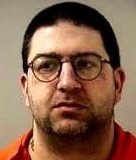 Adam Norcross
Murderer · USA · 1996
Adam W. Norcross (born 07/25/1970) was convicted of Murder 1st and was sentence…
1 victim
Adam Norcross
Murderer · USA · 1996
Adam W. Norcross (born 07/25/1970) was convicted of Murder 1st and was sentence…
1 victim
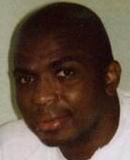 Charles Mamou
Murderer · USA · 1998
Name: Charles Mamou · TDCJ Number: 999333 · Date of birth: 12/06/1974 · Receive…
2 victims
Charles Mamou
Murderer · USA · 1998
Name: Charles Mamou · TDCJ Number: 999333 · Date of birth: 12/06/1974 · Receive…
2 victims
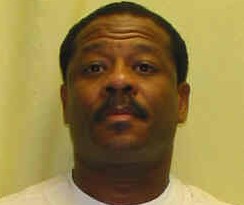 Jerome Henderson
Murderer · USA · 1985
Jerome Henderson was sentenced to death on August 5, 1985. The clemency report…
1 victim
Jerome Henderson
Murderer · USA · 1985
Jerome Henderson was sentenced to death on August 5, 1985. The clemency report…
1 victim
- Gender
- male
- Country
- USA
- Location
- South Braintree, Massachusetts , USA
- Date of birth
- June 11, 1888
- Age at first offence
- 32
- Characteristics
- anarchist
- Victim profile
- Frederick Parmenter, a paymaster, and Alessandro Berardelli, a security guard
- Method of murder
- Shooting
- Date(s) of murder
- April 15, 1920
- Years active
- 1920
- Date of arrest
- May 5, 1920
- Status
-
Executed
Executed by electrocution in Massachusetts on August 23, 1927
Case Overview
Bartolomeo Vanzetti (June 11, 1888–August 23, 1927) was an anarchist who was convicted of murdering two men during a 1920 armed robbery in South Braintree, Massachusetts. After a controversial trial and a series of appeals, Vanzetti was executed on August 23, 1927.
The case involved a highly politicized dispute over guilt or innocence and whether the trials were fair. The dispute focused on small details and contradictory evidence, and historians did not reach a consensus.
The offence
Vanzetti was accused, with Ferdinando Nicola Sacco, of the murders of Frederick Parmenter (a paymaster) and Alessandro Berardelli (a security guard) at the Slater-Morrill Shoe Company on Pearl Street in Braintree, Massachusetts during the afternoon of April 15, 1920.
Vanzetti was further charged with the theft of $15,776.73 from the company.
The authorities connected the Braintree robbery-murder with suspicions regarding local Italian anarchists, including activity related to the Galleanist anarchist movement. Police speculated that the robbers were motivated by the need to finance more bombings.
Vanzetti was also tried for an earlier matter: the attempted robbery and attempted murder in Bridgewater that occurred on Christmas Eve, December 24, 1919.
Investigation
Police suspicions regarding the Braintree robbery-murder and the earlier attempted robbery centered on local Italian anarchists. The authorities knew Sacco and Vanzetti as radical militants and adherents of Luigi Galleani.
Both Sacco and Vanzetti were arrested in Brockton, Massachusetts on May 5, 1920 after appearing at a garage to pick up a car that police believed was used in the robberies. Police found both men with pistols and anarchist literature. Vanzetti was carrying shotgun shells similar to those used in the holdups.
Arrest
On May 5, 1920, the police were alerted when Sacco, Vanzetti, and Riccardo Orciani arrived at a garage. The men sensed a trap and fled. Buda escaped on a motorcycle with Orciani.
Sacco and Vanzetti were tracked onto a streetcar and soon arrested.
Vanzetti claimed that the revolver he was carrying was for protection. To avoid deportation, the pair denied being allied with anarchists.
A postscript to the arrests occurred in 1926, when a bomb destroyed the house of Samuel Johnson, the brother of the Simon Johnson who had called police the night of Sacco and Vanzetti’s arrest.
Background
Sacco was a shoe-maker born in Torremaggiore, Foggia Province, Puglia Regione, Italy, who immigrated to the United States at the age of seventeen. Vanzetti was a fishmonger born in Villafalletto, Cuneo Province, Piemonte Region, Italy, who arrived in the United States at age twenty. Both men left Italy for the U.S. in 1908, though they did not meet until a 1917 strike.
Vanzetti and Sacco were followers of Luigi Galleani, an Italian anarchist who advocated revolutionary violence, including bombing and assassination. Galleani published Cronaca Sovversiva (Subversive Chronicle), a periodical that advocated violent revolution, and an explicit bomb-making manual called La Salute è in voi!.
Since 1914, Italian anarchists had been identified as suspects in violent bombings and assassination attempts, including an attempted mass poisoning. Publication of Cronaca Sovversiva was suppressed in July 1918, and the government deported Galleani and eight of his closest associates on June 24, 1919.
Remaining Galleanists either sought to avoid arrest by becoming inactive or going underground, or remained active. For three years, perhaps 60 Galleanists waged an intermittent campaign of violence against US politicians, judges, and other federal and local officials, especially those who had supported deportation of alien radicals.
Among the violent acts was the bombing of US Attorney General A. Mitchell Palmer’s home on June 2, 1919. In that incident, one Galleanist, Carlo Valdonoci, a former editor of Cronaca Sovversiva and an associate of Sacco and Vanzetti, was killed. The bomb intended for Attorney General Palmer exploded in Valdonoci’s hands.
Radical pamphlets entitled “Plain Words” signed “The Anarchist Fighters” were found at the scene of this and several other midnight bombings that night. Several Galleanist associates were suspected or interrogated about their roles in the bombing incidents.
Two days before Sacco and Vanzetti were arrested, a Galleanist named Andrea Salsedo fell to his death from the Justice Department’s Bureau of Investigation (BOI) offices on 15 Park Row in New York City. Salsedo worked in the Canzani Printshop in Brooklyn, where federal agents traced the “Plain Words” leaflet. People speculated on whether Salsedo committed suicide after interrogation by the Bureau of Investigation, or was pushed out of the window by the only other occupant in the locked room, Roberto Elia, a fellow Galleanist.
Roberto Elia was later deposed in the inquiry and testified that Salsedo had committed suicide for fear of betraying the others, portraying himself as the ‘strong’ one who had resisted. Another anarchist writer, Carlo Tresca, wrote that Elia changed his story later, stating that Federal agents had thrown Salsedo out the window.
The Galleanists realized that they would have to go underground and dispose of any incriminating evidence after their arrest. After their arrest, Sacco and Vanzetti were found to have correspondence with several Galleanists; one letter warned Sacco to destroy all mail after reading.
Timeline
- June 24, 1919 — The government deported Luigi Galleani and eight of his closest associates.
- June 2, 1919 — A bomb exploded at US Attorney General A. Mitchell Palmer’s home.
- December 24, 1919 — The attempted robbery and attempted murder in Bridgewater occurred on Christmas Eve.
- April 15, 1920 — The Braintree holdup and murders occurred during the afternoon of April 15, 1920.
- April 16, 1920 — The Federal Immigration Service called local police chief Michael E. Stewart to discuss Galleanist anarchist Ferruccio Coacci.
- April 18, 1920 — Coacci was deported.
- April 20, 1920 — Stewart returned to the Coacci residence and found “Mike Boda” renting the house.
- May 5, 1920 — Sacco, Vanzetti, and Riccardo Orciani were arrested in Brockton after police were alerted at the garage.
- June 22, 1920 — Vanzetti’s first trial began in Bridgewater.
- July 1, 1920 — The jury deliberated for five hours and returned guilty verdicts on both counts in the Bridgewater trial.
- August 16, 1920 — Vanzetti was sentenced for attempted robbery to a term of 12 to 15 years in prison.
- 1921 — A booby trap bomb mailed to the American ambassador in Paris exploded, wounding his valet.
- May 9, 1920 — The Sacco-Vanzetti Defense Committee was formed immediately following the arrests.
- 1923 — The defense filed an affidavit from a friend of the jury foreman; Thayer denied motions for a new trial on October 1, 1924.
- January 11–13, 1926 — The defense and prosecution presented arguments to the Supreme Judicial Court.
- May 12, 1926 — The Supreme Judicial Court returned a unanimous verdict upholding Judge Thayer’s decisions.
- November 1925 — Celestino Madeiros confessed to committing the Braintree crimes.
- May 26, 1926 — The defense filed a motion for a new trial based on the Madeiros confession.
- September 13–17, 1926 — Arguments were heard on the motion for a new trial.
- October 23, 1926 — Judge Thayer denied the motion for a new trial.
- January 27–28, 1927 — The defense appealed once more to the Supreme Judicial Court.
- April 5, 1927 — The Supreme Judicial Court denied the Madeiros appeal.
- April 9, 1927 — Judge Thayer heard final statements from Sacco and Vanzetti.
- July 10 — The executions were scheduled to begin during the week beginning July 10, with dates later postponed while the governor considered clemency requests.
- August 15, 1927 — A bomb exploded at the home of one of the Dedham jurors.
- August 21, 1927 — More than 20,000 protesters assembled on Boston Common.
- August 23, 1927 — Sacco and Vanzetti were executed by electrocution in Massachusetts.
Trial
First trial (Bridgewater)
Only Vanzetti was tried for the attempted robbery and attempted murder in Bridgewater, which occurred on Christmas Eve, December 24, 1919.
Advocates for Sacco and Vanzetti charged that the case was brought first because evidence against Vanzetti in the Braintree robbery was weak and a conviction for the Bridgewater crimes would help convict him for the Braintree crimes. The prosecution countered that the timing was driven by schedules of different courts.
Vanzetti chose representation by John P. Vahey, an experienced defense attorney, rather than court-appointed counsel.
Frederick Katzmann, Norfolk and Plymouth County District Attorney, prosecuted the case. The presiding judge was Webster Thayer, already assigned to the court before this case was scheduled. The trial began on June 22, 1920.
The prosecution presented several witnesses who put Vanzetti at the scene of the attempted robbery. Their descriptions varied, including descriptions of Vanzetti’s mustache. Physical evidence included a shotgun shell retrieved at the scene and several shells found on Vanzetti when he was arrested.
The defense produced sixteen witnesses, all Italians from Plymouth, who testified that they bought eels for the Christmas holiday from him in accordance with their Christmas traditions.
Cross examination allowed the prosecution to make witnesses appear confused about dates. A boy who testified admitted rehearsing his testimony. The prosecutor asked: “You learned it just like a piece at school?” The boy replied: “Sure”.
The defense tried to rebut the eyewitnesses with testimony that Vanzetti always wore his mustache in a distinctive long style, but the prosecution rebutted their testimony.
Vanzetti did not testify in his own defense. In 1927, Vanzetti said that his lawyers opposed putting him on the stand. The same year, Vahey told the governor that Vanzetti had refused his advice to testify. Another lawyer who assisted Vahey later said that the defense attorneys left the choice to Vanzetti but warned that it would be difficult to prevent the prosecution from using cross examination to impeach his character based on political beliefs, and that Vanzetti chose not to testify after consulting with Sacco. Herbert Ehrmann wrote later that the dangers of putting Vanzetti on the stand were very real. Another legal analysis concluded that the defense would have little to lose from Vanzetti’s testimony because his conviction looked certain given how poorly his alibi witnesses had performed under cross. The same analysis deemed the defense overall “unconvincing” and “not closely argued or vigorously fought.”
On July 1, 1920, the jury deliberated for five hours and returned guilty verdicts on both counts, attempted robbery and attempted murder.
Before sentencing, Thayer learned that during deliberations the jury had tampered with the shells found on Vanzetti at the time of his arrest to determine if the shot they contained was of sufficient size to kill a man. Since that prejudiced the jury’s verdict on the attempted murder charge, Thayer ignored that conviction.
On August 16, 1920, Thayer sentenced Vanzetti for attempted robbery to a term of 12 to 15 years in prison, the maximum sentence allowed.
An assessment of Thayer’s conduct of the trial said: “his stupid rulings as to the admissibility of conversations are about equally divided” between the two sides and provided no evidence of partiality.
The defense raised only minor objections in an appeal that was not accepted.
A few years later, Vahey joined Katzmann’s law firm.
Second trial (Dedham) — Braintree robbery and murders
Sacco and Vanzetti were tried in Dedham, Massachusetts for the South Braintree robbery and murders, with Webster Thayer again presiding. He had asked to be assigned the trial.
Authorities outfitted the Dedham courtroom with cast-iron shutters painted to appear wooden and heavy, sliding steel doors. Each day during the trial, Sacco and Vanzetti were escorted in and out under a heavy armed guard.
Vanzetti testified that he had been selling fish at the time of the Braintree robbery.
Sacco testified that he had been in Boston applying for a passport at the Italian consulate. He stated he had lunched in Boston’s North End with several friends, each of whom testified on his behalf. Prior to trial, Sacco’s lawyer, Fred Moore, contacted the consulate employee Sacco said he had spoken with. Once contacted in Italy, the clerk said he remembered Sacco because of an unusually large passport photo and remembered the date, April 15, 1920, but refused to return to America to testify, citing ill health. Instead, the clerk executed a sworn deposition that was read aloud in court and questioned by the prosecution, which argued Sacco’s visit could not be established with certainty.
The prosecution established that Sacco’s lunch companions were fellow anarchists.
Material evidence and disputes Much of the trial focused on material evidence including bullets, guns, and a cap.
Prosecution witnesses testified that the .32-caliber bullet that killed Berardelli was of a brand so obsolete that only bullets similar to it could be located to make comparisons were those in Sacco’s pockets. Ballistics evidence was presented in exhaustive detail, and was described as equivocal.
Prosecutor Frederick Katzmann initially promised he would not try to link any fatal bullet with Sacco’s gun, but changed his mind after the defense arranged test firings of the gun. Sacco allowed his gun to be test-fired with experts for both sides present during the trial’s second week.
The prosecution matched bullets fired through the gun to those taken from one of the slain guards. In court, two prosecution experts swore that one fatal bullet, labeled Bullet III, matched one of the test-fired bullets. Two defense experts said the bullet did not match.
Years later, defense lawyers suggested that the fatal bullet had been substituted by the prosecution.
Witnesses had described seeing one gunman pump bullets into Berardelli. The defense questioned how only one of four bullets found in the deceased could have come from Sacco’s gun.
Doubt also surrounded Vanzetti’s gun. All bullets found at the scene were .32 caliber, while Vanzetti’s gun was .38 caliber, so there was no direct evidence tying Vanzetti’s gun to the crime scene. The prosecution claimed Vanzetti’s gun originally belonged to the slain guard and that it was stolen during the robbery. No one testified to seeing anyone take the gun, and the guard had no gun when found dead while carrying $15,776.51 in cash. The prosecution traced the gun to a Boston repair shop where the guard had dropped it off a few weeks before the murder. The defense raised doubts that the repair shop had no record of the gun being picked up and noted that the guard’s widow told a friend he might not have been killed had he claimed his gun. The jury believed this link.
The prosecution’s final piece of material evidence was a flop-eared cap claimed to have been Sacco’s. Sacco tried the cap on in court and, according to two newspaper sketch artists who ran cartoons the next day, it was too small, sitting high on his head. Katzmann insisted the cap fitted Sacco and continued to refer to it as his.
Witness identification disputes The trial included controversy about witnesses who identified Sacco at the scene. Mary Splaine, a bookkeeper, precisely described Sacco as the man she saw firing from the getaway car. During cross examination, Splaine said she had refused to identify Sacco at the inquest and that she saw the getaway car for only a second from nearly a half-block away.
Other witnesses, including both prosecution and defense witnesses, refused to identify Sacco or Vanzetti as the men they had seen at the scene.
Jury deliberations and verdicts After deliberating for three hours and then breaking for dinner, the jury returned guilty verdicts.
Supporters later insisted Sacco and Vanzetti had been convicted for their anarchist views, but each juror insisted anarchism played no part in their decision.
First degree murder in Massachusetts was a capital crime. Sacco and Vanzetti were therefore bound for the electric chair unless new evidence was found.
International opinion The verdicts and the likelihood of death sentences roused international opinion. Demonstrations occurred in 60 Italian cities and there was a flood of mail to the American embassy in Paris, with demonstrations in Latin American cities as well.
Anatole France wrote an “Appeal to the American People”: “The death of Sacco and Vanzetti will make martyrs of them and cover you with shame. You are a great people. You ought to be a just people.”
Defense and advocacy
Sacco-Vanzetti Defense Committee
The Sacco-Vanzetti Defense Committee was formed on May 9, 1920 immediately following the arrests by a group of fellow anarchists headed by Vanzetti’s 23-year-old friend Aldino Felicani.
Over the next seven years, the committee raised $300,000. Fred Moore drew on its funds for investigations, though differences arose when Moore tried to determine who had committed the South Braintree crimes over objections from anarchists that he was doing the government’s work.
After the committee hired William G. Thomson to manage the legal defense, he objected to propaganda efforts. A Defense Committee publicist wrote an article about the first trial that appeared in The New Republic. In the winter of 1920–21, the committee sent stories to labor union publications every week and produced pamphlets with titles like Fangs at Labor’s Throat, sometimes printing thousands of copies. It sent speakers to Italian communities in factory towns and mining camps.
The committee later added staff from outside the anarchist movement, notably Mary Donovan, a 40-year-old with experience as a labor leader and Sinn Fein organizer. The prosecution infiltrated its ranks to gather information. In 1927, Mary Donovan and Felicani recruited Gardner Jackson, a Boston Globe reporter from a wealthy family, to manage publicity and serve as a mediator between committee anarchists and growing numbers of supporters with more liberal political views, socialites, lawyers, and intellectuals.
Sacco thanked Gardner Jackson a few weeks before his execution. The statement Sacco made was: “We are one heart, but unfortunately we represent two different class....But, whenever the heart of one of the upper class join with the exploited workers for the struggle of the right in the human feeling is the feel of an spontaneous attraction and brotherly love to one another.”
John Dos Passos joined the committee and wrote its 127-page official review of the case, Facing the Chair: Story of Americanization of Two Foreignborn Workmen.
After the executions, the committee continued its work, helping to gather material that appeared as The Letters of Sacco and Vanzetti.
Motions for a new trial and appeal history
Three key prosecution witnesses stated they had been coerced into identifying Sacco at the scene of the crime, but denied coercion when confronted by District Attorney Katzmann.
One witness, Lola Andrews, a nurse, told authorities she was forced to sign an affidavit stating she had wrongfully identified Sacco and Vanzetti, and she signed a counter-affidavit the following day.
Another witness, Lewis Pelser, described alleged prosecutorial coercion while drunk and signed a counter-affidavit shortly thereafter.
In 1924, controversy continued when it was discovered that someone had switched the barrel of Sacco’s gun with that of another Colt automatic used for comparison.
Other appeals focused on the jury foreman and a prosecution ballistics expert.
In 1923, the defense filed an affidavit from a friend of the jury foreman who said that before the trial the man had said of Sacco and Vanzetti: “Damn them, they ought to hang them anyway!”
That same year, a state police captain, Captain William Proctor, retracted trial testimony linking Sacco’s gun to the fatal bullet. Captain Proctor said he never meant to imply the connection and had repeatedly told Katzmann there was no such connection, but that the prosecution crafted trial questioning to disguise his true assessment.
Thayer denied motions for a new trial on October 1, 1924.
Appeal to the Supreme Judicial Court The defense appealed the denial to the Supreme Judicial Court (SJC), and both sides argued on January 11–13, 1926. The SJC returned a unanimous verdict upholding Thayer’s decisions on May 12, 1926. The Court said it lacked authority to review the trial record as a whole or judge fairness, and instead considered only whether Thayer abused his discretion in the course of the trial.
Madeiros confession and subsequent motion In November 1925, Celestino Madeiros, an ex-convict awaiting trial for murder, confessed to committing the Braintree crimes and absolved Sacco and Vanzetti of participation.
In May, after the SJC denied their appeal and Madeiros was convicted, the defense investigated Madeiros’ story. Police interviews led them to the Morelli gang based in Providence, Rhode Island. The defense developed an alternative theory based on the gang’s history of shoe-factory robberies, connections to a car like that used in Braintree, and other details. Gang leader Joe Morelli resembled Sacco.
The defense filed a motion for a new trial based on the Madeiros confession on May 26, 1926, including 64 affidavits. The prosecution countered with 26 affidavits.
On September 13–17, 1926, the defense and its Madeiros-Morelli theory charged that the US Justice Department aided the prosecution by withholding information from its own investigation. Attorney William Thompson made an explicitly political attack: “A government which has come to value its own secrets more than it does the lives of its citizens has become a tyranny, whether you call it a republic, a monarchy, or anything else!”
Judge Thayer denied the motion on October 23, 1926. In addressing the defense claims about the federal government, Thayer said the defense suffered from “a new type of disease,...a belief in the existence of something which in fact and truth has no such existence.”
Three days later, the Boston Herald responded by reversing its longstanding position and calling for a new trial. Its editorial was titled “We Submit” and won its author a Pulitzer Prize.
Second appeal to the Supreme Judicial Court The defense appealed again, presenting arguments on January 27–28, 1927. While the appeal was pending, Felix Frankfurter published an article in The Atlantic Monthly arguing for a retrial. He noted the SJC had taken a narrow view of its authority in the first appeal and called on the court to review the entire record. Frankfurter described Thayer’s lengthy statement accompanying denial of the Madeiros appeal as: “a farrago of misquotations, misrepresentations, suppressions, and mutilations,” and “honeycombed with demonstrable errors.”
The SJC denied the Madeiros appeal on April 5, 1927.
Protests and advocacy Many socialists and intellectuals campaigned for a retrial without success. John Dos Passos covered the case and stayed to author a pamphlet titled Facing the Chair. Dos Passos was arrested in a demonstration on August 10, 1927, along with Dorothy Parker.
Edna St. Vincent Millay pleaded to the governor in person after being arrested while picketing the State House and then wrote an appeal: “I cry to you with a million voices: answer our doubt...There is need in Massachusetts of a great man tonight.”
Others who wrote to Fuller or signed petitions included Albert Einstein, George Bernard Shaw, and H. G. Wells.
The president of the American Federation of Labor cited the long period between the commission of the crime and the final decision, and the mental and physical anguish for Sacco and Vanzetti, in a telegram to the governor.
Benito Mussolini made inquiries through diplomatic channels and was prepared to ask Governor Fuller to commute the sentences if a request would be granted.
Sentencing
On April 9, 1927, Judge Thayer heard final statements from Sacco and Vanzetti.
Vanzetti delivered a lengthy speech: “I would not wish to a dog or to a snake, to the most low and misfortunate creature of the earth–I would not wish to any of them what I have had to suffer for things that I am not guilty of. But my conviction is that I have suffered for things that I am guilty of. I am suffering because I am a radical and indeed I am a radical; I have suffered because I am an Italian and indeed I am an Italian...if you could execute me two times, and if I could be reborn two other times, I would live again to do what I have done already.”
Thayer declared that responsibility for the conviction rested with the jury: “The Court has absolutely nothing to do with that question.”
Thayer sentenced each of them to “suffer the punishment of death by the passage of a current of electricity through your body” during the week beginning July 10. He postponed the execution date twice while the governor considered clemency requests.
On May 10, a package bomb addressed to Governor Fuller was intercepted in the Boston post office.
Governor’s Advisory Committee
Massachusetts Governor Alvan T. Fuller faced last-minute appeals to grant clemency. On June 1, 1927, he appointed an Advisory Committee of three: President Abbott Lawrence Lowell of Harvard, President Samuel Wesley Stratton of MIT, and Probate Judge Robert Grant. The committee reviewed the trial to determine whether it had been fair.
The defense considered resigning when they determined the committee was biased against the defendants, but prominent supporters including Felix Frankfurter and Judge Julian W. Mack persuaded them to stay because Lowell “was not entirely hopeless.”
One defense attorney said in criticism that no member had “the essential sophistication that comes with experience in the trial of criminal cases,” and that their high positions obscured they were “not really qualified” for the task.
The committee used Thayer’s comments outside the courtroom to demonstrate bias because the governor’s committee was not a judicial proceeding. Thayer told reporters: “No long-haired anarchist from California can run this court!” According to sworn affidavits of eyewitnesses, Thayer also lectured members of his clubs, calling Sacco and Vanzetti “Bolsheviki!” and saying he would “get them good and proper”.
In 1924, Thayer confronted a Massachusetts lawyer at Dartmouth, his alma mater, and said: “Did you see what I did with those anarchistic bastards the other day. I guess that will hold them for a while.... Let them go to the Supreme Court now and see what they can get out of them.”
Boston Globe reporter Frank Sibley wrote a protest to the Massachusetts attorney general condemning Thayer’s bias.
After two weeks of hearing witnesses and reviewing evidence, the committee determined the trial had been fair and a new trial was not warranted. It criticized Thayer using words provided by Judge Grant: “He ought not to have talked about the case off the bench, and doing so was a grave breach of judicial decorum.”
The committee also found some charges about his statements unbelievable or exaggerated, and found that anything he might have said had no impact on the trial. It reported that the panel’s reading of the trial transcript convinced them that Thayer “tried to be scrupulously fair.” The committee stated that the trial jurors were almost unanimous in praising Thayer’s conduct. A defense attorney later noted that the release of the committee’s report “abruptly stilled the burgeoning doubts among the leaders of opinion in New England.”
Supporters of the convicted men denounced the committee. Harold Laski said the decision represented Lowell’s “loyalty to his class.”
Execution and final statements
On August 15, 1927, with executions scheduled for midnight on the 22nd, a bomb exploded at the home of one of the Dedham jurors. On Sunday, August 21, more than 20,000 protesters assembled on Boston Common.
In their cells at Charlestown State Prison, both Sacco and Vanzetti refused a priest several times on their last day.
Their attorney William Thomson asked Vanzetti to make a statement opposing violent retaliation for his death, and they discussed forgiving one’s enemies.
Celestino Madeiros, whose execution had been delayed, was executed first. Sacco was next and went quietly to the electric chair, then shouted “Viva l’anarchia!” and “Farewell, mia madre.”
Vanzetti, in his final moments, shook hands with guards and thanked them for their kind treatment. He read a statement proclaiming his innocence and finally said: “I wish to forgive some people for what they are now doing to me.”
All three executions were carried out by Robert G. Elliott, the “state electrician”.
Aftermath
Violent demonstrations swept through many cities the next day, including Geneva, London, Paris, Amsterdam, and Tokyo. In South America, wildcat strikes closed factories. Three died in Germany, and protesters in Johannesburg burned an American flag outside the American embassy.
At the funeral parlor in Boston’s North End, more than 10,000 mourners viewed Sacco and Vanzetti in open caskets over two days. A wreath over the caskets announced “Aspettando l’ora di vendetta (Awaiting the hour of vengeance).” On Sunday, August 28, a two-hour funeral procession bearing huge floral tributes moved through the city. Police blocked the route, which passed the State House, and at one point mourners and the police clashed. The hearses reached Forest Hills Cemetery where, after a brief eulogy, the bodies were cremated.
The Boston Globe called it “one of the most tremendous funerals of modern times.” Will H. Hays ordered all film of the funeral procession destroyed.
Sacco’s ashes were in Torremaggiore, the town of his birth, at the base of a monument erected in 1998. Vanzetti’s ashes were buried with his mother in Villafalletto.
Continuing protests and analyses After the executions, Sacco’s widow thanked Italian anarchist Severino Di Giovanni by letter for his support and added that the director of the tobacco firm Combinados had offered to produce a cigarette brand named “Sacco & Vanzetti”. On November 26, 1927, Di Giovanni and his comrades bombed a Combinados tobacco shop shortly afterwards. Di Giovanni bombed the American embassy in Buenos Aires a few hours after Sacco and Vanzetti were condemned to death. On December 24, 1927, Di Giovanni blew up the headquarters of the Citibank and of the Bank of Boston in Buenos Aires in apparent protest of the execution. In December 1928, Di Giovanni and his comrades failed in an attempt to bomb the train in which President Herbert Hoover traveled during his visit to Argentina. Three months later, bombs exploded in the New York subway, in a Philadelphia church, and at the home of the mayor of Baltimore. One juror in the Dedham trial had his house bombed, throwing him and his family from their beds. Less than a year after the executions, a bomb destroyed the front porch of executioner Robert Elliott’s home. As late as 1932, Judge Thayer’s home was wrecked and his wife and housekeeper were injured in a bomb blast. Thayer lived permanently at his club in Boston, guarded 24 hours a day until his death.
In the fall of 1928, Upton Sinclair published the novel Boston, which focused on Vanzetti’s life and writings and indicted the American judicial system while mixing fictional characters with actual participants. Sinclair’s portrait of Vanzetti was sympathetic, but he did not absolve Sacco and Vanzetti of the crimes, arguing instead that their trial was unjust. Sinclair wrote: “Some of the things I told displeased the fanatical believers; but having portrayed the aristocrats as they were, I had to do the same thing for the anarchists.”
After the letters appeared in 1928, journalist Walter Lippmann commented: “If Sacco and Vanzetti were professional bandits, then historians and biographers who attempt to deduce character from personal documents might as well shut up shop. By every test that I know of for judging character, these are the letters of innocent men.”
On January 3, 1929, as Gov. Fuller left the inauguration of his successor, Fuller found a copy of the Letters thrust at him by someone in the crowd and knocked it to the ground “with an exclamation of contempt.”
Massachusetts judicial reform Following the SJC’s assertion that it could not order a new trial even if there was new evidence that “would justify a different verdict,” a movement for “drastic reform” took shape. In December 1927, the Massachusetts Judicial Council cited the Sacco and Vanzetti case as evidence of “serious defects in our methods of administering justice,” proposing changes including restrictions on appeals and expanding SJC authority to order a new trial “upon any ground if the interests of justice appear to inquire it.” Governor Fuller endorsed the proposal in his January 1928 annual message, and the Judicial Council repeated recommendations in 1937 and 1938. In 1939, language was adopted granting the SJC authority to consider an entire case on the law and on the evidence or “for any other reason that justice may require” (Mass laws, 1939 c 341).
Historical viewpoints Some historians concluded that the prosecution, trial, and aftermath disregarded political civil liberties and noted Thayer’s decision to deny a retrial. Some critics felt anti-Italian prejudice and prejudice against immigrants influenced authorities and jurors. Others argued that both men were known anarchist members of a militant organization that had carried out bombings and attempted assassinations condemned by the Italian-American community and Americans of all backgrounds. Historians reported the Bureau of Investigation noted that anarchist groups did not generally finance militant activities through bank robberies, but an exception applied to the Galleanist group as Mario Buda admitted in an interviewer quote: “Andavamo a prenderli dove c’erano” (“We used to go and get it [money] where it was”) — meaning factories and banks.
Most historians believed Sacco and Vanzetti were involved at some level in the Galleanist bombing campaign, though their precise roles were not determined.
Later investigations and claims In 1941, anarchist leader Carlo Tresca told Max Eastman: “Sacco was guilty but Vanzetti was innocent”. The statement was later published elsewhere after The Nation and The New Republic refused to publish Eastman’s revelation.
Labor organizer Anthony Ramuglia said in 1952 that a Boston anarchist group asked him to be a false alibi witness for Sacco. Ramuglia agreed, but recalled he had been in jail on the day in question, so he could not testify.
Both men previously fled to Mexico, changing their names to evade draft registration, and the prosecutor in the murder trial used this to demonstrate lack of patriotism, which they were not allowed to rebut.
In October 1961, ballistic tests were run with improved technology using Sacco’s Colt automatic. The results confirmed the bullet that killed Berardelli in 1920 was fired from Sacco’s pistol. Subsequent investigations in 1983 supported this finding.
In 1988, Charlie Whipple revealed a conversation he had with Sergeant Edward J. Seibolt in 1937. Whipple said Seibolt told him that the police ballistics experts had switched the murder weapon, while Seibolt indicated he would deny this if Whipple printed it.
Critics of the prosecution’s evidence noted anomalies in witness statements. One witness said: “He shot at Berardelli probably four or five times,” “He stood guard over him.”
The defense raised suggestions in 1927 that the fatal bullet had been planted, calling attention to awkward scratches on the base of the bullet that differed from those on other bullets. The Lowell Commission dismissed this claim as desperate, but in 1985 historians William Kaiser and David Young made a case for a switch in their book Postmortem: New Evidence in the Case of Sacco and Vanzetti.
In 1973, a former mobster published a confession by Frank “Butsy” Morelli, Joe’s brother. Morelli said: “We whacked them out, we killed those guys in the robbery,”
Before his death in June 1982, Giovanni Gambera told his son that “everyone [in the anarchist inner circle] knew that Sacco was guilty and that Vanzetti was innocent as far as the actual participation in killing.”
Memorialization and later proclamations
In 1977, Massachusetts Governor Michael Dukakis asked for a report on whether there were substantial grounds to believe that Sacco and Vanzetti were unfairly convicted and executed based on legal standards of today. Dukakis issued a proclamation declaring August 23, 1977, the 50th anniversary of their execution, as Nicola Sacco and Bartolomeo Vanzetti Memorial Day. The proclamation stated that Sacco and Vanzetti had been unfairly tried and convicted and that “any disgrace should be forever removed from their names.” Dukakis did not pardon them and did not assert their innocence. A resolution to censure the Governor failed in the Massachusetts Senate by a vote of 23 to 12.
On August 23, 1997, on the 70th anniversary of the executions, Boston Mayor Thomas Menino and Italian-American Governor of Massachusetts Paul Cellucci unveiled a memorial work at the Boston Public Library. Menino said: “The city’s acceptance of this piece of artwork is not intended to reopen debate about the guilt or innocence of Sacco and Vanzetti,” “It is intended to remind us of the dangers of miscarried justice, and the right we all have to a fair trial.”
Spotted an error, or have more information about this case?