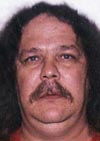
Harold McQueen
Murderer Ervil LeBaron
Murderer · USA · 1972
Ervil Morrell LeBaron (1925 to August 16, 1981) was the leader of a polygamous…
35 victims
Ervil LeBaron
Murderer · USA · 1972
Ervil Morrell LeBaron (1925 to August 16, 1981) was the leader of a polygamous…
35 victims
 Brian Kevin Rosenfeld
Murderer · USA · 1985
Brian Kevin Rosenfeld Brian Kevin Rosenfeld was sentenced to three concurrent l…
23 victims
Brian Kevin Rosenfeld
Murderer · USA · 1985
Brian Kevin Rosenfeld Brian Kevin Rosenfeld was sentenced to three concurrent l…
23 victims
 Marvin Gray
Murderer · USA · 1975
Marvin Gray was convicted killer who claimed responsibility for 23 slayings and…
23 victims
Marvin Gray
Murderer · USA · 1975
Marvin Gray was convicted killer who claimed responsibility for 23 slayings and…
23 victims
 Yahweh ben Yahweh
Murderer · USA · 1980
Yahweh ben Yahweh was born and legally named Hulon Mitchell Jr. (October 27, 19…
23 victims
Yahweh ben Yahweh
Murderer · USA · 1980
Yahweh ben Yahweh was born and legally named Hulon Mitchell Jr. (October 27, 19…
23 victims
 Russell Ellwood
Murderer · USA · 1991
Russell Ellwood was a former taxi driver. Authorities suspected him of killing…
20 victims
Russell Ellwood
Murderer · USA · 1991
Russell Ellwood was a former taxi driver. Authorities suspected him of killing…
20 victims
 John Joubert
Serial killer · USA · 1982
John Joubert John Joubert entered guilty pleas to two counts of first-degree mu…
3 victims
John Joubert
Serial killer · USA · 1982
John Joubert John Joubert entered guilty pleas to two counts of first-degree mu…
3 victims
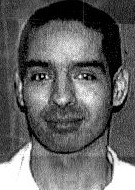 Juan Rodriguez Chavez
Murderer · USA · 1985
Juan Rodriguez Chavez was convicted in Dallas County, Texas, of capital murder…
12 victims
Juan Rodriguez Chavez
Murderer · USA · 1985
Juan Rodriguez Chavez was convicted in Dallas County, Texas, of capital murder…
12 victims
 Kelly Ryan
Murderer · USA · 2005
Kelly Ryan (born July 10, 1972 in Minneapolis, Minnesota) was a former Internat…
1 victim
Kelly Ryan
Murderer · USA · 2005
Kelly Ryan (born July 10, 1972 in Minneapolis, Minnesota) was a former Internat…
1 victim
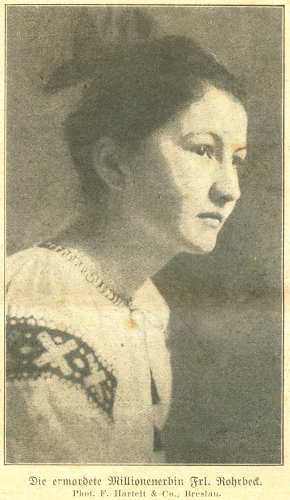 Peter Grupen
Murderer · Germany · 1921
Peter Grupen was Ursula Schade’s stepfather and Dorothea Rohrbeck’s step uncle.…
2 victims
Peter Grupen
Murderer · Germany · 1921
Peter Grupen was Ursula Schade’s stepfather and Dorothea Rohrbeck’s step uncle.…
2 victims
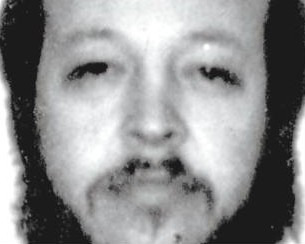 Lem Tuggle
Murderer · USA · 1971
Lem Tuggle was executed by lethal injection in Virginia on December 12, 1996. L…
2 victims
Lem Tuggle
Murderer · USA · 1971
Lem Tuggle was executed by lethal injection in Virginia on December 12, 1996. L…
2 victims
- Gender
- male
- Country
- USA
- Location
- Richmond, Kentucky, USA
- Date of birth
- July 25, 1952
- Age at first offence
- 29
- Characteristics
- robbery, drugs, alcohol
- Victim profile
- Rebecca O'Hearn, 22 (store clerk)
- Method of murder
- Shooting (.22-caliber pistol)
- Date(s) of murder
- January 17, 1981
- Years active
- 1981
- Date of arrest
- —
- Status
-
Executed
Executed by electrocution in Kentucky on July 1, 1997
Case record: Harold McQueen
Background
Harold McQueen, Jr. was executed by electrocution in Kentucky on July 1, 1997. He was also described as 44 years old, with a birthday listed as July 25, 1952.
Harold McQueen was convicted of killing Rebecca O'Hearn, a 22-year-old store clerk, during a robbery. The execution was described as Kentucky’s first person executed in the state after the reinstatement of capital punishment in the United States in 1976, and as the first execution in Kentucky since 1962.
During his execution, smoke was seen rising from the electrodes placed on his right ankle. He was declared dead eight minutes after the execution had begun. A physician’s assistant unstrapped McQueen’s right arm and checked for a pulse at 12:11 a.m.; he was pronounced dead at 12:15 a.m. The official announcement was made five minutes later.
Harold McQueen’s last words to his spiritual adviser were: "I love you, Father". He also spoke an apology before his execution. The statements included: "I just want to apologize one more time to the O'Hearns," followed by "I'd also like to apologize to my family. They're victims as well, in a way. Thanks to everyone who sent me cards, letters and prayers. And to everyone who sent me that, tell them to keep fighting the death penalty."
A spiritual adviser named Paul Stevens was present, and an archbishop and a bishop had asked the governor to commute his death sentence to life in prison without parole earlier, according to the account.
In the period leading to the execution, supporters described McQueen as a devout Catholic while on death row and as having been rehabilitated. The record also included multiple assertions about his conduct and participation in prison activities during his time on death row, including work as a janitor, participation in grievance committee matters, and counseling of other prisoners and juvenile offenders.
People
- Harold McQueen (defendant; also referred to as Harold McQueen, Jr.): charged, convicted, sentenced to death, and executed by electrocution.
- Linda Rose (girlfriend; not charged in the robbery and capital murder trial; testified against Harold): described as remaining in the car during the robbery.
- William Burnell (half-brother; accomplice in the robbery and capital murder trial): sentenced to two 28 year terms; paroled in 1988; described as carrying a bag containing the store’s surveillance camera.
- Rebecca O'Hearn (victim; 22-year-old clerk): shot during the robbery and later found dead; described as discovered slumped forward with hands over her face behind the counter and shot at close distance and in the back of her head.
- Keith Burnell (half-brother): described as participating in the robbery; also referred to as "Keith Burnell" in the narrative.
- Charles O'Hearn (victim’s father): asked to be a witness to the execution; request turned down.
- Paul Stevens (spiritual adviser to McQueen): delivered a short prayer and was addressed by McQueen.
- Michael Bradley (spokesman for the state Department of Corrections): quoted announcing that the execution carried out the sentence of death.
- Michael Collins (journalist): associated with a Kentucky Post account that included quotations.
- Ted Bridis (AP correspondent): referenced as reporting.
- Barry Banister (spokesman for the prison): quoted about security precautions.
- Barry Banister and additional prison security personnel names were included in the account, including those responsible for patrols and state police.
- Phillip Payne (21-year-old cashier): described as winning a contest to witness the execution and involved in a separate limo incident.
- Roxie Rusher (fiancée of Phillip Payne): described as traveling with Payne.
- David W. Luckett (limo driver, 29): described as being handcuffed and charged with possession and other counts after marijuana was spotted.
- Wesley Masters (night-shift worker at the store at a later time): quoted recalling O'Hearn.
- William Teater (person who recalled O'Hearn as friendly): quoted about the day of the shooting and later described in the AP-associated account.
- Jane Chiles (Catholic Conference executive director): quoted about the message of the videotape.
- John Mallery (substance abuse treatment supervisor for Catholic Social Services of Northern Kentucky): quoted about the message.
- Karl Keys (individual who wrote about McQueen): quoted in a personal postscript.
Timeline
- January 17, 1980 — Rebecca O'Hearn was shot during an armed robbery at a Minit Mart convenience store in Richmond; McQueen, his half-brother, and Linda Rose drove to rob the store.
- April 1981 — McQueen was sentenced to death for the murder of Rebecca O'Hearn.
- 1984 — A death warrant was signed for McQueen by Governor Martha Layne Collins; it expired because he had not yet exhausted all stages of his court appeals.
- 1985 — A state post-conviction hearing included testimony by McQueen’s defense attorney.
- June 2, 1997 — McQueen’s Petition for a Writ of Certiorari to the United States Supreme Court was denied.
- July 1, 1997 — McQueen was executed by electrocution at the Kentucky State Penitentiary in Eddyville; he was declared dead eight minutes after the execution began.
The offence
Harold McQueen, his girlfriend Linda Rose, and his half-brother William Burnell (also referred to as Keith Burnell) drove around Richmond in Harold’s car. They had spent the afternoon drinking heavily, smoking marijuana, and taking pills.
At around 11:30 p.m., Harold, Keith, and Linda drove to the Minit Mart Store on Big Hill Avenue to rob it. Harold drove and pulled into the parking lot of an apartment complex backed up to the rear of the Minit Mart. Harold and Keith got out and entered through the front door while Linda Rose remained in the car.
McQueen ordered the 22-year-old clerk, Rebecca O'Hearn, to empty the cash register and the safe. After she complied, McQueen shot her twice with a .22 pistol. After McQueen and Burnell emerged from the store, Burnell carried a bag with the store’s surveillance camera, and McQueen carried three small bags. Linda Rose later testified that McQueen told her that he shot O'Hearn twice and stated: "I know the bitch is dead."
O'Hearn was later found slumped forward with her hands over her face on the floor behind the counter. She was shot in the face from a distance of less than six inches. The second shot to the back of her head was described as fatal, and the account stated it was committed either after he made O'Hearn kneel or after she fell in a kneeling position.
The account described the disposal of the surveillance camera in a nearby pond. It also described that Burnell left McQueen and Rose, who retired to a motel room for the evening.
A later narrative described details about the safe, including that opening the safe required two keys and that one key was hidden, and that the safe-opening sequence suggested she was trying to do what she was told. It also stated that approximately $1,500 in cash and a bundle of food stamps were taken from the Minit Mart. Another portion stated that cash and food stamps were recovered from the trailer where they lived.
Investigation
After McQueen and Rose were picked up on unrelated theft charges, police searched the trailer where they lived. The search recovered the murder weapon and a bundle of cash and food stamps from the Minit Mart.
The account also described that a Park Ranger stopped by the Minit Mart and found the victim in the position described, with police cars in the parking lot when the customer arrived.
Arrest
McQueen and Rose were picked up on unrelated theft charges. The account described that police then searched the trailer where they lived.
Trial
McQueen and Burnell were tried jointly for robbery and capital murder.
After the jury recommendation against death, accomplice Burnell was sentenced to two 28 year terms of imprisonment. Burnell was paroled in 1988.
The account also stated that McQueen and Burnell were tried together for the robbery-murder in Richmond, Kentucky, and that Harold McQueen was sentenced to death in April 1981 for the murder of Rebecca O’Hearn. Additional narrative included assertions about legal representation and trial proceedings, including that Linda Rose was never charged and testified against Harold, and that she fled to Arizona and had to be returned.
In the appellate discussion, the Supreme Court described that McQueen was convicted of first-degree robbery and murder in the course thereof and sentenced to 20 years and death, respectively. The Supreme Court described that the crimes occurred on January 17, 1980, and that the store clerk was shot in the head from a distance of three to six inches and then through the back of her neck. The Supreme Court also described that the evidence of guilt was considered overwhelming and that it declined to discuss the evidence except as it related to specific assignments of error.
The appellate portion also described multiple issues raised in post-conviction proceedings, including ineffective assistance of counsel and challenges to conviction and the sentence of death, and that the Supreme Court affirmed.
Sentencing
McQueen was sentenced to death for shooting and killing an unarmed store clerk, Rebecca O'Hearn, while robbing the store in Richmond, Kentucky on January 17, 1980.
Burnell was sentenced to two 28 year terms of imprisonment following the jury recommendation against death, and he was paroled in 1988.
Appeals
McQueen’s Petition for a Writ of Certiorari to the United States Supreme Court was denied on June 2, 1997.
The account described that McQueen filed other legal maneuvers in federal and state courts to save him from execution, including asking Gov. Paul Patton to grant clemency, and that the governor did not budge and publicly stated: "I do not believe it is proper, through the power of clemency, to substitute my judgment for that of the General Assembly, the courts and the juries of this commonwealth," followed by "I will not, through the power of clemency, substitute my judgment for that of the General Assembly, the courts and the juries of the Commonwealth." It also described that the request for clemency was denied.
A Franklin Circuit Court denied the request for a stay. A state Supreme Court rejected the claim as well. Lyon Circuit Court addressed an issue relating to prison officials giving adequate access, with resolution described as attorneys agreeing to follow an approved schedule.
The account described that five other suits were pending before the U.S. Supreme Court, which turned down all five late Monday night.
Earlier appellate outcomes were described in case references including:
- McQueen v. Commonwealth, 669 S.W.2d 519 (Ky. 1983), cert. denied, 469 U.S. 893 (1984).
- McQueen v. Commonwealth, 721 S.W.2d 694 (Ky. 1986), cert. denied, 481 U.S. 1059 (1987).
The Supreme Court’s summarized holdings included: denial of a request for a statistician or expert on death-qualified jurors was not an abuse of discretion; ambiguous reference to a polygraph examiner during cross-examination was not prejudicially erroneous; it was not error to allow the Commonwealth to bring to the attention of the jury that the victim was a living person rather than a nameless void; and the death sentence was not imposed under the influence of passion, prejudice, or any other arbitrary factor and was supported by aggravating circumstances.
A separate post-conviction appeal summary described that the Supreme Court held that McQueen was not deprived of effective assistance of counsel at the trial or penalty phase; that denial of a request to interview jurors about the impact of dismissal was properly denied; that refusal to recognize a proposed expert death penalty attorney did not deny a fair hearing; that testimony by attorney and admission of private memorandum against defense counsel were correctly refused; and that McQueen was not denied due process due to refusal to order provision of funds necessary to pay expert witnesses for the Rule 11.42 hearing. The Supreme Court affirmed, and it also noted dissent.
Outcome
Harold McQueen was executed by electrocution in Kentucky on July 1, 1997.
The account described the execution chamber sequence including buckling straps across his chest and waist, his visible gestures, checks for pulse, pronouncement dead, and the official announcement by Michael Bradley.
After a post-mortem examination performed by Dr. David Jones, the body was taken to Berea where funeral arrangements were to be made.
The execution also included crowd and security details, including a mention that more than 100 National Guard troops and 50 state police officers stood guard at the penitentiary, with three officers from the Department of Fish and Wildlife patrolling in boats. Prisoners were confined to their cells at 6 a.m. as a precaution. A handful were death penalty advocates and most were opponents at a peaceful demonstration with more than 200 protesters. Police said three people were arrested for drug possession.
The account described that prisoners in a cell above the execution chamber banged on the front of their cells in tribute just as the execution was about to begin. Barry Banister was quoted about extra security precautions remaining in effect until normal operations resumed.
The account described the legal maneuvers and that McQueen’s execution capped the day on which courts rejected late claims. It also included details of witness requests, including Charles O’Hearn’s request to witness the execution being turned down due to state law making no provision for victims’ family to witness an execution.
Aftermath
Supporters described aspects of McQueen’s behavior and rehabilitation while on death row, including that he had not committed violent acts in the 16 years lived on death row, that he held a steady job as a janitor for over 10 years, had no disciplinary problems for over 10 years, and participated as a spokesperson and on grievance committee matters.
The account also described that he had not used illicit drugs since 1987, and that he had received two write-ups for marijuana use while on death row, but none since 1987. It described multiple staff members and other inmates commenting on his conduct, including a unit administrator who described him as having the best record of conduct and custody score low enough that he would have been gone transferred years ago for good conduct.
The account described that Harold McQueen served as one of four inmates on the KSP Grievance committee and had taken part in grievance hearings as an inmate representative. It also described that he worked for over a decade as a janitor at the prison, with corrections officer Tim Fox supervising his work and reporting it was done even above what was expected.
The account described that Harold McQueen was described as a devout Catholic since 1987, attending every prison worship service and praying daily with a rosary. It identified that his rosary belonged to Cindy Stephens, the daughter of Paul Stephens, who was a volunteer chaplain at the prison, and that Cindy Stephens was murdered twenty years earlier. Paul Stephens said: "Harold is a source of strength to his fellow prisoners; he counsels them to live in a way God would approve of." It also said that Paul Stephens did not believe Harold deserved to be electrocuted.
The account described McQueen’s last day beginning early, with him arising at 5:30 a.m., receiving visitors including his mother Helen Burnell and his aunt Virginia Ballinger, and that he met with his girlfriend June Linville for several hours. It also stated that execution witnesses included 17 people, including nine media members, three representatives requested by McQueen, and five officials from prisons across the state, and that no members of his family asked to view the execution.
The account included additional quoted comments from a friend, Rosemary Butler, who said: "It was a very painful experience to watch him die," and "I think we are all victims here." It also described that June Linville threw her candle to the ground and began to sob when word of McQueen’s death was announced.
The record also included additional related accounts:
- A separate contest-witness incident involving Phillip Payne, Roxie Rusher, and limo driver David W. Luckett, where a state trooper spotted marijuana and Luckett was handcuffed and charged with possession and other counts.
- A recollection by William Teater and Wesley Masters about Rebecca O’Hearn being friendly and working morning or night shifts, including Teater’s quote that "Just a few more days and I'm out of here and making some real money," and Masters’s quote about being nervous if he thought about what happened.
- A later account of an anti-drug message presented by McQueen from death row, including his plea quoted: "Drugs destroyed everything I ever had. And it destroyed everything I ever wanted," and further quoted messages including: "You don't have no future with drugs," "You know you just gotta get that high. And if you don't get it, you'll get it the best way you can. If you don't have money, you'll steal, rob."
- Quotes from Jane Chiles and John Mallery about the message of the videotape.
- A quoted description from Karl Keys: "Harold was my friend; he was killed by the Commonwealth of Kentucky on July 1, 1997. He was the first person executed in Kentucky in 35 years. Harold forever changed my life. His love and compassion I will never forget -- even if he refused to get a haircut. May God have mercy on us all."
Spotted an error, or have more information about this case?