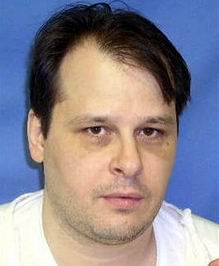
Kevin Scott Varga
Murderer Russell Ellwood
Murderer · USA · 1991
Russell Ellwood was a former taxi driver. Authorities suspected him of killing…
20 victims
Russell Ellwood
Murderer · USA · 1991
Russell Ellwood was a former taxi driver. Authorities suspected him of killing…
20 victims
 Robert Martines Perez
Murderer · USA · 1994
Name: Robert Martines Perez · Other name used in proceedings: Robert Martinez P…
15 victims
Robert Martines Perez
Murderer · USA · 1994
Name: Robert Martines Perez · Other name used in proceedings: Robert Martinez P…
15 victims
 Billy Frank Vickers
Murderer · USA · 1993
Billy Frank Vickers Vickers was executed by lethal injection in Texas on Januar…
14 victims
Billy Frank Vickers
Murderer · USA · 1993
Billy Frank Vickers Vickers was executed by lethal injection in Texas on Januar…
14 victims
 Kiyotaka Katsuta
Serial killer · Japan · 1972
Kiyotaka Katsuta (勝田 清孝; Katsuta Kiyotaka; August 29, 1948 - November 30, 2000)…
22 victims
Kiyotaka Katsuta
Serial killer · Japan · 1972
Kiyotaka Katsuta (勝田 清孝; Katsuta Kiyotaka; August 29, 1948 - November 30, 2000)…
22 victims
 Ignacio Alberto Ortiz
Murderer · USA · 1978
Ignacio Alberto Ortiz was executed by lethal injection on October 27, 1999 in A…
1 victim
Ignacio Alberto Ortiz
Murderer · USA · 1978
Ignacio Alberto Ortiz was executed by lethal injection on October 27, 1999 in A…
1 victim
 Clayton Fountain
Murderer · USA · 1974
Clayton Fountain was a former federal prisoner who was serving life imprisonmen…
5 victims
Clayton Fountain
Murderer · USA · 1974
Clayton Fountain was a former federal prisoner who was serving life imprisonmen…
5 victims
 Anthony LaMarca
Murderer · USA · 1995
Anthony LaMarca was convicted of first-degree murder. He was sentenced to death…
1 victim
Anthony LaMarca
Murderer · USA · 1995
Anthony LaMarca was convicted of first-degree murder. He was sentenced to death…
1 victim
 Charles Daniel Thacker
Murderer · USA · 1993
Charles Daniel Thacker was a white male convicted in Harris County, Texas, of c…
1 victim
Charles Daniel Thacker
Murderer · USA · 1993
Charles Daniel Thacker was a white male convicted in Harris County, Texas, of c…
1 victim
- Gender
- male
- Country
- USA
- Location
- Kansas/Texas, USA
- Date of birth
- March 4, 1969
- Age at first offence
- 29
- Characteristics
- robbery
- Victim profile
- David McCoy / David Logie
- Method of murder
- Beating with a pole / Beating with a ball peen hammer and a tree limb
- Date(s) of murder
- September 1998
- Years active
- 1998
- Date of arrest
- —
- Status
-
Executed
Executed by lethal injection in Texas on May 12, 2010
Case overview
Kevin Scott Varga was a white male executed in Texas on May 12, 2010, for the 1998 robbery and murder of David Logie in Greenville. He was also convicted in connection with the killing of David L. McCoy.
Timeline
- 9/8/1998 — Varga and co-defendants caused the death of an adult male by striking him about the head and neck during the course of committing robbery.
- 9/1/1998 — Varga, Venus Anderson, Billy Galloway, and Deannee Ann Bayless left Sioux Falls, South Dakota, intending to travel to Mexico.
- 9/4/1998 — Sergeant Marla Shrink was dispatched to an address in Sioux Falls, South Dakota, to take photographs where the words “death is coming” were written in mustard in the bottom of a sink.
- May 12, 2010 — Varga was executed by lethal injection in Texas; he was pronounced dead seven minutes later at 6:19 p.m. (lethal drugs began at 6:12 p.m.).
- 10/5/2009 — The U.S. Supreme Court denied certiorari review.
- 2/18/2009 — The U.S. Court of Appeals for the 5th Circuit denied certificate of appealability.
- 2/28/2008 — The federal district court denied Varga’s petition for writ of habeas corpus.
- 4/12/2010 — Varga filed a petition for clemency with the Texas Board of Pardons and Parole.
- 6/25/2003 — The Texas Court of Criminal Appeals opinion was delivered in Varga v. State, No. 73,990.
Background
Kevin Varga was born and raised in Kalamazoo, Michigan. He was described as 41 years old at the time of his execution.
Education and occupation
Varga had 6 years of education. He had worked as a welder, in construction, and as a laborer.
Prior prison record
Varga had prior prison records in South Dakota:
- A 3 year sentence for 1 count of burglary third degree
- A 10 year sentence for 1 count of grand theft
During the punishment phase, the jury heard evidence of Varga’s prior violent and criminal behavior, including:
- An attempted escape while incarcerated at the Hunt County Jail
- Domestic calls made by Varga’s ex-wife to police accusing Varga of hitting her, including an officer observation that he struck someone twice in the head
- A prison classification in South Dakota describing him as “basically the predators of the institution,” along with testimony that he preyed on weaker inmates and was a constant threat to security
The jury did not hear the following prior criminal history evidence:
- Varga’s time in a Michigan county juvenile detention center for 18 month
- Varga’s 30 days in jail in Sioux Falls, South Dakota for simple assault
- Varga’s 3 years sentence in South Dakota for third degree burglary
- A ten-year sentence for grand theft
The offence
Varga and co-defendants committed robbery-murders involving both David Logie and David L. McCoy.
Killing of David Logie
Varga, Venus Anderson, Billy Galloway, and Deannee Ann Bayless left Sioux Falls, South Dakota, in Galloway’s Bronco intending to travel to Mexico. They stopped in Greenville, Texas, where Anderson and Bayless entered the lounge and met David Logie. The group left with Logie in his car, with Bayless driving, while Varga and Galloway followed in another vehicle.
Bayless drove to a deserted area of town behind a building where Bayless and Logie got out of the car to have sex on the hood. Anderson heard Galloway’s voice and saw him punching Logie. Logie screamed: “Please don’t kill me, please. You can have my money...my car, anything, but please, please don’t kill me,” but Galloway kept hitting him.
After several minutes, Varga appeared from behind the car and handed Galloway an object. Logie remained on the ground screaming. Galloway struck Logie with the object for several more minutes.
Afterwards, police found a ball-peen hammer and pieces of a bloody tree limb near Logie’s body. The group took Logie’s wallet and dragged his body into nearby woods. A medical examiner determined Logie’s death was caused by blunt force injuries to the head.
Burning and moving the victim’s vehicle after the Logie murder
After taking Logie’s wallet, Varga and the co-defendants dragged Logie into the woods. The group drove McCoy’s car into the woods and set it on fire in the separate McCoy incident; in the Logie incident, the group took Logie’s car to San Antonio and were arrested there. The group also continued south in Logie’s car to San Antonio.
Killing of David L. McCoy
While on the trip, the group also committed a similar robbery-murder in Kansas. Varga and co-defendants drove south from Sioux Falls on September 1, 1998. They robbed and killed a man in Wichita, Kansas, identified as David McCoy, and later did the same to Logie in Greenville, about 50 miles east of Dallas.
Anderson testified that Varga had a plan to “roll” men along the way to make money, including bringing a man back to a hotel room while Varga hid, then blackmailing the man for his money.
In Wichita, Kansas, Bayless, Anderson, and Galloway went to a bar and met David McCoy. Bayless talked him into returning to the hotel with them. The group then killed McCoy. They wrapped McCoy’s body in blankets, loaded it into Galloway’s vehicle, and abandoned the vehicle a few blocks from where the slaying occurred after the vehicle stopped running in a parking lot. McCoy’s body was found several days later in advanced decomposition. The medical examiner testified that McCoy’s skull fractures were severe, stating: “the bone was broken into so many small pieces they simply fell to the autopsy table.” The medical examiner also testified the cause of death was blunt force trauma to the head.
Additional details from the capital case record
The Texas Court of Criminal Appeals opinion described that the cause of death for both victims was blunt force injuries to the head and that the murders involved injuries consistent with being struck with a hammer and/or a tree limb. The opinion also described that the group drove to San Antonio, where Anderson and Bayless used Logie’s credit cards at a mall, and that Varga and Galloway went to a strip club. When Anderson and Bayless left the mall, they were pulled over by police. Anderson confessed to the murders and surrounding events when placed in the patrol car. Galloway and Varga were arrested at the strip club.
Investigation
Police later found a ball-peen hammer and pieces of a bloody tree limb near Logie’s body. After taking Logie’s wallet, the group dragged Logie’s body into nearby woods. Anderson confessed to both murders when placed in the patrol car, and based on the information she gave, authorities located Logie’s body near Greenville and notified Kansas authorities about the McCoy murder.
Arrest
After the police pulled over Anderson and Bayless, Anderson confessed to the murders. Police arrested Bayless and Anderson. Galloway and Varga were arrested later that night. Varga and Galloway were arrested at the strip club in San Antonio, and the group also took Logie’s car to San Antonio.
Trial
Charge and sentence
Varga was convicted by a Hunt County jury of capital murder under Tex. Penal Code §19.03(a). The trial judge sentenced him to death pursuant to the jury’s answers to special issues under Texas Code of Criminal Procedure Article 37.071, sections 2(b) and 2(e), and Article 37.071 §2(g).
The Texas Court of Criminal Appeals described that direct appeal was automatic. Varga appealed raising twenty points of error.
Evidence described for the guilt and punishment phases
The Texas Court of Criminal Appeals opinion described evidence showing the road trip plan to rob men by luring victims back to a hotel room for blackmail, and described how McCoy and Logie were attacked and killed.
The opinion also described punishment-phase evidence including:
- An attempted escape while incarcerated at the Hunt County Jail and Varga’s statement when caught: “I had to try. I have nothing to lose.”
- Domestic calls by Varga’s ex-wife to police accusing him of hitting her, and an officer’s testimony that he observed Varga strike someone twice in the head.
- Police photographs taken at the residence after leaving town, including words “death is coming” written in mustard in the bottom of the sink and items including the ex-wife’s driver’s license with the image scratched out and a copy of a protective order with “fuck you” written on it.
- Testimony that while incarcerated at a South Dakota prison he was classified as among the most aggressive prisoners and preyed on weaker inmates and was a constant threat to security.
Other prosecution and defense testimony
The record included testimony by Anderson that Varga concocted a plan where she and Bayless would offer men sex then blackmail them, and that Varga beat McCoy with a metal pole and kicked him. Anderson testified that the group was disappointed that their Kansas victim had only $80.
Quoted statements during trial
The Texas Court of Criminal Appeals opinion included an Anderson description that “jumping around and hugging each other and kissing each other and coming up to me and hugging me and asking me if I was all right and telling me it was all right . . . [t]he first murder was always that way, you know. . . . And they kept hugging and kissing me.”
Legal rulings challenged on appeal (as described in the Court of Criminal Appeals opinion)
Varga’s points of error included:
- Legal sufficiency for the future dangerousness special issue
- Admission of other bad acts evidence at punishment phase, including photographs of “death is coming,” a slashed driver’s license, a document with “fuck you” printed across it, and testimony about the document
- An improper definition of “probability” used in jury charge on the future dangerousness issue (including the jury instruction definition “something that is more likely to occur that [sic] it is not”)
- Ineffective assistance of counsel related to not objecting to the probability instruction
- Denial of a mistrial after the State asked an improper question about being a suspect in a strong-arm robbery in North Dakota–South Dakota
- Admission of autopsy photographs of both victims (State’s Exhibit Numbers 196 through 199 and 214 through 217)
- Prosecutor’s punishment argument referencing jurors meeting the victims in heaven and being able to justify the verdict
- Denial of request for discovery of chain of custody documentation for physical evidence
- Arguments about “switching definitions” of reasonable doubt during jury selection and differences between voir dire and jury instructions
- Admission of victim’s widow Diane Logie’s history as an abused child as rebuttal to mitigation evidence
- Refusal to give a requested instruction during punishment that the jury consider only Varga’s conduct and state of mind rather than “law of parties”
- Refusal to include definitions for terms used in special issues
- Challenges to the Texas death penalty scheme, including jury voting requirements and other constitutional claims
- Cumulative error claims
Sentencing
Varga was sentenced to death by a Hunt County jury. The Texas Court of Criminal Appeals affirmed his conviction and sentence.
Appeals
Direct appeal
The Texas Court of Criminal Appeals affirmed Varga’s conviction and sentence on direct appeal. The opinion delivered June 25, 2003, stated: “We shall affirm.”
The Court of Criminal Appeals described its review and overruled the points of error, ultimately affirming the judgment of the trial court.
State habeas corpus
The Texas Court of Criminal Appeals also denied state habeas corpus relief.
Federal habeas corpus and related proceedings
Varga filed a petition for writ of habeas corpus in federal district court, which was denied on February 28, 2008. The U.S. Court of Appeals for the 5th Circuit denied certificate of appealability on February 18, 2009. The U.S. Supreme Court denied certiorari review on October 5, 2009.
Clemeny
No litigation was currently pending after the federal proceedings as described in the case narrative. On April 12, 2010, Varga filed a petition for clemency with the Texas Board of Pardons and Parole.
Outcome
Varga was executed by lethal injection in Texas on May 12, 2010. The lethal drugs began at 6:12 p.m. He was pronounced dead seven minutes later at 6:19 p.m. His execution was described as occurring after court appeals were exhausted and a clemency request was rejected.
Varga’s final statements (as described in the narrative)
Varga addressed victim David Logie’s father, Jack Logie, and five friends of the victim’s family asking for forgiveness and expressing regret. He said: “I know I took someone very precious to you — myself and Mr. Galloway, who you will see tomorrow,” “Please forgive me. You have to forgive me for you to gain the kingdom of Heaven.” “I wish what was torn from you was not,” “I would pay it back a thousand times to bring back your loved ones. I would pay it gladly.”
He also addressed his mother, Beth Varga, and personal friend Kathryn Cox, saying: “Mom, you are my strength... you didn’t do anything wrong,” “This is nothing. I am going to go to sleep and wake up with Jesus. This is the only way God could save me.”
Before succumbing to the injection he uttered: “Thank you Jesus. I am going Mom,”
Silence and watching during execution (as described)
Witnesses remained quiet and solemn throughout the execution, with a family friend keeping a hand on the victim’s father’s back.
Other details
Co-defendants and related sentencing outcomes (as described)
The co-defendants named were Billy John Galloway, Deannee Anne Bayless, and Venus Joy Anderson.
The narrative described:
- Venus Joy Anderson served a reduced seven-year prison term in Texas in exchange for testimony.
- Deannee Bayless was serving 40 years for Logie’s murder and was not eligible for parole until 2018.
- Billy Galloway was set to die in the same chamber the next day; his appeals were exhausted.
Family and personal witnesses mentioned in the execution narrative
During the execution narrative, Varga’s mother was identified as Beth Varga. A personal friend was identified as Kathryn Cox. The execution narrative also described Varga’s sons (Richard and Stephen) and that a brother lived in Rapid City and a stepsister lived in Mobridge.
Field for companions in the offence narrative
The narrative described that Varga and co-defendants drove from Sioux Falls on Sept. 1, 1998, and during the road trip they robbed and killed a man in Wichita, Kansas, before killing David Logie in Greenville, Texas. The narrative also described that none of the four were tried in the slaying of the Kansas man in the Logie case.
Spotted an error, or have more information about this case?