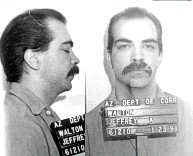
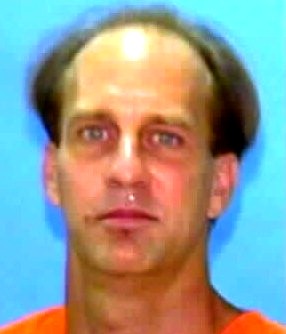
Jeffrey Alan Walton
Murderer Brian Kevin Rosenfeld
Murderer · USA · 1985
Brian Kevin Rosenfeld Brian Kevin Rosenfeld was sentenced to three concurrent l…
23 victims
Brian Kevin Rosenfeld
Murderer · USA · 1985
Brian Kevin Rosenfeld Brian Kevin Rosenfeld was sentenced to three concurrent l…
23 victims
 Yahweh ben Yahweh
Murderer · USA · 1980
Yahweh ben Yahweh was born and legally named Hulon Mitchell Jr. (October 27, 19…
23 victims
Yahweh ben Yahweh
Murderer · USA · 1980
Yahweh ben Yahweh was born and legally named Hulon Mitchell Jr. (October 27, 19…
23 victims
 Russell Ellwood
Murderer · USA · 1991
Russell Ellwood was a former taxi driver. Authorities suspected him of killing…
20 victims
Russell Ellwood
Murderer · USA · 1991
Russell Ellwood was a former taxi driver. Authorities suspected him of killing…
20 victims
 Joseph Corcoran
Mass murderer · USA · 1992
Joseph Corcoran was convicted of four counts of murder for shooting and killing…
6 victims
Joseph Corcoran
Mass murderer · USA · 1992
Joseph Corcoran was convicted of four counts of murder for shooting and killing…
6 victims
 Aaron McKinney
Murderer · USA · 1998
Aaron McKinney was convicted in the 1998 beating death of Matthew Shepard. · Ma…
1 victim
Aaron McKinney
Murderer · USA · 1998
Aaron McKinney was convicted in the 1998 beating death of Matthew Shepard. · Ma…
1 victim
 Gwendolyn Graham
Serial killer · USA · 1987
Gwendolyn Graham worked as a nurse’s aide at the Alpine Manor Nursing Home in W…
5 victims
Gwendolyn Graham
Serial killer · USA · 1987
Gwendolyn Graham worked as a nurse’s aide at the Alpine Manor Nursing Home in W…
5 victims
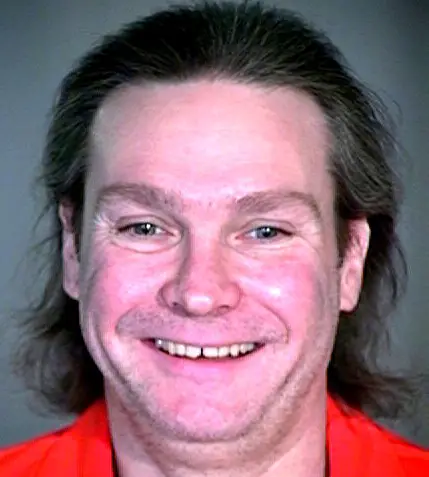 Anthony Spears
Murderer · USA · 1992
Defendant: Anthony Spears (Caucasian). He lived near San Diego. · Victim: Jeane…
1 victim
Anthony Spears
Murderer · USA · 1992
Defendant: Anthony Spears (Caucasian). He lived near San Diego. · Victim: Jeane…
1 victim
 Thomas Huskey
Serial killer ? · USA · 1991
Thomas Huskey, also known as “Zoo Man,” was a former zoo elephant trainer. Loca…
4 victims
Thomas Huskey
Serial killer ? · USA · 1991
Thomas Huskey, also known as “Zoo Man,” was a former zoo elephant trainer. Loca…
4 victims
- Gender
- male
- Country
- USA
- Location
- Tucson, Arizona, USA
- Date of birth
- January 29, 1966
- Age at first offence
- 20
- Characteristics
- robbery, kidnapping, torture, rape, drugs
- Victim profile
- Thomas Dale Powell
- Method of murder
- Dehydration, starvation, and pneumonia
- Date(s) of murder
- March 2, 1986
- Years active
- 1986
- Date of arrest
- 7 days after
- Status
-
Sentenced to death
Sentenced to death January 27, 1987.
Case overview
Jeffrey Alan Walton was sentenced to death for the first-degree murder of Thomas Dale Powell in Tucson, Arizona, following a robbery and kidnapping in which Walton shot Powell once in the head. Powell survived the shot, later died from exposure and pneumonia, and Walton led police to the murder site after his arrest.
Timeline
- March 2, 1986 — Walton, Sharold Ramsey, and Robert Hoover waited outside a bar in Tucson for someone to rob; after Thomas Dale Powell left the bar, the trio robbed him at gunpoint, forced him into Powell's car, drove him to a desert area west of Tucson, and Walton shot Powell in the head.
- December 2, 1986 — Trial began.
- December 16, 1986 — Trial verdict.
- January 27, 1987 — Walton was sentenced to death.
- October 2002 — Walton’s death sentence was reduced from death to life without the possibility of parole for 25 years (as described in October 2002 material).
The offence
Walton, Sharold Ramsey, and Robert Hoover waited outside a bar in Tucson for someone to rob on the night of March 2, 1986. When Thomas Dale Powell left the bar, Hoover alerted Walton that he was coming.
Walton pointed a pistol at Powell and ordered him to lie down and empty his pockets. The trio then forced Powell into Powell's car and drove out to a desert area west of Tucson. Powell was tied up, taken away, and shot in the head by Walton. The shot blinded Powell but did not kill him.
After Powell regained consciousness, he floundered in the desert for approximately a week before he died from exposure and pneumonia.
Walton and his codefendants had gone to the bar intending to find and rob someone at random, steal his car, tie him up, and leave him in the desert while they fled the State in the car. After the trio robbed Powell at gunpoint and forced him into his car, they asked Powell questions about where he lived and whether he had any more money. When the car stopped, Ramsey told Powell that he would not be hurt. Walton and Hoover forced Powell out of the car and had him lie face down near the car while Walton and others debated what to do with him. Walton eventually instructed Hoover and Ramsey to sit in the car and turn the radio up loud. Walton then took a .22 caliber derringer and marched Powell off into the desert.
After walking a short distance, Walton forced Powell to lie down, placed his foot on Powell's neck, and shot Powell once in the head. Walton later told Hoover and Ramsey that he had “never seen a man pee in his pants before.”
Investigation
A medical examiner determined that Powell did not die instantly from the gunshot. Powell had been blinded and rendered unconscious by the shot but was not immediately killed. Powell regained consciousness, floundered about in the desert, and ultimately died from dehydration, starvation, and pneumonia approximately a day before his body was found. After Walton was arrested a week later, he led police to Powell's body and the murder site.
Arrest
Walton was arrested about a week after the March 2, 1986 offence, and he led police to Powell's body.
Trial
Walton was charged with first-degree murder under Arizona’s alternate definitions of the crime, either premeditated murder or felony murder, after instructions on both premeditated and felony murder and a general verdict.
Presiding Judge: G. Thomas Meehan. Prosecutors: Ken Peasley and Kate Dawes.
Parties and proceedings
- Ramsey pled guilty to a lesser offense and testified for the state.
- Hoover was convicted and received a life sentence.
Start of Trial: December 2, 1986. Verdict: December 16, 1986.
Sentencing
Sentencing: January 27, 1987.
Aggravating circumstances
The state proved two aggravating factors:
- Pecuniary gain.
- Especially heinous/cruel/depraved.
Mitigating circumstances
Mitigating Circumstances: None sufficient to call for leniency.
At the sentencing hearing, the trial judge found that the aggravating factors were present beyond a reasonable doubt, found that mitigating factors were not sufficiently substantial to call for leniency, and imposed a death sentence.
Walton’s relative youth was argued as a mitigating factor, and diminished capacity to appreciate the wrongfulness of his conduct was also argued in mitigation, along with other mitigating testimony described as including impairment from substance abuse.
Appeals
Published opinions included:
- State v. Walton, 159 Ariz. 571, 769 P.2d 1017 (1989).
- Walton v. Arizona, 497 U.S. 639, 110 S. Ct. 3047, 111 L. Ed. 2d 511 (1990).
The Arizona Supreme Court affirmed Walton’s conviction and sentence. It found that the especially cruel prong involved mental anguish and uncertainty as to ultimate fate, and it found that the especially depraved prong involved the perpetrator relishing the murder and showing debasement, perversion, or indifference to suffering with pleasure. It also found the pecuniary gain circumstance present. It concluded there were no mitigating circumstances sufficiently substantial to call for leniency, and it conducted a proportionality review and determined that Walton’s death sentence was proportional to sentences imposed in similar cases.
The United States Supreme Court affirmed the judgment of the Arizona Supreme Court. The decision addressed the validity of the death sentence after a jury found Walton guilty of first-degree murder, including challenges relating to jury factfinding at sentencing, the burden of establishing mitigating circumstances, and the constitutionality of the especially heinous/cruel/depraved aggravating circumstance as interpreted by Arizona courts.
Outcome
Walton was sentenced to death on January 27, 1987. Later, in October 2002 material, Walton’s sentence was described as reduced from Death to Life without the possibility of parole for 25 years.
Other details
Walton’s sentencing described that the judge conducted the sentencing hearing alone pursuant to Arizona law, after the jury convicted Walton of first-degree murder following instructions on both premeditated and felony murder.
Powell was described as a young, off-duty Marine. Walton pointed a pistol at Powell, ordered him to lie down and empty his pockets, and later shot Powell once in the head with a .22 caliber derringer.
Walton’s remark to codefendants after the shooting was: “never seen a man pee in his pants before.”
Spotted an error, or have more information about this case?