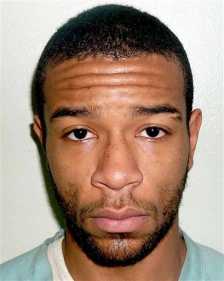
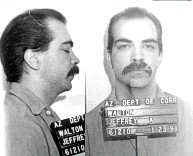
Percy Levar Walton
Murderer Russell Ellwood
Murderer · USA · 1991
Russell Ellwood was a former taxi driver. Authorities suspected him of killing…
20 victims
Russell Ellwood
Murderer · USA · 1991
Russell Ellwood was a former taxi driver. Authorities suspected him of killing…
20 victims
 Robert Martines Perez
Murderer · USA · 1994
Name: Robert Martines Perez · Other name used in proceedings: Robert Martinez P…
15 victims
Robert Martines Perez
Murderer · USA · 1994
Name: Robert Martines Perez · Other name used in proceedings: Robert Martinez P…
15 victims
 Billy Frank Vickers
Murderer · USA · 1993
Billy Frank Vickers Vickers was executed by lethal injection in Texas on Januar…
14 victims
Billy Frank Vickers
Murderer · USA · 1993
Billy Frank Vickers Vickers was executed by lethal injection in Texas on Januar…
14 victims
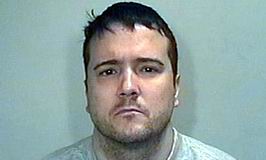 Stephen Shaun Griffiths
Serial killer · United Kingdom · 2009
Stephen Shaun Griffiths was convicted after pleading guilty to killing three wo…
3 victims
Stephen Shaun Griffiths
Serial killer · United Kingdom · 2009
Stephen Shaun Griffiths was convicted after pleading guilty to killing three wo…
3 victims
 Andrew Cunanan
Spree killer · USA · 1997
Andrew Phillip Cunanan (August 31, 1969 – July 23, 1997) was an American spree…
5 victims
Andrew Cunanan
Spree killer · USA · 1997
Andrew Phillip Cunanan (August 31, 1969 – July 23, 1997) was an American spree…
5 victims
 Eddie Duvall Powell
Murderer · USA · 1995
Defendant: Eddie Duvall Powell III · Gender: Male · DOB: 08/23/1969 · Prison st…
1 victim
Eddie Duvall Powell
Murderer · USA · 1995
Defendant: Eddie Duvall Powell III · Gender: Male · DOB: 08/23/1969 · Prison st…
1 victim
 Andre Graham
Murderer · USA · 1993
Andre Graham · Andre L. Graham Andre Graham was executed by lethal injection in…
3 victims
Andre Graham
Murderer · USA · 1993
Andre Graham · Andre L. Graham Andre Graham was executed by lethal injection in…
3 victims
 Anthony Bell
Spree killer · 2006
Anthony Bell was convicted of killing his wife and four in-laws in a May 2006 s…
5 victims
Anthony Bell
Spree killer · 2006
Anthony Bell was convicted of killing his wife and four in-laws in a May 2006 s…
5 victims
- Gender
- male
- Country
- USA
- Location
- Danville, Virginia, USA
- Date of birth
- October 18, 1978
- Age at first offence
- 18
- Characteristics
- history of mental illness, mentally ill
- Victim profile
- Elizabeth, 81, and Jessee Hendrick, 80 / Archie Moore, 33
- Method of murder
- Shooting
- Date(s) of murder
- November 1996
- Years active
- 1996
- Date of arrest
- —
- Status
-
Sentenced to death
Sentenced to death on October 31, 1997
Case overview
Percy Levar Walton was a Black male who was 18 years and one month old at the time of the crimes.
He was convicted of Capitol Murder—three counts of murder.
Walton was incarcerated in Virginia DOC Inmate Number: 250713.
Timeline
- October 31, 1997 — Walton entered the row; Danville Circuit Judge James F. Ingram sentenced Walton to death.
- Oct. 7, 1997 — Walton surprised prosecutors by agreeing to suddenly plead guilty to three counts of capital murder.
- November 1996 — Walton was arrested; he demanded a speedy trial.
- February 1997 — Walton told his lawyer that he was Percy Gunn (Walton's father) as well as the "King of Hearts."
- June 5, 1998 — The Supreme Court of Virginia affirmed Walton's death sentence.
- May 28 — Walton’s original execution date referenced in court.
- April 2003 — Walton was scheduled to be executed.
- May 27, 2003 — The U.S. Supreme Court upheld a stay of execution by a federal appeals court.
- June 16, 2003 — A competency hearing was held.
- June 8 — The Danville Circuit court set Walton’s execution date.
- June 10, 2008 — A later execution-related timeframe after a further reprieve ordered by Gov. Tim Kaine.
- February 23, 2004 — Dr. Mark J Mills filed a letter in Federal District Court.
- March 3, 2004 — Judge Wilson wrote a nine-page order that Walton was sane enough for the state to execute.
- April 28, 2005 — A three-judge panel of the 4th U.S. Circuit Court of Appeals by a 2-1 ruling sent the case back to the District Court in Roanoke for further consideration.
- Oct. 27, 2005 — The full 4th Circuit heard oral arguments.
- March 9, 2006 — The Court denied Walton’s claim of mental retardation and competency by a vote of 7-6.
- April 21, 2006 — The Danville Circuit court set Walton’s execution date for June 8.
- Hours before his execution — Gov. Tim Kaine ordered a six-month reprieve and authorized an independent and nonjudicial examination of Walton’s mental state.
- Dec. 4, 2006 — Gov. Kaine ordered a second reprieve for 18 months, until June 10, 2008.
- June 20, 2002 — The United States Supreme Court ruled in Atkins v Virginia that execution of mentally retarded felons is prohibited by the constitution.
The crimes and conviction
Walton pleaded guilty to three counts of capital murder in the deaths of the elderly white couple Jesse Enoch Henrick (81) and Elizabeth Kendrick (82), and the death of Archie Moore (33-year-old black man) in Danville.
Walton’s conviction was Capitol Murder—three counts of murder.
Investigation and pre-trial custody
In pre-trial custody, Walton’s lawyers argued that his unusual behavior was evidence of mental disorder.
Walton told his lawyer that he was Percy Gunn (Walton's father) and also the "King of Hearts."
Walton told his lawyer that if he closed his eyes he could become invisible.
He was convinced that he would be released on bail even though his lawyer told him this would never happen.
After Walton’s arrest in November 1996, he demanded a speedy trial and said that his innocence would be proven.
By the following summer, he said that he wanted to plead guilty because the electric “chair [was] for killers.”
Walton also told the prosecution expert witness, Stanton Samenow, that he believed he could be executed and still come back and appear on national television.
Walton claimed that he could bring back to life his dead grandfather (as referenced) as well as the victims of his crimes.
Trial and plea
A few weeks before Walton’s scheduled trial on Oct. 7, 1997, Walton agreed to suddenly plead guilty to three counts of capital murder in the deaths of Jesse Enoch Henrick, Elizabeth Kendrick, and Archie Moore in Danville.
Sentencing
Danville Circuit Judge James F. Ingram sentenced Walton to death Oct. 31, 1997.
Mental health and prison conditions
Walton suffered from schizophrenia, and prison personnel described him as “floridly psychotic” and severely mentally retarded.
Walton’s prison cell was described as devoid of any personal affects, except for a large pile of salt, pepper and sugar packets.
It was described that Walton had no form of entertainment and did not seek any.
He was described as making no phone calls and having no visits from family or friends.
Prison guards referred to Walton as “Horse”, short for “Crazy Horse,” and stayed at arms length to avoid his stench.
A guard pointed to a spot in the cell and claimed that if “Horse’s smell gets here, we ba the him.”
Post-sentencing filings and appellate review
In a 1999 affidavit, Walton’s attorney asserted that Walton had not “meaningfully assist[ed]…in preparing a defense.”
The affidavit stated:
“Often times it was extremely difficult to communicate with Mr. Walton, and the re were occasions when we could not tell whe the r he understood what we were saying to him. O the r times it was clear from Mr. Walton's questions and responses to my questions that Mr. Walton understood little of what I was telling him.”
The affidavit also recalled that defense had been “unable to convince Mr. Walton that he would not come back to life” if he were executed.
The Supreme Court of Virginia affirmed Walton's death sentence on June 5, 1998.
In affirming the sentence, the Court used testimony by a jailhouse snitch with “a stack of felonies” whose prior court testimony by the same prosecutor in another death-row case was impugned, as proof that Walton presented the community with “future dangerousness.”
Further legal developments: Atkins, stays, and competency
On June 20, 2002, the United States Supreme Court ruled in Atkins v Virginia that execution of mentally retarded felons was prohibited by the constitution as “cruel and unusual punishment.”
Since 2002, more than 50 death-row inmates who suffer from mental retardation were removed from death-row across the United States and their sentences were remanded to life in prison without parole.
The commonwealth’s mental health expert reported that Walton “appear[ed] to be severely mentally retarded,” while the attorney general’s office fought to execute Walton.
Weeks before Walton was scheduled to be executed in April 2003, Dr. Patricia General testified that Walton was “floridly psychotic” and suggested that he may have severe mental retardation or mental illness such as schizophrenia.
Dr. General recently conducted an IQ test on Walton where he scored 66.
After Dr. General’s testimony, she was reassigned from death-row.
On May 27, 2003, the U.S. Chief U.S. District Judge Samuel G. Wilson agreed to a competency hearing.
At the June 16, 2003 hearing, the commonwealth of Virginia argued that Walton was not mentally retarded.
The state argued that Walton had scored 90 seven years earlier and that he was competent to be executed, even though he scored 66 in a recently state-administered test.
Two independent psychiatrists testified that Walton had chronic schizophrenia and did not understand that he would soon be executed.
Walton claimed in court that he “didn’t even know” why he was there or that he had earlier been scheduled to die.
Senior Assistant Attorney General Robert Harris told the court:
“We’re going to kill you. Do you know THAT?”
Walton replied:
“No”
Robert Harris also told the court that he was “very upset” that Dr. General ordered testing so near to Walton’s execution date; he stated that he had played no role in her removal from staff.
Dr. Alan J. Arikan testified for the state that he did not believe Walton was mentally incompetent and that Walton’s answers to various interviews were calculated.
The testimony was described as conflicting with evidence from prison staff members and independent psychiatrists Dr Anand Pandurangi of the Virginia Commonwealth University Medical College and Dr Ruben Gur of the University of Pennsylvania, who testified to Walton’s impaired mental state.
Walton’s testimony included the following exchanges: When asked by Jennifer Givens, Walton replied:
“nuthin’…I don’t believe the y accused me of nuthin’.”
Asked whether he knew what his sentence was, Walton stated:
“I got a piece of paper saying a hearing on May 28.”
He was described as unaware that May 28 had come and gone.
The competency hearing adjourned with no decision.
Judge Wilson later requested an independent expert to supplement prior testimony before ruling on the issue.
Federal competency proceedings and rulings
In a letter filed in Federal District Court on February 23, 2004, Dr. Mark J Mills, a Columbia University professor with degrees in medicine and law, testified that Walton failed to meet the requirements for insanity as laid down by the US Supreme Court in 1986:
“It is my belief that Mr. Walton understands that he is to be punished by execution and that his punishment is a result of his conviction in the murder (of) three individuals.”
On March 3, 2004, Judge Wilson wrote a nine-page order that Walton was sane enough for the state to execute, despite Walton’s “irrational and bizarre behavior.”
Judge Wilson also chastised the state for its failure to provide procedures for review of claims of mental incompetence within state courts, forcing appeals to go to the federal courts.
On April 28, 2005, a three-judge panel of the 4th U.S. Circuit Court of Appeals by a 2-1 ruling sent the case back to the District Court in Roanoke for further consideration of both the mental retardation claim and mental competency.
Attorney General Kilgore appealed, and the full 4th Circuit heard oral arguments on Oct. 27, 2005.
On March 9, 2006, the Court denied Walton’s claim of mental retardation and competency by a vote of 7-6.
Execution setting and reprieves
On April 21, 2006, the Danville Circuit court set Walton’s execution date for June 8.
Hours before his execution, Gov.
On Dec. 4, 2006, Gov.
Gov. Tim Kaine stated:
“I am compelled to conclude that Walton is severely mentally impaired and meets the Supreme Court's definition of mental incompetence,” Kaine said in a statement. “At the same time, it is within the realm of possibility -- though unlikely -- that Walton's mental impairment is not permanent. Accordingly, a commutation of his sentence is not appropriate at this time.”
Other individuals and related context included in the record
The record stated that Walton was the second severely mentally ill black man from Danville to be sentenced to death.
Calvin Swann was described as the first.
The record stated that Gov. James S. Gilmore granted clemency to Swann in May 1999 and that Swann was also schizophrenic.
Swann was described as tried before the same circuit judge, examined by identical expert witnesses, and defended by the same lawyer as Walton.
The record stated that Mr. Swann had since died in prison.
The record stated that five recent national grants of death-row clemency were based on an inmate’s extreme mental illness, including Arthur P. Baird II (Indiana 2005); Herbert Welcome (Louisiana 2003); Alexander Williams (Georgia 2002); Calvin Swann (Virginia 1999); and Bobbie Shaw (Missouri 1993).
The record also stated that these commutations reflected a greater understanding of severe schizophrenia and the need for compassion and treatment rather than condemnation for sufferers.

Spotted an error, or have more information about this case?