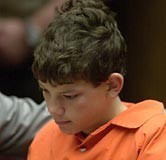
Charles Andrew Williams
Homicide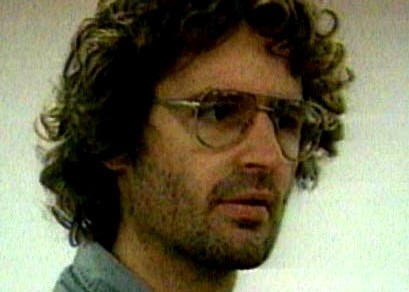 David Koresh
Homicide · USA · 1993
David Koresh (born Vernon Wayne Howell; August 17, 1959 – April 19, 1993) led t…
79 victims
David Koresh
Homicide · USA · 1993
David Koresh (born Vernon Wayne Howell; August 17, 1959 – April 19, 1993) led t…
79 victims
 Todd Hall
Homicide · USA · 1996
Todd Hall was described by neighbors as "mentally slow" and was said to have su…
9 victims
Todd Hall
Homicide · USA · 1996
Todd Hall was described by neighbors as "mentally slow" and was said to have su…
9 victims
 Joshua Jenkins
Homicide · USA · 1996
Joshua Jenkins was a 15-year-old American killer who killed five members of his…
5 victims
Joshua Jenkins
Homicide · USA · 1996
Joshua Jenkins was a 15-year-old American killer who killed five members of his…
5 victims
 Alex Baranyi
Homicide · USA · 1997
Alex Baranyi and David Anderson were 17-year-old high-school dropouts from Bell…
4 victims
Alex Baranyi
Homicide · USA · 1997
Alex Baranyi and David Anderson were 17-year-old high-school dropouts from Bell…
4 victims
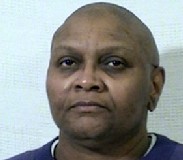 Celeste Carrington
Murderer · USA · 1992
Celeste Carrington Celeste Simone Carrington was Black and was 30 at the time o…
2 victims
Celeste Carrington
Murderer · USA · 1992
Celeste Carrington Celeste Simone Carrington was Black and was 30 at the time o…
2 victims
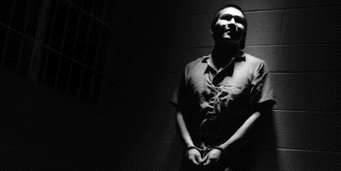 Lester Kills On Top
Murderer · USA · 1987
Lester Kills On Top No A027079 was incarcerated at Montana State Prison in Deer…
1 victim
Lester Kills On Top
Murderer · USA · 1987
Lester Kills On Top No A027079 was incarcerated at Montana State Prison in Deer…
1 victim
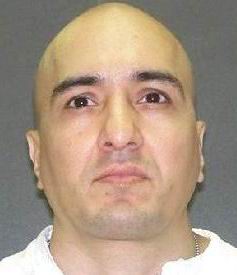 Peter Anthony Cantu
Murderer · USA · 1993
Defendant: Peter Anthony Cantu Victims: Jennifer Ertman (14), Elizabeth Pena (1…
2 victims
Peter Anthony Cantu
Murderer · USA · 1993
Defendant: Peter Anthony Cantu Victims: Jennifer Ertman (14), Elizabeth Pena (1…
2 victims
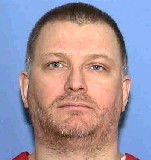 Gary Carl Simmons
Murderer · USA · 1996
Gary Carl Simmons, Jr. was sentenced to death and executed in Mississippi by le…
1 victim
Gary Carl Simmons
Murderer · USA · 1996
Gary Carl Simmons, Jr. was sentenced to death and executed in Mississippi by le…
1 victim
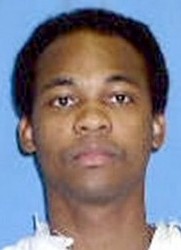 Mauriceo Brown
Murderer · USA · 1996
Name: Mauriceo Brown Mauriceo Brown was convicted in Texas state court of capit…
1 victim
Mauriceo Brown
Murderer · USA · 1996
Name: Mauriceo Brown Mauriceo Brown was convicted in Texas state court of capit…
1 victim
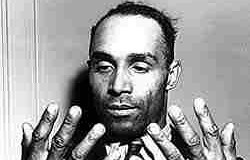 Jarvis Catoe
Serial killer · USA · 1935
Jarvis Theodore Roosevelt Catoe was convicted of killing a woman in Washington…
8 victims
Jarvis Catoe
Serial killer · USA · 1935
Jarvis Theodore Roosevelt Catoe was convicted of killing a woman in Washington…
8 victims
- Gender
- male
- Country
- USA
- Location
- Santee, California, USA
- Date of birth
- February 8, 1986
- Age at first offence
- 15
- Characteristics
- juvenile (15), school shooting
- Victim profile
- Bryan Zuckor, 14, and Randy Gordon, 17 (students)
- Method of murder
- Shooting ( .22-caliber revolver)
- Date(s) of murder
- March 5, 2001
- Years active
- 2001
- Date of arrest
- Same day
- Status
-
Life imprisonment
Sentenced to 50 years to life in prison on August 16, 2002
Overview
Charles Andrew “Andy” Williams was born on February 8, 1986, in Frederick, Maryland. He was convicted of a school shooting committed when he was 15. Williams served a sentence of 50 years to life in prison.
Timeline
- February 8, 1986 — Charles Andrew “Andy” Williams was born in Frederick, Maryland.
- June 1989 — Linda Williams was assigned to the Middle East in the US Army.
- 1990 — Charles Andrew Williams’s parents divorced.
- 1999 — Williams’s father moved himself and Andrew to 29 Palms, California.
- February 2001 — Williams received news that his friend from 29 Palms was killed in a bus accident.
- Monday, March 5, 2001 (9:20 a.m.) — Williams began firing a .22-caliber revolver in a boys’ bathroom at Santana High School.
- June 20, 2002 — Williams pleaded guilty to all charges against him in an effort to avoid a trial.
- August 15, 2002 — A California judge sentenced Williams, as an adult, to 50 years to life in prison.
- March 1, 2004 — Williams was transferred to an adult prison.
- Sunday, Mar. 11, 2001 — A television interview segment featuring Williams’s arrest and comments from his mother appeared in coverage of events following the shooting.
- August 15, 2002 (AP) — Williams was sentenced to 50 years to life in prison and apologized for the shooting rampage.
Background
Williams was born to Charles Jeffery and Linda Williams. He was born about 2 weeks premature and was delivered by C-section. His early life included an apartment in Frederick and later moves within Maryland.
Williams lived the first 8 months of his life with his mother, but seldom saw her after that. In June 1989, Linda Williams worked for the US Army and was assigned to the Middle East. In 1990, the couple divorced. Williams went to live with his father, and his brother Michael went to live with their mother.
Williams grew up in Maryland, moving twice within the state. In 1999, his father wanted a change of scenery and moved himself and Andrew to 29 Palms, California. Williams and his father enjoyed a good relationship for the most part.
After moving to Santee, California, from 29 Palms, Williams felt he was targeted for physical and emotional bullying in school. He began to spend time with a crowd of skateboarders to fit in, and he would often participate in activities such as smoking marijuana. Williams was accepted within this peer group, but at times the individuals also teased or picked on him.
The offence
On Monday, March 5, 2001, at 9:20 a.m., 15-year-old Williams began firing a .22-caliber revolver in a boys’ bathroom at Santana High School. He killed two students and wounded other students during the shooting.
He left the bathroom firing the revolver indiscriminately at other students. A witness said Williams repeatedly walked out of the bathroom, fired shots, then went back into the bathroom. The scene turned chaotic as students and teachers ducked or scrambled to safety.
Williams reloaded his revolver at least once. A student teacher and campus security supervisor Peter Ruiz walked into the bathroom to try to stop Williams, but Williams aimed the revolver at them and forced them out. As they walked out, Williams fired and hit Ruiz in the back.
Two off-duty police officers were visiting the school; they were at different ends of the school. One approached the bathroom and called for backup. Police arrived and charged the bathroom. They discovered Williams kneeling on the floor with the weapon in his hands. Williams told officers he was by himself. He surrendered and was taken into custody.
Victims and injuries
Williams shot and killed two students:
- 14-year-old Bryan Zuckor
- 17-year-old Randy Gordon
Thirteen others suffered gunshot wounds and were transported to various local hospitals. Coverage also described that the assault wounded 11 other students, a teacher, and a campus monitor. The coverage further included a statement from Ray Serrato, a student who still had “a bullet lodged in his back.”
Investigation
After Williams’s arrest, he told investigators that he was “tired of being bullied.”
As Williams was taken into custody and transported on the way to Juvenile Hall, he said he did it because his friends dared him to.
Arrest and custody
Williams was arrested after police arrived and charged the bathroom. Police discovered him kneeling on the floor with the weapon in his hands.
Williams was transferred to Juvenile Hall later that evening.
While in Juvenile Hall, Williams remained there until his sentencing on Thursday, August 15, 2002. He was described as a model inmate. He completed 2 years of high school, became adept in the art of origami, and marked his growth on the wall of his one-person cell.
When he was taken into custody, he was described as of slight build—5 feet 5 inches tall and 110 pounds. While at Juvenile Hall, he grew to nearly 6 feet and about 150 pounds. He spent his time reading and writing letters while a public defender fought to have Prop 21 declared unconstitutional, and after the Supreme Court ruling that Prop 21 was constitutional, he was taken back to court to be tried as an adult.
Trial and plea
On June 20, 2002, Williams pleaded guilty to all charges against him in an effort to avoid a trial.
Coverage described that in June Williams pleaded guilty to two counts of murder and 13 counts of attempted murder.
When police asked in the bathroom, Williams stated, “It’s only me.” He also appeared for his first court hearing two days after the killings, with no family members present.
Sentencing
On August 15, 2002, a California judge sentenced Williams, as an adult, to 50 years to life in prison. The judge ordered Williams to serve his time in the Youth Offender Program at CCI, Tehachapi, until his 18th birthday, after which he would be transferred to adult prison.
Williams was given credit for the 529 days he had served in juvenile hall. The judge fined him $10,000.00 and ordered him to pay restitution to the Victims Restitution Fund.
At his sentencing, Williams apologized and expressed remorse for his actions.
Appeals
Efforts to have Williams’s sentence reduced continued while he was incarcerated at Calipatria State prison. Supporters argued that the judge was too harsh in sentencing Williams as an adult and did not take into consideration Williams’s age at the time of his offense. Supporters wanted him to receive a new sentence that would have meant confinement by the California Youth Authority until age 25. His appeals continued while he remained incarcerated.
Outcome
Williams’s sentence remained 50 years to life in prison following the August 15, 2002 sentencing, and he later was transferred to an adult prison on March 1, 2004.
Other details
Pre-shooting statements and planning
Williams spoke on two occasions of his plan to “pull a Columbine” at Santana High, but no reports were made of threats to the school. One occasion was a week before the shooting, and the second was during the weekend prior to Monday, March 5.
Before the shooting, Williams had two skateboards stolen from him.
After his arrest, Williams said he was “tired of being bullied.” During transport to Juvenile Hall, he also said he did it because his friends dared him to.
Weapon and access
Williams acquired his weapon, an Arminius .22-cal revolver, from the locked gun cabinet in his apartment. The gun belonged to his father.
In commentary provided during coverage, it was described as a “rare, German-made Arminius .22-cal. long-barrel revolver with an eight-shot capacity.”
Claims about others and questioning
Late coverage described that police had questioned many who knew Williams, including Stevens and Reynolds. Kristin Anton, the chief deputy district attorney in charge of the case, was quoted as saying two days after the shooting there were no plans to charge anyone else in the affair.
Coverage also described defense counsel activity: Reynolds and Stevens each hired criminal-defense lawyers.
A Williams associate told TIME that more than two months before the attack, one of Williams’s closest friends boasted that Williams had taken one of his father’s guns and hidden it in bushes behind a park they frequented.
Comments and quotations from coverage
During sentencing coverage, Charles “Andy” Williams said:
“If I could go back to that day, I would never have gotten out of bed,”
Deputy District Attorney Kris Anton was quoted as saying:
“The defendant is the bully. He took a gun to school and shot innocent kids,”
Judge Herbert Exarhos was quoted as saying:
“In all likelihood, it is a question the defendant will be struggling with daily to answer for himself,”
Ray Serrato was quoted as saying:
“I not only lost my best friend, Randy Gordon, I lost my innocence, my security,”
“Fifty years is not enough.”
Time coverage quoted Williams’s mother, Linda Williams, saying before a TV crew:
“He's lost. His future's gone.”
Coverage included a quote from Reynolds, stating:
“It's being reported I am the one to blame for this. I can blame myself. But other people knew way before I did.”
Coverage included statements by Gentry Robler, describing the school environment:
“There's a lot of hate around here,”
Coverage included additional quotations:
“This is a school that was waiting for something like this to happen.”
It also included:
“Andy was instantly picked on by the bigger, more streetwise kids there.”
Laura Kennamer was quoted as saying:
“They'd walk up to him and sock him in the face for no reason,”
“He wouldn't do anything about it.”
Jennifer Chandler was quoted as saying:
“Kids were mean to him. He'd slack it off. Like he kept it all inside.”
In relation to Williams’s domestic life, Shaun Turk was quoted as saying:
“Andy would call him and say it's raining and beg him to give him a ride home. But you could hear his dad yelling into the phone, 'Get your ass home!'”
Adrianna Aceven was quoted as saying:
“the father was distant, disappearing to work on his computer when the kids walked in.”
Statements from Shaun Turk and others also included:
“I never saw Andy go anywhere with his dad,”
Aceven was quoted as describing a later change:
“But he started hanging with a different crowd, getting into trouble, ditching school, acting different.”
Aceven was also quoted on Williams’s earlier identity:
“When I first met Andy he was, like, a good Christian boy from Maryland,”
Analisha Welbaum was quoted as saying:
“Andy didn't speak about his problems. He kept them all in. Maybe a fuse finally blew,”
Stevens was quoted as saying:
“He was pushed to the edge,”
Stevens was also quoted in explanation of a song:
“Listen to In the End, track eight on Linkin Park's CD. That was the song that inspired Andy.”
A description of the lyrics was included verbatim:
“In spite of the way you were mocking me/ Acting like I was part of your property/ Remembering all the times you fought with me/ I'm surprised it got so far...”
Stevens was quoted about how Williams obtained access:
“Andy took the key off the chain when his dad was sleeping,”
Hemmiing was quoted as recounting confrontation:
“Two days later,”
“I confronted Josh. I said what the hell are you and Andy planning? I said this is serious shit. He said they were just kidding. I said, 'You have to tell someone.' He said, 'I'm going to tell my mother's boyfriend [Reynolds], and he is going to have a talk with Andy.'”
Hemming was quoted about regret:
“I thought, well, he's a role model; he's a male.”
Hemming was also quoted reflecting on Reynolds:
“Chris was a buddy.”
Stevens and Hemming were quoted about what they discussed:
“Sure, sometimes I don't always give them the best advice.”
Stevens was quoted about goading:
“They talked him into it,”
Stevens was quoted about friends:
“Two people said, 'Oh, yeah, just like you're running away to Mexico. You're a pussy. You won't do it.' But they were trying to get him to.”
Turk was quoted about the timeline:
“We usually never leave the Jack until 9:15.”
Welbaum was quoted about how Williams looked:
“really calm; he wasn't shaking; he wasn't stuttering.”
And Turk was quoted about an unusual time:
“I got to leave when it is 9:06.”
Coverage included a quote from an unidentified person about what she saw:
“I looked down the hallway and saw him--he was about 100 feet away--and he turned and looked me in the eye. Then he turned around and shot some others.”
Public locations and institutions mentioned in relation to events
Williams attended and was involved in events at Santana High School in Santee. He was questioned by police and transferred to Juvenile Hall after his arrest. Juvenile Hall confinement and later transfer were mentioned alongside CCI, Tehachapi and Tehachapi location about 90 miles north of Los Angeles. Later incarceration included Calipatria State prison.
Family and relationships mentioned
Williams’s mother was Linda Williams. His father was Charles Jeffery. His brother was Michael. Coverage also mentioned that Linda worked for the US Army and was assigned to the Middle East in June 1989.
The narrative coverage mentioned Williams’s “model inmate” status and education efforts, including taking college courses after transfer to adult prison. It also mentioned Williams’s “support of his family and friends” during incarceration.
People named in the offence narrative included student teacher Peter Ruiz (campus security supervisor), Bryan Zuckor, Randy Gordon, and Ray Serrato. Off-duty police officers and other acquaintances mentioned in coverage included Josh Stevens and Chris Reynolds, as well as other classmates and acquaintances.

Spotted an error, or have more information about this case?