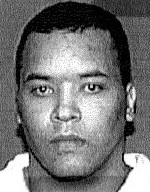
Nanon Williams
Homicide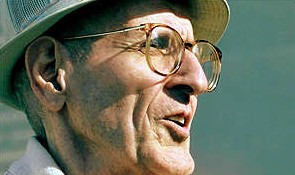 Jack Kevorkian
Homicide · USA · 1990
Jack Kevorkian (born May 26, 1928) was a controversial American pathologist. He…
130 victims
Jack Kevorkian
Homicide · USA · 1990
Jack Kevorkian (born May 26, 1928) was a controversial American pathologist. He…
130 victims
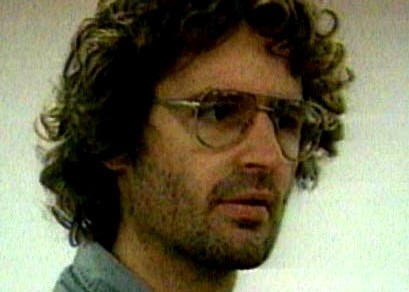 David Koresh
Homicide · USA · 1993
David Koresh (born Vernon Wayne Howell; August 17, 1959 – April 19, 1993) led t…
79 victims
David Koresh
Homicide · USA · 1993
David Koresh (born Vernon Wayne Howell; August 17, 1959 – April 19, 1993) led t…
79 victims
 Todd Hall
Homicide · USA · 1996
Todd Hall was described by neighbors as "mentally slow" and was said to have su…
9 victims
Todd Hall
Homicide · USA · 1996
Todd Hall was described by neighbors as "mentally slow" and was said to have su…
9 victims
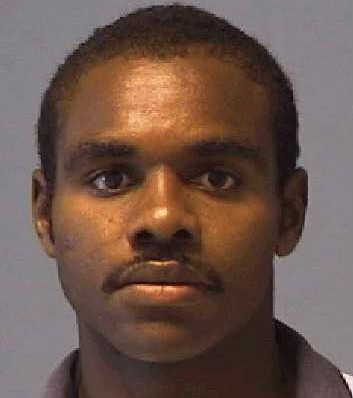 Clinton Bankston
Homicide · USA · 1987
15 August 1987 — Ann Morris (63), her sister Sally Nicholson (59), and Sally’s…
5 victims
Clinton Bankston
Homicide · USA · 1987
15 August 1987 — Ann Morris (63), her sister Sally Nicholson (59), and Sally’s…
5 victims
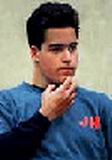 Joshua Jenkins
Homicide · USA · 1996
Joshua Jenkins was a 15-year-old American killer who killed five members of his…
5 victims
Joshua Jenkins
Homicide · USA · 1996
Joshua Jenkins was a 15-year-old American killer who killed five members of his…
5 victims
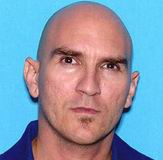 Pedro Alberto Vargas
Mass murderer · USA · 2013
Pedro Alberto Vargas carried out a shooting rampage at an apartment complex in…
6 victims
Pedro Alberto Vargas
Mass murderer · USA · 2013
Pedro Alberto Vargas carried out a shooting rampage at an apartment complex in…
6 victims
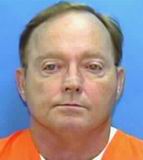 Fred Lewis Way
Murderer · USA · 1983
Fred Lewis Way was sentenced to death on January 23, 1984, resentenced to death…
2 victims
Fred Lewis Way
Murderer · USA · 1983
Fred Lewis Way was sentenced to death on January 23, 1984, resentenced to death…
2 victims
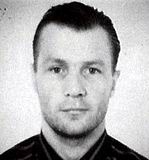 Alexander Solonik
Murderer · Russia · 1990
In February 1997, Greek newspapers published articles that claimed a Russian mo…
10 victims
Alexander Solonik
Murderer · Russia · 1990
In February 1997, Greek newspapers published articles that claimed a Russian mo…
10 victims
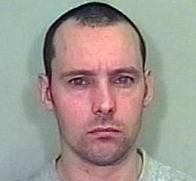 Anthony Morley
Murderer · United Kingdom · 2008
Anthony Morley (born 1972) was an English model and convicted murderer. He won…
1 victim
Anthony Morley
Murderer · United Kingdom · 2008
Anthony Morley (born 1972) was an English model and convicted murderer. He won…
1 victim
 Kelly Lamont Rogers
Murderer · USA · 1990
Kelly Lamont Rogers was executed by lethal injection in Oklahoma on March 23, 2…
1 victim
Kelly Lamont Rogers
Murderer · USA · 1990
Kelly Lamont Rogers was executed by lethal injection in Oklahoma on March 23, 2…
1 victim
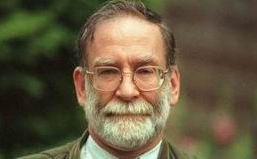 Dr. Harold Shipman
Serial killer · United Kingdom · 1974
Harold Fredrick Shipman was an English doctor who was convicted as a serial kil…
15 victims
Dr. Harold Shipman
Serial killer · United Kingdom · 1974
Harold Fredrick Shipman was an English doctor who was convicted as a serial kil…
15 victims
- Gender
- male
- Country
- USA
- Location
- Harris County, Texas, USA
- Date of birth
- August 2, 1974
- Age at first offence
- 18
- Characteristics
- juvenile (17), robbery, drugs
- Victim profile
- Adonius Collier, 19
- Method of murder
- Shooting (.25 caliber pistol)
- Date(s) of murder
- May 14, 1992
- Years active
- 1992
- Date of arrest
- 3 months after
- Status
-
Life imprisonment
Sentenced to death on September 22, 1995; commuted to life in prison on June 22, 2005
Case overview
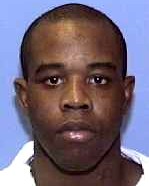
Nanon Williams was sentenced to death in Texas for the 1992 shooting death of Adonius Collier in Harris County, Texas. He was a juvenile offender at the time of the offence, and he remained incarcerated on death row in Texas while pursuing relief.
Timeline
- September 22, 1995 — Nanon Williams was sentenced to death.
- August 1992 — Nanon Williams was arrested in California.
- May 1992 / 13-14 May 1992 — Adonius Collier was shot dead in a wooded area of Hermann Park in Houston, Texas.
- 26 July 1995 — A jury convicted Nanon Williams of murder.
- 1998 — Post-conviction evidentiary hearings and testimony were conducted regarding firearms and ballistics issues.
- December 2000 — A post-conviction evidentiary hearing was held; Judge Joan Campbell made findings after the hearing on 18 December 2000.
- 24 April 2002 — The Texas Court of Criminal Appeals rejected a recommendation for relief.
- June 22, 2005 — Nanon Williams’s death sentence was commuted to life in prison.
- 1999 — Nanon Williams’s codefendant Vaal Guevara came up for parole.
Background
Nanon Williams grew up surrounded by drugs, which his parents manufactured and sold. Shortly after he was born, his mother was incarcerated for her drug activities. During her two years in prison, Williams was left in the custody of his father, who was subsequently incarcerated until Williams was five or six years old. While his father was in prison, his mother remarried a man who was also involved in the manufacture and sale of drugs.
Williams’s earliest childhood memory involved an incident when he was five years old: he was stabbed in the leg by a group of children attempting to steal his tricycle. When he was seven years old, he witnessed the brutal shooting death of his uncle in his family’s home. Court documents described that Williams was covered in blood as he tried to revive his uncle following the shooting.
When he was eleven years old, his family’s ranch was raided in the middle of the night by dozens of federal agents. During the raid, Williams and his sister watched their parents’ arrest before they were taken into custody. When he was twelve years old and living with his grandparents (his sixth home), he learned of the shooting death of his biological father. After Williams’s mother was later released from prison, the family lived on welfare.
Williams remained depressed and suicidal throughout his childhood and teenage years. He stated:
“I became a full time hustler, drug dealer and many other things, but I was never allowed to be innocent; I lost that the day I was born.”
During his teenage years, Williams continued to sell drugs and was shuttled in and out of the juvenile justice system. He continued to go to school and paid his own tuition to a private school for a short time. He was a football star there and was courted by college scouts.
At the age of seventeen, Williams was detained by authorities and extradited to Texas for a crime he maintained he knew nothing about. He remained incarcerated on death row in Texas. While there, he wrote poems, published a newsletter (“the “Williams Report”), and reached out to other young offenders on death row. He was described as now being 29 years old in the materials provided.
Williams also wrote:
“I learned that the ability to use language can create something very beautiful, that written words can take everything to a new realm... Words, unlike anything else, can tear away the veil of reality and create an illusive state that forces us to explore ourselves, our minds and hearts, and the world around us. The more information we receive from words, the more clearly we see the ways of the world that we don’t understand, and that gives us a vision more intense than we care to possess. In order to share our lives here on Death Row and to become a better writer, I began to read, read, read.... The more I read, the more knowledge I gained.”
Williams also wrote:
“My words often reflect an angry young man. Indeed, as an innocent young man imprisoned for a crime I did not commit, I am often angry. My anger is sometimes the motivating factor in what I do. I have attempted not to misdirect my anger but rather to direct it toward something positive.”
He additionally wrote about grief and missing family members:
“I thought of my own father and remembered how he was shot over and over again on a street in Los Angeles, over drug territory. I remembered being a boy of eleven and going to the funeral, watching hundreds of people, it seemed, lay flowers on his casket and kiss him. My father just laid there, very pale, his eyes closed, stitches closing his wounds. There was no life in him and I stood above him, staring at first, and then I laid my head on his chest crying and begging him to wake up”. “Even prison could never erase the memories of my father. Sometimes, even now, more than fourteen years later, I wake up with tears streaming down my face, missing my father. Now Papa was gone... Now there would be no other chances to make Papa proud. I wouldn’t be allowed to attend my grandfather’s funeral, and this caused me more pain than anyone could imagine”.
The offence
Adonius Collier was shot dead in a wooded area of Hermann Park in Houston, Texas, on the night of 13/14 May 1992.
Three years later, on 26 July 1995, a jury convicted Williams of murder.
The state argued that Williams shot Collier first with a .25mm calibre handgun and then, from close range, with a shotgun to the head. Williams consistently maintained that he did not shoot Adonius Collier.
Seven young people drove to Hermann Park on the night in question for the purpose of a drug deal. Williams went with Vaal Guevara, Patrick Smith and Elaine Winn to buy crack cocaine from Adonius Collier and Emmade Rasul, whose girlfriend Stephanie Anderson was also at the scene. Stephanie Anderson was 14 at the time. Williams was described as the youngest of these seven African Americans.
The state’s theory was that Williams, Vaal Guevara, Emmade Rasul, and Adonius Collier got out of their cars and went into the wooded area, while Patrick Smith, Elaine Winn, and Stephanie Anderson remained in the two parked vehicles. Emmade Rasul and Collier were unarmed. Shots were fired at some point.
Two hit Emmade Rasul: one passing through his face and out of his neck, and the other lodging in his foot as he fled the scene. He survived. Collier was killed: he was shot twice in the head, first from a small calibre pistol and then by a shotgun.
The only physical evidence collected at the scene was described as a bag of cocaine found next to Collier’s body; one live, unfired .25mm calibre bullet; a baseball cap; and a pair of flip flops (sandals) shed by Emmade Rasul as he fled the shooting. The police recovered a single gun involved in the crime: Vaal Guevara’s .22 Derringer Magnum, found at his apartment. The .25 handgun and the shotgun were never located.
Investigation and arrest
Arrest warrants were issued for Vaal Guevara and Nanon Williams. After securing a lawyer, Vaal Guevara turned himself into the police. He admitted that the Derringer was his, that he used it in drug transactions, and that he had taken it to Hermann Park that night.
In a subsequent audio-taped statement to the police, Vaal Guevara said that he had fired his .22 Derringer at Adonius Collier.
Williams was arrested in August 1992 in his home state of California and was extradited to Texas.
In a police line-up soon after Williams’s extradition, Emmade Rasul identified Williams as the person who had shot him in the face.
Trial
Williams’s trial included arguments on capital murder and future dangerousness.
Jury conviction
On 26 July 1995, a jury convicted Williams of his murder.
Prosecutor closing argument (guilt phase)
A quote attributed to the prosecutor’s closing argument at trial in 1995 was included:
“Did that defendant kill Adonius Collier? You know that he did.”
During the guilt-stage closing arguments, the prosecutor characterized the defence position in multiple terms, including “implausible”, “ridiculous”, “absolutely ludicrous”, “about the stupidest thing you ever heard”, and “absurd”. The materials also described the prosecutor as telling jurors the defence lawyer was allotted 45 minutes to give her closing arguments and arguing:
“with you for 45 years, I don’t think anyone ever would, you would ever believe any of that for one second”.
The materials described that the jury sided with the state and voted to convict.
Defence theory
The defence theory presented at trial was that Vaal Guevara had fired the first shot that struck Adonius Collier, that the shot was fatal, and that whoever fired the shotgun had shot a corpse and was therefore not guilty of murder.
The defence presented no expert testimony to support this or to refute the state’s theory that Williams had fired both shots.
Accomplice testimony: Vaal Guevara and Elaine Winn
Vaal Guevara was initially charged with capital murder. However, he agreed to plead guilty to a reduced charge described as “illegal investment” (in drugs) with a recommended 10-year prison sentence, in exchange for his testimony against Williams.
Questions were raised about the reliability of Guevara’s testimony. The prosecutor later admitted that it was “apparently not at all truthful”.
Before trial, the prosecution offered Williams a deal to plead guilty for a 45-year prison sentence; Williams refused. Williams recalled:
“My attorney believed me to be innocent of the crime, but asked me to seriously consider taking a life sentence instead of risking a trial and being condemned to death. Needless to say, I did not take it, but did I consider it? HELL NO!!! I am no choir boy, and yes, I am guilty of many things, but not of killing anyone.”
In a post-conviction affidavit, Williams’s trial lawyer suggested:
“the impetus behind the state’s offer of a life sentence could have been that they realized that they had no physical evidence to present against my client, and they were reliant on accomplice witness testimony.”
Guevara’s testimony identified Williams as the person who shot Adonius Collier, and he testified that Guevara himself had not shot Collier. The state did not seek to correct this testimony despite an earlier audio-taped statement to police.
On cross-examination by the defence lawyer, Guevara said he did not remember telling police he had shot at Collier. After the jury was removed, Guevara’s taped statement to police was played back. After the jurors returned, Guevara told them that he had shot at Collier with his .22 Derringer as Collier came towards him. He said he was absolutely positive he had not hit anyone because:
“my Derringer couldn’t reach that far”.
The prosecution presented Elaine Winn to corroborate Guevara’s testimony. The materials described that Winn said she had not seen the shooting, but her testimony suggested Williams had gone to the park with a .25 handgun and a shotgun, that he had robbed the victim (described as “a tenuous aggravator”), and that he had returned to the car with the shotgun.
Elaine Winn was Vaal Guevara’s girlfriend and Adonius Collier’s former girlfriend. The materials stated that she was not charged with any offence.
The prosecutor acknowledged the potential concern about Winn and Guevara’s credibility. Of Winn, the prosecutor said in closing arguments:
“100 per cent or the very least 98 or 99 per cent of what she told you rang true.”
He further argued:
“if you want, you can go ahead and disregard everything [Vaal Guevara] said... I still have enough. There’s still more than enough evidence to convict the defendant beyond a reasonable doubt, maybe even pretty close to all doubt.”
He also argued:
“You don’t need to agonize over it for hours or days... if you want to give the defendant the benefit of the doubt, though he certainly does not deserve any benefit of the doubt, there is a bunch of corroboration”.
The materials also included the prosecutor’s position that the state did not have enough evidence to prove Guevara guilty of aggravated robbery or capital murder and therefore sought to make a deal:
“How could we ever prove to folks like you beyond a reasonable doubt that he’s guilty of aggravated robbery or capital murder? What can we do with him? We can make him a deal. We try to get the best testimony out of him we can.”
After the trial ended, Vaal Guevara was convicted of “illegal investment” and sentenced to 10 years in prison, with credit for three years already served.
Trial ballistics evidence: Robert Baldwin
Robert Baldwin, a Houston Police Department ballistics expert, testified that a bullet found in Adonius Collier’s head was .25 caliber, indicating Williams was the shooter. In question-and-answer form included in the materials:
Q: Is there any way in the world based on your training, your expertise, and the examinations that you made, that the bullet... was shot out of that Derringer?
A: No sir. It’s the wrong caliber...
Baldwin also stated that the bullet from Collier’s head and the bullet found in Emmade Rasul’s foot were both fired from a .25 automatic weapon even though they looked different.
In closing argument, urging conviction, the prosecutor suggested:
“need not agonize”
and stated:
“there’s a fail-safe involved in all of this. That’s why we forwarded all of the firearm’s evidence to Bob Baldwin .”
The prosecutor stressed:
“Robert Baldwin, uncontradicted, told you both were .25 caliber bullets... He told you absolutely, positively certain that they couldn’t be fired out of the Derringer .”
Failure to test-fire the Derringer: defence lawyer affidavit statements
A post-conviction affidavit from Williams’s trial lawyer was quoted regarding lack of firearms testing:
“I did not do any testing of the firearms evidence. I did not ask the trial court for any funding for ballistics, firearms or forensic pathology experts. I reviewed the state’s file, talked to my client, and talked to the co-defendant’s attorney about the weapons that were involved.”
The materials included Robert Baldwin testimony that he had not checked the Derringer’s functional condition:
“I do not know what the functional condition of that Derringer is, I have never checked it”.
At a post-conviction evidentiary hearing, the defence lawyer acknowledged it had been a fundamental lapse to proceed without securing testing. She said:
“that is probably my failing, because as an ex-prosecutor that is the practice that I did. I mean, it’s normal to presume, in a homicide case, that all missiles and all firearms are submitted for testing. ”
She later described the moment of realization:
“It was the first time that I learned that it hadn’t been checked, and had I thought it through, you know, at that particular moment, I would also - would have reached the conclusion that he obviously couldn’t have made a comparison... So I just felt like it should have been a lightning bolt at that point that the Derringer was not submitted.”
She also stated in an affidavit:
“It was negligence on my part not to attempt to stop the trial at this point, after Mr Baldwin had given evidence that the bullet could not possibly have come from Vaal Guevara’s Derringer, but then admitted that he never checked the gun. It was definitely not trial strategy to do nothing - missed the importance of his testimony at the trial.”
An appeal lawyer requested independent testing of Vaal Guevara’s .22 Derringer Magnum and the bullets. The materials described a letter in which the appeal lawyer stated the bullet taken from the murder victim’s head had been fired from the bottom barrel of the .22 Derringer, directly contradicting trial testimony. The materials also stated that his January 1998 letter said the Derringer had “had not been previously submitted to the laboratory for testing or comparison to the fired evidence”.
Post-conviction proceedings and evidentiary hearings
The materials described that after post-conviction evidentiary hearings in 1998 and 2000, Judge Joan Campbell issued a decision after a hearing on 18 December 2000.
Judge Joan Campbell’s findings after the evidentiary hearing
The materials stated that Judge Joan Campbell wrote:
“The Court finds that Vaal Guevara shot [Adonius Collier] in the head with Guevara’s .22 Magnum Davis Derringer.”
While the judge held that Williams failed to establish actual innocence (due to testimony suggesting he fired the shotgun), she recommended relief because of denial of effective assistance of counsel. She found the trial lawyer ineffective for failing to conduct necessary firearms and ballistics testing, and she held that:
“the failure to hire an independent firearms examiner prejudiced the Defendant because a reasonable probability exists that but for the failure to hire, the outcome of the proceedings would have been different”.
Texas Court of Criminal Appeals rejection
On 24 April 2002, the Texas Court of Criminal Appeals rejected the recommendation. The materials described that the Court issued an unpublished two-page order and stated it did not believe the findings were supported by evidence presented at the evidentiary hearing, without further explanation.
Ballistics credibility and calibre issues (later expert testimony)
Forensic firearms expert Robert L. Singer, laboratory director for the Tarrant County (Fort Worth) Medical Examiner’s Office, testified at post-conviction hearings held in September 1998 and December 2000. The materials stated Singer testified that the bullet in Collier’s head and the bullet in Emmade Rasul’s foot were clearly of different calibers. Singer stated:
“should have been noted by a competent firearms examiner at the beginning of any examination”
and added that:
“certainly to the trained naked eye, it should be obvious without very much difficulty at all”.
Singer testified in the materials that the bullet from the victim’s head had been shot from the .22 Derringer and the bullet from the survivor’s foot was a .25mm caliber bullet.
An affidavit in 1998 from Ronald Singer stated Baldwin’s trial testimony “at best demonstrates extreme carelessness on his part, and at worst calls into question his expertise.” Singer continued that correct identification “might have materially affected the outcome of the trial”.
The materials included statements from jurors about what they would have done had they known the other bullet’s origin:
“ Had I known that the other bullet found in the head of the victim came from the co-defendant Vaal Guevara’s .22 Derringer, that information would have raised a reasonable doubt that Nanon Williams was guilty of capital murder. Consequently, I would have acquitted .”(13)
and:
“ As a juror, this information, had I known about it at the trial, would have changed the trial. It would have changed the effectiveness of the defense and it would have altered the jury’s deliberation. As we jurors were held to the high standard of ‘beyond a reasonable doubt’, this evidence may have changed our verdict .”(14)
Houston Police Department crime laboratory concerns
An audit in March 2003 revealed defects in the Houston Police Department (HPD) Crime Laboratory DNA analysis section, including staff relying on outdated scientific techniques and an issue described as the lab not being designed to minimize contamination, including an occasion where “the roof leaked such that items of evidence came in contact with the water”. The DNA section was shut down and hundreds of criminal cases were opened for review.
A Harris County grand jury completed its investigation on 16 October 2003 and concluded the lab had suffered “inexcusable, wholesale mismanagement” and “incompetence”. The materials stated:
“there seemed to be a total lack of concern about profound errors committed by certain members of the lab staff.”
The materials also stated that at least two other capital convictions obtained by Harris County prosecutors involved ballistics evidence processed at the HPD crime lab, including Johnnie Bernal and Anibal Rousseau.
Shotgun evidence and related disputes
The prosecutor at trial suggested a sequence in which Williams shot Emmade Rasul in the face, shot Collier in the head, shot again at Rasul while running away, and then shot Collier in the head from close range with the shotgun. The materials described that this was not true as the first shot was by a bullet from Guevara’s .22 Derringer rather than Williams’s .25 caliber pistol.
The materials described disputes about whether Collier was alive when shot with the shotgun and about who fired the shotgun. Williams denied carrying or firing the shotgun. The state’s prime witness remained Vaal Guevara, who claimed he saw Collier move and heard him mumble after being first shot and claimed Williams said “no more witnesses” and then shot him from close range with the shotgun.
Elaine Winn testified at trial that Williams hid the shotgun under a large football jacket he was wearing; she later admitted that the weather was too hot to wear such a heavy item. She testified Williams returned to the car carrying the shotgun and still wearing the jacket. Winn also testified she was present at Vaal Guevara’s apartment about a week after the murder and that Williams sold the shotgun.
A post-conviction witness said that after the shooting, Vaal Guevara sold the shotgun to a pawn shop called Cash America on South Main in Houston.
Emmade Rasul testified he had not seen a shotgun. He identified Williams as the person who shot him in the face and stated he did not see how Collier was killed, and he heard shots as he fled. Rasul denied seeing Williams with a shotgun and said he told police Williams was wearing jogging trousers and a T-shirt rather than a heavy jacket. Under questioning by the prosecutor, he said it was possible Williams wore the type of clothes that could hide a shotgun.
Dr Tommy Brown, the state’s medical examiner, conducted Collier’s autopsy. The materials stated he missed the bullet in Collier’s head and found only shotgun pellets. An autopsy worker found the bullet and put it with the pellets. Dr Brown testified he had X-rayed Collier’s head before the autopsy and had not seen the bullet. The X-ray was not admitted as evidence during trial, and the state later asserted it could not be located after being ordered produced.
Dr Brown testified that Collier was alive when he was shot by the shotgun, and that the shotgun blast caused death by “reasonable medical probability.” A closing argument quote in the materials commented on Brown’s failure to notice the bullet:
“ I don’t understand this big fuss about the autopsy. Obviously nobody is perfect and obviously Dr Brown should have found that there was a bullet in there... What’s the big deal? He should have, but what is the big deal he missed a bullet?”
At the post-conviction evidentiary hearing in 2000, Dr Marc Krouse testified the injuries could not have been caused from such close distance, saying the shotgun would have had to have been between six and 15 feet away, ruling out the scenario of the gunman standing over the victim as Guevara suggested. In a 1998 affidavit, Dr Krouse disputed Brown’s cause-of-death claim, stating:
“the shotgun wound is obviously a lethal wound, but it is not clearly or convincingly the only cause of death of Adonius Collier”
Krouse stated that the .22 bullet could have caused death and described the probability:
“Such a penetrating injury from a .22 magnum weapon, especially one that does not exit, has a high probability of fatality, that is, there is a high probability that the .22 wound caused a lethal injury.”
At the evidentiary hearing, Krouse testified nothing ruled out the possibility Collier had died from the initial bullet. The materials stated this first bullet was fired from Guevara’s .22 Derringer, not from a .25 caliber weapon.
Post-conviction witnesses and testimony
The materials stated that Antonio Joseph, who lived with Guevara at the time of the crime, told a defence investigator that he had seen a shotgun in the apartment and said it belonged to Guevara.
Troy Lymuel testified at the post-conviction hearing in December 2000. The materials included his affidavit quote:
“While I was in the apartment, I saw a woman there who I now know to be Elaine Winn. At that time I knew her as Vaal Guevara’s girlfriend. I heard her say: ‘I can’t believe I shot that nigger in the face.’ She repeated this over and over. I also heard her say, ‘What if I have to go to jail, what will happen to my baby?’ Vaal Guevara and other people who were in the apartment were trying to get her to calm down. Vaal Guevara said that he was going to buy a ticket and fly to Trinidad. He said: ‘If I go down, I’ll make sure everyone goes down’.”
The state suggested Lymuel had a motive to lie to protect Williams, described as his cousin.
At post-conviction hearings, the state presented Patrick Smith, who drove Williams, Guevara, and Elaine Winn to Hermann Park and who had not appeared as a witness at the 1995 trial. Smith testified that at the time of the 1992 crime, he and Guevara were good friends and had known each other for about seven years. He said he never went by “Xavier”, but that Guevara had given this name to police to protect him.
The materials said Smith’s testimony supported the state’s post-conviction theory that Collier was alive after being hit by the first shot and that Williams shot him in the head with a shotgun from close range. Smith claimed that after the shooting began he saw a person on the ground with Williams standing by him and heard the man shout he had been shot. The materials stated Smith testified he heard a shotgun blast, turned back, and saw Williams standing over a body with a shotgun in his hand. Smith testified that Williams said he put the shotgun in the victim’s mouth and pulled the trigger.
The materials stated that Judge Joan Campbell found Patrick Smith credible and that she found that Guevara fired the first bullet but Williams had not proved he did not fire the shotgun.
Judge Campbell also described in her decision the importance of knowing the bullet from Collier’s head was a .22 bullet from Guevara’s gun and that Guevara was the first person to shoot Collier. The materials included:
“the great importance of an independent pathologist is based on knowing that [the bullet from Collier’s head] is a .22 bullet from Guevara’s gun and that Guevara was the first person to shoot [Collier]. Certainly with the knowledge that [it] is a .22 bullet, the testimony of a pathologist such as Krouse is vital to defensive argument that [Williams] either was not guilty, or punishment should be different.”
Sentencing
A future dangerousness question was described as part of the Texas death penalty procedure. The prosecutor presented evidence of Williams’s other run-ins with the law, including possession of firearms, burglary, and robbery. Evidence included testimony from an elderly Californian man who had been the victim of an armed burglary committed by three black males in March 1992, to which Williams had pleaded guilty while still a juvenile without a lawyer or parent present.
The materials stated the state also presented evidence that Williams displayed aggression in jail pending trial and beat another inmate at the Harris County Jail.
The prosecutor’s closing arguments for execution included multiple quoted statements describing Williams as evil and dangerous. The materials included:
“He’s a predator... He’s evil. He’s just flat-out evil. What else can I say ?”
and:
“It is almost incredible how evil, how vicious, how cunning, what utter disregard the defendant has for life, for property. It’s almost mind-boggling”.
and:
“...his intelligence and cunning are the things that make him so dangerous. Imagine running into a dark alley somewhere. Imagine him in your house. Imagine coming home and finding him in your house... It is absolutely frightening to think what this defendant is capable of. Imagine being locked in a cell with him.”
and:
“If we are all in agreement that in certain instances the death penalty is appropriate, if not this case, if not this defendant, then when?”
and:
“...if this defendant isn’t a future danger, nobody is a future danger... It almost insults your intelligence to try to argue with you that he is not a future danger”.
and:
“I am asking you for one thing, folks. I am asking you for justice... Did we give the defendant a fair trial? We gave him all of his rights. But don’t we, as a society, have any rights? Don’t we have the right to be safe and secure? Don’t other inmates have the right to be safe and secure in prison?”
The materials also quoted additional remarks:
“He’s not a boy, he’s a man. He will be 21 in a couple of weeks ”.
and:
“the absolute worst decision that any responsible person could ever make.”
and:
“is just kind of see no evil, hear no evil, ‘I know what he’s going to be like, but somehow, some way maybe he will change’ when you know he won’t.”
and:
“prospects of rehabilitation... are nil. They are none. He has no desire to do anything to improve himself.”
Mitigation and mental health evidence
The materials described that at the sentencing phase, mitigation evidence included testimony from Williams’s mother and older sister, and from a probation officer who knew Williams from when he was held at a juvenile facility in California at age 16.
The jury learned that Williams’s parents were drug dealers, that both had served time in prison during his childhood, and that the father was killed by another drug dealer over a dispute over territory. The jury also learned his mother had married another drug dealer and the family moved to California. The jury learned Williams witnessed the shooting of his uncle when he was seven or eight years old, and learned his father had been shot to death a few years later. The jury also learned that when he was 11, a federal agent had put a gun to his head during an FBI raid on his mother’s house. Both the mother and sister testified that Williams was angry, depressed, and talked about suicide. The mother testified Williams was intelligent and athletically gifted.
The probation officer testified about Williams’s good character, intelligence, and good disciplinary record at the facility.
A quote from the US Supreme Court’s discussion of mitigation for younger offenders appeared:
“Evidence of a difficult family history and of emotional disturbance is typically introduced by defendants in mitigation. In some cases, such evidence properly may be given little weight. But when the defendant was 16 years old at the time of the offense there can be no doubt that evidence of a turbulent family history, of beatings by a harsh father, and of severe emotional disturbance is particularly relevant....[Y]outh is more than a chronological fact. It is a time and condition of life when a person may be most susceptible to influence and to psychological damage. Even the normal 16-year-old customarily lacks the maturity of an adult... All of this does not suggest an absence of responsibility for the crime of murder, deliberately committed in this case. Rather, it is to say that just as the chronological age of a minor is itself a relevant mitigating factor of great weight, so must the background and mental and emotional development of a youthful defendant be duly considered in sentencing.”
The materials described that the prosecutor ridiculed mitigation evidence as “malarkey” and included a quote about mitigating evidence:
“There’s always mitigating evidence. Think about it. ‘I was sexually abused as a child, I was tortured, I was physically abused as a child, I am mentally ill, I have a low IQ, I am learning disabled, I never even knew my parents, I never even knew who my parents were, I was always in foster homes.’ There’s always mitigating evidence.”
and a quote suggesting mitigation was an excuse:
“He could kill you or me or the judge or the President or wipe out our families, he can do anything he wants, he’s got this ‘I can commit any capital murder from now on because seven years earlier there was some bad stuff that happened in my family’”.
According to materials, Williams’s prosecutor later stated and the materials reported it as:
“think about the lack of true mitigating circumstances and you know what your verdict must be”.
The materials further stated that Williams refused to meet with a psychiatrist until a couple of days before trial, and his trial lawyer said she felt it was too late to raise a mental health issue and would look “bogus”. The materials also stated that Williams refused to attend when his mother testified at the sentencing phase.
Dr Gary Aitcheson’s post-conviction mental health testimony
For the post-conviction proceedings, a mental health expert, Dr Gary Aitcheson, reviewed Williams’s records and conducted a mental health examination. The materials stated Dr Aitcheson concluded Williams suffered from post-traumatic stress disorder (PTSD) due to violence exposed or subjected to during childhood.
The materials summarized multiple factual bases Aitcheson described and quoted an assessment by him. Aitcheson suggested:
“without a psychiatrist to explain the evidence the jury received from his family, telling the jury about the violence he was exposed to as a youngster could only have done more harm than good, and may have led the jury to decide he was likely to be dangerous in the future, which is simply not the case with PTSD”.
In Dr Aitcheson’s opinion:
“expert testimony at the sentencing phase could have helped the jury to understand that the defendant was not an ‘immutable psychopath, but rather a young man struggling without guidance to deal with a horrific childhood’.”
The materials also included Aitcheson’s opinion that:
“From the time he spent with him, Dr Aitcheson was ‘certain that he is not a cold, heartless killer, but instead an intelligent, talented, teachable, emotional human being’.”
A notable quote attributed to Williams was included in the mitigation section:
“I have learned that, that is what hope is, to bloom under circumstances that are not ideal. Inside each of us, that flower only needs a little water and it will give the breath to our soul that prepares us for whatever may come ”.
Appeals and outcomes
Post-conviction findings and rejection
Judge Joan Campbell recommended relief after finding ineffective assistance of counsel due to firearms and ballistics testing failures, but the Texas Court of Criminal Appeals rejected the recommendation on 24 April 2002 with minimal explanation.
Later status
Williams’s death sentence was commuted to life in prison on June 22, 2005. His legal status therefore became life imprisonment following the commutation.
Other details
The materials included a statement from Williams’s handwritten writing about hope and language, and multiple descriptions of his actions on death row, including writing and publishing “the ‘Williams Report’.”
The materials also included quotations from the prosecutor’s and trial arguments about robbery as a capital aggravator and about the jury’s sentencing options, including claims that the jury could convict or acquit and that ordinary murder was not an option. One such quote in the materials read:
“Is the defendant guilty of capital murder... yes or no? If he’s guilty, we go on. If not, he walks... Finding him guilty of ordinary murder... is not an option”.
The materials described discussions about constitutional due process and international law concerning the death penalty for child offenders, including claims about international treaties and execution practices.
No acquittal or conviction overturn was stated in the legal outcome line provided; the status given was commutation of the death sentence to life in prison.

Spotted an error, or have more information about this case?