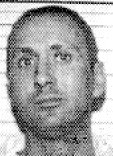
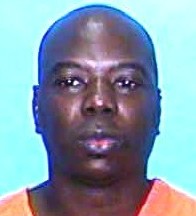
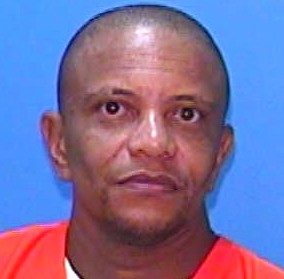
Ronald Turney Williams
Murderer Ervil LeBaron
Murderer · USA · 1972
Ervil Morrell LeBaron (1925 to August 16, 1981) was the leader of a polygamous…
35 victims
Ervil LeBaron
Murderer · USA · 1972
Ervil Morrell LeBaron (1925 to August 16, 1981) was the leader of a polygamous…
35 victims
 Brian Kevin Rosenfeld
Murderer · USA · 1985
Brian Kevin Rosenfeld Brian Kevin Rosenfeld was sentenced to three concurrent l…
23 victims
Brian Kevin Rosenfeld
Murderer · USA · 1985
Brian Kevin Rosenfeld Brian Kevin Rosenfeld was sentenced to three concurrent l…
23 victims
 Marvin Gray
Murderer · USA · 1975
Marvin Gray was convicted killer who claimed responsibility for 23 slayings and…
23 victims
Marvin Gray
Murderer · USA · 1975
Marvin Gray was convicted killer who claimed responsibility for 23 slayings and…
23 victims
 Yahweh ben Yahweh
Murderer · USA · 1980
Yahweh ben Yahweh was born and legally named Hulon Mitchell Jr. (October 27, 19…
23 victims
Yahweh ben Yahweh
Murderer · USA · 1980
Yahweh ben Yahweh was born and legally named Hulon Mitchell Jr. (October 27, 19…
23 victims
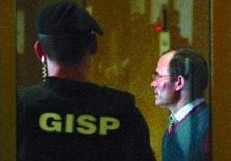 António Luís Costa
Serial killer · Portugal · 2005
24 June 2006 — António Luís Costa was arrested by the Polícia Judiciária. · 4 J…
3 victims
António Luís Costa
Serial killer · Portugal · 2005
24 June 2006 — António Luís Costa was arrested by the Polícia Judiciária. · 4 J…
3 victims
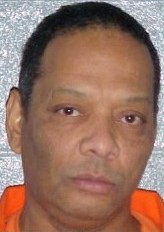 Bernard Smith
Murderer · USA · 1983
Bernard Smith was convicted in Superior Court (Yuma) of first-degree murder and…
1 victim
Bernard Smith
Murderer · USA · 1983
Bernard Smith was convicted in Superior Court (Yuma) of first-degree murder and…
1 victim
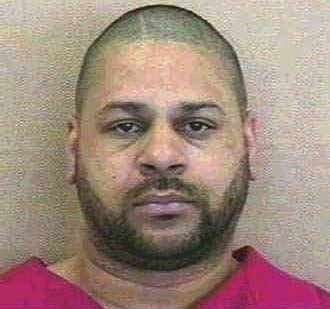 Charlie Mason Alston
Murderer · USA · 1990
Charlie Mason Alston was convicted for the murder of Pamela Renee Perry and was…
1 victim
Charlie Mason Alston
Murderer · USA · 1990
Charlie Mason Alston was convicted for the murder of Pamela Renee Perry and was…
1 victim
 Thomas Paul West
Murderer · USA · 1987
Defendant: Thomas Paul West · Victim: Don Bortle (Donald Bortle / Donald Bortle…
1 victim
Thomas Paul West
Murderer · USA · 1987
Defendant: Thomas Paul West · Victim: Don Bortle (Donald Bortle / Donald Bortle…
1 victim
 Gary Lloyd Nelson
Murderer · United Kingdom · 1993
Name: Gary Lloyd Nelson · Birth year: 1969 · Nationality: British · Residence/l…
2 victims
Gary Lloyd Nelson
Murderer · United Kingdom · 1993
Name: Gary Lloyd Nelson · Birth year: 1969 · Nationality: British · Residence/l…
2 victims
 Jose de la Cruz
Murderer · USA · 1987
Jose de la Cruz was 19 years old at the time of the murder of Domingo Rosas. At…
1 victim
Jose de la Cruz
Murderer · USA · 1987
Jose de la Cruz was 19 years old at the time of the murder of Domingo Rosas. At…
1 victim
- Gender
- male
- Country
- USA
- Location
- West Virginia/Arizona, USA
- Date of birth
- April 4, 1943
- Age at first offence
- 32
- Characteristics
- armed robbery, burglary, robbery, fugitive, escape
- Victim profile
- ??? / An off-duty West Virginia state trooper / John Bunchek
- Method of murder
- Shooting
- Date(s) of murder
- 1975 / 1979 / 1981
- Years active
- 1975–1981
- Date of arrest
- June 8, 1981 (wounded by police)
- Status
-
Sentenced to death
Sentenced to death in Arizona on April 23, 1984
Case record: Ronald Turney Williams
Background
Ronald Turney Williams was 38 years old when FBI agents wounded him in a Manhattan hotel lobby on June 9, 1981. He was on the Federal Bureau of Investigation's 10 most wanted list.
Williams had previously been twice convicted for murder. He was serving a life sentence for murder, armed robbery, kidnapping, and arson before escaping in a mass breakout from the West Virginia State Penitentiary.
Williams escaped on Nov. 7, 1979, in a mass breakout from the West Virginia State Penitentiary, where he was serving a life sentence for murder, armed robbery, kidnapping and arson. He and others commandeered a passing vehicle and fatally shot the driver, an off-duty West Virginia state trooper.
The offence
On the morning of March 12, 1981, Williams kicked in the front door of a home in Scottsdale and began to burglarize it.
While Williams was inside, a neighbor, John Bunchek, came to the home to investigate. Williams shot Bunchek in the chest, killing him. John Bunchek died from the wound.
John Bunchek, an elderly Scottsdale resident, was shot and killed on March 12, 1981. Before Bunchek was shot, Mrs. Bunchek spoke with a stranger who had asked whether the next-door neighbors were home. Mrs. Bunchek told him that they were not. Mrs. Bunchek saw the stranger walk toward the neighbors’ (the Tancoses’) house. When Mr. Bunchek arrived a few minutes later, he went to investigate. When he failed to return, Mrs. Bunchek went to the Tancos house where she found her husband lying face down in a pool of blood, having been shot in the chest.
During the burglary, items were taken from the Tancos residence.
Williams subsequently also admitted to burglarizing the home of Marjorie Larson in Virginia in December 1980. The Larson front door was opened by bodily force. The burglary was a daytime burglary during which small items were stolen. As Williams left the Larson house, he saw Larson standing in a neighbor’s driveway and shot at (but did not hit) her. The gun used to fire at Larson was the same gun that was used in the Bunchek murder and that Williams used in the shoot-out with the FBI.
Williams left Virginia after the Larson burglary although he was engaged to be married at the time.
Investigation
A white male was seen wandering around the neighborhood just before the shooting and knocked on John Bunchek’s door to ask Sylvia Bunchek whether her next-door neighbors were home.
In addition to Mrs. Bunchek, five other witnesses saw the stranger in the neighborhood that day. Brenda Wood and William Koranda talked with him face-to-face; Alan and Elizabeth Tautkus saw him for about five seconds as they drove by in their car.
Wood and the Tautkuses provided the police with a description from which a composite sketch was prepared. This sketch was televised and published in local newspapers on March 13. The sketch was seen by one of Williams’s roommates, Lynn Walsh.
Walsh told McClaskey and Le Duc that the drawing looked like "Randy." "Randolph Cooper" and "Randy Despain" were names that Williams testified he used while he was in Arizona.
The roommates looked at the drawing and made the composite face look thinner and more bearded. McClaskey then called Silent Witness and reported their suspicions that Williams was the suspect.
After the shooting and apprehension in New York, a nurse asked the FBI agent accompanying Williams to the hospital what Williams had done. The agent indicated that "he killed a bunch of people down south." When Williams mumbled "no, no, no," and the agent said "What about the old man in Scottsdale," Williams replied either "If[I] hadn't been framed in the first place, it never would have happened," or "None of this would have happened if I hadn't been framed in the first place."
Williams’s reference to being framed was to a prior murder conviction in West Virginia.
Arrest
Williams was arrested after a shoot-out with FBI agents in New York City on June 8, 1981. FBI agents wound him in the lobby of a Manhattan hotel. The lobby incident was covered by The New York Times June 9, 1981.
A special agent, Richard T. Bretzing, said Mr. Williams had been shot when he drew a gun on F.B.I. agents who had confronted him in the lobby of the George Washington Hotel, Lexington Avenue and 23d Street.
After the shoot-out, Williams was taken to Bellevue Hospital, where he was reported in stable condition.
Williams had left Arizona that same day without telling his roommates.
Trial
An Arizona grand jury indicted Williams. Following an extradition hearing, Williams was arraigned on April 3, 1983. Counsel was appointed for him, but Williams elected to represent himself at the guilt phase with the assistance of advisory counsel.
Presiding Judge: Joseph D. Howe Prosecutor: Lawrence Turoff Start of Trial: November 28, 1983 Verdict: February 10, 1984 Sentencing: April 23, 1984
Evidence and witness testimony
The evidence at trial showed that none of the items taken from the Tancos residence during the burglary was found in Williams’s possession.
The Mauser.380 semiautomatic pistol that Williams used in the New York shoot-out was the same gun that fired the bullet which killed Bunchek. Williams had bought this gun in Mechanicsville, Virginia, in 1980.
A footprint on the door of the Tancos house matched the tread marks of a type of athletic shoe that Williams had owned when he was in Scottsdale.
Mrs. Tautkus identified Williams as the person she saw on March 12, although Wood and Koranda both testified that Williams was not the man they had seen in the neighborhood.
Roommates and movement
Williams rented a house that was about three minutes from the Tuatkus home with Walsh, James McClaskey and Cheryl Le Duc.
Meanwhile, without telling anyone, Williams "threw his stuff in the trunk of the car" and took off from Scottsdale the day of the murder.
Williams rented a house with Walsh, James McClaskey and Cheryl Le Duc.
Defendant’s testimony and admissions
Williams testified on his own behalf. His defense was that McClaskey and McClaskey's friend, "Bobby," had borrowed his gun and committed the crime. However, LeDuc and Walsh testified that McClaskey looked and dressed differently from the man seen in the neighborhood that day. Neither knew of any friend of McClaskey whose name was "Bobby."
Williams also testified that he left Scottsdale to avoid being investigated for escaping from jail in 1979, committing the burglary in Virginia, and having no identification.
Williams admitted that he lied under oath (at the extradition hearing) about aliases he had used, people he knew, and his presence in Arizona at the time Bunchek was killed.
Verbatim outcome content
The jury returned a guilty verdict on the first degree murder and burglary counts on February 10, 1984.
Sentencing
Williams was sentenced to death on the murder conviction and to an aggravated term of fourteen years for the burglary conviction.
Aggravating Circumstances: Prior convictions punishable by life imprisonment; Pecuniary gain. Mitigating Circumstances: None sufficient to call for leniency.
Status remained: sentenced to death in Arizona on April 23, 1984.
Appeals
Published opinions included:
- State v. Williams (Ronald), 166 Ariz. 132, 800 P.2d 1240 (1987).
Outcome
Williams was convicted of first degree murder and armed burglary in the first degree for breaking into a home, burglarizing it, and shooting and killing someone who saw him, John Bunchek.
John Bunchek was shot and killed on March 12, 1981.
Other details
Williams was described as an escaped murderer by The New York Times.
The George Washington Hotel was located on Lexington Avenue and 23d Street, as referenced in the June 9, 1981 report.
A special agent named Richard T. Bretzing was quoted regarding the circumstances of the hotel-lobby shooting.
At trial, Brenda Wood, William Koranda, Alan Tautkus, and Elizabeth Tautkus provided information that led to the composite sketch.
Silent Witness was contacted by McClaskey.
Spotted an error, or have more information about this case?