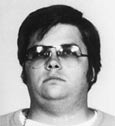
Mark David Chapman
Murderer Ervil LeBaron
Murderer · USA · 1972
Ervil Morrell LeBaron (1925 to August 16, 1981) was the leader of a polygamous…
35 victims
Ervil LeBaron
Murderer · USA · 1972
Ervil Morrell LeBaron (1925 to August 16, 1981) was the leader of a polygamous…
35 victims
 Brian Kevin Rosenfeld
Murderer · USA · 1985
Brian Kevin Rosenfeld Brian Kevin Rosenfeld was sentenced to three concurrent l…
23 victims
Brian Kevin Rosenfeld
Murderer · USA · 1985
Brian Kevin Rosenfeld Brian Kevin Rosenfeld was sentenced to three concurrent l…
23 victims
 Marvin Gray
Murderer · USA · 1975
Marvin Gray was convicted killer who claimed responsibility for 23 slayings and…
23 victims
Marvin Gray
Murderer · USA · 1975
Marvin Gray was convicted killer who claimed responsibility for 23 slayings and…
23 victims
 Yahweh ben Yahweh
Murderer · USA · 1980
Yahweh ben Yahweh was born and legally named Hulon Mitchell Jr. (October 27, 19…
23 victims
Yahweh ben Yahweh
Murderer · USA · 1980
Yahweh ben Yahweh was born and legally named Hulon Mitchell Jr. (October 27, 19…
23 victims
 Jeanette Swanson
Homicide · USA · 2002
Jeanette Swanson was convicted of deliberate homicide for killing her two child…
2 victims
Jeanette Swanson
Homicide · USA · 2002
Jeanette Swanson was convicted of deliberate homicide for killing her two child…
2 victims
 Rodney Gray
Murderer · USA · 1994
Rodney Gray was convicted of capital murder for killing Grace Blackwell, a 79-y…
1 victim
Rodney Gray
Murderer · USA · 1994
Rodney Gray was convicted of capital murder for killing Grace Blackwell, a 79-y…
1 victim
 Herbert Rowse Armstrong
Murderer · United Kingdom · 1921
Herbert Rowse Armstrong (1869 - 31 May 1922) practised as a solicitor and was c…
1 victim
Herbert Rowse Armstrong
Murderer · United Kingdom · 1921
Herbert Rowse Armstrong (1869 - 31 May 1922) practised as a solicitor and was c…
1 victim
 John Emil List
Mass murderer · USA · 1971
John Emil List was a devout member of the Lutheran church who taught Sunday sch…
5 victims
John Emil List
Mass murderer · USA · 1971
John Emil List was a devout member of the Lutheran church who taught Sunday sch…
5 victims
 John Rowles
Murderer · 1929
John Rowles was the subject of an investigation that connected multiple disappe…
3 victims
John Rowles
Murderer · 1929
John Rowles was the subject of an investigation that connected multiple disappe…
3 victims
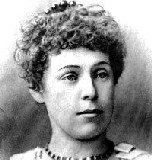 Florence Maybrick
Murderer? · United Kingdom · 1899
Florence Elizabeth Maybrick (Florence Maybrick) was an American woman convicted…
1 victim
Florence Maybrick
Murderer? · United Kingdom · 1899
Florence Elizabeth Maybrick (Florence Maybrick) was an American woman convicted…
1 victim
- Gender
- male
- Country
- USA
- Location
- Manhattan, New York, USA
- Date of birth
- May 10, 1955
- Age at first offence
- 25
- Characteristics
- history of mental illness, drugs, motive unclear, domestic violence
- Victim profile
- Former Beatles member John Lennon, 40
- Method of murder
- Shooting (Charter Arms .38 Special revolver)
- Date(s) of murder
- December 8, 1980
- Years active
- 1980
- Date of arrest
- Same day
- Status
-
Life imprisonment
Sentenced to 20 years to life in prison in August 1981
Case record: Mark David Chapman
Background
Mark David Chapman (born May 10, 1955, in Fort Worth, Texas) shot and killed musician John Lennon on December 8, 1980. Chapman remained at the scene until he was arrested and claimed that The Catcher in the Rye would explain his perspective and motivation.
Chapman was born in Fort Worth, Texas, the oldest child of David Curtis Chapman, a staff sergeant in the Air Force, and Diane Elizabeth Pease, a nurse. Shortly after Chapman’s birth, they moved to Atlanta. His sister, Susan, was born when he was seven.
Chapman reported that he lived in dread of his father, who would beat his mother. He reported: “I'd wake up hearing my mother screaming my name, and it just scared the fire out of me, and I'd run in there and make him go away. Sometimes I think I actually pushed him away.” He reported that he had fantasized about getting a gun and killing his father. He was considered a normal boy, and his IQ was assessed as above average.
Chapman described his childhood to psychiatrists as “unhappy,” noting that he was the type of child often picked on by other boys. As a result, he relied much on imaginary people for entertainment.
Chapman told journalist Jack Jones: “I used to fantasize that I was a king, and I had all these Little People around me and that they lived in the walls. And that I was their hero and was in the paper every day and I was on TV every day, their TV, and that I was important. They all kind of worshiped me, you know. It was like I could do no wrong.” He also said: “sometimes when I'd get mad I'd blow some of them up. I'd have this push-button thing, part of the [sofa], and I'd like get mad and blow out part of the wall and a lot of them would die. But the people would still forgive me for that, and, you know, everything got back to normal. That's a fantasy I had for many years.”
In his first two years of high school, Chapman was a drug user. He would sometimes skip school and once ran away to live on the streets for two weeks. Chapman reported that he was bullied and that he was not a good athlete.
His favorite band was The Beatles. He began work as a YMCA summer camp counselor, where he was very popular among the children, who nicknamed him “Nemo.” He won an award for Outstanding Counselor and was made assistant director. The executive director of his branch said: “If there ever was a person who had the potential for doing good, it was Mark.” Chapman played guitar.
Chapman made two brief attempts at college, including Covenant College in Lookout Mountain, Georgia, but dropped out. He was fired from several jobs.
Later he worked successfully with the YMCA with Vietnamese refugees at a resettlement camp at Fort Chaffee in Arkansas, after a brief visit to Lebanon on the same work. He was named an area coordinator and a key aide to David Moore, the program director. In 1980, Moore told reporters: “He was really caring with the refugees and he worked his tail off to do everything exactly right. He was a super kid.” It was reported that Chapman accompanied Moore to meetings with government officials, and that President Gerald Ford shook his hand.
Chapman joined his girlfriend, Jessica Blankenship, as a student at Covenant College, a strict Presbyterian university. However, Chapman fell behind in his studies and career, became obsessed with guilt over having an affair, and sank into a deep depression. He returned to work at the resettlement camp but left after an argument.
Chapman took a job as a security guard, at first unarmed, but then he took a week-long course that qualified him as an armed guard. He left home after arguing with his parents and lived at the YMCA or on the streets, spending money on short trips to Hawaii.
In 1977, Chapman attempted suicide by gassing himself inside his car. The vacuum cleaner hose melted in the exhaust pipe and he was discovered. He was hospitalized for mental illness. After his release, the hospital hired him part-time. His supervisor reported: “All the patients, especially the older ones that nobody else would talk to, just loved that boy, and I can't say enough good about him.”
A friend recommended The Catcher in the Rye to Chapman, and the story took on personal significance for him. It was reported that he wished to model his life after its protagonist, Holden Caulfield. Chapman went on a trip around Far Eastern countries.
Chapman began a relationship with a travel agent, a Japanese-American woman named Gloria Abe. They married on 2 June 1979. He started work as a solitary printer but left after arguing with hospital employers. He developed obsessions and got into debt. He later said that around this time he started to hear the voices of the “Little People” again.
In September 1980, Chapman wrote a letter to a friend, Lynda Irish, saying “I'm going nuts,” signed “The Catcher in the Rye”.
The offence
Chapman went to New York in October 1980 planning to kill Lennon but left to obtain ammunition from his unwitting friend Dana Reeves in Atlanta. He returned to New York in November. Chapman reported that after going to the cinema and being inspired by the film Ordinary People, he returned to Hawaii, telling his wife that he had been obsessed with killing Lennon but had snapped out of it.
On December 6, Chapman flew back to New York. He reported that he reenacted some fictional events from Holden Caulfield’s stay in The Catcher in the Rye.
On the morning of December 8, 1980, after leaving personal items in his hotel room for police to find, Chapman bought a copy of The Catcher in the Rye from a New York bookstore. In it, he wrote “This is my statement” and signed “The Catcher in the Rye.”
Chapman spent most of the day near the entrance to The Dakota apartment building where Lennon and his wife Yoko Ono lived, talking to other fans and the doorman. At one point, Chapman missed seeing John Lennon step out of a cab and enter The Dakota on the morning of December 8. Chapman conversed with the Lennons’ housekeeper after she had just taken their five-year-old son Sean for a walk, and Chapman patted Sean on the head as they departed.
Around 5:00 p.m., John and Yoko left The Dakota for a recording session at Record Plant Studios. As they walked towards their limousine on the curb, Chapman shook hands with Lennon and held out a copy of Lennon’s new album, Double Fantasy, for him to sign. Photographer Paul Goresh was present when Lennon signed Chapman’s album and took a photo.
Chapman reported: “At that point my big part won and I wanted to go back to my hotel, but I couldn't. I waited until he came back. He knew where the ducks went in winter, and I needed to know this(a reference to The Catcher In The Rye).”
Around 10:50 p.m., the Lennons’ limousine returned to The Dakota. Lennon and Ono passed by Chapman and walked towards the archway entrance of the building’s courtyard. Chapman turned from the street and fired five hollow point bullets from a Charter Arms .38 revolver that he had purchased in Hawaii. Four of the bullets hit Lennon’s back and shoulder. One bullet pierced Lennon’s aorta, causing severe blood loss by aortic dissection. It has been suggested that before firing Chapman called out “Mr. Lennon!” and dropped into a “combat stance,” but this was not stated in court hearings or interviews.
Chapman remained at the scene, taking out his copy of The Catcher in the Rye and trying to read it, until the police arrived. New York Police Department officers who first responded recognized that Lennon’s wounds were severe and decided to transport him in their police car to Roosevelt Hospital.
Chapman was arrested without incident. In his statement to police three hours later, Chapman stated: “I’m sure the large part of me is Holden Caulfield, who is the main person in the book. The small part of me must be the Devil.”
Lennon was declared dead at 11:20 p.m. after losing more than 80% of his blood.
Investigation
Chapman left personal items in his hotel room for police to find. Officers transported Lennon to Roosevelt Hospital.
Arrest
Trial
Chapman was charged with second degree murder.
At an initial hearing in January 1981, Chapman’s lawyer Jonathan Marks entered a plea of “not guilty, by reason of insanity.” Chapman was interviewed for hundreds of hours by psychiatrists. Nine were prepared to testify at trial: six who gave clinical opinion that he was psychotic, and three who gave clinical opinion that he fell short of necessary criteria for psychosis.
In June, Chapman told Marks he wanted to drop the insanity defense and plead guilty. Marks strenuously objected with “serious questions” over Chapman’s sanity and legally challenged his competence to make this decision. During further assessment, psychiatrists concluded Chapman was delusional but competent.
In the pursuant hearing, Chapman said God had told him to plead guilty and that he wouldn’t change his plea regardless of his sentence. Judge Dennis Edwards declared Chapman fit to plead.
Chapman was allowed to plead guilty to second degree murder before his trial began and was sentenced afterward.
Sentencing
In August 1981, Chapman was sentenced to 20 years to life in prison, slightly less than the maximum possible of 25 years to life.
Appeals
No appeal information was included in the provided material.
Outcome
Chapman was imprisoned from 1981.
Aftermath
Chapman was imprisoned since 1981 in Attica State Prison near Buffalo in Western New York. He was reported to be an evangelical Christian. He was separated from other prisoners due to concerns for his safety and was confined within a Secure Housing Unit for violent and at-risk prisoners. There were 105 other prisoners in the building “who are not considered to pose a threat to him,” according to the New York State Department of Correctional Services.
Chapman had his own prison cell but “spends most of his day outside his cell working on housekeeping and in the library.” It was reported that he worked in prison as a legal clerk and kitchen helper, but otherwise his activities were severely curtailed.
Chapman was denied from participating in the Cephas Attica workshops. He was also prohibited from attending the prison’s violence and anger management classes due to concern for his safety.
Chapman liked to read and write short stories. At his parole board hearing in 2004, Chapman said that if released he would like to minister on Jesus and God. He said that there was a possibility he could find work as a farmhand or return to his previous trade as a printer.
Chapman was on the Family Reunion Program and was allowed two visits a year with his wife. Under the program, he could spend up to 42 hours alone with his wife in a specially built prison home. He received occasional visits from his sister, a few friends, and clerics. His mother, his only other regular visitor, died in February 2004.
In 2004, James Flateau, spokesman for the state Department of Correctional Services, said Chapman had been involved in three “minor incidents” between 1989 and 1994 for delaying an inmate count and refusing to follow an order, but nothing else since 1994.
Parole applications and campaigns
Chapman was denied parole four times by a three-member board in closed hearings lasting less than an hour in October 2000, October 2002, October 2004, and October 2006.
Prior to the 2000 hearing, Yoko Ono sent a letter to the board opposing Chapman’s release, referring to Chapman as “the subject.” Ono stated that Lennon “brought light and hope to the whole world” and “would have gladly changed his position with 'the subject' and live the life of protection that 'the subject' enjoys now.” Ono stated: “...myself and John's two sons would not feel safe for the rest of our lives – people who are in positions of high visibility and outspokenness such as John would also feel unsafe.” She also stated: “many will feel betrayed. Anger and fear would rise again [such that] people in the outside world who are strongly distressed about what he has done... would feel that it is unfair that 'the subject' is rewarded with a normal life while John lost his. Violence begets violence.”
State Senator Michael F. Nozzolio, chairman of the Senate Crime Victims, Crime and Correction Committee, wrote to Parole Board Chairman Brion Travis. Nozzolio wrote: “It is the responsibility of the New York State Parole Board to ensure that public safety is protected from the release of dangerous criminals like Mark David Chapman.”
An online petition to the parole board never to release Chapman was started by Sarajane Sein. As of August 3, 2007, it had reportedly collected 9299 signatures supporting statements such as: “Chapman committed a heinous crime, unprovoked and without remorse”, “He deserves to pay for this with life in prison” and “It is also a matter of public safety that he not be released.”
At a 50-minute hearing in 2000, Chapman stated he was not a danger to society and had overcome psychological problems at the time of the murder. He stated that as a conservative he believed he did not deserve to be free and that: “I believe once you take a person's life, there's no way you can make up for that. Period.” He also spoke about regret for the effect on Yoko Ono.
The Board’s page of explanation stated that while Chapman had an “exemplary disciplinary record” while in prison, partly because he served his time in special protective housing, “you have been unable to avail yourself of anti-violence and/or anti-aggression programming.” The Board also stated: “Your most vicious and violent act was apparently fueled by your need to be acknowledged... During your parole hearing, this panel noted your continued interest in maintaining your notoriety.” The Board concluded that releasing Chapman at that time would “deprecate the seriousness of the crime and serve to undermine respect for the law.”
Robert Gangi, a lawyer for the Correctional Association of New York, said it was unlikely Chapman would ever be freed: “The fact that it was John Lennon... eliminates any hope for even a slim chance for Chapman being released... The parole board is not going to risk the political heat by releasing Chapman.”
An additional online petition was started in 2001 by Roland Porter of the John Lennon Society. The petition stated: “This Petition is designed to keep the convicted Killer of John Winston (Ono) Lennon (Mark David Chapman) in prison without Parole!”
In 2002, the parole board stated that releasing Chapman after 22 years in prison would “deprecate the seriousness” of the crime and that while “your behavioral record continues to be very positive, your current positive adjustment...cannot predict your community behavior.”
The parole board held a third hearing in 2004. The board reported that its decision was based on the interview, a review of records, and deliberation. The board said its decision “was based on the extreme malicious intent you exhibited during the instant offense where you fired a handgun multiple times striking your target”. One of the reasons given by the Board was subjecting Yoko Ono to “monumental suffering by her witnessing the crime.” The board stated: “During the interview, your statements for motivation acknowledges the attention you felt this murder would generate,” and “To release you on parole at this time would significantly undermine respect for the law.” Around 6,000 people had signed the online petition by that time. Lennon fans were threatening retribution if he were to be released.
In October 2006, the parole board held a 16-minute hearing and concluded it remained “concerned about the bizarre nature of this premeditated and violent crime... While the panel notes your satisfactory institutional adjustment, due to the extremely violent nature of the offense your release would not be in the best interest of the community” or his own personal safety.
On December 8, 2006, Yoko Ono published a one-page advertisement in several newspapers saying that while December 8 should be a “day of forgiveness,” she had not yet forgiven Chapman and wasn’t sure if she was ready to yet.
Chapman’s next parole hearing was scheduled for October 2008.
Motivation and mental health
It was suggested that Chapman, as a young boy, was “very sensitive” and that his parents’ anger towards each other intruded upon his normal development, and that he retreated into a fantasy world.
For a period during his teens, Chapman regularly smoked marijuana and ingested LSD. He was a fan of the Beatles, particularly Lennon, and was reportedly angered by Lennon’s 1966 remark that the Beatles were “more popular than Jesus.”
Jan Reeves, sister of one of Chapman’s best friends, reported: “seemed really angry toward John Lennon, and he kept saying he could not understand why John Lennon had said it. According to Mark, there should be nobody more popular than the Lord Jesus Christ. He said it was blasphemy.” Chapman also angered at the song “Imagine” at prayer meetings and religious rallies; Chapman and his prayer group sang a parody with the lyric “Imagine, imagine John Lennon is dead.”
Chapman had read in a library book, John Lennon: One Day at a Time by Anthony Fawcett, about Lennon’s life in New York. Chapman’s wife Gloria said: “He was angry that Lennon would preach love and peace but yet have millions [of dollars].”
Chapman stated: “He told us to imagine no possessions, and there he was, with millions of dollars and yachts and farms and country estates, laughing at people like me who had believed the lies and bought the records and built a big part of their lives around his music.”
Chapman became obsessed with Catcher in the Rye after rereading it for the first time since high school. He was particularly influenced by the book’s polemic against “phoniness” and the need to protect people, especially children. Chapman held a copy of the book when he murdered Lennon, in which he wrote “This is my statement.”
After his arrest, he wrote a letter to the media urging everyone to read the “extraordinary book” that may “help many to understand what has happened”.
At sentencing, Daniel W. Schwartz said Chapman wanted to kill Lennon because he viewed him as a “phony”.
Chapman later said he thought the murder would turn him into a Holden Caulfield, a “quasi-savior” and “guardian angel”.
Chapman recalled listening to the Plastic Ono Band album in the weeks before the murder and stated: “I would listen to this music and I would get angry at him, for saying that he didn't believe in God... and that he didn't believe in the Beatles. This was another thing that angered me, even though this record had been done at least ten years previously. I just wanted to scream out loud, 'Who does he think he is, saying these things about God and heaven and the Beatles?' Saying that he doesn't believe in Jesus and things like that. At that point, my mind was going through a total blackness of anger and rage. So I brought the Lennon book home, into this Catcher in the Rye milieu where my mindset is Holden Caulfield and anti-phoniness.”
It was said that at some point Chapman had begun praying to the devil as well as to God for strength.
Chapman later stated: “He told us to imagine no possessions, and there he was, with millions of dollars and yachts and farms and country estates, laughing at people like me who had believed the lies and bought the records and built a big part of their lives around his music.” He also stated that while Holden was not violent, he did: “have a violent thought of shooting someone, of emptying a revolver into this fellow's stomach, someone that had done him wrong” despite being “a very sensitive person and he probably would not have killed anybody as I did. But that's fiction and reality was standing in front [of] the Dakota.”
After his arrest, Chapman underwent dozens of assessments by different psychiatrists. He described his anger toward his father, his identification with Holden Caulfield and with Dorothy of The Wizard of Oz, and his conferences with the “Little People”. He also provided a list of other celebrities he had thought about killing.
Chapman told Jack Jones that he told his “Little People” he intended to go to New York and kill John Lennon and that they begged him not to, saying: “Please, think of your wife. Please, Mr. President. Think of your mother. Think of yourself.” Chapman said he told them his mind was made up and their reaction was silence.
Chapman stated that while in New York he thought about leaping to his death from the Statue of Liberty.
Overall, psychiatrists concluded that while Chapman was delusional he was competent to stand trial. Six prepared to testify for the defense that he was psychotic. The prosecution presented three psychiatrists who said Chapman fell short of full psychosis. Chapman later said he thought he was suffering from schizophrenia, a diagnosis made by some in his pre-sentencing psychiatric assessments. Journalist Jack Jones referred to Chapman as a sociopath.
At the parole board hearing in 2000, Chapman stated: “I feel that I see John Lennon now not as a celebrity. I did then. I saw him as a cardboard cutout on an album cover. I was very young and stupid, and you get caught up in the media and the records and the music. And now I've come to grips with the fact that John Lennon was a person. This has nothing to do with being a Beatle or a celebrity or famous.”
At a 2006 parole board hearing, Chapman stated: “The result would be that I would be famous, the result would be that my life would change and I would receive a tremendous amount of attention, which I did receive... I was in a very confused, dark place. I was looking for reasons to vent all that anger and confusion and low self-esteem.” He also stated: “I believe that if I really wanted to, I could have changed my mind; I had ample opportunity to do it and I didn't do it and I regret that deeply.”
Media and film
For the first six years in Attica, Chapman refused all requests for interviews. He later told James R. Gaines his story of the murder and his youth. Gaines turned the interviews into a three-part, 18,000-word People magazine series in February and March 1987. Chapman told the Parole Board it was an interview “which I regret.”
Chapman gave interviews to Jack Jones of the Rochester, N.Y., Democrat and Chronicle. In 1992, Jones published a book titled Let Me Take You Down: Inside the Mind of Mark David Chapman, the Man Who Killed John Lennon.
In 2000, with his first parole hearing approaching, Jones asked Chapman to tell his story for “Mugshots,” a CourtTV Network program. Chapman refused to go on camera but, after praying over it, consented to tell his story in a series of audiotapes. He told the Parole Board that the program “took a lot out of context, but that's okay.” He also said: “Those three hours were really great, because I was able really – it was like a confession almost. I was able to accept my responsibility in this for probably the first real time, and I told him I didn't deserve anything.”
Chapman’s experiences during the weekend on which he committed the murder were adapted into the feature-length movie Chapter 27, starring Jared Leto as Chapman and Lindsay Lohan as a Lennon fan who befriends him. The film’s title referenced The Catcher in the Rye, which has 26 chapters, and was inspired by Chapter 27 of Robert Rosen’s book Nowhere Man: The Final Days of John Lennon, according to Spanish-language newsweekly Proceso and other Latin American publications.
Chapter 27 premiered at the Sundance Film Festival in January 2007 and received mostly negative reviews; it failed to land a distributor in the USA. It was picked up for distribution in Europe, Asia, and South America.
Another film, The Killing of John Lennon, directed by Andrew Piddington and starring Jonas Ball as Chapman, premiered at the Edinburgh International Film Festival in August 2006.
John Lennon’s murder in popular culture
The material provided listed multiple references in popular culture, including:
- Marilyn Manson’s album Holy Wood (In the Shadow of the Valley of Death) and references in the song “Lamb of God”.
- Elton John’s 1982 song “Empty Garden (Hey Hey Johnny)” from the album Jump Up!.
- George Harrison’s song “All Those Years Ago” referring to Chapman as “The devil's best friend... someone who offended all.”
- David Gilmour’s song “Murder” on his 1984 solo album About Face.
- Warrant’s 1992 album Dog Eat Dog song “Andy Warhol Was Right.”
- Jedi Mind Tricks track “Put 'Em In The Grave” stating: “I'm like Mark David Chapman with a Salinger book”.
- ...And You Will Know Us by the Trail of Dead song titled “Mark David Chapman” in their 1999 album Madonna.
- Half Man Half Biscuit song “When the Evening Sun Goes Down” including the lyric “I'm off to see the Bootleg Beatles, as the bootleg Mark Chapman”.
- Loudon Wainwright III mentions Chapman in “Not John” on his 1982 album I'm Alright.
- Julian Cope track “Don't Call Me Mark Chapman,” appearing on his 1994 album Autogeddon.
- Bad Religion reference in “Don't Pray on Me” on their album *Recipe for Hate” with the line: “Mark David did it to John”.
- Of A Revolution song “Dakota” on the 2005 album Stories of a Stranger.
- Eighteen Visions song “Who the F*ck Killed John Lennon” on their release Until The Ink Runs Out.
- Sumo’s “Cállate Mark” (“Shut up Mark”) from Fiebre.
- Christine Lavin recorded “The Dakota” referencing the murder for her 1985 album Future Fossils.
- A scene in the 1997 film Private Parts involving Howard Stern insisting Chapman be killed if released.
- The play and film Six Degrees of Separation mentions Mark Chapman during a monologue on the anti-social aspects of Catcher in the Rye.
- A conspiracy theory that Chapman was allegedly programmed to carry out the murder, featured in an episode of Law & Order.
- Fenton Bresler’s book Who Killed John Lennon.
- Psychic TV album Jack the TAB: Tekno Acid Beat with Mark David Chapman detailing reasons for shooting Lennon while a line from Beatles’ “Happiness Is a Warm Gun” was looped.
- EMF single “Lies” with a voice sample of Mark Chapman; Yoko Ono achieved an injunction and a modified version was included in future pressings.
- The Cranberries song “I Just Shot John Lennon” on the 1996 release To the Faithful Departed.
- U2’s spoken references to Chapman during “Bullet the Blue Sky” with the line normally a variation on: “I can make a wound that won't heal, 38 mm like the police, I'm at the door with John and Yoko, screaming 'love and peace', an old tune soon to be deceased. John, we don't need your help! America's at war with itself. More bodybags, than Vietnam, what's my name Mark Chapman”
- References in WrestleMania 22.
- Paul McCartney poem “Jerk of All Jerks.”
- Mindless Self Indulgence song titled “Mark David Chapman” based on fan votes.
- Freddie Mercury wrote “Life is real (Song for Lennon)” included on Queen’s 1982 album Hot Space.
- O.A.R. track “Dakota” on Stories of a Stranger.
- Additional musical references described in the provided material.
Other details
During a “LARRY KING LIVE” interview transcript excerpt, Chapman was identified as “JOHN LENNON'S ASSASSIN” by the host. The transcript included statements and exchanges.
Chapman said: “Well, Larry, I'm well now. I've had a number of years of wellness. I feel good. There's always been things inside of me that I wanted to get and tell me why I did what I did.”
When asked about his sentence, Chapman said: “Twenty years to life.”
When asked about parole eligibility, Chapman stated: “I'm eligible for parole in eight years.”
Chapman said he accepted responsibility: “It was me, Larry, and I accept full responsibility for what I did.”
Chapman said: “On December 8, 1980 Mark David Chapman was a very confused person. He was literally living inside of a paperback novel, J.D. Salinger's "The Catcher in the Rye." He was vacillating between suicide, between catching the first taxi home, back to Hawaii, between killing, as you said, an icon.”
On the question of whether he would have killed someone else, Chapman said: “If Lennon would have unfortunately died a few days prior, say, in an automobile accident, would you have stalked someone else? I can't answer that question. I don't know. I was so bonded with John Lennon at that point, what I told them is I'd probably be crushed.”
Chapman stated: “I have regrets. I'm sorry for what I did.”
On why he wanted to shoot, Chapman said: “Mark David Chapman at that point was a walking shell who didn't ever learn how to let out his feelings of anger, of rage, of disappointment. Mark David Chapman was a failure in his own mind. He wanted to become somebody important, Larry. He didn't know how to handle being a nobody.”
Chapman said: “Well, if you want to pick it up from the night, I was standing there with a gun in my pocket.”
When asked if he knew he was going to shoot, Chapman said: “Absolutely.”
Chapman described the shooting: “I took five steps toward the street, turned, withdrew my Charter Arms .38 and fired five shots into his back.” He stated: “All in his back.” When asked if Lennon saw it coming, Chapman said: “He never saw anything coming, Larry. It was a very quick -- it was a rough thing.”
Chapman described what happened after: he said he felt shock, stood with the gun hanging limply, and Jose the doorman shook the gun out of his hand.
When asked about the book, Chapman said: “I'm not blaming a book. I blame myself for crawling inside of the book and I certainly want to say that J.D. Salinger and "The Catcher in the Rye" didn't cause me to kill John Lennon.”
Chapman said: “Well, not medication and not doctors, but the Lord.”
Chapman also stated: “Well, I became a Christian when I was 16, Larry, and that lasted about a year of genuine walking with him.”
Chapman said: “No, I don't think they're going let me out on the parole date.”
In response to questions about conspiracy theories, Chapman said: “Hogwash.”
When asked about prison safety, Chapman said: “Every prisoner in Attica has his own cell.”
In response to treatment questions, Chapman said: “I'm treated humanely.”
When asked about homosexual attacks in his building, Chapman said: “None, zero.”
When asked about copycatters, Chapman said: “I regret that the most, because John Lennon wasn't the only person to die because of this. There were suicides after, which I deeply regret.”
Chapman said: “I certainly don't think they're going let me out on the parole date.”
In further discussion, Chapman described celebrity stalking and said: “People stalk celebrities... because they have nothing inside themselves. Their esteem is rock bottom.”
Chapman said about prior letters: “First time I've ever said this, Larry. Robert Bardo wrote me three letters. I don't have them anymore.”
Chapman said: “Well, again, he wasn't saying he was going to kill anyone. He was just asking me questions.”
Chapman said: “Probably not one of the other Beatles. This thing started, Larry, when I got angry at Lennon.”
In remarks included from Jack Jones as guest in the transcript, Jones stated: “You come away with the feeling that Mark is an unusual individual. He's a sociopath, but he is much more intelligent than, I think, most of these people.”
Jones said: “It keys in that here's a very cold, methodical dispassionate person who carried out an incredibly premeditated act of violence.”
Jones stated: “Mark David Chapman buys it. Mark believes fully in God as he perceives God to be.”
Jones stated: “Some psychologists say he was killing his father but, I think, on a much more relevant level he was killing a part of all of us. He wanted to hurt the world.”
Jones also said: “I don't think he wants to get out.”
When asked about whether he would accept parole if offered, Jones said: “I don't think, particularly if it were offered today or tomorrow, he would get out.”
Spotted an error, or have more information about this case?