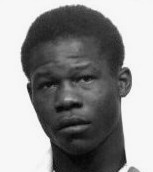
Anthony Leroy Pierce
Murderer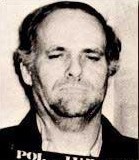 Ervil LeBaron
Murderer · USA · 1972
Ervil Morrell LeBaron (1925 to August 16, 1981) was the leader of a polygamous…
35 victims
Ervil LeBaron
Murderer · USA · 1972
Ervil Morrell LeBaron (1925 to August 16, 1981) was the leader of a polygamous…
35 victims
 Brian Kevin Rosenfeld
Murderer · USA · 1985
Brian Kevin Rosenfeld Brian Kevin Rosenfeld was sentenced to three concurrent l…
23 victims
Brian Kevin Rosenfeld
Murderer · USA · 1985
Brian Kevin Rosenfeld Brian Kevin Rosenfeld was sentenced to three concurrent l…
23 victims
 Marvin Gray
Murderer · USA · 1975
Marvin Gray was convicted killer who claimed responsibility for 23 slayings and…
23 victims
Marvin Gray
Murderer · USA · 1975
Marvin Gray was convicted killer who claimed responsibility for 23 slayings and…
23 victims
 Yahweh ben Yahweh
Murderer · USA · 1980
Yahweh ben Yahweh was born and legally named Hulon Mitchell Jr. (October 27, 19…
23 victims
Yahweh ben Yahweh
Murderer · USA · 1980
Yahweh ben Yahweh was born and legally named Hulon Mitchell Jr. (October 27, 19…
23 victims
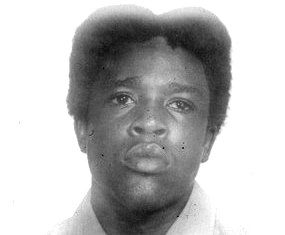 James Dupree Henry
Murderer · USA · 1974
James Dupree Henry was sentenced by Florida state courts to be executed for the…
1 victim
James Dupree Henry
Murderer · USA · 1974
James Dupree Henry was sentenced by Florida state courts to be executed for the…
1 victim
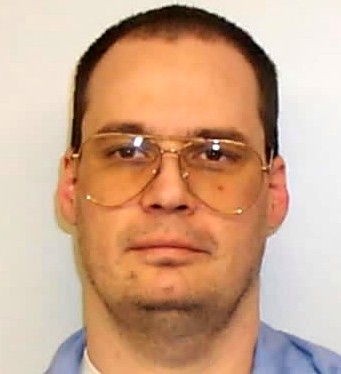 Darrell Edward Payne
Murderer · USA · 2000
Darrell Edward Payne was 36 and of Nampa at the time of the July 2000 murder of…
1 victim
Darrell Edward Payne
Murderer · USA · 2000
Darrell Edward Payne was 36 and of Nampa at the time of the July 2000 murder of…
1 victim
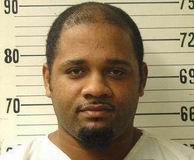 James Stout
Murderer · USA · 1995
James P. Stout and three accomplices were accused of carjacking, abducting and…
1 victim
James Stout
Murderer · USA · 1995
James P. Stout and three accomplices were accused of carjacking, abducting and…
1 victim
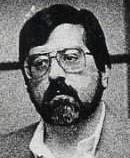 Richard Wade Farley
Mass murderer · USA · 1988
Richard Wade Farley (born 1948) was an American convicted mass murderer. He sta…
7 victims
Richard Wade Farley
Mass murderer · USA · 1988
Richard Wade Farley (born 1948) was an American convicted mass murderer. He sta…
7 victims
- Gender
- male
- Country
- USA
- Location
- Harris County, Texas, USA
- Date of birth
- J uly 20, 1959
- Age at first offence
- 18
- Characteristics
- robbery
- Victim profile
- Fred Johnson, 40 (restaurant manager) / Edward King, 37 (death row inmate)
- Method of murder
- Shooting / St abbing with homemade knife
- Date(s) of murder
- August 4, 1977 / August 1979
- Years active
- 1977–1979
- Date of arrest
- August 4, 1977
- Status
-
Sentenced to death
Sentenced to death on March 20, 1978
Name and identifiers
Anthony Leroy Pierce (also known as Yatombi Ikei), TDCJ-ID Polunsky Unit 3872, and FM 350 South Livingston, TX 77351 USA (Case No: 267685; Case No. 267685); Anthony Pierce #000587.
Background
Yatombi Ikei (pronounced Ya-Tom-Be/ I-Key) was born Anthony L. Pierce on July 20, 1959, in Harris County, an annexation of the City of Houston, Texas. The person was arrested on August 4, 1977 and was charged with the robbery/murder of the manager of a fast food restaurant. The person stated that he was eighteen years of age at the time and described this as making him the youngest (then) to receive the death penalty by an all white jury. The person stated that he had never been to prison before and that he was placed in a youth facility. The person stated that a sealed order was placed on his file by a juvenile court judge once he turned 18 years of age, but the order was violated. The person stated that one juvenile act was illegally used as an extraneous factor during the punishment phrase to get him to death row. The person stated that he had been tried three times for this same case and that he was denied every opportunity to be fairly represented all three trials.
The offence
On August 4, 1977, the person was arrested and charged with the robbery/murder of the manager of a fast food restaurant.
Investigation
The person described that several eye-witnesses identified someone else other than himself as being the perpetrator. The person described ballistic tests conducted by the Houston Police Department Crime Lab on his person and clothing reportedly worn during the crime, stating the results came up negative for gun-powder residue. The person stated that fingerprints taken from the crime scene did not match his. The person stated that a trace metal test was conducted and came up negative as well.
The person stated that arrest records of the Houston Police Department would have verified that he could not have come into the place in question on five different occasions prior to the day of the crime and threaten to kill the deceased, because he was in the custody of the Harris County Sheriff’s Department on an unrelated case that was later dismissed. The person stated that audio portion of the optometer readers video recording of the place he was at was available from different routes, and that this would have shown he could not have gotten from point A to point B at the time stated for the crime.
Arrest
On August 4, 1977, the person was arrested.
Trial
The person stated that he pleaded "not guilty". He stated that his case centered on misidentification. He stated that trial counsel referred to fingerprints recovered from the restaurant counter that did not match him. He stated that no gun was recovered and no traces of gun powder residue were found on his hands.
The person stated that the conviction was almost solely based on questionable identification by witnesses at the murder scene. He stated that two witnesses allegedly saw the murder through a reflection in the window of the restaurant and identified someone other than Pierce as the perpetrator. He stated that other witnesses either could not identify or incorrectly identified items of clothing recovered from him when he was arrested a short time after the murder. The person stated there were inconsistencies in witness testimonies regarding the murder scene.
The person stated that there were conflicts between him and the victim in the restaurant at various times before the day of the murder, and that he could not have been involved because he was in custody at the time those events were supposedly happening. He stated that the district attorney’s office should have known about this having access to records regarding his custody.
The person stated that defense counsel failed to properly impeach witnesses with available information. The person stated that defense counsel failed to show that he could not have committed the crime because someone much taller than he had to have shot the gun, based on the angel of the bullet wound. The person stated that the trial court improperly admitted evidence of purported extraneous offence.
The person stated that the trial court improperly admitted evidence of purported extraneous offence of him. He stated that witness Elray Mosley said there had been conflicts between him and the victim in the restaurant at various times before the day of the murder, and that those conflicts could not have occurred because he was in custody at the time they supposedly happened.
The person stated that the jury selection/venire process involved inconsistencies in their previous statements prior to the court’s showing, and that they should have all been challenged for cause. The person stated that the jurors could not consider the full range of punishment nor consider issuing a lesser form of punishment once they had found someone guilty of an intentional murder, as required by law. The person stated that the issue involved the distance of two separate incidence.
The person stated that he was also presented evidence offered to show he was somewhere else during the time the incident was reported to have taken place, and that counsel attempted to show that an indictment was served on him merely on the advice of a prosecuting attorney, not by any facts, and described this as similar to the indictment being served on him in the initial case.
The person stated that the architects reconstruction of the line-up proceeding and the psychologist’s testimonies were pertinent to the case and that their testimonies were improperly excluded by the trial judge, who is now deceased.
The person stated that trial counsel failed to show he could not have committed the crime due to height required by the angle of the bullet wound. The person stated that defense counsel failed to show that he could not have come into the place in question on five different occasions prior to the day of the crime.
Witnesses and disputed identification
The person described that the person’s name surfaced when a non-witness suggested it to two "supposed" eye-witnesses who initially stated that they saw the person’s older brother, who was in California at the time, run in the back of some apartment buildings. The person stated that the prosecution attempted to place him at the scene when it was shown that he was at a bar involved in a fight. He stated that the two men to step forward and help clear up the whereabouts of the Sanders brothers were Nellis Brooks and Nelson Warfield.
The person stated that he sought to obtain statements from the "supposed" eye-witnesses, noting that these statements were given right after the incident had happened. The person stated that the witness Cooks never identified him in a line-up and that the Sanders brothers identified someone else and only changed their identity after a non-witness suggested his name to them. The person stated that the other witness Charles was not all that sure and that there were two other people involved that the court never mentioned, because their involvement threw the court's wisdom in the trash.
The person stated that the conviction was based on questionable identification and that the state failed to disclose material exculpatory evidence. He stated that two witnesses were paid by the police for their identification of Pierce as the murderer. He stated that another witness, Olester Jackson, was not charged with an offence in exchange for testimony against him. He stated that the state failed to disclose this.
Sentencing
The person stated that he was denied a fair sentencing hearing because of prosecutorial misconduct, namely the prosecutor’s extensive use of false and inadmissible evidence concerning his juvenile record. The person stated that the prosecutor surprised the defense at trial with information that he had purportedly been charged with arson, simple assault, various burglaries, aggravated robbery and robbery. He stated that no documentary evidence of any such acts or charges were offered and that virtually all of these allegations were false. The person stated that such charges as he had as a juvenile were dismissed for lack of evidence or were invalid for various reasons.
The person stated that admission to invalid and unreliable evidence concerning his prior unadjudicated criminal acts, many from juvenile years and some from his time on death row, violated his right to a fair sentencing hearing.
Appeals
The person described his state habeas corpus petition filed on his behalf by attorneys out of the Defunct Resource Center, stating that it sat in state district court for 11 years. He stated that an appointee out of a particular district court amended it in regards to a pending issue before the Supreme Court that he did not want raised, because he feared that it would take precedent over more serious issues that had never been properly addressed by the appeals court in Austin, Texas. The person stated that he had no prior knowledge that his state habeas corpus petition was being amended because the attorneys did this behind his back, and that his state habeas corpus petition was affirmed by the Appeals Court in Austin, Texas (in an unpublished ruling citing 48 plus claims were never addressed).
The person stated that he believed he was illegally forced under the 1996 Antiterrorism Legislation that streamlines the appeals process, that it was illegal because it was not retroactive and applied only to cases tried after 1996. He stated his state habeas corpus petition had been in court since 1990, well before that legislation went into effect.
The person included an extended “Update on the Opinion by the Court of Appeals” discussion. He stated that he had reread the files and realized that most readers had no real understanding of the laws and the logic of the Appeals Court's decision. He stated that a recent article came out in the San Antonio Express denoting how the Court of Criminal Appeals placed lawyers on appeals whose filing abysmal; he stated the court still affirmed these cases after acknowledging this fact.
The person described that he pleaded "not guilty", that his case involved misidentification, and that the Appeals Court concluded that the misidentification involved another case with nothing to do with the initial case, which he stated was false. He stated that the witness Cooks never identified him in a line-up and that the Sanders brothers changed their identity after a non-witness suggested his name.
The person stated that what the court cited was that the attorney, though charged to him as the appellant, did not challenge the evidence in the case, and the court therefore did not address the evidence. The person stated that "supposed" eye-witnesses gave several different statements which he tried to obtain. He stated that their testimonies were improperly excluded by the trial judge, now deceased.
The person stated that prospective jurors had inconsistencies and should have been challenged for cause. He stated that this meant jurors could not consider the full range of punishment or lesser punishment once guilty of intentional murder was found. He stated that the issue involved the distance of two separate incidence.
The person stated that the attorney in addition to introducing evidence that he was somewhere else attempted to show that an indictment was served on him merely on the advice of a prosecuting attorney and not by any facts, and that the indictment was served in the initial case similarly. He stated that the Appeals Court denied relief and he described that the brief summery of facts was used to justify the position on denying relief. He stated that the attorney’s appeal brief raised procedural law violations and he described that, along with the merits, a dismissal would result.
The person stated that he believed the courts were playing politics and that blame for neglect of timely facts was put on him instead of ineffectiveness of court-appointed attorneys while denying relief at the same time. He described this as a means to carry out state sanctioned murders.
Outcome
The person was sentenced to death on March 20, 1978.
Other details
The person stated that his older brother was in California at the time. The person stated that he had been considered and/or offered probation and life imprisonment, which he refused.
The person stated that he believed his arrest was illegal and described that he was neither taken before a magistrate, read any rights, served an arrest warrant, nor had probable cause to arrest him, due to a non-witness coming on the scene 15 minutes after the crime happened. He also stated that the Grand Jury assembly was illegally assembled, that the Grand Jury did not hear from witnesses either for or against him, and that the Grand Jury did not review evidence collected by the police department before issuing a sealed indictment charge, as required by law. He stated that if the Grand Jury had reviewed evidence, there would have been no probable cause to arrest him because a non-witness came upon the scene 15 minutes after the crime had happened. He also stated that the Grand Jury reviewed evidence incorrectly because there was no probable cause.
The person stated that the evidence at trial did not prove Pierce's guilt to a moral certainty and was insufficient to support the conviction. He stated that the conviction was almost solely based on questionable identification by witnesses at the murder scene.
The person stated that the original state habeas corpus petition had been amended without his knowledge and that it was affirmed in an unpublished ruling citing 48 plus claims were never addressed.
The person referenced a “After-Thought” section asserting that his grandfather was killed by a drunk driver who did not even get probation and that his younger brother was killed by a man he thought involved a woman, with an indictment thrown out due to an illegal member sitting in the Grand Jury, but that the case was never sought after again. The person also stated that in each instance, the state's outlook on the social, economic and racial make-up of the victims was not important enough to pursue.
The person stated that there was a conflict involving the distance of two separate incidence and that the time it was reported the incident took place had evidence offered that he was somewhere else. He stated that in his view this included an indictment served on him on advice of a prosecuting attorney without facts.
The person listed six points as a sample of abuse and impropriety, including illegal arrest, misidentification by witnesses, negative ballistic and trace results, fingerprints not matching, denial of fair sentencing due to prosecutorial misconduct over juvenile record, and denial of effective assistance of counsel.
The person described allegations that charges listed for him as arson, simple assault, various burglaries, aggravated robbery and robbery were false and that those charges as a juvenile were dismissed for lack of evidence or were invalid for various reasons.
Names mentioned include Nellis Brooks, Nelson Warfield, Elray Mosley, Cooks, Charles, Olester Jackson, and the Sanders brothers. The person also referenced Houston Police Department Crime Lab, Houston Police Department, Harris County Sheriff’s Department, Polunsky Unit 3872, and TDCJ-ID.
The person requested legal assistance and wrote: “After-Thought” and multiple statements describing his belief he was an innocent man on death row wrongfully sentenced to die. He also wrote: “After-Thought” and: “If you believe I am a fraud” followed by statements regarding his family history. He wrote: “For the record, I was being considered and/or offered probation and life imprisonment, for which I refused...”

Spotted an error, or have more information about this case?