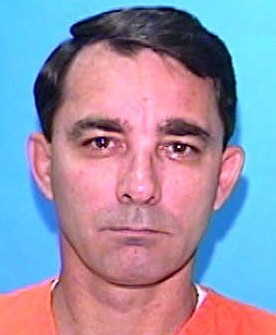
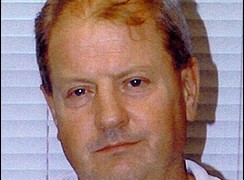
Kenneth Ray Wright
Murderer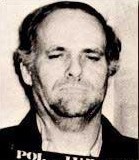 Ervil LeBaron
Murderer · USA · 1972
Ervil Morrell LeBaron (1925 to August 16, 1981) was the leader of a polygamous…
35 victims
Ervil LeBaron
Murderer · USA · 1972
Ervil Morrell LeBaron (1925 to August 16, 1981) was the leader of a polygamous…
35 victims
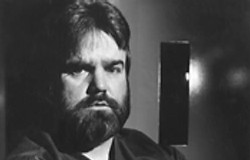 Marvin Gray
Murderer · USA · 1975
Marvin Gray was convicted killer who claimed responsibility for 23 slayings and…
23 victims
Marvin Gray
Murderer · USA · 1975
Marvin Gray was convicted killer who claimed responsibility for 23 slayings and…
23 victims
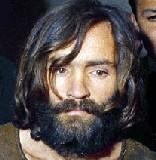 Charles Manson
Murderer · USA · 1969
Charles Milles Manson (born November 12, 1934) was an American criminal and mus…
9 victims
Charles Manson
Murderer · USA · 1969
Charles Milles Manson (born November 12, 1934) was an American criminal and mus…
9 victims
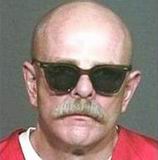 Barry Byron Mills
Murderer · USA · 1979
Barry Byron Mills (born 1948) was a leader of the Aryan Brotherhood (AB) prison…
8 victims
Barry Byron Mills
Murderer · USA · 1979
Barry Byron Mills (born 1948) was a leader of the Aryan Brotherhood (AB) prison…
8 victims
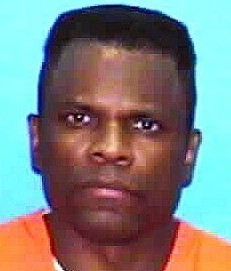 John Errol Ferguson
Murderer · USA · 1977
John Errol Ferguson was sentenced to death and was executed by lethal injection…
8 victims
John Errol Ferguson
Murderer · USA · 1977
John Errol Ferguson was sentenced to death and was executed by lethal injection…
8 victims
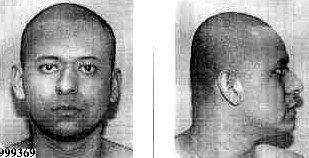 Bernardo Tercero
Murderer · USA · 1997
Bernardo Aban Tercero was born on 8/20/1977. He was a 23-year-old at the time o…
1 victim
Bernardo Tercero
Murderer · USA · 1997
Bernardo Aban Tercero was born on 8/20/1977. He was a 23-year-old at the time o…
1 victim
 Barry Lee Fairchild
Homicide · USA · 1983
Barry Lee Fairchild was convicted of the kidnap, rape and murder of a 22-year-o…
1 victim
Barry Lee Fairchild
Homicide · USA · 1983
Barry Lee Fairchild was convicted of the kidnap, rape and murder of a 22-year-o…
1 victim
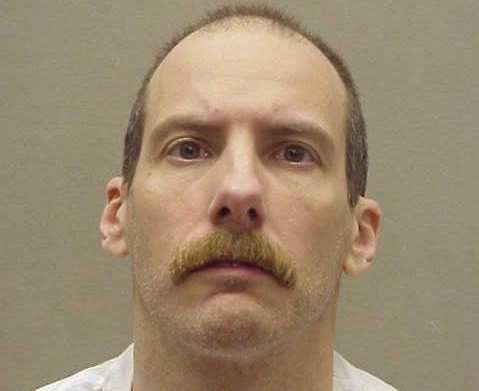 Eric Napoletano
Serial killer · USA · 1984
Eric Napoletano was described as a “sexually sadistic serial killer,” according…
3 victims
Eric Napoletano
Serial killer · USA · 1984
Eric Napoletano was described as a “sexually sadistic serial killer,” according…
3 victims
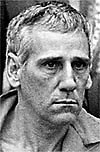 James Rodney Johnson
Murderer · USA · 1991
James Rodney Johnson was executed by lethal injection in Missouri on January 9,…
4 victims
James Rodney Johnson
Murderer · USA · 1991
James Rodney Johnson was executed by lethal injection in Missouri on January 9,…
4 victims
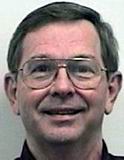 William Phillips
Murderer · USA · 2007
William Phillips was identified as the gunman in the Johnson Space Center (JSC)…
1 victim
William Phillips
Murderer · USA · 2007
William Phillips was identified as the gunman in the Johnson Space Center (JSC)…
1 victim
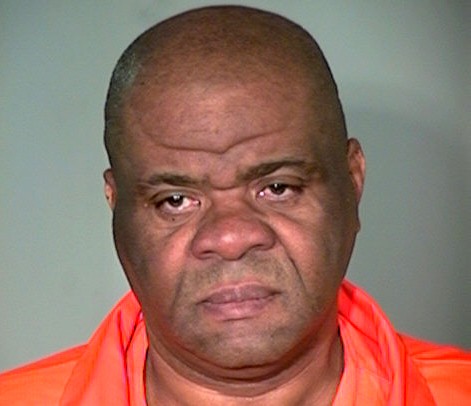 Fred Robinson
Murderer · USA · 1987
Fred Robinson and Susan Hill lived together for a number of years. Beginning in…
1 victim
Fred Robinson
Murderer · USA · 1987
Fred Robinson and Susan Hill lived together for a number of years. Beginning in…
1 victim
- Gender
- male
- Country
- USA
- Location
- Lee County, Florida, USA
- Date of birth
- May 31, 1940
- Age at first offence
- 29
- Characteristics
- kidnapping, rape
- Victim profile
- Camellia Jo Hand, 8
- Method of murder
- Blows to the head from a blunt instrument
- Date(s) of murder
- April 10, 1969
- Years active
- 1969
- Date of arrest
- —
- Status
-
Life imprisonment
Sentenced to life in prison on September 20, 1969
Case overview
Kenneth Ray Wright (born 31 May 1940) was convicted in Florida of first degree murder connected to the sexual assault, murder, and mutilation of 8-year-old Camellia Jo Hand.
Background
Kenneth Ray Wright was born in Siloam Spring, Arkansas. He amassed a record of incarceration for crimes of petty thievery, breaking and entering, and indecent assault. In 1968, he moved to Ocoee, Florida.
The offence
Camellia Jo Hand, aged 8 years, disappeared on Thursday, April 10, 1969, between 7 A.M. and 8:30 A.M. while walking from her home to school. She was presumably kidnapped and murdered.
Two days later, on Saturday afternoon, April 12, 1969, her body was discovered and dug up from a shallow grave not far from where she disappeared. She was clad only in shoes and socks. Assorted items of clothing and other articles had been buried with her.
Numerous stab wounds, abrasions, wounds and fractures were found on her body, and there was evidence of sexual molestation. The cause of death was a brain hemorrhage from blows to the head from a blunt instrument. Her pet dog, who was following her to school, was found a short distance away from where her body was buried.
Investigation and evidence at trial
The State’s case was built upon circumstantial evidence. The court described that deep, intense feeling had been engendered on the ultimate issue of guilt or innocence.
The court noted that the State sought to prove Wright’s guilt by facts and circumstances so conclusive that they would not only be consistent with guilt but inconsistent with innocence and would exclude any reasonable hypothesis except that of guilt. The prosecution relied on a partial, smudged print of a left index finger on a razor blade found lying several feet from the gravesite on top of the ground, and on a many colored skirt found near the body, the source of which, at least as evidence against Wright, was to some extent shrouded in doubt.
Trial
Wright’s indictment was in Orange County, but venue was later changed to Lee County where trial was held before a jury.
The jury returned an adverse verdict of first degree murder with recommendation of mercy, and the court sentenced Wright to life imprisonment.
The appeal described that numerous motions, documents, and other pre-trial pleadings were filed and numerous hearings held in both the Orange County Circuit Court before removal and later in the Lee County Circuit Court after removal, and that voluminous testimony was taken.
A total of seventy-seven assignments of error were filed notwithstanding admonitions against such a multiplicity of assignments.
The appellate court identified two trial errors that required reversal of the judgment appealed:
- Admission into evidence of three colored photographs.
- Failure of the trial court to define for the jury the essential elements of all the felonies involved in the charge of felony-murder.
The appellate court stated that it would pretermit discussion of the remaining assignments of error and said it found none of them reversible.
Trial error (1): admission of prejudicial color photographs
The appellate court described that several photographs, 8 in number and all in color, were admitted in evidence over objection. It described that three of the photographs—identified as State’s Exhibits Nos. 26, 27 and 28—were grossly inflammatory and unnecessary to explain or elucidate any portion of the State’s case.
The appellate court described Exhibit No. 26 as depicting the nude body of the victim at the gravesite but in a different position than when her body was found. It described that when first discovered, she was on her stomach with her head and body bent over and facing downward, and that there was an unobjectionable picture to show this; it described that Exhibit No. 26 showed her body facing in an upright position but with her head pulled up and back, showing the face and upper part of her body from the front.
27 as taken at the morgue after removal of the body from the grave and showing a deep stab wound on the left top side of the head, another wound in the left chest, and other lacerations in the abdominal area.
28 as also taken at the morgue, showing Camellia Jo laid out on her right side in a horizontal position, taken from the rear, showing several stab wounds in the back and a deep, gashing type wound in her upper buttocks.
The appellate court held that the admission of photographs Exhibits 26, 27 and 28 was prejudicial error. It reasoned that while the photographs may have been technically relevant, they were so inflammatory and gruesome in character and so totally devoid of direct bearing upon the most vital issue in the case as to warrant their rejection as evidence.
The appellate court stated that the most vital issue was whether Wright was the person who murdered Camellia Jo Hand, given that the case consisted solely of circumstantial evidence.
It stated that the photographs did not prove, or tend to prove, the identity of defendant Wright as being the perpetrator of the crime, and that the prejudicial gruesomeness would remain indelibly in the minds of the jurors.
The appellate court recounted testimony by Dr. Thomas E. Hegert, the official Orange County Medical Examiner for the past 14 years, who testified that he used other means such as charts rather than pictures to explain his findings and examinations and that he said:
“rather than pictures”
and: “the location of the wounds and the dimensions of the wounds, I would better explain by my diagrams”
and: “No they are not necessary”
The appellate court therefore held that the admission of the photographs in question was prejudicial error.
Trial error (2): failure to charge essential elements of felonies in felony-murder
The appellate court addressed Florida Statute section 782.04 F.S.A. defining first degree murder as:
“The unlawful killing of a human being, when perpetrated from a premeditated design to effect the death of the person killed * * * or when committed in the perpetration of or in the attempt to perpetrate any arson, rape, robbery, burglary, abominable and detestable crime against nature or kidnapping, * * *”
It described that the statute is divided into two classifications: premeditated design to effect the death, and felony-murder committed in the perpetration of or the attempt to perpetrate named felonies.
The indictment charged first degree murder under both classifications: from a premeditated design to effect the death of Camellia Jo Hand and also by striking her on the head with a blunt instrument. The appellate court stated it was not concerned with the premeditation feature and was concerned only with the felony-murder feature.
The appellate court stated that defense counsel called to the attention of the court that, as to the felony-murder part of the indictment, the jury instructions should define the ingredients contained in the felonies involved, but the court failed or refused to charge the jury with the various elements going to make up these substantive felony offenses. It described that the jury was instructed merely in terms of the statute, except as to rape and a brief reference to one isolated phase of crime against nature.
The appellate court held that the failure to so charge was reversible error, agreeing that the trial court should charge on the specific ingredients making up each permissible felony under the evidence.
The appellate court cited legal principles and cases, including quoting from decisions and explaining that instructions defining collateral felonies may and should be given in felony-murder prosecutions.
It quoted from Albritton v. State, Fla.App.1969, 221 So.2d 192:
“In such setting of testimonial conflict between the numerous State witnesses on the one hand and Albritton and his wife Michele on the other, the admissibility of the photographs of the child taken in the hospital comes into clear focus. And it is in such posture of evidence that the propriety of admission of the photographs must be judged. The fact that the photos were inflammatory and such as would arouse to passion is not alone sufficient to warrant their refusal in evidence. Gragg v. State, Fla.App.1965, 177 So.2d 59; Cullaro v. State, Fla.App.1957, 97 So.2d 40; Pleas v. State, Fla.1966, 184 So.2d 647; Calloway v. State, Fla.1966, 189 So.2d 617. But where admittedly gruesome and reasonably calculated to inflame the minds of the jurors, they can only be admissible by a showing the of the prosecution that, not only are the pictures relevant, but also that they are demonstrably material in reconciling or tending to reconcile, some disputed fact in evidence directly pertinent to the charge being tried. [Cases cited.] If the wounds, bruises and burns on her body, as she lay in the hospital just before her death, were many and aggravated, such as would result from beatings and other physical mistreatment at the hands of Albritton, the charge of second degree murder was made out. If, on the other hand, the bruises, etc., were relatively minor and slight, such as might result from a fall week before from a truck, or an indoor fall from some wall shelving or burns from a hair dryer, essentially accidental in nature, the charge would not be made out. The location, extent, degree, and severity of the bruises and burns would have a direct bearing in resolving the issue.”
It also quoted from Robles v. State, including the following passage:
“It is beyond argument that the question whether appellant was guilty of statutory burglary constituted an essential part of the theory upon which the jury was instructed to decide defendant's guilt. * * * We have long held that an indictment for first degree murder is fatally defective if it fails to charge premeditation. Denham v. State, 1886, 22 Fla. 664. If premeditation is so vital a part of the crime of murder in the first degree, it must follow that the elements of the felony of burglary, which may be proved in lieu of premeditation, are equally vital and should therefore have been the subject of instructions to the jury. We are not prepared to say that the elements of the supporting felony under the felony-murder rule must be explained to the jury with the same particularity that would be required if burglary were the primary crime charged. Nevertheless, we do hold that they must be defined sufficiently to assure the accused a fair trial of the commission of the secondary crime as well as the primary one. In the present case, the instructions relevant here consisted of the statutory definition of first degree murder, which includes the felony-murder rule, and then the following: 'The Court further instructs you that the gravamen of the offense of statutory burglary is the breaking into and entering of a dwelling house of another with the intent to commit a felony therein. 'It is not necessary for the State to prove premeditation where the death of the person killed is committed in the perpetration of, or in the attempt to perpetrate burglary. So that, if you find in the evidence, that the defendant killed Gayle Sherry Sterne while engaged in the commission of burglary, or the attempt to commit burglary, then the defendant should be adjudged guilty of murder in the first degree as the result of the perpetration of, or the attempt to perpetrate burglary.' If appellant were being tried for burglary, it could hardly be said that he could have a fair trial under these instructions. The jury is left to its own devices as to what constitutes breaking and entering and as to the character of the felonious intent that is required. As to the precise intent that appellant was alleged to have, these instructions fail to identify the felony that he allegedly intended to commit or even to define the term 'felony,' in the abstract. It is true that the court agreed to give such instructions and the defendant's trial counsel agreed to prepare same but failed to do so. But this failure of counsel does not relieve the court of the duty to give all charges necessary to a fair trial of the issues. We hold that since proof of these elements was necessary in order to convict appellant under the felony-murder rule, the court was obligated to instruct the jury concerning them, whether or not requested to do so. Canada v. State, Fla.App.1962, 139 So.2d 753; Motley v. State, 1945, 155 Fla. 545, 20 So.2d 798; Croft v. State, 1935, 117 Fla. 832, 158 So. 454. * * * It is equally, if not more, important that the jury be adequately instructed concerning the essential elements of the crime charged than it is that the elements be alleged in the indictment or information. And this is even more true when the burglary or other secondary crime is involved under the felony-murder rule than when it is the primary crime charged.”
The appellate court further stated that the trial court charged in general terms that crime against nature includes copulation between human beings per anum, but a detailed, inclusive charge covering all ingredients of such offense was not given.
It also stated the court made no attempt to set forth the ingredients of robbery, though it said the evidence would have warranted a verdict of guilt of robbery-murder. It cited statutory provisions and cases for robbery.
It stated the same issue applied to kidnapping, referring to the statutory definition of kidnapping.
The appellate court concluded that the failure to define elements of possibly applicable felonies was supported by reason and logic, and that the jury needed instruction on how the homicide occurred in commission or attempted commission of the particular felony.
Appeals
The case reached the District Court of Appeal of Florida, Second District.
The appellate court described:
- Appeal from a judgment of conviction entered pursuant to an adverse jury verdict of first degree murder with recommendation of mercy and a sentence to life imprisonment.
- Wright’s indictment in Orange County and later change of venue to Lee County where trial was held.
The appellate court’s opinion was authored by Pierce, Chief Judge, and it stated that LILES and MANN, JJ., concur. It included counsel listings:
- “Meredith J. Cohen and Edward J. Hanlon, Jr. & Partners, Orlando, for appellant.”
- “Robert L. Shevin, Atty. Gen., Tallahassee, and Charles Corces, Jr., Asst. Atty. Gen., Lakeland, for appellee.”
The appellate court dated its disposition:
- “July 7, 1971”
The appellate court held that the judgment of conviction appealed was:
“Reversed.”
Sentencing
After an adverse jury verdict of first degree murder with recommendation of mercy, Wright was sentenced to life imprisonment.
Outcome
The appellate court reversed the judgment of conviction on the grounds of:
- admission of three prejudicial color photographs, and
- failure to charge the jury on essential elements of felonies involved in the felony-murder charge.
Aftermath and incarceration status
The Florida Department of Corrections advised that Wright was transferred to the Kansas Department of Corrections under the Interstate Corrections Compact on November 8, 1996, and remained in custody.
Wright was eligible for parole review in 2008.
The case summary also described that Wright professed himself a “changed man” in an interview with Central Florida author Samuel Roen in 1994, and that he lobbied the Florida Department of Corrections for parole regularly, citing a model prison record and successful therapy in overcoming his sexual aberrations.
Other details
The appellate court repeatedly characterized the photographs Exhibits 26, 27 and 28 as inflammatory and gruesome, described the trial evidence as circumstantial, and focused on identification as the essential issue because, in its view, the challenged photographs did not prove, or tend to prove, the identity of Wright as the perpetrator.
Spotted an error, or have more information about this case?