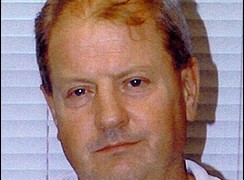
Steven Wright
Serial killer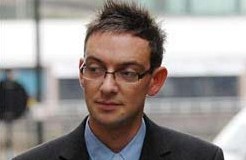 Colin Norris
Serial killer · United Kingdom · 2002
Colin Campbell Norris (born 1976) was a Scottish nurse described in the British…
7 victims
Colin Norris
Serial killer · United Kingdom · 2002
Colin Campbell Norris (born 1976) was a Scottish nurse described in the British…
7 victims
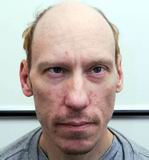 Stephen Port
Serial killer · United Kingdom · 2014
Stephen Port (born 1975) was a convicted British rapist and serial killer who m…
4 victims
Stephen Port
Serial killer · United Kingdom · 2014
Stephen Port (born 1975) was a convicted British rapist and serial killer who m…
4 victims
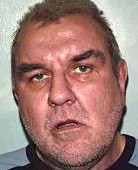 Anthony Hardy
Serial killer · United Kingdom · 2002
Anthony John Hardy (born May 31, 1951) was an English serial killer who was con…
3 victims
Anthony Hardy
Serial killer · United Kingdom · 2002
Anthony John Hardy (born May 31, 1951) was an English serial killer who was con…
3 victims
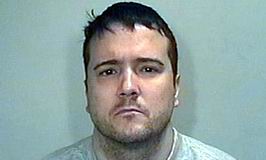 Stephen Shaun Griffiths
Serial killer · United Kingdom · 2009
Stephen Shaun Griffiths was convicted after pleading guilty to killing three wo…
3 victims
Stephen Shaun Griffiths
Serial killer · United Kingdom · 2009
Stephen Shaun Griffiths was convicted after pleading guilty to killing three wo…
3 victims
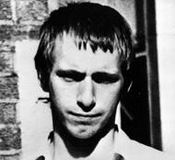 Bruce Lee
Serial killer · United Kingdom · 1973
Bruce Lee was born Peter George Dinsdale in 1960. He later changed his name to…
26 victims
Bruce Lee
Serial killer · United Kingdom · 1973
Bruce Lee was born Peter George Dinsdale in 1960. He later changed his name to…
26 victims
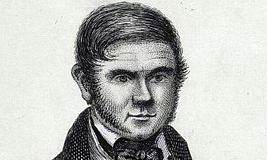 William Burke
Serial killer · United Kingdom · 1827
William Burke (1792 – 28 January 1829) was born in Urney, near Strabane, in the…
17 victims
William Burke
Serial killer · United Kingdom · 1827
William Burke (1792 – 28 January 1829) was born in Urney, near Strabane, in the…
17 victims
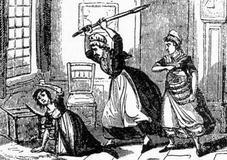 Elizabeth & Mary Branch
Murderers · United Kingdom · 1740
Elizabeth Branch (1673–1740) and her daughter Mary Branch (1716–1740) were Engl…
1 victim
Elizabeth & Mary Branch
Murderers · United Kingdom · 1740
Elizabeth Branch (1673–1740) and her daughter Mary Branch (1716–1740) were Engl…
1 victim
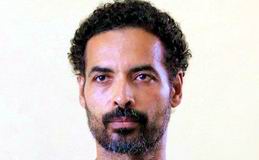 Arthur Simpson-Kent
Murderer · United Kingdom · 2015
Name: Arthur Simpson-Kent · Age at sentencing: 49 · Age at time of offence (as…
3 victims
Arthur Simpson-Kent
Murderer · United Kingdom · 2015
Name: Arthur Simpson-Kent · Age at sentencing: 49 · Age at time of offence (as…
3 victims
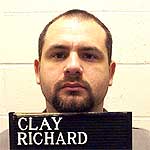 Richard Clay
Murderer · USA · 1994
Richard D. Clay’s close friend, Charles Sanders, had an affair with Stacy Marti…
1 victim
Richard Clay
Murderer · USA · 1994
Richard D. Clay’s close friend, Charles Sanders, had an affair with Stacy Marti…
1 victim
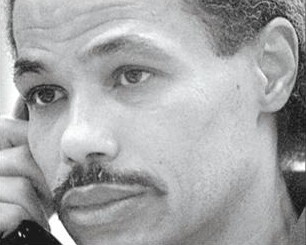 Willie Lloyd Turner
Murderer · USA · 1970
Willie Lloyd Turner was executed by lethal injection in Virginia on May 25, 199…
2 victims
Willie Lloyd Turner
Murderer · USA · 1970
Willie Lloyd Turner was executed by lethal injection in Virginia on May 25, 199…
2 victims
- Gender
- male
- Country
- United Kingdom
- Location
- Ipswich, Suffolk, England, United Kingdom
- Date of birth
- April 24, 1958
- Age at first offence
- 48
- Characteristics
- drugs
- Victim profile
- Tania Nicol, 19 / Gemma Adams, 25 / Anneli Alderton, 24 / Annette Nicholls, 29 / Paula Clennell, 24 (prostitutes)
- Method of murder
- A sphyxiation / Strangulation
- Date(s) of murder
- October-December 2006
- Years active
- 2006
- Date of arrest
- December 19, 2006
- Status
-
Released
Sentenced to life imprisonment; trial judge recommended he should never be released from prison on February 22, 2008
Case record: Steven Gerald James Wright (Steven Wright)
Background
Steven Gerald James Wright was a British serial murderer, also known as the Suffolk Strangler. He was born in the Norfolk village of Erpingham in April 1958 (born 24 April 1958 is stated). Wright was one of four children, including one brother. His parents were a military policeman and a veterinary nurse. While Wright’s father was on military service, the family lived in both Malta and Singapore.
Wright’s parents split during the 1960s, and both later remarried. Wright lived with his father, who later fathered two more children with his second wife. Wright was described as living with his father along with siblings including an older brother David and two younger sisters, Jeanette and Tina. The names given for the father’s later family included Keith and Natalie with his second wife, Valerie. Wright’s mother left in 1964 when Wright was 8. Wright’s father divorced his mother in 1977.
Wright left school in 1974. He joined the Merchant Navy soon afterwards and became a chef on ferries sailing from Felixstowe, Suffolk. It is stated that he joined the Merchant Navy becoming a chef on ferries sailing from Felixstowe, Suffolk.
Wright married in 1979 and had a son named Michael, born in 1983. Another marriage is also described: in 1978 in Milford Haven, Wright married Angela O’Donovan, and they had a son, Michael. The marriage is described as breaking up after eight years and ending in 1987. Wright and his partner later divorced.
Wright later became a steward on the QE2, a lorry driver, a barman, and just prior to his arrest a fork-lift truck driver.
Former prostitute Lindi St Clair claimed that she had been attacked by Steve Wright in the 1980s.
Wright’s second marriage is described as lasting less than one year while he was a pub landlord in Norwich. Wright’s second marriage is also described as being to 32-year-old Diane Cassell at Braintree register office in August 1987, and they split in July 1988.
Wright had a relationship with Sarah Whiteley from 1989–1993. They had a daughter together, born in 1992. During that time Wright managed a public house in South London. The public house post was lost due to Wright’s gambling and drinking behaviour.
It was stated that throughout these times Wright built up large debts largely through gambling, and that he had recently been declared bankrupt.
Wright attempted suicide twice: first by carbon monoxide poisoning and then, in 2000, by an overdose of pills. The carbon monoxide poisoning attempt is described as occurring in his car in the mid-1990s. The overdose attempt is described as occurring in 2000.
Wright met his last partner Pamela Wright in 2001 in Felixstowe. They moved to a house in Ipswich together in 2004. Wright’s shared surname with Pamela Wright is described as a coincidence.
It was stated that Wright had always admitted that he had used prostitutes, firstly while in the Merchant Navy and continuously throughout his life. In Ipswich he admitted he went to certain massage and sauna establishments that were actually brothels. Throughout the trial Wright stated he had used prostitutes on many occasions, including three of the victims. It was also stated that when his partner began working night shifts their sex life became almost non-existent, so he returned to prostitutes based on nearby streets, procuring a dozen in the final three months of 2006.
A statement regarding another marriage is included: a Thai woman, Somchit Chomphusaeng, said she married Wright in Thailand in 1999.
The offence
Steven Wright was found guilty of all five murders connected to the Ipswich 2006 serial murders. The victims were women who worked as prostitutes or sex workers around Ipswich, Suffolk, England. The killings took place during late 2006.
Timeline
- 30 October 2006 — Tania Nicol went missing.
- 2 November — A suspect was interviewed voluntarily by police.
- 7 November — Nicol’s mother issued an appeal for information.
- 15 November — Gemma Adams went missing; police appealed for information.
- 22 November — A suspect’s house was searched by police.
- 2 December — Gemma Adams’s body was found near Hintlesham west of Ipswich.
- 3 December — Anneli Alderton went missing.
- 5 December — Annette Nicholls went missing.
- 8 December — Tania Nicol’s body was found near Copdock southwest of Ipswich.
- 9 December — Police confirmed “obvious similarities” between the deaths of Nicol and Adams.
- 10 December — Anneli Alderton’s body was found near Nacton; Paula Clennell went missing.
- 12 December — Bodies of Nicholls and Clennell were found in close proximity near Levington southeast of Ipswich.
- 13 December — Police revealed a large public response in aid of the investigation; clothes of two women were found.
- 14 December — Police confirmed that one of the bodies found 12 December near Levington was Paula Clennell.
- 15 December — Police confirmed that the second of the bodies found on 12 December was Annette Nicholls; media reports that a sixth woman had been reported missing were later disproved; Nicol’s father made a public appeal.
- 16 December 2006 — Police released CCTV footage of Alderton on the day she vanished.
- 18 December — At 07.20, a 37-year-old man was arrested at his home in Trimley St. Martin, on suspicion of murder; the man was not named by police.
- 19 December — A second male suspect, aged 48, from Ipswich, was arrested; magistrates granted a 36-hour extension to hold and question the first arrested suspect.
- 21 December — Lord Goldsmith, the Attorney General, issued guidelines to the media regarding reporting information about the two men in custody; police announced the first suspect was released on bail, while the second suspect was named as Steve Wright and charged with the murder of all five women.
- 22 December — Steve Wright appeared in court before Ipswich magistrates and was remanded in custody.
- 2 January 2007 — Steve Wright appeared at Ipswich Crown Court.
- 1 May — Steve Wright appeared at Ipswich Crown Court, pleading not guilty to five counts of murder.
- 14 January 2008 — Jury selection began for Wright’s trial at Ipswich Crown Court; he pleaded not guilty.
- 16 January 2008 — Wright’s trial began.
- 21 February 2008 — Wright was found guilty of murdering all five women.
- 22 February 2008 — Wright was sentenced to life imprisonment; the trial judge recommended he should never be released from prison.
- 19 March 2008 — It was announced that Wright would be appealing against his convictions.
- 2 February 2009 — It was announced that Wright had decided to drop the appeal case.
- 6 June — Bail was cancelled for the first suspect because no more inquiries involving the case were to be undertaken.
Victims
The case involved five victims whose bodies were discovered at different locations near Ipswich in Suffolk.
Gemma Adams
The body of a young woman was discovered in the water of Belstead Brook at Thorpe’s Hill, near Hintlesham, by a member of the public on 2 December 2006. She was later identified as 25-year-old Gemma Adams and had not been sexually assaulted. She was born in Kesgrave and was living in Ipswich.
It was stated that Adams disappeared on 15 November at about 01.15 (UTC).
Adams was found naked in a brook, but had not been sexually assaulted. As a child, she was described as being a popular girl among friends and her affluent family. As a teenager she started smoking cannabis and eventually started taking harder drugs, becoming addicted to heroin. She had been working as a prostitute to cover the cost of her drug addiction, which had already led to her being dismissed from her job with an insurance firm.
Tania Nicol
On 8 December, the body of 19-year-old Tania Nicol, a friend of Adams who had been missing since 30 October, was discovered in water at Copdock Mill just outside Ipswich. There was no evidence of sexual assault. Nicol was described as the first of the victims to be reported missing and the second body to be found. Nicol was stated to be from Ipswich.
It was stated that Nicol disappeared on 30 October and was reported missing on 1 November. It was also stated that the youngest of the five victims had been working as a prostitute to fund her addiction to heroin and cocaine.
Anneli Alderton
On 10 December, a third victim was found by a member of the public in an area of woodland by the A14 road near Nacton and later identified as 24-year-old Anneli Alderton. It was stated that she had been asphyxiated and was around three months pregnant when she died.
Anneli Alderton disappeared on 3 December. She was last seen on the 17.53 train from Harwich to Manningtree. Alderton got off the train at Manningtree at 18.15 before going on to Ipswich via another train, arriving at 18.43.
Her body was found on 10 December near Nacton, in woodland in front of Amberfield School. Alderton was described as being found naked and also posed in the cruciform position. It was stated that Alderton had been addicted to drugs since shortly after her father’s death from lung cancer in 1998.
Paula Clennell
On 12 December, it was stated that Suffolk police announced that the bodies of two more women had been found. On 14 December, the police confirmed one of the bodies as 24-year-old Paula Clennell. Clennell had disappeared on 10 December and was last seen in Ipswich. It was stated that Clennell died from “compression of the throat”.
Clennell was described as the mother of three children, born in Northumberland and living in Ipswich. It was also stated that her body was found on 12 December near Levington on the same day as Nicholls’. Clennell’s body was described as found naked but not sexually assaulted, with a post mortem reporting that she had been killed by “compression of her throat”.
Prior to her death, Clennell commented on the then recent murders in an interview with Anglia News, stating:
“I need the money.”
It was also stated that, despite them making her “a bit wary about getting into cars”, she continued to work as “I need the money.”
Clennell’s three children had all been taken into care due to her drug addiction. It was also stated that Clennell herself had spent some of her childhood in a referral unit, and that it was shortly after being placed there that she started taking drugs.
Annette Nicholls
On 15 December, the police confirmed that the other body was that of 29-year-old Annette Nicholls, who had disappeared on 5 December. Nicholls’ body was found on 12 December near Levington, described as being one of those posed in the cruciform position.
It was stated that Nicholls was a mother of one from Ipswich, and that she disappeared on 5 December at 21.50. It was also stated that her body was found on 12 December near Levington, naked but not sexually assaulted. The oldest victim was described as having been a drug addict since the early 2000s, when she was completing a beautician’s course at Suffolk College. Soon afterwards she started working as a prostitute to fund her addiction.
Investigation
Suffolk police linked the killings and launched a murder investigation, codenamed Operation Sumac.
At a 10 December press conference, detectives issued a warning to all women in Ipswich not to work on the streets. The statement included that they had received offers of assistance from neighbouring police forces, particularly Norfolk, in their “hunt for the killer or killers”. It was stated that Chief Constable Alastair McWhirter acknowledged that Suffolk Constabulary would be reliant on external assistance due to the magnitude of the investigation.
A senior investigator with the Metropolitan Police, Commander Dave Johnston, was reported to have been drafted into the murder inquiry team from Scotland Yard in London in an advisory capacity. The day-to-day investigation was conducted by Detective Chief Superintendent Stewart Gull.
During the 13 and 14 December press conferences, DCS Gull revealed that police believed the locations where the five bodies were found to have been “deposition sites” not murder scenes, indicating that the victims were all killed elsewhere and transported to the locations where they were later found. DCS Gull was unable to indicate where the women had been murdered, or whether the crimes took place at a single location or at multiple sites.
It was also stated that some items of women’s clothing and accessories, including a handbag and jacket, had been recovered and were being forensically tested to establish whether they belonged to any of the murdered women.
During the press briefings, DCS Gull stated that over 200 police officers were involved in the investigation, and that some 400–450 calls were being received daily by detectives. On 15 December, Suffolk Constabulary’s website revealed that a total of 7,300 telephone calls had been made to police regarding the investigation, and that over 250 police staff were working on the cases, with support from at least 26 other police forces. As of 18 December, the number of officers involved increased to 500, and a further 350 officers from 30 other police forces assisted; detectives trawled through 10,000 hours of CCTV footage. The number of calls received regarding the case had increased to around 10,000.
The prosecutor later suggested it was possible Wright may not have acted alone, as the remains of Anneli Alderton were found some distance from the road but with no evidence that her body had been dragged by one person.
It was also stated that the Metropolitan Police said it was not a strong line of enquiry regarding possible links to other crimes, including the disappearance of Suzy Lamplugh. Cleveland Police had not ruled out a link between Wright and the murder of Vicky Glass, a heroin addict who vanished from Middlesbrough in September 2000. Her naked body was later found in a stream on the North Yorks Moors. Wright was still being investigated in connection with other murders and disappearances including the Suzy Lamplugh case; Wright had worked with Lamplugh on the QE2 ocean liner during the early 1980s. Lamplugh was last seen alive in 1986 and legally declared dead in 1994, but her body had never been found.
It was stated that the police said they were not prepared to discuss who they may or may not wish to interview in connection with ongoing investigation. Suffolk police confirmed they had been approached by Scotland Yard in connection with the Lamplugh case.
Arrest
Suffolk Constabulary reported that on 18 December it had arrested a 37-year-old man on suspicion of murdering all five women. The man was arrested at 07.20 at a house in Trimley St. Martin near Felixstowe, Suffolk. The detention of that suspect was extended by magistrates by a further period of 24 hours to the maximum of 96 hours allowed under English law.
On 19 December, at 05.00, police arrested a second suspect, a 48-year-old, at a residence in Ipswich on suspicion of committing murder. On 20 December, police were granted a 36-hour extension to question the second suspect in detention.
A joint statement on 21 December was issued by DCS Gull, and Michael Crimp, senior prosecutor for the Crown Prosecution Service in Suffolk, announced that the second suspect named as Steve Wright had been charged with the murder of all five women. Police said the first suspect, who was not officially named, was released on police bail. Bail was cancelled on 6 June for the first suspect, as no more inquiries involving the case were to be undertaken involving this person.
Court appearances and trial
Wright appeared before magistrates in Ipswich on 22 December 2006 and was remanded in custody. On 2 January 2007, Wright appeared before Ipswich Crown Court and was remanded in custody to appear before a court on 1 May.
On 1 May, Wright formally entered a plea of not guilty; the judge indicated the trial would be heard at Ipswich Crown Court in January 2008.
On 14 January 2008, Wright appeared at Ipswich Crown Court ahead of his trial. The prosecution opened their case when the trial began on 16 January 2008.
It was stated that the first time specific details were released to the public included that the bodies of two victims, Anneli Alderton and Annette Nicholls, were deliberately posed in the cruciform position. DNA evidence linked Steve Wright to three of the victims, and fibre evidence also connected him to the victims.
The defence argued that Wright was a frequenter of prostitutes and had “full sex” with all of the victims barring Tania Nicol, whom he “picked up” with the intention of sexual relations, but apparently changed his mind and dropped her off back in the red light district of Ipswich. The defence argument was described as contradicting Wright’s earlier statement when stopped by police in the district in the early hours of the morning, when he said he “did not know he was in the red light district” and that he was driving around “because he could not sleep”. Wright’s rented flat was described as located in the red light area.
Jurors were taken on 21 January to sites involved in the case, including Wright’s rented house, which they viewed only from the outside, and the areas where the victims were found.
It was stated that the jury in the trial was the second group chosen because a member of the original jury (consisting of ten men and two women) had a health issue that would have been prohibitive for the trial. The sentencing jury consisted of nine men and three women. All potential jurors completed a questionnaire asking if the candidates knew any of the victims, witnesses, or the suspect. Defence counsel Timothy Langdale QC noted that the jurors had a particularly difficult task given the media coverage of the events. The judge ordered them to decide the case based only on evidence presented in court.
Verdict
On 21 February 2008, after eight hours of deliberation, the jury returned a unanimous guilty verdict against Steve Wright on all five counts of murder.
Sentencing
Sentencing took place at 10:30 a.m. on 22 February.
It was stated that he was found guilty of murder, which carries an automatic term of life imprisonment, but in such cases the judge recommends a minimum number of years the offender should serve before parole can be considered.
The Prosecution QC demanded that life should mean life for Wright and he should never be released from prison.
On 22 February 2008, Wright was sentenced to life imprisonment and Mr Justice Gross said that life should mean life, on the basis that the murders resulted from a “substantial degree of pre-meditation and planning”.
Aftermath
Relatives of the victims thanked the police for their efforts to solve the crime. Some family members expressed feelings that life imprisonment was not enough and that Wright should face the death penalty.
Craig Bradshaw stated:
“Today, as this case has come to an end, we would like to say justice has been done but we're afraid that where five young lives have been cruelly ended the person responsible will be kept warm, nourished and protected. In no way has justice been done. These crimes deserve the ultimate punishment and that can only mean one thing. Where a daughter and the other victims were given no human rights by the monster, his will be guarded by the establishment at great cost to the taxpayers of this country and emotionally to the bereaved families. Where a daughter and the other victims were given no human rights by the monster, his will be guarded by the establishment at great cost to the taxpayers of this country and emotionally to the bereaved families.”
However, other family members seemed satisfied with the verdict. Gemma Adams’s father stated:
“I am very relieved and pleased for all of the families that this is now over and we can now start to get on with our lives.”
The Prime Minister Gordon Brown praised the “professionalism and dedication” of the police and prosecutors involved in the case, using the case as an example of the importance of the national DNA database.
Appeals status
It was announced on 19 March 2008 that Wright would be appealing against his convictions. On 2 February 2009, it was announced that Wright decided to drop this appeal case.
Wright’s motivations for the murders had never been revealed. In interviews carried out after he was charged, Wright answered no comment to every question he was asked.
Other details
Media coverage and name association
Before the bodies started being recovered, coverage was mostly confined to local media. The BBC news began to report the investigation following the discovery of Tania Nicol’s body, and after the discovery of Anneli Alderton’s body the story received major exposure on a national and international level.
It was stated that, though not officially named by police, the media named the first suspect arrested in connection to the killings as Tom Stephens. The BBC and the Daily Mirror released interviews with Stephens given before his arrest, and it was noted that the BBC were criticised for this because it could affect any future trial. Images of Stephens were used in many media articles and were taken from his MySpace page.
The murders were compared to those by Peter Sutcliffe, the “Yorkshire Ripper,” and to “Jack the Ripper”. The case was also described as being likened to serial killers targeting prostitutes. Media attempts to coin a name for the presumed murderer included “Suffolk Strangler” and other terms.
A reward was offered first by local business Call Connection. It initially offered £25,000, then raised to £50,000. The News of the World offered a £250,000 reward for leads to a direct arrest and conviction, bringing the total reward on offer to £300,000.
On 21 December 2006, then Attorney General Lord Goldsmith issued guidance to the media due to concerns raised by Suffolk Constabulary about coverage and potential prejudice of a future trial. Lord Goldsmith urged the media to show restraint in what they reported about the two suspects being held to avoid prejudicing any possible trial.
Social issues coverage
The murders refocused press attention on controversial issues in British politics, including prostitution law, drug use, and possible restructuring of police forces.
It was stated that prostitution itself was not illegal in the UK, but living off the proceeds of prostitution was. It was stated that proposals for a long-term approach to tackling prostitution did not proceed, and that the murders highlighted vulnerability of prostitutes and lack of action by government. It was stated that the government’s aim in Sweden was prosecution of clients, and that the UK debate included moving towards legalised brothels and other measures to improve the safety of women.
It was also stated that the debate included whether drug use should be legalised or decriminalised with provision on prescription to registered addicts, or penalised more harshly. High numbers (95% according to the Home Office) of street prostitutes were said to have a history of substance abuse, and prostitution was stated to be one means of funding addiction.
It was further stated that in 2005 the government proposed merging smaller police forces in England and Wales with neighbouring counterparts, including Suffolk Constabulary, with aims of improving ability to pursue major inquiries and making efficiency savings, but that this plan was subsequently abandoned in July 2006.
Spotted an error, or have more information about this case?