Arturo Reyes Torres
Mass murderer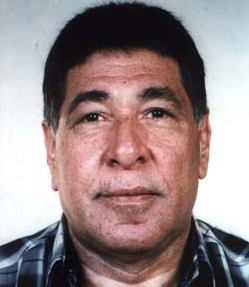 Gameel Al-Batouti
Mass murderer · USA · 1999
Gameel Al-Batouti (also rendered “Gamil ElBatouty” or “El Batouty” in U.S. offi…
216 victims
Gameel Al-Batouti
Mass murderer · USA · 1999
Gameel Al-Batouti (also rendered “Gamil ElBatouty” or “El Batouty” in U.S. offi…
216 victims
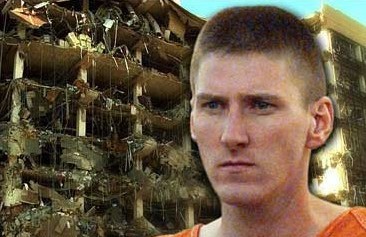 Timothy McVeigh
Mass murderer · USA · 1995
Timothy James McVeigh (April 23, 1968 – June 11, 2001) was a United States Army…
168 victims
Timothy McVeigh
Mass murderer · USA · 1995
Timothy James McVeigh (April 23, 1968 – June 11, 2001) was a United States Army…
168 victims
 Julio Gonzalez
Mass murderer · USA · 1990
Julio Gonzalez was sentenced to 174 twenty-five-year sentences (a total of 4,35…
87 victims
Julio Gonzalez
Mass murderer · USA · 1990
Julio Gonzalez was sentenced to 174 twenty-five-year sentences (a total of 4,35…
87 victims
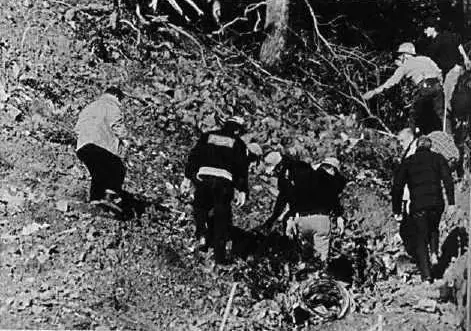 David Burke
Mass murderer · USA · 1987
David Augustus Burke (May 18, 1952–December 7, 1987) was an employee of USAir,…
43 victims
David Burke
Mass murderer · USA · 1987
David Augustus Burke (May 18, 1952–December 7, 1987) was an employee of USAir,…
43 victims
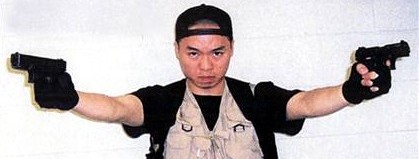 Seung-Hui Cho
Mass murderer · USA · 2007
Seung-Hui Cho was a mass murderer who shot and killed 32 people and wounded man…
32 victims
Seung-Hui Cho
Mass murderer · USA · 2007
Seung-Hui Cho was a mass murderer who shot and killed 32 people and wounded man…
32 victims
 George Jo Hennard
Mass murderer · USA · 1991
George Jo Hennard carried out a mass killing at a Luby’s Cafeteria in Killeen,…
23 victims
George Jo Hennard
Mass murderer · USA · 1991
George Jo Hennard carried out a mass killing at a Luby’s Cafeteria in Killeen,…
23 victims
 Daniel Pelosi
Murderer · USA · 2001
Daniel Pelosi (born 2 August 1963 in Center Moriches, New York) was convicted o…
1 victim
Daniel Pelosi
Murderer · USA · 2001
Daniel Pelosi (born 2 August 1963 in Center Moriches, New York) was convicted o…
1 victim
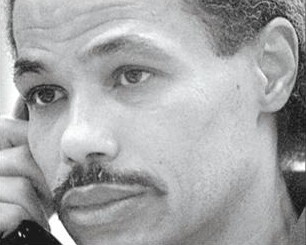 Willie Lloyd Turner
Murderer · USA · 1970
Willie Lloyd Turner was executed by lethal injection in Virginia on May 25, 199…
2 victims
Willie Lloyd Turner
Murderer · USA · 1970
Willie Lloyd Turner was executed by lethal injection in Virginia on May 25, 199…
2 victims
 Allyson McConnell
Murderer · Canada · 2010
Allyson McConnell was convicted of manslaughter in the bathtub drowning of her…
2 victims
Allyson McConnell
Murderer · Canada · 2010
Allyson McConnell was convicted of manslaughter in the bathtub drowning of her…
2 victims
 Jessie James Cowans
Homicide - Murderer · USA · 1977
Jessie James Cowans Jessie James Cowans was arrested for armed robbery when he…
2 victims
Jessie James Cowans
Homicide - Murderer · USA · 1977
Jessie James Cowans Jessie James Cowans was arrested for armed robbery when he…
2 victims
 Violette Nozière
Murderer · France · 1933
Violette Nozière was convicted of parricide in 1934 for poisoning her parents i…
1 victim
Violette Nozière
Murderer · France · 1933
Violette Nozière was convicted of parricide in 1934 for poisoning her parents i…
1 victim
 Robert Healey
Murderer · United Kingdom · 1986
Robert Healey Sentenced to life in prison on April 1, 1987 · 30 March 1987 — Ro…
2 victims
Robert Healey
Murderer · United Kingdom · 1986
Robert Healey Sentenced to life in prison on April 1, 1987 · 30 March 1987 — Ro…
2 victims
- Gender
- male
- Country
- USA
- Location
- Orange County, California, USA
- Date of birth
- March 1956
- Age at first offence
- 41
- Characteristics
- revenge, armed robbery
- Victim profile
- Hal Bierlein, 51; Wayne Bowers, 43; Paul White, 40 ; and Michael Kelley, 49 (ex-coworkers)
- Method of murder
- Shooting ( AK-47)
- Date(s) of murder
- December 19, 1997
- Years active
- 1997
- Date of arrest
- —
- Status
-
Shot to death by police in a gun battle on the same day as the shootings (December 19, 1997)
Timeline
- December 19, 1997 — Arturo Reyes Torres arrived at a Caltrans maintenance yard and shot and killed four men; police exchanged gunfire with him and shot him to death in a gun battle.
- December 20, 1997 — Highway authorities tightened security at the maintenance yard.
- December 21, 1997 — A personnel hearing involving Arturo Reyes Torres and co-workers was discussed in relation to the shootings.
Background
Arturo Reyes Torres was a state transportation worker who worked at a Caltrans maintenance yard for about 15 years. He was fired after he was videotaped selling about $100 worth of scrap aluminum from the yard; another account described $106.50 worth of highway scrap and allegations relating to scrap-metal salvaging. He had complained to friends that he had been singled out by his supervisor. He had worked at the yard for about 15 years, and police described him as a former state employee.
He was described as an avid outdoorsman and as having been a gun enthusiast; police said he arrived armed with multiple firearms and circled trailers in pelting rain while firing through windows. The incident caused employees to hop fences and dive for cover.
A common practice for Caltrans employees had included selling scrap metal to raise small amounts of money for employee barbecues and other staff events, and Torres and another fired employee contended that the agency had long tacitly allowed employees to sell scrap metal for that purpose. The dispute was also tied to a supervisor’s warning and a videotaped incident.
The Caltrans spokesman Albert Miranda declined to speak in detail and referred reporters to a complaint argued before the State Personnel Board. Caltrans alleged that Arturo Torres and James Torres had broken agency rules in a scrap-metal salvaging scheme, and it said supervisors had videotaped the men on Feb. 24 as they sold aluminum they had taken from a bridge. The judgment in that matter was heard by an administrative law judge, Melvin R. Segal, who found in favor of Caltrans, and the state board ratified the judgment in October.
Melanie Bierlein, identified as the supervisor’s widow, said she and her husband spoke often about problems he encountered with Arturo Torres and that they grew fearful in the months after Torres and James Torres were caught selling scrap. She said the family suspected Arturo Torres of harassing and threatening them, and said one day a large rock was thrown through the window of a family car.
Arturo Torres’ family gathered in Santa Ana on Friday and answered media questions cautiously. Arturo Torres’ father, Pedro Torres, said: "What's done is done,'' and "Of all our children, he looked after us most. He loved us, and we loved him. He wasn't a fighter. He was never a troublemaker. That's all.'' His mother, Aurelia, was also mentioned as having been told by Arturo Torres that he did not want any food because his wife, Jeanette, was making dinner.
Arturo Reyes Torres was described as the second-oldest of six children and as having been born in March 1956 in Ciudad Juarez. His father brought the family to Orange County in about 1960. The elder Torres said his son graduated from Saddleback High School in Santa Ana and served in Germany during a stint in the Marines from November 1979 to December 1982, and that the discharge was not dishonorable. Arturo Torres was said to have owned a four-bedroom, two-story house on a cul-de-sac in Huntington Beach and to have kept his lawn neatly mowed; neighbors described him as jolly and mellow, friendly, and he was said to enjoy deep-sea fishing and bicycling to the beach. He was also described as having recently become a U.S. citizen, with his father saying he held an Immigration and Naturalization Service registration card for many years.
Arturo Torres was said to have been worried about his wife’s cancer; a neighbor said the cancer had been in remission for a number of years. His father said Arturo Torres stopped by his parents’ house for a few hours on Thursday and seemed pale, agitated and nervous, and said he explained his behavior as worrying about his wife. Another account stated he visited his parents only hours before he armed himself. Arturo Torres was said to have sought to take care of some business before his deadly outburst and to have called Renee Renz, who was buying a bar in Orange from Torres and his father. Renee Renz said he called at 11:59 a.m. and the tape on the phone machine said: "Hi Renee, it's Art Torres," "Can you give me a call at my dad's phone number today? It's Thursday." She said he called her at the bar at 2 p.m. about an hour before the killing began and that he said: 'Sure, I'll do that.' She said Torres never took her up on the offer and that she found it weird. She said: "He's a nice, nice guy."
Arturo Torres was described as having kept his firing secret from his family. It was stated that he unsuccessfully appealed the case to state authorities.
The offence
On December 19, 1997, Arturo Reyes Torres arrived at a state Transportation Department maintenance yard in pelting rain armed with an assault rifle, a shotgun and a handgun. He circled trailers and fired through the windows, methodically picking off employees. Police and multiple accounts described him as firing more than 70 bullets, and police said more than 300 bullets were fired in all. He then started to drive away.
Four men were shot to death when gunfire first rang out at the Caltrans facility at about 3:15 p.m. Another account stated that the first to die was Hal Bierlein, a maintenance supervisor, who was shot in his car when Torres pulled alongside him in the Caltrans maintenance yard and opened fire. Employees were described as scrambling for cover as Torres sprayed nearby work trailers with more than 70 bullets.
The fourth victim, Michael Kelley, died later at a hospital after being fatally shot. Another account stated that Michael Kelley, 49, Paul White, 40, and Wayne Bowers, 43, were killed, along with Hal Bierlein, a supervisor.
Two other people were wounded, including a police officer.
Investigation
At the first police encounter, Arturo Reyes Torres fired at an officer as police approached the yard; it was stated that he missed the officer and hit a truck window that blew shards of glass into the officer’s face. An officer shouted "Shots fired!" into the radio.
Orange Police Lt. Art Romo described a running battle in which police cornered Torres at Batavia and West Taft Avenue. The running battle ended when officers shot Torres twice in the head, once in the arm and once in the chest.
Police said Torres’ arsenal included a shotgun and handgun in addition to an AK-47 he bought in 1988, and that a California law was passed to regulate military-style weapons. Police said he had a clear view through windows of workers scrambling for cover, and it was described as unclear whether Torres had specific victims in mind.
The motive was addressed in multiple ways. Motive was described as unknown in an account. Another account quoted Lt. Art Romo saying: "If you stop and think about what happened, it appears that revenge was the motive in that particular gentleman [Bierlein] being killed. Then maybe he decided to go after the other people." Deputy State Attorney Terrence Mason was quoted as saying: "My first reaction when I heard about the shooting ... was he went after Bierlein." Mason also said: "Arturo Torres was known to be a real gun nut. Word filtered through the grapevine that he might come armed." And Mason said of Bierlein: "He was afraid for his life in September during two days of personnel proceedings." Another quote from Mason stated: "It was clearly revenge,'' said Deputy State Attorney Terrence Mason, who represented Caltrans in its efforts to terminate Torres."
Melanie Bierlein was quoted as saying: "My husband told me, `If anything happens to me, you make sure you get everything that's coming to you from Caltrans,' '' She also said: "It was clearly revenge,'' said Deputy State Attorney Terrence Mason, who represented Caltrans in its efforts to terminate Torres. It was further stated that Torres feared he would retaliate and that his supervisor had warned workers against the scrap-metal practice and had helped videotape Torres in the act.
Arrest / Police action
When police arrived, they exchanged gunfire with Arturo Reyes Torres. He started to drive away, but a motorist blocked his brown Mercedes and a gunfight broke out. Police cornered Torres at Batavia and West Taft Avenue, and officers shot him to death after a running battle.
The officer involved was identified as John Warde. It was stated that Warde was struck in the abdomen by a bullet that pierced a protective vest. Warde was taken to St. Joseph Hospital in Orange and was in stable condition. Another worker, Reginald Tennyson, 54, was reported in fair condition at UCI Medical Center in Orange after being shot near the ankle.
Trial / Sentencing
No trial or sentencing information was provided.
Appeals
No appeals information was provided.
Outcome
Arturo Reyes Torres was shot to death by police in a gun battle on December 19, 1997.
The shootings resulted in five deaths total, with four victims dying at the yard and Michael Kelley dying later at a hospital. The killed victims were identified as:
- Hal Bierlein, 51
- Wayne Bowers, 43
- Paul White, 40
- Michael Kelley, 49
In addition, officer John Warde and worker Reginald Tennyson were reported as wounded.
Aftermath
Highway authorities tightened security Friday at the maintenance yard where Arturo Reyes Torres returned and shot the four workers after being fired.
Caltrans victim testimony against Torres and the personnel hearing were discussed after the incident, and Wayne Bowers’ testimony against a Caltrans co-worker involved in an under-the-table recycling scheme was noted. Michael Kelley was described as having recently expressed concerns about Torres, and Reginald Tennyson remained hospitalized at UC Irvine Medical Center with a bullet wound to his ankle.
Arturo Torres’ family gathered in Santa Ana and answered media questions, with Pedro Torres saying: "What's done is done,'' and emphasizing that his son "looked after us most" and "wasn't a fighter" and "was never a troublemaker. That's all.''
Spotted an error, or have more information about this case?