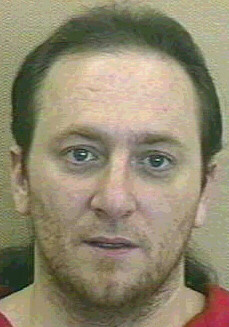
Clifton Allen White
Murderer Brian Kevin Rosenfeld
Murderer · USA · 1985
Brian Kevin Rosenfeld Brian Kevin Rosenfeld was sentenced to three concurrent l…
23 victims
Brian Kevin Rosenfeld
Murderer · USA · 1985
Brian Kevin Rosenfeld Brian Kevin Rosenfeld was sentenced to three concurrent l…
23 victims
 Yahweh ben Yahweh
Murderer · USA · 1980
Yahweh ben Yahweh was born and legally named Hulon Mitchell Jr. (October 27, 19…
23 victims
Yahweh ben Yahweh
Murderer · USA · 1980
Yahweh ben Yahweh was born and legally named Hulon Mitchell Jr. (October 27, 19…
23 victims
 Russell Ellwood
Murderer · USA · 1991
Russell Ellwood was a former taxi driver. Authorities suspected him of killing…
20 victims
Russell Ellwood
Murderer · USA · 1991
Russell Ellwood was a former taxi driver. Authorities suspected him of killing…
20 victims
 Robert Martines Perez
Murderer · USA · 1994
Name: Robert Martines Perez · Other name used in proceedings: Robert Martinez P…
15 victims
Robert Martines Perez
Murderer · USA · 1994
Name: Robert Martines Perez · Other name used in proceedings: Robert Martinez P…
15 victims
 Christopher Lee Simmons
Homicide · USA · 1993
Christopher Lee Simmons was 17 years old at the time of his arrest for the Sept…
1 victim
Christopher Lee Simmons
Homicide · USA · 1993
Christopher Lee Simmons was 17 years old at the time of his arrest for the Sept…
1 victim
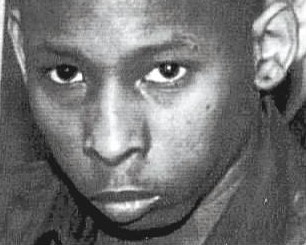 Ronald Lee Fitzgerald
Murderer · USA · 1993
January 29, 1993 — Ronald Lee Fitzgerald was convicted of capital murder in sla…
2 victims
Ronald Lee Fitzgerald
Murderer · USA · 1993
January 29, 1993 — Ronald Lee Fitzgerald was convicted of capital murder in sla…
2 victims
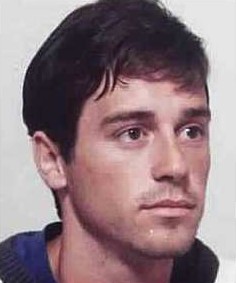 Robert Baltovich
Murderer? · Canada · 1990
Robert Baltovich was a Canadian man born July 17 1965. He was educated at the U…
1 victim
Robert Baltovich
Murderer? · Canada · 1990
Robert Baltovich was a Canadian man born July 17 1965. He was educated at the U…
1 victim
 Marjorie Orbin
Murderer · USA · 2004
Marjorie Orbin murdered her husband Jay Orbin in Phoenix, Arizona on or about S…
1 victim
Marjorie Orbin
Murderer · USA · 2004
Marjorie Orbin murdered her husband Jay Orbin in Phoenix, Arizona on or about S…
1 victim
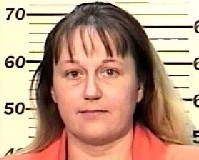 Shawna Nelson
Murderer · USA · 2007
Shawna Nelson was found guilty of first-degree murder in the slaying of Heather…
1 victim
Shawna Nelson
Murderer · USA · 2007
Shawna Nelson was found guilty of first-degree murder in the slaying of Heather…
1 victim
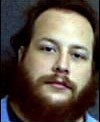 Michael James Hayward
Murderer · USA · 1994
Michael James Hayward was sentenced to death in 1996. Hayward was involved in c…
1 victim
Michael James Hayward
Murderer · USA · 1994
Michael James Hayward was sentenced to death in 1996. Hayward was involved in c…
1 victim
- Gender
- male
- Country
- USA
- Location
- Mecklenburg County, North Carolina, USA
- Date of birth
- March 2, 1958
- Age at first offence
- 31
- Characteristics
- rape, robbery
- Victim profile
- Kimberly Ewing (female, 28)
- Method of murder
- St abbing with knife
- Date(s) of murder
- February 4, 1989
- Years active
- 1989
- Date of arrest
- February 1989
- Status
-
Executed
Executed by lethal injection in North Carolina on August 24, 2001
Case information
Clifton Allen White was sentenced to death in North Carolina for the 1989 stabbing death of Kimberly Ewing.
Timeline
- Friday, 5 May 1989 — White and Ewing went to a party; Ewing became upset with White for handing syringes to one of her friends with a drug problem.
- Around 10:00 p.m. — The three left Ewing's home; Ewing drove White to a convenience store near her home, and then drove Gibson to the Waffle House for work.
- Between 11:30 p.m. and midnight — Ewing left the Waffle House to return home.
- Around 11:00 p.m. — White took a taxi cab from the convenience store to the road where Ewing's house was located.
- Sunday morning — White drove Ewing's car to a friend's house early Sunday morning, exchanged Ewing's possessions for drugs, and gave away some of Ewing's clothing; Gibson discovered Ewing’s missing possessions and found Ewing dead in her bedroom.
- On 16 May 1989 — White was arrested in Florida.
- On 4 February 1994 — White was sentenced to death for the murder of Ewing in Superior Court, Mecklenburg County.
- 13 June 1996 — White filed an appeal as of right in the Supreme Court of North Carolina.
- 13 February 1996 — The appeal was heard in the Supreme Court.
- June 1992 — White’s first death sentence was reversed and the case was remanded for a new trial.
- August 24, 2001 — White was executed by lethal injection in North Carolina.
The offence
White had known Kimberly Ewing for about two weeks prior to her death, and he met Ewing through Ewing’s roommate, Wendy Gibson. White had recently met Gibson at a bar and often visited Gibson at Ewing’s home.
On the night of Friday, 5 May 1989, White and Ewing went to a party with some friends. At the party, Ewing became upset with White for handing some syringes to one of her friends who had a drug problem. White left the party and went to see Gibson at the Waffle House, where she worked. Ewing also went to the Waffle House and again argued with White about the syringes. The argument ended, and when Gibson got off work, the three went to Ewing’s home. Gibson and Ewing went to their respective bedrooms, and White slept on the couch.
The next day, White and Ewing argued again, but they ultimately seemed to resolve the dispute. The three then went to several bars that afternoon and returned to Ewing’s home that evening. Around 10:00 p.m., the three left Ewing’s home. Ewing took White to a convenience store near her home, and then White drove Gibson to the Waffle House for work. Ewing ate dinner at the Waffle House, then left between 11:30 p.m. and midnight to return home.
Around 11:00 p.m., White took a taxi cab from the convenience store to the road where Ewing’s house was located. White told the cab driver that he was upset with his girlfriend, who had left him and had taken everything, and that he was going to “kick ass” and kill her. White also told the driver that he was going to steal her VCR and sell it for drugs to pay for the cab ride. The driver declined the offer and drove away. White drove Ewing’s car to a friend’s house early Sunday morning. He exchanged Ewing’s microwave, stereo, speakers, and some jewelry for drugs and gave away some of Ewing’s clothing. White said that he had argued with his girlfriend and had taken the things that he had bought her. He later drove away in Ewing’s car.
Gibson returned home Sunday morning and discovered that Ewing’s car, stereo, television, VCR, and microwave were missing. She then found Ewing dead in her bedroom. Ewing was naked and covered in blood, with her hands tied behind her back with an electrical cord. Ewing had been cut and stabbed in the neck and beaten over the head with a blunt object. A fireplace shovel was found in Ewing’s bedroom, and a paring knife was missing from the house.
White admitted that he killed Ewing but contended that he committed a lesser degree of homicide because he never intended to kill her, and because the killing occurred during an altercation between White and the victim while White was under the influence of alcohol and cocaine.
In a statement to police after his arrest in Florida on 16 May 1989, White said:
“got messed up on some drugs” one night and killed his girlfriend’s roommate when she came home.
He said he “took a cab to Ewing’s house, climbed in a window, and waited for her.”
“When she arrived, he tied her hands behind her back. He then hit her in the head with a fireplace shovel and cut and stabbed her with a paring knife, killing her.”
He “took the victim's money and some of her possessions, traded them for cocaine, and drove her car to Florida.”
White’s confession included taking Ewing’s money and possessions, trading them for cocaine, and driving her car to Florida.
Investigation and arrest
On 16 May 1989, White was arrested in Florida.
Trial
Charges and verdicts
White was indicted for:
- the murder and first-degree kidnapping of Kimberly Ewing
- larceny of an automobile
- robbery with a dangerous weapon
- second-degree burglary
White was originally capitally tried at the 17 August 1990 Criminal Session of Superior Court, Mecklenburg County, and was found guilty of all charges. In accordance with the jury’s recommendation, the trial court sentenced defendant to death for the murder of Ewing.
On 25 June 1992, this Court reversed White’s convictions and remanded the case to Mecklenburg County for a new trial.
White was again tried capitally and was found guilty of:
- first-degree murder on the theories of premeditation and deliberation and of lying in wait
- first-degree kidnapping
- larceny of an automobile
- second-degree burglary on the basis of intent to commit larceny
Sentencing in trial court
In accordance with the jury’s recommendation, the trial court sentenced White to death for the murder of Ewing and imposed consecutive forty-year sentences of imprisonment for first-degree kidnapping, robbery with a dangerous weapon, and second-degree burglary, as well as a consecutive ten-year sentence of imprisonment for felonious larceny of an automobile.
Voir dire issue (prospective juror Michael Culbreth)
White contended that the trial court erred in excusing for cause prospective juror Michael Culbreth and in failing to give the defense an opportunity to rehabilitate him. The court excused Culbreth after he expressed reservations about imposing the death penalty based on his religious beliefs about the sanctity of life.
White argued that questions posed to Culbreth incorrectly stated the law by suggesting the juror would be required to set aside religious scruples when making a decision as to punishment. The prosecutor asked Culbreth:
"if [the court] tells you that you should put aside your feelings of that nature and make your decision based solely on the evidence and the law, do you feel that your beliefs, based on your religion, would prevent or substantially impair the performance of your duty regardless of the instructions of the Court?"
Culbreth’s responses supported the excusal for cause, including these exchanges:
When the prosecutor asked Culbreth, “Then as a matter of conscious [sic], regardless of the facts and circumstances, do you feel that your religious, your strong religious beliefs, would prevent or substantially impair the performance of your duties as a juror, regardless of the Court's instruction?” Culbreth responded, “That is correct.”
When the court asked Culbreth, “So, upon reflection, Mr. Culbreth, at this time, as you indicated earlier, you can consider [the death penalty] but if the State proved everything that it was required to prove beyond a reasonable doubt, it would be your duty to make a recommendation of the death penalty, and you could not do that because of your personal beliefs?” Culbreth responded, “Right.”
The Supreme Court held that the trial court did not abuse its discretion in excusing Culbreth for cause and did not err in supervision of voir dire.
Parole eligibility jury instruction
White contended that the trial court erred in failing to truthfully instruct the jury on the actual conditions of parole after the jury inquired during deliberations.
The trial court gave the following instruction:
“The question of eligibility of parole is not a proper matter for you to consider in recommending punishment and it should be eliminated entirely from your considerations and dismissed from your minds. In considering whether to recommend death or life imprisonment, you should determine the question as though life imprisonment means exactly what the statute says, imprisonment for life in the State's prison.”
The Supreme Court held that parole eligibility was not a proper matter for jury consideration and found no error with the instruction. It also rejected White’s pretrial contention that some voir dire should have been allowed to address jurors’ misconceptions about parole eligibility.
Admission of prior bad acts (prior sexual assaults)
White argued that the trial court improperly admitted evidence of two prior sexual assaults during the guilt phase.
The Supreme Court found that the prior assaults were admitted under North Carolina Rule of Evidence 404(b) to support charges of first-degree murder and second-degree burglary with intent to commit the murder. The court described that the prior assaults involved placing a sharp blade to the women’s throats, while in the present case the victim was stabbed and her throat was slashed. The court also described similarity in clothing removal, timing with alcohol and/or drugs, and the introduction of evidence of alcohol and drug abuse.
The testimony of the witnesses for the prior assaults was identified as:
- Darlene Hamrick
- Rhonda Lambert
The court instructed the jury before each witness’s testimony that the testimony was not to be considered on the issue of character or to show that White acted in conformity therewith, but may be considered for limited purposes including:
- motive
- purpose
- intent
- opportunity to commit
- plan, scheme, system, or design, or preparation for the offense as to the charge of first-degree murder
- establish intent to commit murder as to the charge of second-degree burglary
White challenged the final charge as omitting the “not be considered on the issue of character” statement. The Supreme Court considered this in a plain error framework and held the error did not have a probable impact on the jury’s finding of guilt and did not constitute plain error.
Voluntary intoxication instruction
White argued that the trial court improperly instructed the jury regarding evidence of voluntary intoxication by incorrectly stating that White would not be guilty if intoxication meant he “could not,” rather than “did not,” have specific intent to kill.
The Supreme Court found that the issue was not preserved and reviewed for plain error. It concluded the instruction did not shift the burden of proof and did not have a probable impact on the jury’s finding of guilt.
Penalty phase: cross-examination of expert witness
During the penalty phase, White contended that the trial court erred by allowing the State to cross-examine the defense’s expert witness in psychiatry, Dr. John Billinsky, about the work of Dr. William Varley.
Dr. Varley was described as a clinical psychologist who conducted psychological testing on White and reported conclusions to Dr. Billinsky. The Supreme Court held that this cross-examination was proper under Rule 705 of the Rules of Evidence and relied on precedent including State v. Simpson and State v. Allen.
Mitigating circumstance instruction: N.C.G.S. § 15A-2000(f)(1)
White challenged the submission of the mitigating circumstance that he had no significant history of prior criminal activity under N.C.G.S. § 15A-2000(f)(1).
White originally requested submission of the (f)(1) circumstance but then asked to withdraw that request before the State’s rebuttal, stating it was not a proper mitigating circumstance based on evidence of his criminal history. The trial court denied withdrawal and allowed the State to present rebuttal evidence of a prior rape allegedly committed by White.
The court instructed the jury that, in considering whether the (f)(1) mitigating circumstance exists, it could consider criminal activity including:
- breaking and entering in 1976
- escape in 1976, 1977, and 1979
- breaking and entering and larceny in 1989
- driving while impaired
- the alleged sexual assaults and/or rapes against Lambert, Hamrick, and Corter
The Supreme Court concluded that the submission of the (f)(1) mitigating circumstance constituted harmless error.
Additional preservation issues
White raised preservation issues about:
- the aggravating circumstance that the murder was especially heinous, atrocious, or cruel under N.C.G.S. § 15A-2000(e)(9), and whether the instruction was unconstitutionally vague
- the jury instruction that each juror was allowed, rather than required, to consider mitigating circumstances when weighing aggravating against mitigating circumstances
The Supreme Court rejected both assignments of error.
Appeals
White appealed to the Supreme Court of North Carolina.
The opinion addressed multiple claims of error, including voir dire excusal of juror Michael Culbreth, parole eligibility instructions, admission of prior sexual assaults, intoxication instructions, expert cross-examination, the (f)(1) mitigating circumstance, and other aggravating/mitigating instruction issues.
Outcome
The Supreme Court concluded that White received a fair trial and capital sentencing proceeding free from prejudicial error.
The Supreme Court conducted proportionality review and held that the sentence of death entered against White was not excessive or disproportionate, based on the jury’s findings and comparisons to similar capital cases.
The Supreme Court held:
- “NO ERROR.”
A dissent by Justice WEBB stated it was error to admit evidence of two prior sexual assaults by the defendant and that the dissent would vote for a new trial.
Aftermath and statements
An unrelated clemency-related narrative described White’s scheduled execution and included multiple quoted statements and reported observations. The narrative included these quotes attributed to White and others:
White’s trial statement:
“I accept responsibility. It is my fault that there is a mother and father that don't have their daughter. I accept full responsibility. It was because of me.”
White’s expression of remorse:
“I feel bad. I feel bad because it is my fault. This mother and father don't have a daughter and it is my fault. It bothers me just to think about it. It is something that never leaves my mind. It will be with me for the rest of my life.”
A quoted description attributed to White:
“He don't understand it himself, he don't know what it was”
A quoted statement attributed to Barbara White:
“He has searched his heart for years. I've watched him cry, I've listened to him cry on the phone: 'I don't know why this happened.'”
A quoted statement attributed to John Johnson:
“Then he started cracking jokes and he put me at ease.”
A quoted statement attributed to Teresa Hunt:
“He was always told, 'You're nothing, you're never going to amount to nothing,'”
“He was never violent toward me and I never saw him be violent against anyone,”
“He never raised his hand to hit me. Whenever there was a fight, he walked away.”
A quoted statement attributed to Barbara White about another change:
“I know the real Clifton, I know the loving man that he is,”
A quoted statement attributed to Barbara White about death row:
“He's not an animal, and he's not one of those one of these prisoners sitting in jail that has nobody. I want people out there to realize that Clifton is loved deeply.”
A quoted statement attributed to Barbara White describing White’s visions:
“He's told me many a time that when he closes his eyes, he sees [Ewing's] face, and when he wakes up, he sees her face,”
A quoted statement attributed to Clifton White’s attorney Jonathan Broun:
“not a monster”
A quoted statement attributed to Jonathan Broun:
“We're not solving these problems by executing him,”
A quoted statement attributed to Johnson:
“but the biggest reason is the man himself.”
“There are legal reasons, and public policy reasons, to spare his life,”
“I want people out there to realize that Clifton is loved deeply.”

Spotted an error, or have more information about this case?