
Jessie Derrell Williams
Murderer Brian Kevin Rosenfeld
Murderer · USA · 1985
Brian Kevin Rosenfeld Brian Kevin Rosenfeld was sentenced to three concurrent l…
23 victims
Brian Kevin Rosenfeld
Murderer · USA · 1985
Brian Kevin Rosenfeld Brian Kevin Rosenfeld was sentenced to three concurrent l…
23 victims
 Marvin Gray
Murderer · USA · 1975
Marvin Gray was convicted killer who claimed responsibility for 23 slayings and…
23 victims
Marvin Gray
Murderer · USA · 1975
Marvin Gray was convicted killer who claimed responsibility for 23 slayings and…
23 victims
 Yahweh ben Yahweh
Murderer · USA · 1980
Yahweh ben Yahweh was born and legally named Hulon Mitchell Jr. (October 27, 19…
23 victims
Yahweh ben Yahweh
Murderer · USA · 1980
Yahweh ben Yahweh was born and legally named Hulon Mitchell Jr. (October 27, 19…
23 victims
 Russell Ellwood
Murderer · USA · 1991
Russell Ellwood was a former taxi driver. Authorities suspected him of killing…
20 victims
Russell Ellwood
Murderer · USA · 1991
Russell Ellwood was a former taxi driver. Authorities suspected him of killing…
20 victims
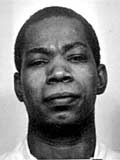 Jeffery Henry Caldwell
Murderer · USA · 1988
Jeffery Henry Caldwell Jeffery Henry Caldwell was executed by lethal injection…
3 victims
Jeffery Henry Caldwell
Murderer · USA · 1988
Jeffery Henry Caldwell Jeffery Henry Caldwell was executed by lethal injection…
3 victims
 Frederick Baker
Murderer · United Kingdom · 1867
Frederick Baker was a solicitor’s clerk in Alton, Hampshire, England. On Saturd…
1 victim
Frederick Baker
Murderer · United Kingdom · 1867
Frederick Baker was a solicitor’s clerk in Alton, Hampshire, England. On Saturd…
1 victim
 Juan David Rodriguez
Murderer · USA · 1988
Juan David Rodriguez (DOB: 06/26/56) was tried in the Eleventh Judicial Circuit…
1 victim
Juan David Rodriguez
Murderer · USA · 1988
Juan David Rodriguez (DOB: 06/26/56) was tried in the Eleventh Judicial Circuit…
1 victim
 Kayoko Nakai
Murderer · Japan · 2000
Kayoko Nakai was 66 and ran a rival telephone dating club in Kobe at the time o…
4 victims
Kayoko Nakai
Murderer · Japan · 2000
Kayoko Nakai was 66 and ran a rival telephone dating club in Kobe at the time o…
4 victims
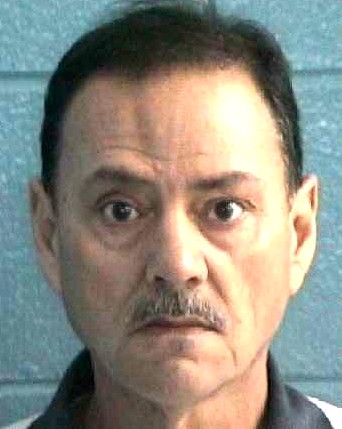 Roddy Childress
Murderer · USA · 1989
Roddy Elroy Childress was the half-brother of Jolene Kappus. In February 1989,…
2 victims
Roddy Childress
Murderer · USA · 1989
Roddy Elroy Childress was the half-brother of Jolene Kappus. In February 1989,…
2 victims
 Denny Taylor
Murderer · USA · 2006
Denny O'Dell Taylor Sr., 60, died from a self-inflicted gunshot wound to the he…
2 victims
Denny Taylor
Murderer · USA · 2006
Denny O'Dell Taylor Sr., 60, died from a self-inflicted gunshot wound to the he…
2 victims
- Gender
- male
- Country
- USA
- Location
- Jackson County, Mississippi, USA
- Date of birth
- May 3, 1951
- Age at first offence
- 32
- Characteristics
- rape, sexual mutilation, drugs, kidnapping, armed robbery
- Victim profile
- Karon Ann Pierce (female, 18)
- Method of murder
- St abbing with knife
- Date(s) of murder
- January 11, 1983
- Years active
- 1983
- Date of arrest
- —
- Status
-
Executed
Executed by lethal injection in Mississippi on December 11, 2002
Case overview
Jessie Derrell Williams was executed by lethal injection in Mississippi on December 11, 2002. He was condemned to die for the 1983 torture slaying of Karon Ann Pierce, an 18-year-old woman from Escatawpa. The case involved capital murder of Pierce committed while Williams was engaged in the commission of kidnaping.
Timeline
- January 11, 1983 — Jessie Derrell Williams murdered Karen Ann Pierce.
- January 12, 1983 — Pierce’s throat was slashed, she was sexually mutilated, and she was left in the woods to die 15 minutes later; she was described as 18 years old.
- December 1983 — A Mississippi jury found Williams guilty of the capital murder of Pierce committed while he was engaged in the commission of kidnaping; the jury sentenced Williams to death.
- February 2, 1984 — An evidentiary hearing occurred on Williams’s post-trial motion; the post trial motions were overruled.
- January 25, 1984 — Williams filed a motion for a new trial that raised inter alia this issue.
- January 8, 1999 — Williams filed his federal petition in the Southern District of Mississippi.
- January 17, 1984 — Williams’s entry date in Mississippi State Penitentiary/Parchman was recorded as 01/17/1984.
- January 20, 1990 — Williams’s death sentence status was recorded as 01/20/1990.
- December 12, 2002 — Williams died after being pronounced dead at 6:42 p.m. during his execution.
- December 11, 2002 — Gov. Ronnie Musgrove denied Williams’s clemency petition.
- 6:29 p.m. — Chemicals began to flow during the lethal injection procedure.
- 6:42 p.m. — Williams was pronounced dead.
- 6 p.m. — The execution was set for 6 p.m.; it was delayed about 30 minutes.
Background
Karon Ann Pierce had come to the Scoreboard Lounge in Gautier, Mississippi, with her boyfriend after going out to dinner. While at the bar, witnesses testified that Pierce was drinking and taking drugs and had became involved in fights with other women at the bar. Her date left the Scoreboard early in the evening after she refused to go home with him.
Sometime after her date left and before Williams arrived, Pierce was gang-raped. Pierce and the rapists remained at the bar after the rape.
As the evening progressed, Williams, Michael Norwood, and Terrell Evans arrived. Evans and Pierce began talking, and Evans convinced her to go for a ride with Williams, Norwood, and himself. On the way out of town, they stopped at a convenience store, bought beer, and continued on to a secluded spot off Interstate 10. They smoked marijuana and drank beer.
Pierce smoked marijuana and ingested hallucinogens and tranquilizers along with whiskey, according to witnesses at trial. Toward the end of the evening, Williams, Norwood, and Terrell Evans continued to drink and take drugs.
Pierce’s mother, Waldine Riley, watched Williams dying on the gurney. Pierce’s twin sister, Sharon Ann Alford of Carriere, was described as having planned to attend the execution but changed her mind and remained on the prison grounds until the execution was completed.
The offence
On the night of January 11, 1983, Pierce went with a date to the Scoreboard Lounge in Gautier. Throughout the night, Pierce consumed beer and drugs. Her date left early after she refused to go home with him. After the gang-rape, Pierce and the rapists remained at the bar.
Williams, Norwood, and Evans had sex with Pierce a number of times in the bed of the truck. During one of the times with Williams, Pierce asked him to stop, but he did not. Pierce asked to go back to the Scoreboard to pick up some of her things, but the men refused to take her back to the bar.
At some point during the night, Pierce and Williams exited the truck. Pierce started to run away from Williams. Williams tackled her and dragged her into the woods.
Evans went searching for Williams and Pierce. Evans saw Williams with a knife standing over Pierce’s mangled and cut body. As Evans began to walk away, Williams said, "I am not leaving until I'm sure she is dead." Fifteen minutes later, Williams returned to the truck. The three men left the scene.
Pierce’s body was discovered about ten days later by a hunter in Jackson County. Pierce’s throat had been slashed and she had been stabbed in the heart. Her vagina and anus had been excised with a small, sharp knife. A pathologist testified that Pierce was alive while she was mutilated. Police also said the cause of death was a knife wound and that the location of the wound was the area between Pierce’s vagina and her rectum, inflicted while she apparently was still alive.
Investigation
Police at first arrested 16 people in connection with Pierce’s death. Law enforcement authorities later named Williams, his roommate Michael Anthony Norwood, and his cousin Thomas Terrell Evans as the killers.
A serrated knife was found on Williams, which prosecutors said was the murder weapon.
Arrest and custody status
Jessie Derrell Williams was held at Parchman State Penitentiary (recorded location: MSP; total length: DEATH; county of conviction: JACKSON). His final hours were described as spent at Parchment State Penitentiary visiting with family.
Trial
Indictment, venue, and conviction
Williams was indicted by a Jackson County Grand Jury for the capital murder of Karen Ann Pierce, committed while he was engaged in the commission of kidnaping. Venue was transferred to Lauderdale County for trial.
In December 1983, Williams was found guilty of the capital murder of Pierce and sentenced to death by virtue of the jury verdict.
Co-indictee testimony and alleged plea bargain issue
Thomas Terrell Evans was Williams’s first cousin and co-indictee and testified against Williams in the original trial in December 1983.
During the trial, Evans denied the existence of any plea bargain agreement he had with the State, and the prosecution also denied the same. Evans stated: "I've told the truth all the time, yes sir."
Following the trial, Williams filed a motion for a new trial on January 25, 1984, in the Lauderdale County Circuit Court, raising whether the prosecution withheld the existence of an alleged plea bargain agreement struck with co-defendant Evans, whereby Evans would plead guilty to accessory after the fact and receive five years imprisonment in exchange for turning State’s evidence and testifying against Williams. The court held an evidentiary hearing on February 2, 1984, and overruled Williams’s post trial motions.
During the evidentiary hearing, Williams called Honorable Michael C. Moore (then the District Attorney for the 19th Circuit Court District), Honorable Kathy H. King (then assistant district attorney), Honorable Louis Guirola, Jr. (then an assistant district attorney), and co-indictee Thomas Terrell Evans to testify as to whether there had been a deal for Evans’s testimony against petitioner.
District Attorney Michael C. Moore’s testimony
District Attorney Michael C. Moore testified that Fielding Wright, Evans’s attorney, approached the two assistant district attorneys and told them that they had the wrong man in regard to the crime against Karen Ann Pierce. Moore testified that Wright informed them that his client’s culpability would be equal to one guilty of accessory after the fact only.
Moore testified that he knew that Evans was already on probation and that his probation would most certainly be revoked, but also stated that "I can say with certainty that nothing was ever said to Mr. Evans in that regard, or at least with my consent, that he would serve a certain period of time in the penitentiary, because we can't-- there is no way we can tell."
Moore further stated, "I've never discussed what we would recommend in return for his testimony with Mr. Evans. As a matter of fact, the only thing I've ever told Mr. Evans is that I don't have any recommendation." Moore testified that prior to trial, there were no tentative agreements as to recommendations from the State if Evans were to plead guilty to a crime.
Moore also stated that he never discussed a recommendation and that "nothing was ever said" with his consent about serving a certain period.
Assistant District Attorney Kathy King’s testimony
Assistant District Attorney Kathy King testified that Fielding Wright approached them and stated that Evans could tell them who was the real killer of Pierce. King stated that she and Wright discussed what kind of offer might be made for Evans since he was already on probation. King stated she never promised Wright anything since the prosecution team had not yet spoken to Evans himself. She made it clear to both Evans and Wright that there would be no deal if Evans’s version did not match with all other evidence and testimony of the other co-indictees. Because there were discrepancies between Evans’s testimony and that of Williams and other co-indictee Norwood, King stated that a deal was "up in the air," and in her mind, "there was no deal," in light of the indictments handed down by the grand jury.
King described one discussion after the indictments where she told Fielding: "'Fielding, obviously the grand jury didn't believe all the facts as your man told them after they heard all the evidence, and they saw fit to indict him.' And that's all I ever said to Fielding after that."
King further stated: "[t]he only other time I kn[e]w anything about any deals even being discussed was some time before the trial was set. . . . Terrell Evans was in our office and . . . when Mike [Moore] told him there were no deals, there were not going to be any deals."
She said Mike Moore’s exact words were unclear to her, but: "I don't remember Mike's exact words, but Mike said as far as he was concerned, he would go with the death penalty for him [Evans] too."
Assistant District Attorney Louis Guirola, Jr.’s testimony
Assistant District Attorney Louis Guirola, Jr. corroborated the prosecutors’ testimonies. He stated: "[t]he only thing [he] ever heard prior to the trial date and extending back was that Mr. Moore told Mr. Evans specifically that he did not have a deal, he did not have any recommendation and that as far as he was concerned, . . . he [wa]s facing the death penalty too."
Guirola testified that Moore asked Evans at least twice whether he understood that he had no deals, and Evans responded, "Yes, I understand."
Guirola also stated this happened multiple times in individual interviews and that: "it would go on at each individual interview so that he would understand at each interview that he did not have a plea negotiation."
Guirola gave the most detailed account of exchanges between the district attorney’s office and Fielding Wright, including the following statements: "[L]et me . . . start[ ] at the beginning. When this investigation first took place, there were bits and pieces of information that would come into the Sheriff's Office and then they would make arrests based on these bits and pieces of information. During their investigation, they arrested two individuals, one I believe was John Paul Adams and the other one, . . . Mitchell Byrd. . . . Sometime later during the investigation, Thomas Terrell Evans was arrested but he was not charged with capital murder at that time and we weren't even sure of what his involvement was . . . . I think it might have been the next day or next afternoon, Mr. Fielding Wright came into our office and announced that he was representing Thomas Terrell Evans. And, at that time, he made the statement-- and I remember this vividly, because it shocked me-- he said, 'You've got the wrong people charged with capital murder, and I know who did it.' Well, of course, at that point Miss King was present too and we were very interested . . . . And, Mr. Wright said, 'Well, of course, I can't tell you what my source of information [is]. I can only tell you that I know who did it and you've got the wrong people in jail for capital murder.' Well, it didn't take a genius to understand that if he's representing Thomas Terrell Evans and he comes in and makes that kind of a statement that, obviously, Mr. Wright's source of information was Thomas Terrell Evans. At that point, Mr. Wright said 'Well, if I am able to bring some information forward that will get you the right man, what would this office be willing to?' At which point myself and Miss King both told him, 'We can't make any recommendation. We can't say anything at this point because we don't even know who it is or what he will say.' . . . [Wright] gave us an outline of what the person knew and who he knew to be the actual killer of the victim . . . and that [his source] could be guilty of nothing more than accessory after the fact to capital murder, which if you took the facts as Mr. Wright perceived them and he was told them, arguably that would have been the charge. So, at that point, I believe Miss King and I both told Mr. Wright, 'Well, if this is true, if these facts are right down the line as you have told us, there is no way that you could convict that man of anything more than accessory after the fact to capital murder, which carries a maximum penalty of five years in the penitentiary.' Now, at that point-- let me make it clear-- that was not a recommendation that was made, that was an observation that that would be the maximum penalty for that particular crime. At that point, Evans was brought in for an interview. After the interview, there was some discussion about what Evans would get if his story was true. Guirola told Wright again, 'If what your man is saying is true, then the maximum penalty would be five years in the penitentiary, and since he is in fact on probation now, that probation would be revoked and he would get five years consecutive with five addition years for accessory after the fact.' I still did not perceive that as a recommendation, because all of the facts were not in, all of the testimony was not in. But, I thought that in my opinion that's what would happen if all these facts were true. . . . I didn't think we were in the position to . . . make any firm recommendation. After the case went before the grand jury, they indicted Evans for capital murder, too. Now since the time of the indictment, and I would say sometime before, at no time has Terrell Evans been told 'you've got a deal with the District Attorney' or 'we're going to reduce something,' because there was nothing to reduce at that point. . . . As a matter of fact, that has been to the contrary. Mr. Moore has always told Mr. Evans, 'Be sure that you understand you do not have any kind of recommendation, you do not have any kind of deal. You are charged with capital murder and as far as I'm concerned you are facing the death penalty too.' At which point Mr. Evans would always indicate that he understood."
Co-indictee Thomas Terrell Evans’s testimony
Evans testified that he did not feel like he ever had any kind of tentative agreement with the district attorney and that there was no discussion between him and the district attorney’s office regarding a possible sentencing recommendation. Evans stated there was discussion about revocation of probation.
Sentencing and aggravating factors found by jury
Williams was convicted of capital murder and sentenced to death. At a resentencing hearing, a second jury found three aggravating circumstances in favor of the death penalty: (1) Williams was previously convicted of a felony involving the threat of violence to a person; (2) the capital offense was committed while Williams was engaged in commission of a kidnaping; and (3) the capital murder of Pierce was especially heinous, atrocious, and cruel. The jury found there were no mitigating circumstances to outweigh the aggravating circumstances.
The first capital murder sentencing was reversed in the sentence-determining phase, remanding the case for a new sentencing hearing after the Supreme Court found reversible error at sentencing based on the trial court allowing the prosecutor to comment on parole and appellate review process. On remand, the second sentencing resulted in another sentence of death.
Williams’s prior armed robbery conviction in 1973 was described as an aggravating factor in the death sentence. Prosecutors said Williams used a knife in the 1973 armed robbery. Mississippi law called for the death penalty in cases of kidnap and murder.
Appeals
Mississippi Supreme Court: direct appeal and rehearing
On direct appeal, the Mississippi Supreme Court affirmed the guilt-finding phase of Williams’s bifurcated trial. On petition for rehearing, it reversed the sentence-determining phase and remanded for a new sentencing hearing. Williams v. State, 544 So. 2d 782 (Miss. 1987).
Post-conviction collateral relief
Williams appealed under the Post-Conviction Collateral Relief Act, seeking to vacate his capital murder conviction on the ground that the State violated discovery rules by withholding a leniency agreement consummated between co-indictee Thomas Terrell Evans and the prosecution, whereby Evans would plead guilty to accessory after the fact and receive five years imprisonment in exchange for turning State’s evidence and testifying against Williams. Williams argued that the alleged plea bargain undermined Evans’s credibility.
The Mississippi Supreme Court concluded that the issue raised in Williams’s motion for a new trial was capable of determination at that point, that the issue was litigated and adjudicated to be without merit, and that Williams was procedurally barred from another evidentiary hearing on the issue. The Court also found no merit existed because there was no evidence of any "deal" and denied Williams’s motion for post-conviction relief.
The Supreme Court stated it denied Williams’s motion for post-conviction relief and affirmed denial.
Federal habeas corpus and certificate of appealability
In 283 F.3d 272, the United States Court of Appeals for the Fifth Circuit addressed Williams’s request for a certificate of appealability after denial of federal habeas relief.
On January 11, 1983, Williams murdered Karen Ann Pierce, and he did not dispute that he murdered Pierce or the manner in which he committed the murder. After trial and conviction for capital murder, a jury sentenced Williams to death.
Williams sought habeas relief in federal district court after exhausting state remedies; the district court denied his petition. Williams sought a certificate of appealability, arguing constitutional rights were violated because:
- there was insufficient evidence to support a kidnaping conviction;
- the prosecutor failed to turn over potentially exculpatory information; and
- the jury that re-sentenced Williams was not instructed on the elements of kidnaping.
The Fifth Circuit denied Williams’s application for a COA.
The Fifth Circuit concluded:
- The kidnaping evidence was substantial and a rational trier of fact could have found the essential elements beyond a reasonable doubt.
- The gang-rape statements were not material under Brady/Bagley because even if disclosed, the jury would have found him guilty of murder during the course of a kidnaping.
- The sentencing instruction claim was procedurally barred, and the district court denied relief accordingly.
The Fifth Circuit denied the request for a COA on each claim.
Sentencing and execution events
Statements and last-day behavior
Williams refused to say a word before being executed Wednesday night for the 1983 rape and mutilation murder of Karon Ann Pierce. He refused to eat breakfast and lunch and declined to make phone calls. He forwent even a last meal of his choice.
Williams met with his spiritual adviser, Ruby Walters, between 4:30 p.m. and 5 p.m. before the execution. He was described as appearing to be in a good mood and chatty earlier in the day, and then became visibly somber after his mother and brother left.
When asked for any final words, Williams responded: "No sir," and later: "No sir," when asked for final statements. He also told officials: "I say 'no' to drugs." He took two ibuprofen pills.
In a letter to The Sun Herald, Williams wrote: "If I'm executed (murdered)," Williams wrote in a letter to The Sun Herald, "I feel like all efforts to find out who actually killed Karon will die right along with me. As long as I'm alive, the search will continue."
He signed a waiver to turn over his inmate funds to his mother. It was described as unclear how much money he had.
Williams asked that his body be donated to the University of Mississippi Medical Center in Jackson.
Clemency and court actions
The 5th U.S. Circuit Court of Appeals in New Orleans denied Williams’s request for a stay of execution on Monday. Williams’s attorney Tom Sumrall then filed a petition with the U.S. Supreme Court Tuesday.
Gov. The U.S. Supreme Court rejected Williams’s last-minute appeal two hours before his execution.
Execution procedure and medical details
An emergency/lockdown status was described as placed on the penitentiary as a security measure Tuesday. Williams was transported to a holding cell adjacent to the death chamber on Monday. It was described that an officer guarded him at all times.
At 6 p.m., six MDOC officers escorted Williams, with his hands and feet shackled, to the death chamber and strapped him to a gurney. The penitentiary superintendent, a medical pathologist, and a coroner were present. A microphone would be lowered over Williams’s head in case he had final words. A timekeeper and the executioner were in a separate room. The IV ran from that room to the death chamber.
The execution team delayed the execution almost 30 minutes because they could not find a vein in Williams’s arms due to dehydration. Williams declined to take a sedative.
At 6:29 p.m., after Leonard Vincent, general counsel for the Mississippi Department of Corrections, said, "No stay," the chemicals began to flow into Williams’s arms. Williams appeared to puff his lips between his moustache and beard as the chemicals began to flow, tilted his head to the right, shut his eyes, and his breathing became labored before he drifted into death.
The Sunflower County Coroner Doug Card pronounced Williams dead after putting a stethoscope to his chest.
At 6:42 p.m., Williams was pronounced dead.
Family, witnesses, and protests
A three-hour meeting with Williams’s immediate family ended in strong emotion. Williams’s mother was described as taking the situation very hard; his brother John Williams was emotionally upset; officials reported his daughter had told them that while in prison he tried to turn his life over to God.
Protesters gathered outside the prison to pray. At the same time, a dozen people protested outside the prison gates, and about 60 people protested outside the governor’s mansion in Jackson. The Green Party of Mississippi protested the execution and called on Musgrove to commute the sentence and not participate in what it called "state-sponsored killing."
Pierce’s mother Waldine Riley shouted "Whoopee!" and "Karon, you got it, Baby. We are even." After Williams was pronounced dead at 6:42 p.m., she shoved her arm into the air in triumph.
Attorney General Mike Moore said: "This is the end of a long journey." Moore also said: "This was one of the most brutal crimes I have prosecuted. I prosecuted the case, and I know he is guilty and he knew it." In a quote from the same speaker, he said: "This was one of the first death penalty cases that I tried as a young district attorney... actually this crime occurred ...next month it will be twenty years. Mr. Williams certainly passed away in a very humane fashion it was certainly not the way that Karon Ann Pierce was murdered and tortured." He also said: "He died peacefully, very peacefully. My sister bled to death. I don't have hatred in my heart toward him, I don't have nothing towards him. Its just I have a pain where my sister was."
Sgt. Bryan White consoled Pierce’s brother Tony Fairley during the execution.
Other witnesses described Williams as dying a humane death. Keith Hill said: "I found it uneventful. I think you could show this to schoolchildren and they wouldn't be affected by it. They would probably be bored," and said Williams died peacefully with minimal movement. Jason Straziuso said Riley was focused on Williams. Christine Nelson said the building "had a smell. It was a weird smell to me." Randy Bell said: "It appeared he just went to sleep," and agreed that the execution was humane despite delay.
Williams’s family members who were described included his mother Josephine Hunter, his brother John Williams, and his daughter Tina Ragon of Picayune. Williams’s spiritual adviser was Ruby Walters. Williams was described as meeting with his spiritual adviser in the afternoon before the execution.
Tracy Alan Hansen was described as executed in July by lethal injection. Williams became the second death row inmate to be executed at Parchment since Mississippi’s capital punishment laws were amended in 1998.
Donation and disposition
Williams’s body and organs were described as being donated to the University of Mississippi Medical Center. His body will go to University of Mississippi Medical Center. Williams signed a waiver to turn over his inmate funds to his mother.
Outcome
He was pronounced dead at 6:42 p.m.
Other details
Physical and identifying details
Jessie Derrell Williams was recorded as:
- Name: Jessie Derrell Williams
- Race: WHITE
- Sex: MALE
- Date of Birth: 05/03/1951
- Height: 5FT 11IN
- Weight: 212
- Complexion: LIGHT/FAIR
- Build: HEAVY
- Eye Color: BROWN
- Hair Color: (recorded as entry “Entry Date 01/17/1984”; hair color not separately shown beyond that entry)
- Location: MSP
- County of Conviction: 1 JACKSON
- Sentence Date: 1 01/20/1990
- MDOC#: 0000061530
Prior conviction referenced
Prosecutors said Williams had been previously convicted of armed robbery in 1973 and used a knife in that robbery.
Victim description and date references
Pierce was described as 18 years old. Pierce was referred to as Karon Ann Pierce, Escatawpa native, and as Karen Ann Pierce in some procedural references. Pierce’s murder timing was described as Jan. 12, 1983 in an execution-related narrative, while other passages described the murder occurred on Jan 11, 1983.
Legal framing in federal proceedings
In federal proceedings, the Fifth Circuit described the kidnaping conviction as a capital murder offense under MISS. CODE ANN. § 97-3-19(2)(e) (kidnaping). It referenced MIS. CODE ANN. § 97-3-53 for kidnaping elements and MISS. CODE ANN. § 99-19-101 for sentencing considerations listing aggravating circumstances.
Notes about co-indictee testimony recantations
The Fifth Circuit described that Evans recanted in a 1985 sworn affidavit and later in 1990, and the Mississippi Supreme Court found that the 1985 recantation did not undermine the original verdict; it held that Evans failed to challenge that determination in the federal habeas petition and Williams had never asserted or proved Evans gave perjured testimony.
"I say 'no' to drugs." — Ken Jones, MDOC public information officer
"No stay," — Leonard Vincent, general counsel for the Mississippi Department of Corrections
"I am not leaving until I'm sure she is dead." — Jessie Derrell Williams
"No sir" — Jessie Derrell Williams
"I wish to God Karon had that opportunity" — Waldine Riley

Spotted an error, or have more information about this case?