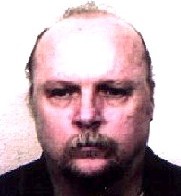
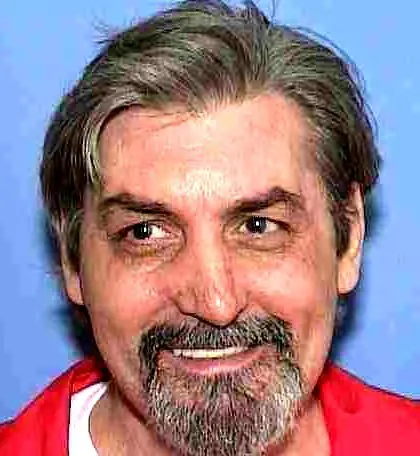
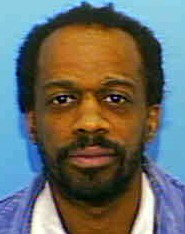
Keith Daniel Williams
Murderer Ervil LeBaron
Murderer · USA · 1972
Ervil Morrell LeBaron (1925 to August 16, 1981) was the leader of a polygamous…
35 victims
Ervil LeBaron
Murderer · USA · 1972
Ervil Morrell LeBaron (1925 to August 16, 1981) was the leader of a polygamous…
35 victims
 Brian Kevin Rosenfeld
Murderer · USA · 1985
Brian Kevin Rosenfeld Brian Kevin Rosenfeld was sentenced to three concurrent l…
23 victims
Brian Kevin Rosenfeld
Murderer · USA · 1985
Brian Kevin Rosenfeld Brian Kevin Rosenfeld was sentenced to three concurrent l…
23 victims
 Marvin Gray
Murderer · USA · 1975
Marvin Gray was convicted killer who claimed responsibility for 23 slayings and…
23 victims
Marvin Gray
Murderer · USA · 1975
Marvin Gray was convicted killer who claimed responsibility for 23 slayings and…
23 victims
 Yahweh ben Yahweh
Murderer · USA · 1980
Yahweh ben Yahweh was born and legally named Hulon Mitchell Jr. (October 27, 19…
23 victims
Yahweh ben Yahweh
Murderer · USA · 1980
Yahweh ben Yahweh was born and legally named Hulon Mitchell Jr. (October 27, 19…
23 victims
 Justen Grant Hall
Murderer · USA · 2002
Justen Grant Hall Hall was sentenced to death on May 11, 2005. The trial court’…
2 victims
Justen Grant Hall
Murderer · USA · 2002
Justen Grant Hall Hall was sentenced to death on May 11, 2005. The trial court’…
2 victims
 Juan Vallejo Corona
Serial killer · USA · 1960
Juan Vallejo Corona was a native of Mexico, born in 1934. He moved to Yuba City…
25 victims
Juan Vallejo Corona
Serial killer · USA · 1960
Juan Vallejo Corona was a native of Mexico, born in 1934. He moved to Yuba City…
25 victims
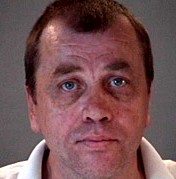 David William Tiley
Murderer · United Kingdom · 2007
David William Tiley was born in 1960. In 1995, he received a six-year jail term…
2 victims
David William Tiley
Murderer · United Kingdom · 2007
David William Tiley was born in 1960. In 1995, he received a six-year jail term…
2 victims
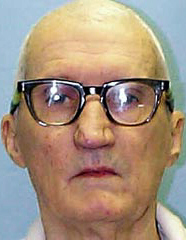 James Barney Hubbard
Murderer · USA · 1957
James Barney Hubbard was executed by lethal injection in Alabama on August 5, 2…
2 victims
James Barney Hubbard
Murderer · USA · 1957
James Barney Hubbard was executed by lethal injection in Alabama on August 5, 2…
2 victims
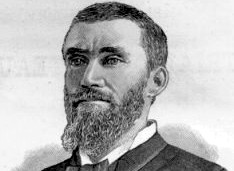 Charles Guiteau
Murderer · USA · 1881
Charles Julius Guiteau (September 8, 1841 – June 30, 1882) was an American lawy…
1 victim
Charles Guiteau
Murderer · USA · 1881
Charles Julius Guiteau (September 8, 1841 – June 30, 1882) was an American lawy…
1 victim
- Gender
- male
- Country
- USA
- Location
- Merced County, California, USA
- Date of birth
- J une 6, 1947
- Age at first offence
- 31
- Characteristics
- robbery, kidnapping, rape
- Victim profile
- Miguel Vargas, Salvadore Vargas and Lourdes Meza
- Method of murder
- Shooting
- Date(s) of murder
- October 8. 1978
- Years active
- 1978
- Date of arrest
- —
- Status
-
Executed
Executed by lethal injection in California on May 3, 1996
Case record: Keith Daniel Williams
Timeline
- October 9, 1978 — Victims Miguel Vargas and Salvador Vargas were found lying face down on the floor in their rural Merced residence. Both had been shot in the back of the head.
- October 13, 1978 — Lourdes Meza’s body was discovered in a field some distance from the residence; she had been raped and shot four times.
- Sunday, October 8, 1978 — Keith Daniel Williams and co-defendant Robert Leslie Tyson left for the victim’s home in Merced around 4:00 p.m.
- Sunday night, October 8, 1978 — Mr. Leon Macias, uncle of the two male victims, was at the Vargas home when Williams and Tyson arrived some time before 9:00 p.m.; the group sat around the dining room table discussing the sale of the car.
- Monday morning, October 9, 1978 — When Macias returned at 9:00 a.m., there was no answer at the door; he did not investigate immediately.
- Early period after October 9, 1978 (five days later) — Lourdes Meza’s body was discovered in a field some distance from the residence.
- June (next month after confession) — Tyson became nervous and confessed to the police within the week; Williams was picked up the next month and confessed.
- 1977–1978 — Williams was charged with murder with special circumstances under California’s 1977 death penalty law.
- 03/24/1988 — Court action was affirmed.
- Dec. 14, 1994 — The appeal was argued and submitted.
- April 7, 1995 — The appeal was decided.
- May 2, 1996 — Witnesses were escorted into the witness area just after 11:45 p.m.
- May 3, 1996 — Warden Arthur Calderon gave the order to begin the execution at 12:03 p.m.; Williams was pronounced dead at 12:08 a.m.
- May 3, 1996 — Keith Daniel Williams was executed by lethal injection at San Quentin State Prison.
Background
Keith Daniel Williams was in custody on multiple offenses, including:
- P207-KIDNAP, P245-ASLT W/ DEADLY WEAP, P211-ROBRY, ESCAPE FED PRISON (listed as 1977–’78)
- P466-POSS BURG. TOOLS, V10851-VEHICAL THEFT (listed as 11/1976)
- FORG., AUTO THEFT, V23102A, VIO. PAROLE, P245-AWD, AG. ASSAULT (listed as 1971–’75)
- THIRD DEGREE RAPE (listed as 10/67)
- EXTENSIVE HISTORY OF JUVENILE ARRESTS (listed as 1963–’66)
Steven King Ainsworth wrote “In Memoriam” and discussed meeting Williams (called “Danny”) in 1980 while both were on death row; Ainsworth described their friendship and detailed prison experiences and visits.
Ainsworth stated that Keith Daniel Williams was executed by lethal injection at San Quentin State Prison on 3 May, 1996 and referenced “Since reinstatement of capital punishment in 1977.”
The offence
Victims Miguel Vargas, Salvador Vargas, and Lourdes Meza were killed as part of a plan involving robbery, kidnapping, and rape.
In Saturday, September 30, 1978, Keith Daniel Williams, Robert Tyson, and three others were out driving when their car broke down. Williams and Tyson decided to rob a nearby camper. They forced the couple occupying the vehicle out, and as the couple fled, Williams fired several shots over their heads into the air. Williams, Tyson and others held a yard sale.
On Friday, October 6, 1978, Miguel Vargas, Salvador Vargas and Lourdes Meza came to the sale. Miguel expressed interest in selling his car for $1500. He returned the next day with Meza and agreed to sell the car. At the sale, one member of the group wrote out a check on a checkbook stolen from the camper. Vargas also expressed interest in buying Williams’s Beretta.
After Vargas and Meza left, Williams told Tyson how easy he thought it would be to “just get rid of them,” and a plan was formed to go to their place in Merced and retrieve the bad check; Williams intended to kill the three.
According to testimony recounted on appeal, Williams proceeded to clean his and Tyson’s guns and, that night, sent two of the women in the group out to hustle money or prostitute themselves in order to obtain gas money. When that failed, Williams himself sold a camera in the morning and others cashed more checks from the stolen checkbook. After obtaining money for gas, Williams and Tyson left for the Vargas farmhouse. En route, Williams and Tyson had at least two beers.
Upon arrival at the Vargas farmhouse, Williams and Tyson found Miguel Vargas, Salvador Vargas, Meza, and three others. They drank and discussed selling Williams’s gun. After the others left, Williams and Tyson retrieved their guns from the car. Williams pulled a gun on Miguel Vargas, but Tyson turned the situation into a joke. Williams and Tyson then left briefly, purportedly to get beer, and returned within 15 minutes with guns drawn.
Williams ordered Tyson to guard Miguel while he went upstairs. Williams found Salvador and Meza upstairs. Williams ordered Tyson to bring Miguel upstairs and take Meza downstairs and “take care of her.” Williams then shot Salvador and Miguel twice each, retrieved two guns, Meza’s purse, and the check, and left the farmhouse with the other two.
During the trip, Williams had intercourse with Meza in the back seat. When the three finally stopped in a remote area, Williams took Meza from the car and shot her four times. Meza’s naked body was left abandoned in a field.
Investigation details added that Lourdes Meza was kidnapped and that she was raped repeatedly before being shot.
The period during the crimes included Williams consuming a disputed amount of alcohol, morphine, codeine, heroin and marijuana.
Investigation
After Miguel and Salvador were found shot in the back of the head, investigators later determined that Lourdes Meza was kidnapped and that she was raped repeatedly before being shot.
The appeal record described that Tyson became nervous and confessed to the police within the week; Williams was picked up the next month and also confessed.
Ainsworth’s “In Memoriam” piece also discussed Williams’s view of his case while on death row, but that material did not provide additional factual details about the killings beyond the execution narrative.
Arrest and confessions
Tyson confessed to the police within the week. Williams was picked up the next month and confessed.
In the taped confession fragment quoted in the appellate opinion, the confessor stated:
“A [ Williams ]: So, we went up there [to the Vargases' farmhouse] and, uh, went in--first there was a bunch of people there. We had something to drink. We was drinkin' and stuff and, uh, we left and (yawn) went back about a half-hour later, everybody was gone except for, uh, these two dudes and this chick. Uh, killed these two dudes upstairs in the bedroom. Q [Officer]: Who killed them? A: I did. Q: You did. Well, how did--how did you do that? A: Well, we went to the door. Bob threw down on them when we went to the door and I was still on the outside and he went in. The dude, the chick's old man was downstairs, he's the one who answered the door. Q: Which one was he? The smaller one or the bigger one? A: I don't know, he was just a Mexican. Q: Just a Mexican. A: We backed 'em up. I went upstairs and the chick and the dude was upstairs, the chick was in the bathroom, the dude was coming out of the bedroom, and I put him--both down on the ground on the landing there and then I called Bob, had him bring the other dude up, and told Bob to go down and take care of the chick. So he took her downstairs. I killed the two Mexicans upstairs, walked down and Bob, he couldn't--he couldn't kill her. So I started to shoot her there, but, it was, like he was getting all freaked out and everything so I told him to grab her ... and we left. Q: How long were you with [Meza] before you went back to the car? A: A minute, time to walk up there, shoot her, turn around and walk back. The reason I didn't, cause, I was gonna shoot Bob cause of the way he was acting and way he was doing things, he was just, you know, the dude was freakin' out on me and everything. I had full intentions of shooting him. Q: Up there? A: Yeah. So I was gonna shoot him too. And the dude started sniveling and crying and started telling me, I don't know, a bunch of shit, find that weak ... you know, and I threw down the gun when I went back to the car, I started talking to him through the open window and the dude started sniveling and crying and shit. I just got, you know, I was mad, and I just got in the car and took off. We went back to his house and, uh, I split. Q: When you went up there, did you put her right down or something or did you, was she standing up when you shot her? A: No. She was down. I just put her down and I shot her in the back of the head. Q: How many times did you shoot her? A: Four.”
Trial
Williams was charged with murder with special circumstances under California’s 1977 death penalty law.
He pleaded not guilty by reason of insanity and was examined by two court appointed psychiatrists, Drs. Brannan and Lloyd, each of whom found him sane.
Williams’s defense proceeded on a theory of diminished capacity.
Williams was found guilty on three counts of first-degree murder.
The jury found nine of 10 special circumstances true:
- six multiple-murder circumstances
- two robbery circumstances
- one kidnapping circumstance
The jury found not true the charged rape circumstance.
The jury then found Williams sane and returned a sentence of death on all three counts.
Co-defendant
Co-defendant was Robert Leslie Tyson.
On sentencing, the appeal summary stated that Tyson received three concurrent 25-year-to-life sentences for his part in the crimes.
Sentencing and sentence modification
The appellate opinion discussed Williams’s motion to modify his death sentence and review of numerous claimed errors. The trial judge’s consideration included various statutory and other factors as described in the appellate discussion.
The appellate opinion noted that the state conceded error at the penalty phase regarding multiple-murder special circumstance overcharging, and that the California Supreme Court found it to be error, although the federal appellate court rejected relief based on the harmlessness and the weighing/non-weighing analysis applied.
The appellate opinion also addressed an instructional error regarding the kidnapping special circumstance instructions: it agreed error occurred but concluded it did not require reversal.
Appeals
A federal appellate opinion in the United States Court of Appeals for the Ninth Circuit was issued under the case caption “Keith Daniel Williams, Petitioner-appellant, v. Arthur Calderon, Warden, San Quentin State Prison, respondent-appellee.”
- Argued and Submitted: Dec. 14, 1994
- Decided: April 7, 1995
- Appeal from: United States District Court for the Eastern District of California
- Panel: POOLE, DAVID R. THOMPSON, and TROTT, Circuit Judges
The Ninth Circuit stated it reviewed de novo the denial of the petition for writ of habeas corpus and concluded it would not grant relief. It stated: “We therefore affirm.”
Earlier state proceedings included:
- Williams’s appeal and first state habeas petition were denied in their entirety.
- The California Supreme Court decision cited “People v. Williams” with a citation including “cert. denied” in 1988.
- Williams’s second state habeas petition received a postcard denial.
In the appellate discussion, Williams raised arguments including:
- ineffective assistance of counsel at guilt, sanity, and penalty phases
- counsel conflict of interest
- right to psychiatric assistance
- perjury by the prosecution’s main witness
- instructional and penalty-phase challenges, including special circumstance instructions and penalty-phase guidance
- district court procedural claims including refusal of broader evidentiary hearings
The appellate opinion concluded that none of Williams’s asserted errors warranted habeas relief and that the district court’s denial should be affirmed.
Outcome
The status of the case was that Williams’s conviction and habeas relief efforts did not result in overturning the death sentence.
The case was affirmed, and Williams was executed.
Execution and last day
Keith Daniel Williams was executed by lethal injection on May 3, 1996 at San Quentin State Prison in the execution chamber.
Execution procedure details included:
- Witnesses were escorted into the witness area just after 11:45 p.m. Thursday, May 2.
- They observed insertion of IVs into Williams’s arms.
- At 12:03 p.m., May 3, Warden Arthur Calderon gave the order to begin the execution.
- Williams was pronounced dead at 12:08 a.m.
Ainsworth’s “In Memoriam” added narrative statements about Williams’s last day, including that Williams visited with attorneys and a spiritual advisor.
Williams’s last meal included:
- fried pork chops
- a baked potato with real butter
- asparagus
- salad with bleu cheese dressing
- apple pie
- whole milk
The execution narrative stated Williams had no last words.
Other details
The appellate opinion included discussion of disputes and context about intent, premeditation, sanity phase evidence, and perjury allegations. It described that Dr. Brannan opined:
“I think he remains a danger to the health and safety of others, himself included. The reason I say this is because I think he is sociopathic, impulsive, and acts without thinking....” (“RT 4/10/79 at 1528.”)
The appellate opinion also reported statements attributed to Williams during sanity-phase material:
“He thinks this whole trip is a bunch of ‘S.’ He said he would just like to get it over with and take what is coming to him. He does not think jail will do him any good.... He said that if he does twenty years in prison he will get out and probably do the same thing again. . . . . . He sums it up by telling me that, one, he rejects authority and always will. Two, he does not go for the rehab bullshit. Three, he goes by the same code of ethics whether he is inside or outside of jail. Four, he is very prejudiced against Mexicans.” (“RT 4/10/79 at 1526.”)
The appellate opinion also included portions of counsel and trial court instruction quoted on points such as the “no sympathy” instruction and penalty-phase guidance. One trial court statement quoted in the appellate opinion was:
“Now, ladies and gentlemen, if during the course of the argument you thought you heard a comment about the law as being that it says that you shall impose a sentence of death if you conclude that the aggravating circumstances outweigh the mitigating circumstances, or you shall impose mitigating--excuse me, life imprisonment without possibility of parole if you feel that the mitigating circumstances outweigh the aggravating circumstances, I tell you that's not the law that applies to the case. You may use those. As the way in which you go about this. But the way you go about this is up to you. And the law does not say you shall do one or the other. RT 4/11/79 at 1614.”
Spotted an error, or have more information about this case?