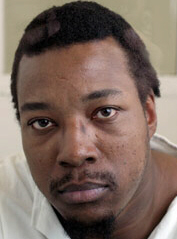
Robert Wayne Williams
Murderer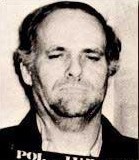 Ervil LeBaron
Murderer · USA · 1972
Ervil Morrell LeBaron (1925 to August 16, 1981) was the leader of a polygamous…
35 victims
Ervil LeBaron
Murderer · USA · 1972
Ervil Morrell LeBaron (1925 to August 16, 1981) was the leader of a polygamous…
35 victims
 Brian Kevin Rosenfeld
Murderer · USA · 1985
Brian Kevin Rosenfeld Brian Kevin Rosenfeld was sentenced to three concurrent l…
23 victims
Brian Kevin Rosenfeld
Murderer · USA · 1985
Brian Kevin Rosenfeld Brian Kevin Rosenfeld was sentenced to three concurrent l…
23 victims
 Marvin Gray
Murderer · USA · 1975
Marvin Gray was convicted killer who claimed responsibility for 23 slayings and…
23 victims
Marvin Gray
Murderer · USA · 1975
Marvin Gray was convicted killer who claimed responsibility for 23 slayings and…
23 victims
 Yahweh ben Yahweh
Murderer · USA · 1980
Yahweh ben Yahweh was born and legally named Hulon Mitchell Jr. (October 27, 19…
23 victims
Yahweh ben Yahweh
Murderer · USA · 1980
Yahweh ben Yahweh was born and legally named Hulon Mitchell Jr. (October 27, 19…
23 victims
 Mark Schwab
Murderer · USA · 1991
Mark Dean Schwab (born December 16, 1968; white; male; hair brown; blue eyes; 6…
1 victim
Mark Schwab
Murderer · USA · 1991
Mark Dean Schwab (born December 16, 1968; white; male; hair brown; blue eyes; 6…
1 victim
 Laurie Dann
Murderer · USA · 1988
Laurie Dann (also referred to as Laurie Wasserman; née Wasserman; born c. 1958;…
1 victim
Laurie Dann
Murderer · USA · 1988
Laurie Dann (also referred to as Laurie Wasserman; née Wasserman; born c. 1958;…
1 victim
 Robert Lynn Pruett
Murderer · USA · 1995
Robert Lynn Pruett (TDCJ Number 999411) Robert Lynn Pruett was born on 09/18/19…
2 victims
Robert Lynn Pruett
Murderer · USA · 1995
Robert Lynn Pruett (TDCJ Number 999411) Robert Lynn Pruett was born on 09/18/19…
2 victims
 Michelle Tharp
Murderer · USA · 1998
Michelle Sue Tharp was convicted in Washington County of first-degree murder, e…
1 victim
Michelle Tharp
Murderer · USA · 1998
Michelle Sue Tharp was convicted in Washington County of first-degree murder, e…
1 victim
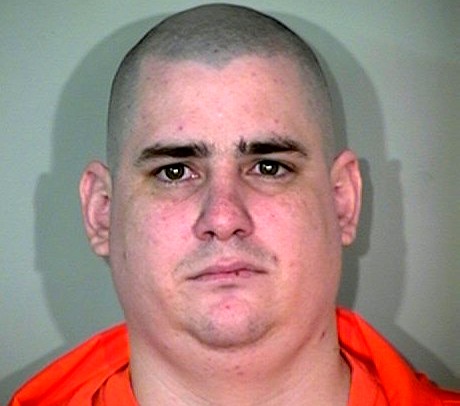 Kenneth Laird
Homicide · USA · 1992
Kenneth Laird was a juvenile who was tried as an adult. Two weeks before the mu…
1 victim
Kenneth Laird
Homicide · USA · 1992
Kenneth Laird was a juvenile who was tried as an adult. Two weeks before the mu…
1 victim
 Kristi Fulgham
Murderer · USA · 2003
Kristi and Joey Fulgham married in 1991 and lived in the Starkville area. They…
1 victim
Kristi Fulgham
Murderer · USA · 2003
Kristi and Joey Fulgham married in 1991 and lived in the Starkville area. They…
1 victim
- Gender
- male
- Country
- USA
- Location
- East Baton Rouge Parish, Louisiana, USA
- Date of birth
- 1951
- Age at first offence
- 28
- Characteristics
- —
- Victim profile
- Willie Kelly, 67 ( security guard )
- Method of murder
- Shooting ( 12-gauge sawed-off shotgun)
- Date(s) of murder
- January 5, 1979
- Years active
- 1979
- Date of arrest
- —
- Status
-
Executed
Executed by electrocution in Louisiana on December 14, 1983
Case information
- Name: Robert Wayne Williams
- Approximate birth year: c. 1951
- Date of execution: December 14, 1983
- Place: Louisiana
The offence
On January 5, 1979, Robert Wayne Williams participated in the robbery of an A & P Supermarket grocery store located at 3525 Perkins Road in Baton Rouge. Willie Kelly, a 67-year-old security guard, was bagging groceries at the time.
Williams and Ralph Holmes entered the supermarket. Both men placed ski masks over their faces. Williams pulled out a 12-gauge sawed-off shotgun. The two men approached Kelly. Ralph Holmes tried to remove Kelly’s pistol from his holster. As Kelly made a move toward his pistol, Williams yelled “Don't try it”, and immediately shot Kelly in the face at point blank range.
Williams and Holmes then proceeded to complete the robbery. During this process, Holmes pistol-whipped one of the customers, and Williams accidentally shot two people in their feet.
Williams maintained that the shotgun he was using in the robbery discharged accidentally, striking Kelly in the face.
Investigation and arrest
The police received a telephone call from an informant implicating Holmes, Williams, and Williams’ wife.
Following their arrest, both Williams and his wife gave confessions that implicated themselves in the crime.
Trial
Williams was convicted of first-degree murder in Louisiana State District Court.
In the penalty phase of his bifurcated trial, the jury recommended the penalty of death after finding the existence of three of the necessary aggravating factors listed by the Louisiana Code of Criminal Procedure, Article 905.4:
- that the offender was engaged in armed robbery,
- that he knowingly created a risk of death or great bodily harm to more than one person, and
- that the offense was committed in an especially heinous, atrocious or cruel manner.
Williams sought to challenge aspects of his trial and sentencing, including:
- the exclusion of certain jurors at the voir dire phase allegedly violating the constitutional rules announced in Witherspoon v. Illinois, 391 U.S. 510 (1968), and Adams v. Texas, 448 U.S. 38 (1980);
- insufficiency of the evidence under the due process clause to support the second and third aggravating circumstances found by the jury;
- deprivation of effective assistance of counsel at both the guilt and sentencing phases of his trial; and
- the Louisiana Supreme Court’s comparative review system for death sentences allegedly being unconstitutional in that it reviewed by judicial district rather than statewide.
The jury found Williams guilty and recommended the death penalty.
Sentencing
The record indicated that the conviction and sentence were affirmed by the Supreme Court of Louisiana.
A state district judge signed a warrant ordering the imposition of sentence on March 31 (year not specified in the provided material). The United States Supreme Court denied certiorari.
Appeals
Louisiana Supreme Court
The conviction and sentence were affirmed by the Supreme Court of Louisiana. State v. Williams, 383 So.2d 369 (La.1980).
United States Supreme Court
Certiorari was denied. Williams v. Louisiana, -- U.S. --, 101 S.Ct. 899, 66 L.Ed.2d 828 (1981).
Fifth Circuit (federal appellate decision)
The United States Court of Appeals for the Fifth Circuit considered multiple claims. It stated:
- the court found each point to be meritless and affirmed the district court’s judgment denying relief;
- it held that every assertion of ineffective assistance does not require a hearing where the district court had the complete record before it and expressly stated that a full and searching review was made;
- it found the federal district court did not err in its deference to legal conclusions made in state court; and
- it rejected arguments that certain claims were disregarded.
The Fifth Circuit ordered that the stay previously issued would remain in effect until June 30 and stated that no motion for rehearing would be entertained, and ordered the clerk to issue the mandate immediately.
AFFIRMED.
United States Supreme Court (stay vacated; execution allowed to proceed)
The United States Supreme Court considered a motion by the state of Louisiana to vacate a stay of execution.
On November 7, 1983, the Supreme Court held that because it agreed the stay was improvidently imposed, it granted the motion to vacate the stay and allowed the state to reschedule Williams’ execution.
The Supreme Court summarized that:
- on October 23, 1983, the Court of Appeals for the Fifth Circuit stayed the execution pending final action of the Supreme Court;
- Williams had previously been sentenced to death, and his conviction and sentence had been affirmed by the Louisiana Supreme Court;
- after certiorari was denied and habeas relief attempts were unsuccessful, Williams filed subsequent habeas petitions raising claims that the district court and Fifth Circuit rejected; and
- the stay was vacated.
Justices’ opinions and dissents (verbatim where quoted)
Justice STEVENS concurred in the judgment. He quoted the prosecutor’s argument at the sentencing phase, stating:
“ I want to read you some laws because something they [the defense] said, don't sentence this man to death, don't kill this man. You see, you have the last word on the verdict, and it but, by far you don't have the last word on it if you return it. The Louisiana Supreme Court has enacted a series of statutes that I want to read to you. What happens if you return a death penalty in this case. Because the law that's set up is very exacting, detailed and complicated procedure for a review of this court, the Louisiana Supreme Court, and other courts before any death penalty can be imposed. The law states, 905.9, Review on Appeal, The Supreme Court of Louisiana shall review of every sentence of death to determine if it is excessive. The Court, by rule, shall establish such procedures as necessary to satisfy constitutional criteria for review. And, then the statute, they enact it. See, not necessarily, its's mandatory that the Supreme Court review it. There's seven judges on the Supreme Court. The highest judges in this state. For it to be upheld, four of them will have to approve it. Well, what do they review? They state that every sentence of death shall be reviewed by this court to determine if it is excessive, and in determining whether the sentence is excessive, the court shall determine. A. whether the sentence was imposed under the influence of passion, prejudice or any other arbitrary factors. If they decide it was, they can reverse and order a life sentence. Where the sentence is disproportionate to the penalty imposed in similar cases considering both the crime and the defendant. If they don't think this defendant—if they think the crime was heinous enough and the statutory circumstances were proved but they don't think it ought to be applied to this defendant, they can reverse it and order a life sentence. Whenever the death penalty is imposed, a verbation transcript of the sentence hearing along with the record required on appeal shall be transferred to the Court. They review everything that went on in this trial . . . . And there is a total and complete investigation done on the defendant to determine whether or not they will let your decision to impose the death penalty stand. And only then does it make it through the Louisiana Supreme Court, and the defendant has a right, if he wishes—I'm not saying that it's granted in every case. It could be denied. It could be appealed all the way through the United States Supreme Court. * * * * * "But more important, what is this verdict going to mean? You see, you represent a certain segment of our society, law abiding people, raising families, working for a living, not robbing stores. You're the people that set the standards in this community. The Justices on the Supreme Court will review, and determine their decision whether or not if you decide to give him the death penalty, whether or not you were correct or not, but you see,—it use to be one." Tr. 290-292, 296 (emphasis supplied).”
Justice BRENNAN, joined by Justice MARSHALL, dissented. Justice BLACKMUN also dissented.
Outcome
Robert Wayne Williams was executed in Louisiana by electrocution on December 14, 1983.
His last words were:
“I told the truth about what happened. I would like it to be a remembrance for Louisiana and the whole country that it would be a deterrence against capital punishment and show that capital punishment is no good and never has been good. I would like all the people who have fought capital punishment to keep on fighting--not just for me but for everybody else.”
Aftermath
Williams was described as the first inmate from Louisiana’s death row executed after a twenty-two year hiatus.
Other details
Execution procedure and related statements (as described in the provided material)
The electric chair was refurbished and polished. The room had a clock mounted on a wall behind the chair and an exhaust fan positioned slightly to the right of the clock. A microphone was attached to a small podium for a final statement.
The execution process involved an initial charge of 2,000 volts, then lowering it to 500 volts, then increasing it to 2000 volts before lowering it to 500 volts. The entire execution process was described as taking one minute and ten seconds.
A warden described the timing of the execution and led Williams to the death chamber.
Federal court case identifiers and parties (verbatim where provided)
The Fifth Circuit proceeding included:
- Robert Wayne Williams, Petitioner-appellant, v. Frank C. Blackburn, Warden, Louisiana State Penitentiary, and William J. Guste, Attorney General of The State of Louisiana, Respondents-appellees
- United States Court of Appeals, Fifth Circuit
- Appeal from the United States District Court for the Middle District of Louisiana.
- Before BROWN and GARZA, Circuit Judges, and BEER, District Judge.
- PER CURIAM:
- AFFIRMED.
The Supreme Court proceeding included:
- Ross MAGGIO, Warden v. Robert Wayne WILLIAMS. No. A-301. Nov. 7, 1983. PER CURIAM.

Spotted an error, or have more information about this case?