Johnny Paul Witt
Murderer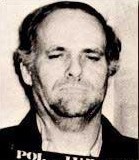 Ervil LeBaron
Murderer · USA · 1972
Ervil Morrell LeBaron (1925 to August 16, 1981) was the leader of a polygamous…
35 victims
Ervil LeBaron
Murderer · USA · 1972
Ervil Morrell LeBaron (1925 to August 16, 1981) was the leader of a polygamous…
35 victims
 Marvin Gray
Murderer · USA · 1975
Marvin Gray was convicted killer who claimed responsibility for 23 slayings and…
23 victims
Marvin Gray
Murderer · USA · 1975
Marvin Gray was convicted killer who claimed responsibility for 23 slayings and…
23 victims
 Yahweh ben Yahweh
Murderer · USA · 1980
Yahweh ben Yahweh was born and legally named Hulon Mitchell Jr. (October 27, 19…
23 victims
Yahweh ben Yahweh
Murderer · USA · 1980
Yahweh ben Yahweh was born and legally named Hulon Mitchell Jr. (October 27, 19…
23 victims
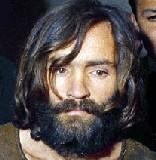 Charles Manson
Murderer · USA · 1969
Charles Milles Manson (born November 12, 1934) was an American criminal and mus…
9 victims
Charles Manson
Murderer · USA · 1969
Charles Milles Manson (born November 12, 1934) was an American criminal and mus…
9 victims
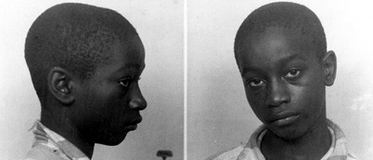 George Stinney
Homicide · USA · 1944
George Junius Stinney Jr. was executed by electrocution on June 16, 1944. He wa…
2 victims
George Stinney
Homicide · USA · 1944
George Junius Stinney Jr. was executed by electrocution on June 16, 1944. He wa…
2 victims
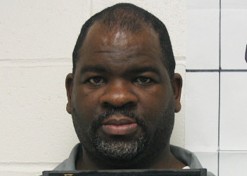 Richard Strong
Murderer · USA · 2000
Richard Strong was a defendant in the State of Missouri, Respondent, v. Richard…
2 victims
Richard Strong
Murderer · USA · 2000
Richard Strong was a defendant in the State of Missouri, Respondent, v. Richard…
2 victims
 Carol Ege
Murderer · USA · 1984
Carol Ege was imprisoned in Michigan for the 1984 slaying of Cindy Thompson. Eg…
1 victim
Carol Ege
Murderer · USA · 1984
Carol Ege was imprisoned in Michigan for the 1984 slaying of Cindy Thompson. Eg…
1 victim
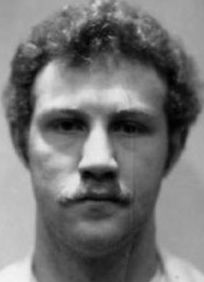 Ronnie Lee Gardner
Murderer · USA · 1984
Ronnie Lee Gardner was executed by shooting in Utah on June 18, 2010. Ronnie Le…
2 victims
Ronnie Lee Gardner
Murderer · USA · 1984
Ronnie Lee Gardner was executed by shooting in Utah on June 18, 2010. Ronnie Le…
2 victims
 Jaylen Fryberg
Mass murderer · USA · 2014
Jaylen Fryberg Jaylen Fryberg committed suicide by shooting himself the same da…
4 victims
Jaylen Fryberg
Mass murderer · USA · 2014
Jaylen Fryberg Jaylen Fryberg committed suicide by shooting himself the same da…
4 victims
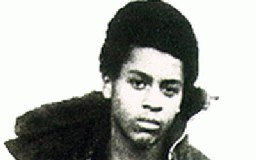 Willie Bosket
Homicide · USA · 1978
Willie Bosket was a juvenile who committed robberies and related violent attack…
2 victims
Willie Bosket
Homicide · USA · 1978
Willie Bosket was a juvenile who committed robberies and related violent attack…
2 victims
- Gender
- male
- Country
- USA
- Location
- Volusia County, Florida, USA
- Date of birth
- 1943
- Age at first offence
- 30
- Characteristics
- sexual assault, sex with corpse, mutilation
- Victim profile
- Jonathan Mark Kushner (male, 11)
- Method of murder
- Asphyxiation by the gag
- Date(s) of murder
- October 28, 1973
- Years active
- 1973
- Date of arrest
- —
- Status
-
Executed
Executed by electrocution in Florida on March 6, 1985
Case overview
Johnny Paul Witt was convicted of first degree murder in Florida and sentenced to death. He was executed by electrocution in Florida on March 6, 1985. He was convicted for the October 28, 1973, killing of 11-year-old Jonathan Mark Kushner, the son of a University of South Florida professor. Witt was 42 at execution and 30 at the time of the murder.
The offence
Witt and his younger friend, Gary Tillman, spoke on other occasions about killing a human and even had stalked persons like animal prey. On the day of the murder, Witt and Tillman were bow and arrow hunting in a wooded area near a trail often used by children.
When the victim rode his bicycle along a path through the area, Tillman struck him on the head with a star bit from a drill. Witt assisted Tillman in gagging Kushner and placing him in the trunk of Witt’s car. Witt and Tillman then drove to a deserted grove, opened the car trunk, and discovered the victim was dead, having suffocated from the gag.
Witt and Tillman dug a grave for the Kushner boy and then slit his stomach so it would not bloat. Before burying the victim, Witt and Tillman performed various acts of sexual perversion and violence to Kushner’s body.
Investigation
During the course of the case, the record described an arrest and custodial interrogation of Witt in November 1973. The appellate discussion addressed admissibility of inculpatory statements rendered after Witt requested an attorney, and whether Fifth Amendment and Sixth Amendment rights were violated.
Arrest
Witt was arrested during the afternoon of November 5, 1973.
Trial
Witt was convicted of first degree murder after a jury trial.
During jury selection for the capital penalty phase, the court excused 11 venirepersons for cause because they expressed opposition to the death penalty. Witt later challenged the excusal of prospective jurors Colby, Gehm, and Miller under the standards set out in Witherspoon v. Illinois.
Admissions and Miranda/Edwards issues
The appellate court recounted the following sequence of events after Witt was arrested.
Witt was given a standard Miranda warning and brought to the county jail. He was interrogated simultaneously by sheriff’s deputies, an FBI agent, and an assistant state prosecutor. Witt requested an attorney soon after questioning began, and interrogation at that point properly ceased.
Witt was left in the interrogation room under the custody of Lt. Arnie Myers of the Hillsborough County Sheriff’s Department. Lt. Myers testified that Witt began to complain about the interrogation. Myers testified that he cut off Witt’s discussion by informing him that he was not authorized to discuss the Kushner case.
Witt then asked Myers if all of the sheriff’s murder cases were solved. Myers responded by asking which case Witt had in mind. Witt told Myers that Tillman, Witt’s co-defendant, possibly had information on the murder of a young girl named Gail Joyner. Myers testified that his interest was piqued because he was working on the Joyner investigation at the time.
Soon after the statement, officers arrived to take Witt to his prison cell for the night. Myers testified that Witt said he would like to continue their discussion the next day, presumably referring to the Joyner case.
On November 6, Witt had his first appearance before a county judge and was represented by an attorney from the public defenders’ office. It was unclear from the appellate narrative whether Witt actually consulted with the attorney, even though he requested an opportunity.
On November 7, Myers went to Witt’s cell in the early morning to continue their discussion from two days previously. On the way to the interrogation room, Myers read Witt his rights under routine police procedures. In the interrogation room, Witt asked Myers if he had spoken to Tillman yet. Myers responded he had not but that someone else had. Witt asked what Tillman said, and Myers responded he did not know.
Witt was silent for a while and then stated his co-defendant would probably attempt to pin the blame upon him, referring apparently to the Kushner case. Witt then asked for paper and pen; Myers provided paper and pen and a waiver of rights form. Myers read the waiver form and asked Witt if he understood its contents; Witt responded affirmatively.
Myers testified that reading the waiver form was routine police procedure when giving a prisoner writing materials during a questioning session. Witt then wrote a 13-page confession over the course of several hours. Agent Fred Barnesdale, also of the Hillsborough County Sheriff’s Department, joined Myers while Witt was writing his confession. Barnesdale asked Witt questions to secure Witt’s cooperation in revealing the locations of various aspects of the crime. Witt also tendered an oral confession during the course of November 7.
Witt’s motion to suppress his confession was denied by the trial court on February 12, 1974.
Witt contended that his confession was extracted in violation of Miranda v. Arizona and Edwards v. Arizona, arguing that his waiver of counsel was not intelligent and knowing, and that initiation by the police of further custodial interrogation after he expressed a desire to consult an attorney constituted improper coercion. He further argued that his confession and all evidence stemming from it were inadmissible under his Fifth Amendment right against self-incrimination and his Sixth Amendment right to counsel.
The appellate court addressed the argument and found that the confession was properly admitted, concluding that Witt initiated the November 5 discussion about the Joyner case, and that Myers initiated the November 7 follow-up discussion based on Witt’s invitation and Myers’s belief about the subject matter. The court also concluded that the record fairly supported that it was Witt who initiated discussion of the Kushner case on November 7. It found that Myers read Witt his rights twice and that Barnesdale’s questions did not extend the subject matter beyond categories already broached by Witt’s voluntary acts.
Competency/sanity and penalty phase psychiatric testimony
The trial court determined on January 8, 1974, that Witt was competent to stand trial. The record described that a court-appointed psychiatrist examined Witt without warning him that anything he said could be used against him in court. One of the psychiatrists informed Witt that he had a choice whether to submit to the examination.
During the penalty phase of Witt’s trial, psychiatrists testified that Witt had an incurable propensity to commit future violent crimes, that he was a menace to society, and that he was a sexual pervert. The trial judge explicitly relied on some of these factors in reaching the sentencing decision.
Witt argued that use of this psychiatric testimony violated his Fifth Amendment privilege against self-incrimination and Sixth Amendment right to counsel because the psychiatrist failed to warn him that the results of the examination would be used against him in court and that he had the right to remain silent. The appellate analysis discussed Estelle v. Smith and concluded Witt failed to state a meritorious Smith claim because trial counsel did not object and did not, on the record presented, demonstrate cause to qualify for an exception from the procedural default bar.
Sentencing
Witt was sentenced to death by the Circuit Court for the Seventh Judicial District for Volusia County, Florida on February 21, 1974, in accordance with the jury’s recommendation. The record described subsequent affirmance of the decision by the Florida Supreme Court on direct review.
The trial court also made reliance on non-statutory aggravating circumstances in the sentencing order, which was among the issues raised on appeal. The appellate court found that the first four issues Witt presented were properly disposed of by the district court, except for the Witherspoon issue.
Appeals
Direct review and postconviction in Florida
Witt v. State (342 So.2d 497) was described as the Florida Supreme Court’s affirmance of the death sentence on direct review. The United States Supreme Court denied certiorari in 434 U.S. 935.
Witt then moved under Fla.R.Crim.P. 3.850 to vacate, set aside, or correct the sentence, and the motion was denied. The Florida Supreme Court affirmed the denial in Witt v. State, 387 So.2d 922, and the United States Supreme Court denied certiorari in 449 U.S. 1067.
Federal habeas and Eleventh Circuit decision
Witt sought federal habeas relief in the United States District Court for the Middle District of Florida. The district court denied his petition initially and, after an evidentiary hearing on the Witherspoon issue, affirmed its prior memorandum decision. Witt filed a notice of appeal on June 24, 1981.
The Eleventh Circuit decision described: it affirmed the district court’s disposition of the first four issues and reversed on the Witherspoon issue, remanding for further proceedings. The appellate court concluded that the trial court committed constitutional error by dismissing for cause a prospective juror who expressed opposition to the death penalty but who failed to indicate unequivocal inability to apply the law as charged. It held this error mandated reversal of the district court’s decision denying Witt’s request for resentencing.
Witherspoon voir dire transcript quotation (Colby)
The appellate record included the following voir dire exchange that led to the dismissal of prospective juror Colby:
Mr. Plowman [for the State]: Now, let me ask you a question, ma'am. Do you have any religious beliefs or personal beliefs against the death penalty?
Ms. Colby: I am afraid personally but not -
Mr. Plowman: Speak up, please.
Ms. Colby: I am afraid of being a little personal, but definitely not religious.
Mr. Plowman: Now, would that interfere with you sitting as a juror in this case?
Ms. Colby: I am afraid it would.
Mr. Plowman: You are afraid it would?
Ms. Colby: Yes, sir.
Mr. Plowman: Would it interfere with judging the guilt or innocence of the defendant in this case?
Ms. Colby: I think so.
Mr. Plowman: You think it would?
Ms. Colby: I think it would.
Mr. Plowman: Your Honor, I would move for cause at this point.
THE COURT: All right. Step down.
The appellate court concluded that Colby was improperly excused for cause because her statements were limited to expressions of feelings and her thoughts on inflicting the death penalty and did not unequivocally state she would automatically be unable to apply the death penalty or find guilt where facts so indicated. It further described the prosecutor’s question regarding whether her fears would “interfere” as admitting of a variety of interpretations, and it found this insufficient under the Witherspoon standard as applied to the case.
Witherspoon voir dire transcripts (Gehr and Miller)
The record included voir dire colloquies for prospective juror Gehm and prospective juror Miller, which were also described in the appellate decision.
Prospective juror Gehm’s colloquy included:
Mr. Plowman: I am asking you [to] consider . . . aggravating circumstances . . . would you be able to follow that and come back with a death penalty conviction? . . . . .
Mr. Gehn: I am afraid not, sir.
Mr. Plowman: You would not be able to do so?
Mr. Gehm: My religious convictions would be foremost in my mind up to this point and possibly beyond that.
Mr. Plowman: Okay.
Mr. Gehm: I am afraid I would be unable to. . . . .
Mr. Behuniak [for petitioner]: I am saying if you were to return a verdict of guilty of first-degree murder, could you keep an open mind as to whether you should vote for the death penalty or life?
Mr. Gehn: No, I could not.
Mr. Behuniak: Why is that, sir?
Mr. Gehn: I feel that the Almighty is the Judge of life or death.
Mr. Behuniak: That's right. You said that previously. But you would not let it interfere with your determination?
Mr. Gehn: I am afraid that it would be weighing on my mind during the trial.
Mr. Plowman: Your Honor, the state would move to dismiss for cause at this time.
The Court: Do you think that this state of mind will prevent you from acting with impartiality? Do you feel that the state of mind that you have will prevent you from acting with impartiality? What I am saying is -
Mr. Gehm: I am afraid it might, sir.
The Court: You are afraid so?
The Court: Okay. Step down.
The appellate decision stated that Gehm’s statements that he “could not” keep an open mind in sentencing were far less equivocal than responses attributed to Ms. Colby.
Prospective juror Miller’s responses included:
Mr. Plowman: Okay. Did you hear the discussion that we have had just recently with Mrs. Davis regarding the death penalty?
Mr. Miller: That's right.
Mr. Plowman: Okay. Do you have any strong feelings one way or the other regarding the death penalty?
Mr. Miller: Well I just couldn't bring a - I couldn't vote, I guess, well, I am against the death penalty.
Mr. Plowman: You are against the death penalty? Would that interfere with your determination in this case?
Mr. Miller: I think it would.
Mr. Plowman: Okay. And you wouldn't be able to follow the law as instructed by the Court?
Mr. Miller: When it comes down to a death verdict, I wouldn't.
Mr. Plowman: You could not do it. Okay. Regardless of the law?
Mr. Miller: No, sir.
Mr. Plowman: Okay. Your Honor, the State would move the Court to excuse Mr. Miller for cause.
The Court: Do you feel because of your state of mind regarding that particular situation it would make you unable to render a just and fair verdict in this case?
Mr. Miller: I am against the death verdict. I think it would.
The Court: Step down.
The appellate decision described Miller as offering less ambiguous responses than Colby and as indicating he “wouldn’t” be able to follow the law as instructed and that he “could not” register a vote for the death penalty regardless of the law.
Subsequent Supreme Court and later proceedings
The record also contained discussion of Wainwright v. Witt (469 U.S. 412) and later proceedings, including an Eleventh Circuit decision denying a certificate of probable cause and denying an emergency motion for stay of execution.
The Supreme Court in Wainwright v. Witt discussed the standard for juror exclusion and reversed the Eleventh Circuit’s judgment that the prospective juror in question had been improperly excused for cause.
The later Eleventh Circuit panel decision (No. 85-3137) affirmed the denial of a petition for writ of habeas corpus and the denial of a motion for stay of execution, and it denied the application for certificate of probable cause to appeal to the court. It stated that Witt’s conviction and sentence had undergone direct review and collateral review, including the reversal as to the sentence on the Witherspoon issue by the Eleventh Circuit and the later reversal by the Supreme Court.
Outcome
Witt was executed by electrocution in Florida on March 6, 1985. The execution followed denial of his habeas relief and denial of a stay of execution in federal appellate proceedings.
Other details
Individuals named in relation to the case
- Jonathan Mark Kushner — victim; 11-year-old son of a University of South Florida professor.
- Gary Tillman — younger friend and co-defendant in the conduct described; alleged to have possibly had information about the murder of a young girl named Gail Joyner.
- Lt. Arnie Myers — custody of Witt during interrogation; Hillsborough County Sheriff’s Department.
- Agent Fred Barnesdale — Hillsborough County Sheriff’s Department; joined during confession writing and asked questions about crime locations.
- Officer names in the appellate narrative included sheriff’s deputies, an FBI agent, and an assistant state prosecutor during the November 5 interrogation phase.
- Prospective jurors: Colby, Gehm, and Miller.
Procedural posture described
The record described:
- Witt’s trial and death sentence on February 21, 1974.
- Florida Supreme Court affirmance on direct review and on Fla.R.Crim.P. 3.850 postconviction review.
- Federal habeas proceedings in the United States District Court for the Middle District of Florida.
- The Eleventh Circuit’s partial affirmance and reversal as to sentencing on the Witherspoon issue, remanding for resentencing.
- The Supreme Court’s reversal of the Eleventh Circuit’s decision and remand proceedings, followed by the Eleventh Circuit’s subsequent denial of habeas relief and stay of execution in a later successive petition.
- A scheduled execution time referenced in later proceedings: 7:00 a.m. on March 6, 1985.
Execution status
Witt’s execution status was described as occurring on March 6, 1985, by electrocution in Florida.
Spotted an error, or have more information about this case?