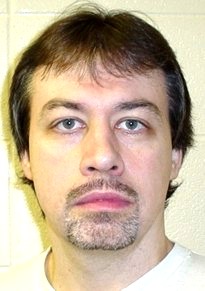
David Leon Woods
Murderer Brian Kevin Rosenfeld
Murderer · USA · 1985
Brian Kevin Rosenfeld Brian Kevin Rosenfeld was sentenced to three concurrent l…
23 victims
Brian Kevin Rosenfeld
Murderer · USA · 1985
Brian Kevin Rosenfeld Brian Kevin Rosenfeld was sentenced to three concurrent l…
23 victims
 Marvin Gray
Murderer · USA · 1975
Marvin Gray was convicted killer who claimed responsibility for 23 slayings and…
23 victims
Marvin Gray
Murderer · USA · 1975
Marvin Gray was convicted killer who claimed responsibility for 23 slayings and…
23 victims
 Yahweh ben Yahweh
Murderer · USA · 1980
Yahweh ben Yahweh was born and legally named Hulon Mitchell Jr. (October 27, 19…
23 victims
Yahweh ben Yahweh
Murderer · USA · 1980
Yahweh ben Yahweh was born and legally named Hulon Mitchell Jr. (October 27, 19…
23 victims
 Russell Ellwood
Murderer · USA · 1991
Russell Ellwood was a former taxi driver. Authorities suspected him of killing…
20 victims
Russell Ellwood
Murderer · USA · 1991
Russell Ellwood was a former taxi driver. Authorities suspected him of killing…
20 victims
 Mark Hutt
Murderer · Canada · 2009
Mark Hutt was convicted of first-degree murder in connection with the death of…
1 victim
Mark Hutt
Murderer · Canada · 2009
Mark Hutt was convicted of first-degree murder in connection with the death of…
1 victim
 Jennifer Trayers
Murderer · USA · 2010
Jennifer Trayers (defendant; wife of Navy Lt. Cmdr. Frederick Trayers III) · Fr…
1 victim
Jennifer Trayers
Murderer · USA · 2010
Jennifer Trayers (defendant; wife of Navy Lt. Cmdr. Frederick Trayers III) · Fr…
1 victim
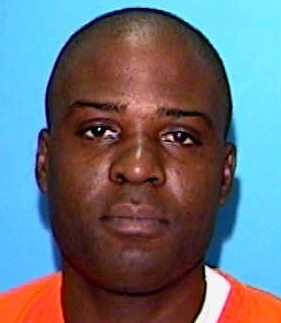 Matthew Marshall
Murderer · USA · 1988
Matthew Marshall was identified in the case as: Florida Supreme Court opinion 7…
1 victim
Matthew Marshall
Murderer · USA · 1988
Matthew Marshall was identified in the case as: Florida Supreme Court opinion 7…
1 victim
 Allen Nicklasson
Murderer · USA · 1994
Allen Nicklasson · late August 1994 — Dennis Skillicorn, Allen Nicklasson, and…
3 victims
Allen Nicklasson
Murderer · USA · 1994
Allen Nicklasson · late August 1994 — Dennis Skillicorn, Allen Nicklasson, and…
3 victims
- Gender
- male
- Country
- USA
- Location
- DeKalb County, Indiana, USA
- Date of birth
- August 7, 1964
- Age at first offence
- 20
- Characteristics
- —
- Victim profile
- Juan Placencia (male, 77)
- Method of murder
- St abbing with knife 21 times
- Date(s) of murder
- April 7, 1984
- Years active
- 1984
- Date of arrest
- Same day
- Status
-
Executed
Executed by lethal injection in Indiana on May 4, 2007
Background
David Leon Woods was sentenced to death for the killing of Juan Placencia, a 77-year-old neighbor in Garrett.
The offence
In the early morning hours of April 7, 1984, David Leon Woods went to the apartment of Juan Placencia and stabbed him to death.
Woods proceeded with accomplices Greg Sloan and Pat Sweet to steal a television. Woods was armed with a knife and told Sloan and Sweet that he was going to scare Placencia with it. Sweet stayed in the yard. Woods and Sloan approached the door of the apartment and rang the bell. Placencia answered the door, whereupon Woods jumped in and stabbed him several times with the knife.
Placencia fell back into a chair, directed them to his money, and began to make noise, asking for help. Woods took money from Placencia’s wallet and then stabbed him again repeatedly. The direct-appeal description stated that Placencia died from three wounds which pierced his heart.
Woods and Sloan carried out the television and hid it in a trash bin. Later they picked it up and sold it. They also washed their clothes and threw the knife and other items in a creek.
Another account described that Woods stabbed Placencia 21 times during a burglary and that Woods took $130 from Placencia’s wallet and took a television that he later sold for $20. Woods apologized before his execution.
Investigation
A police officer responding to a report of a man needing help went to Placencia’s apartment building and found Woods on a porch crying and incoherent, mumbling “Why did it have to be him.” The officer entered the apartment, saw the body, reported in, and returned to the porch to question Woods about why he had been at the apartment.
Woods responded that he had gone to the apartment to use the phone, discovered the body, and ran from the apartment yelling for help.
While Woods was being questioned in a police car, his mother appeared and told police that she felt her son had been involved in the killing. She said he had been in and out of their house during the previous night asking for dark clothes and gloves and that he talked nervously about needing money and killing someone. She stated he had talked about killing a woman who lived above Placencia in the same apartment house. She said she transported to the police station, added further details at 10:40 a.m., and signed a consent to search her house.
At 4:45 p.m., Woods was still being held in the chief’s office and was interrogated again after being read his Miranda rights and making an explicit waiver. A lie detector test was scheduled for 8:00 p.m.
Woods was transported in handcuffs to the post where he broke down during questioning in preparation for the test and confessed that he had gone with Sloan to the Placencia apartment to steal a television, had knocked on the door, and had stabbed Placencia as he answered the door and again inside the apartment. Woods was returned to the county jail where he was formally arrested.
Arrest
The direct-appeal discussion described police taking Woods to the Garrett police station, leaving him alone in the police car after he had been cooperative, and then driving him to the Garrett police station two blocks away for further questioning. It also described him later being taken to the state police post in Fort Wayne for polygraph-related questioning and confessing, followed by formal arrest.
Trial
Charges
Woods was charged in Count I with the knowing and intentional killing of Juan Placencia and in Count II with robbery and serious bodily injury of the same victim.
In a separate request for a sentence of death, the prosecution alleged an aggravating circumstance that Woods committed an intentional killing while committing robbery.
Verdicts and findings
A trial by jury resulted in verdicts of guilty as charged in Counts I and II. The jury reconvened for the penalty phase and returned a verdict recommending the death penalty.
The trial court expressly found that the State proved beyond a reasonable doubt that Woods intentionally killed the victim while committing robbery. The trial court concluded that mitigating circumstances were outweighed by the single aggravating circumstance and ordered death on Count I and fifty years on Count II.
Evidence and procedures mentioned in appellate discussion
In the direct appeal discussion, the court addressed multiple matters including the suppression motion regarding arrest and detention, the admissibility and voluntariness of Woods’s confession, and challenges to trial rulings.
The direct-appeal discussion described an officer going to the apartment after a report and finding Woods on a porch. Woods was given Miranda rights, waived them, and was questioned in the police car for about a half hour. Woods was then taken to the police station, given Miranda rights again, signed a waiver of rights and consent to search his residence, and emptying his pockets. His wallet and money were returned, and his mother’s statements were described as contributing information leading officers to a search.
The discussion also described the line of cases addressing the admissibility of confessions and how the court evaluated voluntariness, including the absence of evidence of physical abuse or prolonged interrogation sessions, along with Woods’s testimony about alleged threats during a 4:45 p.m. session and the finding that trial court rulings on suppression and objections were proper.
The discussion also addressed the denial of continuances, competence to stand trial and the decision not to hold a pretrial hearing, the excusing of a juror due to medical problems, mistrial based on officers’ testimony identifying an exhibit as the murder weapon, and chain of custody rulings related to multiple exhibits including a television, baseball bat, knife, and other items.
The discussion described that Woods attempted to break into Juan Placencia’s home and stabbed him in the abdomen with an approximate four-inch knife. It described that Placencia fell back into his chair pleading for help, Woods began to steal items, then returned and stabbed him twenty additional times leaving him for dead.
Appeals issues discussed in the direct appeal record
The direct appeal discussion included arguments related to:
- jury selection and exclusion of persons who had served as jurors within the preceding year,
- prosecutor arguments at guilt and sentencing phases,
- instructions at the penalty phase including an instruction telling the jury it should not consider sympathy or prejudice,
- amended charges and death request procedures,
- incorporation of guilt-phase evidence into the penalty phase,
- double jeopardy arguments concerning robbery and the death penalty,
- motions challenging the death penalty request and constitutional claims, and
- the sufficiency of findings in the sentencing order.
Sentencing
The trial court sentenced Woods to death on the murder charge and fifty years on the robbery and serious bodily injury charges after the jury recommended death.
Clemency and clemency recommendation
The Indiana Parole Board refused to recommend clemency for a man set to be executed next week.
The governor was described as reviewing the Parole Board recommendation and other information before making a decision. Gov. Mitch Daniels denied clemency after the Parole Board unanimously recommended against it. A Parole Board member’s statement included that testimony and evidence concerning Woods’s childhood and living conditions was merely an attempt to place blame where blame should not lie.
Appeals
Direct appeal
In Woods v. State, the Supreme Court addressed a number of issues arising from the convictions and death sentence. The direct appeal summary stated that convictions of robbery and murder were affirmed and imposition of the sentence of death was affirmed.
The postconviction-related material also described that the convictions and death sentence were affirmed on direct appeal and on rehearing.
Postconviction relief
Woods petitioned for postconviction relief challenging the effectiveness of trial counsel. The postconviction court denied relief and the Supreme Court affirmed.
The postconviction decision held that a Sixth Amendment claim of ineffective assistance of trial counsel may be presented for the first time in postconviction proceedings even if not raised on direct appeal, and that court-appointed defense counsel’s conflict of interest did not adversely affect defense counsel’s representation of Woods.
Federal habeas corpus
Woods filed a petition for writ of habeas corpus. The United States Court of Appeals for the Seventh Circuit affirmed denial of relief, holding that the trial court’s failure to conduct a competency hearing did not violate procedural or substantive due process rights, that Woods was not denied effective assistance of counsel, and that Woods was not denied due process due to lack of procedural mechanism for review of an alleged conflict of interest with postconviction relief counsel.
Outcome
David Leon Woods was executed by lethal injection in Indiana on May 4, 2007.
Woods died at 12:35 a.m. Friday, with another account describing pronouncement at 1:35 a.m. Fort Wayne time Friday.
Accounts of witnesses and prison officials described Woods as calm, pleasant, relaxed, and having expressed many times that he had found religion and was going to a better place.
Woods shared a last meal described as birthday cake and pizza with his family Wednesday, and prison officials had him on a liquid diet Thursday. Woods’s final statement included:
“I want everybody to know that I do have peace and it’s through Jesus Christ that I have this peace,” he said.
Woods apologized and stated:
“I want Juan's family to know I truly am sorry, and I do have remorse,” Woods said.
Aftermath
Gene Placencia, whose father was killed by Woods, wanted Woods to look him in the eye before Woods was put to death by injection. Gene Placencia settled for watching Woods die and said the execution gave him closure.
Other family members described anger, closure, and healing, including that June Placencia would mark May 4, 2007, as the date that his father’s spirit finally rested in peace.
Woods was described as the first Indiana inmate put to death since Marvin Bieghler on Jan. 27, 2006, and also as the first Indiana inmate put to death since January 2006. The execution was also described as the seventh execution since Mitch Daniels became governor in January 2005, and it was described as occurring while courts considered challenges to Indiana’s lethal injection procedures.
The day leading up to the execution was described as calm, and prison spokesman Barry Nothstine described Woods’s demeanor and religious statements.


Spotted an error, or have more information about this case?