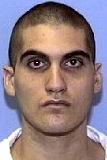
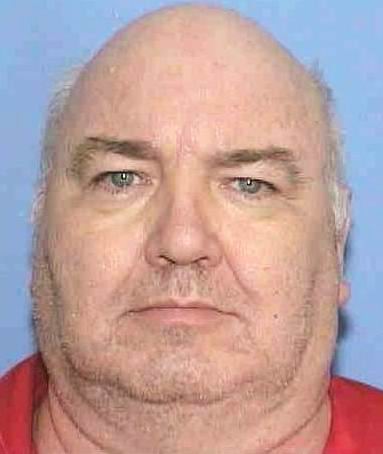
Steven Michael Woods
Murderer Russell Ellwood
Murderer · USA · 1991
Russell Ellwood was a former taxi driver. Authorities suspected him of killing…
20 victims
Russell Ellwood
Murderer · USA · 1991
Russell Ellwood was a former taxi driver. Authorities suspected him of killing…
20 victims
 Robert Martines Perez
Murderer · USA · 1994
Name: Robert Martines Perez · Other name used in proceedings: Robert Martinez P…
15 victims
Robert Martines Perez
Murderer · USA · 1994
Name: Robert Martines Perez · Other name used in proceedings: Robert Martinez P…
15 victims
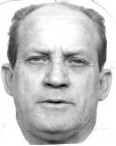 Billy Frank Vickers
Murderer · USA · 1993
Billy Frank Vickers Vickers was executed by lethal injection in Texas on Januar…
14 victims
Billy Frank Vickers
Murderer · USA · 1993
Billy Frank Vickers Vickers was executed by lethal injection in Texas on Januar…
14 victims
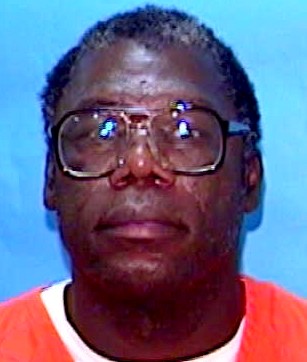 Kenneth Quince
Murderer · USA · 1979
Kenneth Darcell Quince (also known as Rasikh Abdul-Hakim) was the appellant in…
1 victim
Kenneth Quince
Murderer · USA · 1979
Kenneth Darcell Quince (also known as Rasikh Abdul-Hakim) was the appellant in…
1 victim
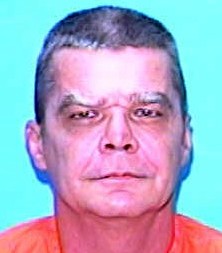 William L. Thompson
Murderer · USA · 1976
William L. Thompson was convicted and sentenced to death for the 03/30/76 kidna…
1 victim
William L. Thompson
Murderer · USA · 1976
William L. Thompson was convicted and sentenced to death for the 03/30/76 kidna…
1 victim
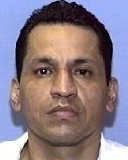 Jesse Joe Hernandez
Murderer · USA · 2001
Defendant: Jesse Joe Hernandez · Race: Hispanic · Gender: Male · Age: 47 · Educ…
1 victim
Jesse Joe Hernandez
Murderer · USA · 2001
Defendant: Jesse Joe Hernandez · Race: Hispanic · Gender: Male · Age: 47 · Educ…
1 victim
 Ronald Allen Smith
Murderer · USA · 1982
Ronald Allen Smith (born September 7, 1957) was a Canadian man. He was sentence…
2 victims
Ronald Allen Smith
Murderer · USA · 1982
Ronald Allen Smith (born September 7, 1957) was a Canadian man. He was sentence…
2 victims
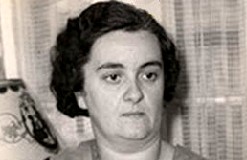 Mary Frances Creighton
Murderer · USA · 1923
Mary Frances Creighton (c. 1898 - July 16, 1936) was a housewife and was execut…
3 victims
Mary Frances Creighton
Murderer · USA · 1923
Mary Frances Creighton (c. 1898 - July 16, 1936) was a housewife and was execut…
3 victims
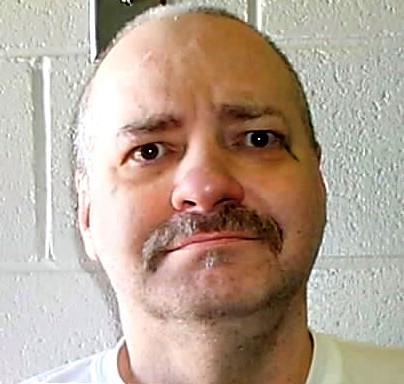 Thomas Creech
Serial killer · USA · 1967
Defendant: Thomas Creech (also referred to as Thomas Eugene Creech) Jurisdictio…
10 victims
Thomas Creech
Serial killer · USA · 1967
Defendant: Thomas Creech (also referred to as Thomas Eugene Creech) Jurisdictio…
10 victims
- Gender
- male
- Country
- USA
- Location
- Denton County, Texas, USA
- Date of birth
- April 17, 1980
- Age at first offence
- 21
- Characteristics
- armed robbery, drugs, domestic violence, murder for hire, torture
- Victim profile
- Ronald Whitehead, 21, and Bethena Brosz, 19
- Method of murder
- Shooting - St abbing with knife
- Date(s) of murder
- May 2, 2001
- Years active
- 2001
- Date of arrest
- —
- Status
-
Executed
Sentenced to death on August 27, 2002; executed by lethal injection in Texas on September 13, 2001.
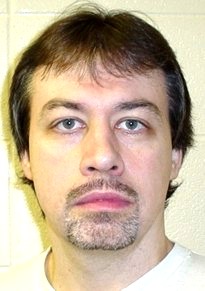
Case record: Steven Michael Woods
Background
Steven Michael Woods was a white male. He had 10 years of education. He worked in computer technology, assembly work, and labor.
Woods had no prior prison record.
Woods was from Wayne County, Michigan, and offended in Denton County. The victims were Ronald Patrick Whitehead and Bethena Lyn Brosz.
Woods was described as an anarchist and described himself as being on Texas Death Row. Woods stated in online statements that he was from Michigan and spent most of his adult years traveling around the US. Woods wrote that he enjoyed punk rock, classic rock, and big band jazz, and said his favorites were those genres. Woods said he was involved with the “alternative” crowd and described the group as a “bunch of punk rockers and hippies.”
Woods wrote letters and messages while on Texas Death Row, including statements about conditions, isolation, and the death penalty. Woods wrote that the death penalty involved “solitary confinement” for “an average, 6 years.” Woods wrote that he was kept on “23 hour lockdown” in a “6 by 9 cell.”
In one letter, Woods wrote about his beliefs and said, “I am a collector of quotes and catch-phrases.” Woods also wrote: “What the eyes don’t see, the heart doesn’t grieve over.” Woods wrote: “Let us be realists, let us insist on the impossible.-Che Guevara.”
Woods wrote about his cat, “Koshka,” and said his ex-fiance’s father was an Episcopal priest and that he stayed with him before getting locked up.
Woods wrote that he was “not a violent person,” and stated his “biggest fear is confrontation.” Woods wrote: “I’m rather timid actually, and my biggest fear is confrontation.” Woods wrote that he liked to cause problems and make people think, and said that the problems he caused were “harmless pranks, and I am never violent.” Woods wrote that he shouted “Freebird” in church.
Woods wrote about drug use and described himself as having sold drugs, including cocaine and heroin. Woods wrote about preparing “the needle for my fix,” and included the quote: ”Good Bye, Friend, times were oft good, but it’s a whole new world now.”
Woods wrote: “Yes, that is correct, I said I was innocent.” Woods wrote: “This is the first time I have ever been in jail or prison.” Woods wrote: “I can’t say I’ve enjoyed the experience!”
Woods wrote about an intention to petition the courts and wrote: “If you are reading this, and you are a lawyer, please write to me. I want to petition the courts to show my execution on the evening news.” Woods wrote about his view that people might reconsider their beliefs if they watched executions. Woods wrote: “If we could force the government to televise executions on the evening news.”
Woods wrote about his life and addiction and stated: “I WANTED to experience the life of a heroin junkie.” Woods wrote: “If I had it all to do again, I would like to say I’d do it differently.” Woods wrote: “I’m not. I know, NOW, that those drugs are not a solution to any problem or situation.”
Woods wrote the phrase: “Better that the world be destroyed, than a person acts against his nature.” and attributed it to “-Karl Marx.” Woods ended a message with: “In Hope and Sincere Respect, Steve Woods 999427.”
A separate writing attributed to “A Story,” by Stacy L. Neitzel (Times Staff Writer) described Woods’s son, Steven Woods Jr., and stated that Woods Sr. became emotional during a message that said “Drugs Kill.” That writing described Woods’s claimed drug abuse during his son’s childhood, violence between Woods and his ex-wife, and that Woods Jr. was in a maximum security prison in Texas.
The offence
On May 2, 2001, in The Colony, Texas, Woods and a co-defendant killed Ronald Patrick Whitehead and Bethena Lyn Brosz using a 380 caliber pistol, a 45 caliber pistol, and a knife. Ronald Patrick Whitehead was a 21 year old white male. He was killed by being shot 6 times in the head and having his neck cut 4 times.
Bethena Lyn Brosz was a 19 year old white female. She was also killed. She received 2 shots to the head, 1 shot in the knee, and her throat was cut.
Police found the bodies after anonymous tips were received that Woods was involved in the killings, along with one Marcus Rhodes. Early in the morning of May 2, 2001, two golfers driving down Boyd Road at the Tribute Golf Course near The Colony, Texas, found the bodies of Ron Whitehead and Beth Brosz. Both had been shot in the head and had their throats cut. Whitehead was dead. Brosz was still alive but after receiving medical care, she died the next day.
Woods and a co-defendant took property from the victims. The property included their car keys, backpacks, a cell phone and other personal items.
A witness account described that Woods had agreed to lead Whitehead and Brosz to a house in The Colony owned by someone named “Hippy,” but the vehicles became separated and Woods and Rhodes returned to the Deep Ellum section of Dallas. Detectives then interviewed Rhodes, and after a search of his car revealed items belonging to Whitehead and Brosz, Rhodes was arrested.
Woods admitted to being with the victims the night before their bodies were found. Woods said he and Rhodes had agreed to lead the victims as described.
Witnesses testified that before the killings he told them about his plan to commit the murders, and after the killings he told them about his participation in them.
During trial proceedings, prosecutors presented evidence in the punishment phase that Woods was involved in the murder of another victim in California one-and-a-half months prior to the murders of Whitehead and Brosz. Jurors were also told that Woods got into a fight with another inmate in the Denton County Jail. Jurors learned that Woods, Rhodes, and two other accomplices planned to rob a clothing store in Deep Ellum. Jurors also learned that Woods may have planned to murder a woman who intended to purchase and resell illegal drugs. Evidence presented also included that Woods made “bottle bombs” as a juvenile.
The jury found beyond a reasonable doubt that:
- there was a probability that Woods was a continuing threat to society;
- Woods actually caused the death of the victims, intended to kill the victims, or anticipated that the lives of victims would be taken;
- there was no sufficient mitigating circumstance to warrant a sentence of less than death after taking into consideration the circumstances of the crime and the evidence of Woods’s character, background, and personal moral culpability. The parties special issue was answered through application of Texas law as part of the sentencing questions under Texas Code of Criminal Procedure Article 37.071.
Investigation
Anonymous tips were received that Woods was involved in the killings, along with Marcus Rhodes. Detectives interviewed Woods, who admitted to being with the victims the night before their bodies were found.
Detectives then interviewed Rhodes. After a search of Rhodes’s car revealed items belonging to Whitehead and Brosz, Rhodes was arrested. Woods left the Dallas area. Woods traveled to New Orleans, Idaho and California. Woods was finally arrested in California.
Several witnesses testified that before the killings Woods told them about his plan to commit the murders, and after the killings Woods told them about his participation in them.
Authorities recovered backpacks belonging to the slain pair in Rhodes’s car. Guns used in the slayings were recovered from the home of Rhodes’ parents. Prosecutors said a latex glove carrying Woods’s DNA was found in Rhodes’s car after the killings.
Witness testimony in the trial proceedings described that Woods lured Whitehead to the isolated road on the pretense of a drug deal and killed him because he knew about another killing involving Woods two months earlier in California. Prosecutors described Brosz as killed because she was a witness to Whitehead’s death.
Arrest
Woods was not arrested as a result of his interview. Woods left the Dallas area and traveled to New Orleans, Idaho and California. Woods was finally arrested in California after Rhodes was arrested.
Trial
Woods was indicted on April 18, 2002 by a Denton County grand jury for murdering Ronald Patrick Whitehead and Bethena Lyn Brosz. Because Woods was charged with murdering two victims in the same criminal transaction, he was charged with capital murder.
In August 2002, a Denton County jury found Woods guilty of murdering Ronald Patrick Whitehead and Bethena Lyn Brosz. After the jury recommended capital punishment, the court sentenced Woods to death by lethal injection.
The trial judge sentenced Woods to death in accordance with state law after jurors answered the special issues.
Vor dire and voir dire rulings
In direct appeal opinion excerpts, the court discussed the appellant’s challenges to the trial court’s restrictions during voir dire. The appellant argued that his questioning of venire member Kerri Denise Wyrick was improperly limited during an exchange concerning whether she could consider mitigation and vote for life imprisonment instead of death after a guilty verdict and special issues.
The record described the question and objection sequence as follows: Q. And it mentions on there if you find sufficient mitigating circumstance or circumstances to warrant that a sentence of life imprisonment rather than a death sentence be imposed. It says "sufficient mitigating circumstance or circumstances." So do you understand that to mean that even one mitigating circumstance, if it's sufficient, is enough to award a life penalty instead of a death penalty? A. I understand. Q. Could you do that even if you'd already found a defendant guilty beyond a reasonable doubt of committing a capital murder, you'd found special issue number 1, that the State proved that beyond a reasonable doubt, that you found on special issue number 2 that the State proved that beyond a reasonable doubt? [PROSECUTOR]: I object to contracting. THE COURT: Sustained, the way it's phrased. Q. Would you be able to follow the law as to special issue number 3 if you found even one sufficient mitigating circumstance? A. Yes.
Defense counsel did not exercise a challenge for cause or a peremptory challenge against Wyrick, and she was seated on the jury. The appellate opinion stated that the trial court erred in refusing to allow the question to be asked, but found no substantial or injurious effect because defense counsel was able to ask essentially the same question. The point of error for that issue was overruled.
The record also described other exchanges where the trial court sustained “contracting” objections in voir dire. The opinion described an exchange involving venire member Michael Rudolf Ziegler: “Could you be fair and impartial in a murder case where the people killed were under 25 years of age?” The appellate opinion stated that the prosecutor objected and the trial court sustained the objection, and defense counsel exercised a peremptory strike against Ziegler.
The opinion also described multiple questions defense counsel sought to ask of venire member Jerry Linsley: Q. Can you be impartial in this case if the victims were young? [PROSECUTOR]: Objection, contracting. THE COURT: Sustained. Q. Can you consider the life penalty where the victims were young? He's trying to get him to commit to a certain set of facts, being that the victims were young. THE COURT: Sustained. Q. Can you be impartial if one of the victims is a young woman? [PROSECUTOR]: Objection. Contracting again. THE COURT: Sustained. Q. Can you consider the life penalty if a victim was a young woman? [PROSECUTOR]: Objection. Contracting. THE COURT: Sustained.
Defense counsel did not exercise a challenge for cause or a peremptory strike against Linsley, and he was seated on the jury. The appellate opinion characterized the questions as an improper global fishing expedition and overruled the points of error.
Limited cross-examination
The direct appeal opinion described that the trial court granted a motion in limine to bar defense counsel from questioning State’s witness Brian Young about his prison sentence and prospects for parole. The opinion described an exchange after defense counsel finished questioning Young: THE COURT: Is it your position that you intend to try to ask those questions in front of the jury? [DEFENSE COUNSEL]: It is, Judge. THE COURT: Is there an objection from the State? [PROSECUTOR]: We object, Your Honor. Irrelevant, improper impeachment under 609, and there are no offers or agreements in exchange for his testimony. THE COURT: I'm going to sustain the objection. The record has been made. [DEFENSE COUNSEL]: Yes, ma'am.
Admission of evidence
The direct appeal opinion described the admission of testimony of David Samuelson and Staci Schwartz. The opinion stated the complaints related to their testimony about statements made to them by Marcus Rhodes.
The opinion described Rhodes’s statements as:
- Rhodes stated that “he had a job to do” for the appellant that night and did not want to do it.
- Rhodes stated he and the appellant had used Brosz’s credit card to make an online purchase of tickets to an anime festival.
- Rhodes stated they tried to make Samuelson look responsible by buying the tickets in Samuelson’s name and having them sent to his house.
The appellate opinion discussed that the statements were admitted under Rule 803(24) as statements against interest and were non-testimonial for Confrontation Clause purposes.
Jury charge and reasonable doubt
The direct appeal opinion included discussion of a Geesa instruction. The opinion quoted the Geesa instruction paragraphs [1] through [6] verbatim. It also stated that Paulson overruled the portion requiring definition of reasonable doubt and that in this case the trial court submitted paragraphs [1], [2], [3], and [6], but not [4] and [5]. The appellate opinion stated that point of error thirteen was overruled.
The opinion included the Geesa instruction as: All persons are presumed to be innocent and no person may be convicted of an offense unless each element of the offense is proved beyond a reasonable doubt. The fact that a person has been arrested, confined, or indicted for, or otherwise charged with, the offense gives rise to no inference of guilt at his trial. The law does not require a defendant to prove his innocence or produce any evidence at all. The presumption of innocence alone is sufficient to acquit the defendant, unless the jurors are satisfied beyond a reasonable doubt of the defendant's guilt after a careful and impartial consideration of all the evidence in the case. The prosecution has the burden of proving the defendant guilty and it must do so by proving each and every element of the offense beyond a reasonable doubt, and if it fails to do so, you must acquit the defendant. It is not required that the prosecution prove guilt beyond all possible doubt; it is required that the prosecution's proof excludes all "reasonable doubt" concerning the defendant's guilt. A "reasonable doubt" is a doubt based on reason and common sense after a careful and impartial consideration of all the evidence in the case. It is the kind of doubt that would make a reasonable person hesitate to act in the most important of his own affairs. Proof beyond a reasonable doubt, therefore, must be proof of such a convincing character that you would be willing to rely and act upon it without hesitation in the most important of your own affairs. In the event you have a reasonable doubt as to the defendant's guilt after considering all the evidence before you and these instructions, you will acquit him and say by your verdict "Not guilty."
Admission of statement during punishment
The direct appeal opinion described an audio-taped statement by the appellant to a California detective regarding his involvement in an uncharged offense pertaining to the murder of Beau Sanders. It described issues under Texas Code of Criminal Procedure Article 38.22. It described that the California detective did not advise the appellant of the right to terminate the interview at any time. It described the State conceding that the statement was not taken in strict compliance and that the trial court erred in admitting it.
The opinion then set out a portion of testimony by Detective Toms: Q. Okay. During the course of your investigation into the disappearance or missing Beau Sanders, did you ultimately end up going and searching a particular area of your county? A. Yes sir, we did. Q. What area was that? A. It's a cement road. It's an area south of - or sorry, southwest of Las Vegas, approximately 45 minutes southwest of Las Vegas. Q. And what is in this area? What kind of terrain is it? A. Desert. Q. Desert for as far as - A. Open desert. Q. So to search this type of area, what did ya'll do? A. What we did was have search and rescue. We contacted volunteers and asked them to come out and conduct a grid search of a specific area that we had information that Beau Sanders'[s] body would be located in. Q. How many times did you go and search this area, the desert area? A. Two times. Q. Were you successful or did you find anything the first time you went out there? A. The first time we were not successful. We did not find anything at all. Q. Tell the jury what happened the second time. A. I actually wasn't present during the search, but the second search, they went out and located evidence that would - that has now since been proven to be the body of Beau Sanders. Q. What kind of evidence did the searchers find? A. We found clothing, skeletal remains, and gun evidence, fired cartridge casings. Q. What type of gun evidence did you find? A. It was a .380 fired cartridge casing. Q. After the remains were found and identified, did you and your team come to Texas to talk to witnesses to investigate the matter? A. Actually, I came to Texas prior to the remains being found. Q. And while you were here in Texas, did you have an opportunity to speak with Steven Michael Woods? A. Yes sir, I did.
The appellate opinion discussed the trial court’s admission error and concluded it was non-constitutional error and overruled point of error six.
Texas death-penalty statute arguments
The direct appeal opinion discussed the appellant’s arguments challenging the Texas death-penalty statute, including mitigation burden arguments, mixed signals, and constitutionality. The opinion overruled points of error one through five and affirmed the judgment.
Sentencing
On August 27, 2002, Woods was sentenced to death. The trial judge sentenced Woods in accordance with state law after jurors found the required special issues.
- there was no sufficient mitigating circumstance to warrant a sentence of less than death after consideration of circumstances and evidence of Woods’s character, background, and personal moral culpability.
Appeals
On December 15, 2004, the Texas Court of Criminal Appeals rejected Woods’s appeals and affirmed his conviction and sentence.
On May 23, 2005, the U.S. Supreme Court rejected Woods’s direct appeal by denying his petition for writ of certiorari.
On November 2, 2005, the Texas Court of Criminal Appeals denied Woods’s application for state habeas relief.
On August 26, 2009, the federal district court for the Eastern District of Texas denied his application for a federal writ of habeas corpus.
On October 25, 2010, the U.S. Court of Appeals for the Fifth Circuit rejected Woods’s appeal by affirming the federal district court’s order denying the federal writ.
On May 16, 2011, the U.S. Supreme Court rejected his second application by denying a writ of certiorari.
On September 1, 2011, Woods filed a second or successive state writ application for habeas corpus.
On September 2, 2011, the Texas Court of Criminal Appeals denied Woods’s successive writ application and denied his motion to stay his execution.
The record also contained judicial opinion excerpts including:
- An opinion delivered December 15, 2004 by Price, J.
- A separate habeas opinion: “Ex parte Woods,” 176 S.W.3d 224 (Tex. Crim. App. 2005), which denied relief on ineffective assistance of counsel claims.
- A federal appellate opinion: Woods v. Thaler, 399 Fed. Appx. 884 (5th Cir. 2010), which affirmed denial of federal habeas relief on the ineffective-assistance claim and affirmed denial of an evidentiary hearing.
Outcome
Woods was executed by lethal injection in Texas. Woods was pronounced dead at 6:22 p.m. local time. He was executed on September 13, 2011.
Media descriptions included that the execution was the tenth execution in Texas that year and the 33rd in the country.
In his last words, Woods told his mother he loved her, accused the state of committing a murder, and named his co-defendant, Marcus Rhodes, who pleaded guilty and was serving a life sentence.
"You're not about to witness an execution. You are about to witness a murder. I am strapped down for something Marcus Rhodes did. I never killed nobody, ever," he said. "Justice has let me down. Somebody completely screwed this up. Well, Warden, if you're going to murder someone, go ahead and do it. Pull that trigger."
In another reported account of his statements from the gurney:
"You're not about to witness an execution, you're about to witness a murder. ... I've never killed anybody, never," "This whole thing is wrong. " "Warden, if you're going to murder someone, go ahead and do it. Pull that trigger."
Woods also told people: “Warden, if you are going to murder someone, go ahead and do it. Pull that trigger.” Woods also told his mother and friend Tali Kaluski that he loved them Tuesday.
A witness account from Brosz’s mother, Janet Shires, described her observation and her statement of relief. Statements were included in reported quotes:
“Now when we think of Bethena, I have hope it will be easier to think more about the happier memories now that there is no reason to be worried about what the mastermind of the murders will do next,” Shires said in a statement. “We will miss her forever of course. There is no sentence that would change that. “But I feel such a profound relief today, relief that he can never hurt anyone anywhere ever again, relief that he cannot mislead anyone else into filling the web with lies, relief that his escape or release could never happen — all 100 percent guaranteed.”
Another reported quote from Shires:
“This has been a long road, and a hard one,” Janet Shires, Brosz's mother, said Tuesday after watching Woods die. “We will miss her forever, of course. There is no sentence that would change that. But I feel such a profound relief today -- relief that he can never hurt anyone anywhere ever again.”
A reported quote from a victims-rights advocate, Dudley Sharp, included:
"We hold people responsible for being conspirators or assisting even in good acts," said Dudley Sharp, a victims-rights advocate in Houston. "We are not treating murderers any different than we would by giving a Nobel Prize to someone who began research 40 years ago even though they didn't make the breakthrough."
For his last meal, Woods requested bacon; a large pizza with bacon, sausage, pepperoni and hamburger; fried chicken breasts; chicken fried steak; hamburgers with bacon on French toast; garlic bread sticks; Mountain Dew, Pepsi, root beer and sweet tea; and ice cream. A Texas Department of Criminal Justice spokeswoman, Michelle Lyons, was quoted as saying he was pronounced dead at 6:22 p.m. local time.
Aftermath
Marcus Rhodes pleaded guilty to murdering the couple and was serving a life sentence at the time of reported execution coverage.
Woods’s supporters maintained a Facebook page, and Woods posted statements online. Woods stated that he was present for the killings but did not know they were going to happen and fled because he feared Rhodes would kill him too. The description also included that Woods maintained his innocence during his trial, in online posts, and in media interviews.
Woods’s mother witnessed the execution and described relief as shown in quoted statements. A nurse described injuries during trial testimony, including that Brosz’s mother saw “daughter's brains coming out from underneath the dressing....”
Other details
The names and associations mentioned in the trial and opinions included:
- Ronald Whitehead, 21
- Bethena Brosz, 19
- Marcus Rhodes (co-defendant)
- David Samuelson (witness)
- Staci Schwartz (witness)
- Brian Young (witness)
- Michael Rudolf Ziegler (venire member referenced in voir dire)
- Jerry Linsley (venire member referenced in voir dire)
- Kerri Denise Wyrick (venire member referenced in voir dire)
- Cheryl Boyagian (Woods’s mother, referenced in habeas analysis)
- Steven Woods Sr. (Woods’s father, referenced in habeas analysis)
- Lee Gabriel (trial judge in direct appeal background and state habeas background)
- Price, J. (delivered the opinion in the December 15, 2004 direct appeal opinion)
- Keller, P.J., Meyers, Johnson, Keasler, Hervey, Holcomb, and Cochran, JJ. joined the opinion
- Womack, J. filed a dissenting opinion
The case materials also referenced other uncharged offense evidence discussed in the direct appeal:
- The murder of Beau Sanders, described as the manager of Insomnia whose body was discovered in the desert area southwest of Las Vegas, Nevada.
The direct appeal opinion described rules for jury instructions and discussed Texas death-penalty statute provisions, including:
- Texas Code of Criminal Procedure Article 37.071
- the future dangerousness special issue definition
- the parties special issue definition
- the mitigation special issue definition
In procedural background for state habeas, the text stated:
- “Background: Writ of habeas corpus was sought by petitioner whose capital murder conviction and sentence in the District Court, Denton County, Lee Gabriel, J., had been affirmed on direct appeal.”
- “Holding: The Court of Criminal Appeals, Cochran, J., held that defense counsel was not ineffective in its allegedly limited presentation of mitigation evidence during punishment phase of capital murder trial. Denied.”
- “Womack, J., concurred in denial of relief.”
A federal appellate narrative also stated:
- The Court of Appeals held defense counsel’s conduct was reasonable trial strategy and therefore not ineffective assistance.
- It also stated Woods was not entitled to an evidentiary hearing.
In the case materials, Woods’s identity was also referenced as “Steven Michael Woods, a/k/a HALO” in an appellate case caption.
Spotted an error, or have more information about this case?