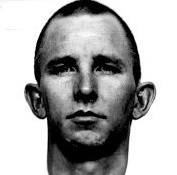
Randy Lynn Woolls
Murderer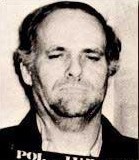 Ervil LeBaron
Murderer · USA · 1972
Ervil Morrell LeBaron (1925 to August 16, 1981) was the leader of a polygamous…
35 victims
Ervil LeBaron
Murderer · USA · 1972
Ervil Morrell LeBaron (1925 to August 16, 1981) was the leader of a polygamous…
35 victims
 Brian Kevin Rosenfeld
Murderer · USA · 1985
Brian Kevin Rosenfeld Brian Kevin Rosenfeld was sentenced to three concurrent l…
23 victims
Brian Kevin Rosenfeld
Murderer · USA · 1985
Brian Kevin Rosenfeld Brian Kevin Rosenfeld was sentenced to three concurrent l…
23 victims
 Marvin Gray
Murderer · USA · 1975
Marvin Gray was convicted killer who claimed responsibility for 23 slayings and…
23 victims
Marvin Gray
Murderer · USA · 1975
Marvin Gray was convicted killer who claimed responsibility for 23 slayings and…
23 victims
 Yahweh ben Yahweh
Murderer · USA · 1980
Yahweh ben Yahweh was born and legally named Hulon Mitchell Jr. (October 27, 19…
23 victims
Yahweh ben Yahweh
Murderer · USA · 1980
Yahweh ben Yahweh was born and legally named Hulon Mitchell Jr. (October 27, 19…
23 victims
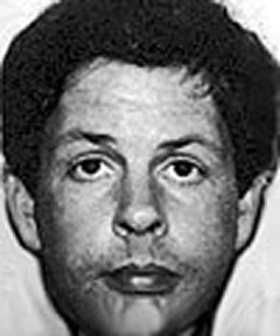 Herbert Richard Baumeister
Serial killer · USA · 1980
Herbert Richard “Herb” Baumeister (April 7, 1947 - July 3, 1996) was an America…
16 victims
Herbert Richard Baumeister
Serial killer · USA · 1980
Herbert Richard “Herb” Baumeister (April 7, 1947 - July 3, 1996) was an America…
16 victims
 Amanda Bennett
Murderer · USA · 2011
Amanda Bennett was an Indiana woman who shot her three children and set the fam…
3 victims
Amanda Bennett
Murderer · USA · 2011
Amanda Bennett was an Indiana woman who shot her three children and set the fam…
3 victims
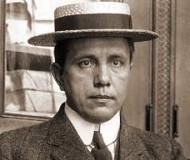 Harry Thaw
Murderer · USA · 1906
Harry Kendall Thaw (February 12, 1871 - February 22, 1947) was the son of Pitts…
1 victim
Harry Thaw
Murderer · USA · 1906
Harry Kendall Thaw (February 12, 1871 - February 22, 1947) was the son of Pitts…
1 victim
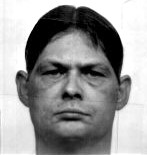 Johnny James
Murderer · USA · 1985
Johnny James was executed by lethal injection in Texas on September 3, 1993. He…
1 victim
Johnny James
Murderer · USA · 1985
Johnny James was executed by lethal injection in Texas on September 3, 1993. He…
1 victim
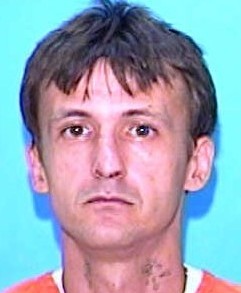 Mark Allen Davis
Murderer · USA · 1985
Mark Allen Davis was indicted in the Sixth Judicial Circuit, Pinellas County. T…
1 victim
Mark Allen Davis
Murderer · USA · 1985
Mark Allen Davis was indicted in the Sixth Judicial Circuit, Pinellas County. T…
1 victim
- Gender
- male
- Country
- USA
- Location
- Kerr County, Texas, USA
- Date of birth
- November 21, 1949
- Age at first offence
- 30
- Characteristics
- arson, rape, alcohol, drug addict, history of mental illness, convicted rapist
- Victim profile
- Betty Stotts, 44 (movie ticket teller)
- Method of murder
- St abbing with knife - Fire
- Date(s) of murder
- June 16, 1979
- Years active
- 1979
- Date of arrest
- Same day
- Status
-
Executed
Executed by lethal injection in Texas on August 20, 1986
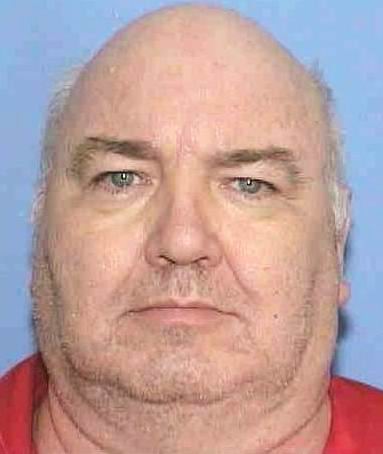
Case record: Randy Lynn Woolls
Background
Randy Lynn Woolls was executed in Texas on August 20, 1986. He was 36 years old at the time of his execution. Woolls was identified as offender #646.
Woolls had prior convictions and had blamed drugs for his three prison sentences. He had started using drugs when he was 13. Ronald Sutton, the prosecuting lawyer, said Woolls’s problems went deeper than drugs, stating: “Even as a child he was caught torturing many animals. He never showed any emotion or guilt. I don’t believe that he even remembered anything that happened because he was so high on Valium.”
Woolls had two personal witnesses, his aunt, June Hind Mills, and his cousin, Natrona Mills. They told Woolls: “I love you, Randy.”
The offence
On June 16, 1979, Woolls entered the Bolero drive-in movie theater where Betty Stotts, 44, was selling movie tickets.
Woolls hit Stotts over the head with a tire tool, stabbed her several times, and then set the booth on fire. After setting the booth on fire, Woolls sold tickets to movie customers, took $600 out of the register, stole Stotts’s car, and drove it into the movie where he was arrested. An autopsy showed that Stotts was still alive when the fire was set.
Woolls was shown to have been under the influence of alcohol and 40 doses of liquid Valium.
Stotts apparently had written letters to her husband and four children a few days before she died that told them she would not always be with them in body but that her spirit would. Investigators found Stotts’s journal in the debris. Stotts’s next-to-last entry read: “The burning and cutting of oneself for natural self is sorrow and when it is all gone, the higher self is left.” The last entry read: “This is the last I shall write to express myself.”
Woolls said: “I feel death is a little severe for something that was a mistake. They said I beat this woman down with a tire tool, cut her throat, then I piled everything in the booth on top of her and set it on fire. Then I get in her car, go inside the show and am sitting inside the car when the cops got there. It’s obvious I was totally out of my mind.”
Sutton said: “By God! He walked into a drive-in movie theater, cut the woman’s throat, raped her, set the place on fire, then he had the audacity to sit outside and sell tickets to the movie!”
Woolls’s conviction was described as a conviction of capital murder, and it was affirmed on direct appeal to the Texas Court of Criminal Appeals.
Investigation
Arrest
Woolls stole Stotts’s car and drove it into the movie where he was arrested.
Trial
Woolls’s conviction and sentence were affirmed on direct appeal to the Texas Court of Criminal Appeals.
On October 8, 1979, Woolls was convicted of capital murder.
Woolls sought habeas relief in federal court after his direct appeal.
The Fifth Circuit described facts of the murder as generally undisputed.
Voir dire dispute involving “reasonable doubt”
Woolls argued in his appeal that failure to define “reasonable doubt” during voir dire resulted in the improper exclusion of veniremember Gutierrez.
A colloquy occurred between the prosecutor and Gutierrez: Q. “In order to clear your conscience, if you were called upon to determine whether or not death should be imposed, to answer the two questions to satisfy Mr. Gutierrez' (sic) conscience, regardless of the other eleven people, but to satisfy Mr. Gutierrez, you would require the State to remove all doubt that he did it deliberately and he was a continuing threat to society before Mr. Gutierrez could vote on these two issues knowing at the time that it would result at the time in sentencing the defendant to death?” A. “Yes.” THE COURT: “When the District Attorney asked you that question he said, "remove all doubt." Are you saying remove all reasonable doubt?” MR. GUTIERREZ: “All doubt.” THE COURT: “All right. I sustain the challenge.”
After continued questioning by the appellant’s counsel, the court proceeded to question Gutierrez’s understanding of “reasonable doubt”: THE COURT: “All right. In the deliberation in a capital case where a death penalty is a possible result, you've heard the evidence and you've retired to the jury room, and in your mind you have a doubt concerning the defendant's guilt or innocence, but you classify that doubt in your mind as a non-reasonable or unreasonable doubt, one not based on reason, could you [then] find the defendant guilty of the offense?” MR. GUTIERREZ: “If there's any doubt in my mind I could not.” THE COURT: “Whether that doubt was reasonable or unreasonable?” MR. GUTIERREZ: “Yes.” * * * THE COURT: “Let me ask you one other [question]. When you say it's to be clear in your mind, are you saying that you are using the judgment scale that's it's (sic) beyond all doubt or beyond a reasonable doubt?” MR. GUTIERREZ: “Beyond all doubt.” THE COURT: “And those are not synonymous. That's not the same standard?” MR. GUTIERREZ: “No. I don't think so.”
The Fifth Circuit held that the exclusion was proper, reasoning that Gutierrez understood “reasonable doubt” and “beyond all doubt” were different standards and would require proof under a stricter approach.
Exclusion of veniremembers
Woolls asserted that the trial court erred in sustaining the State’s challenge for cause of five veniremembers. The Fifth Circuit concluded the appellant failed to make a substantial showing of the denial of a federal right regarding the exclusion of prospective jurors.
The Fifth Circuit described the excluded prospective jurors and their views:
- Veniremember Kendall stated he would automatically vote against the death penalty regardless of how gruesome, brutal, or bizarre the facts of the particular case, and that he was unalterably opposed to capital punishment.
- Veniremember Shelton stated that under no circumstances could he consider the imposition of the death penalty.
- Veniremember Thigpen initially stated she would automatically vote against imposition of the death penalty regardless of the facts of the case, then later qualified her answer after being asked if she could impose the death penalty if someone “close to her” was the victim; she later said she could think of no circumstances under which she could consider giving the death penalty or voting for an issue that would result in the imposition of the death penalty.
- Veniremember McCullough stated he would consider whether the death penalty could be imposed or not but would automatically vote “no” to at least one of the questions during the punishment phase regardless of the facts adduced at trial.
- Veniremember Huerta stated that, regardless of the facts presented, she would automatically vote “no” to the questions presented during the penalty phase simply because a positive response would result in the death penalty.
Sentencing
Woolls was sentenced to death.
Appeals
Woolls, Randy Lynn Woolls, appealed to the United States Court of Appeals for the Fifth Circuit. The case was captioned: Randy Lynn WOOLLS, Petitioner-Appellant, v. O.L. McCOTTER, Director, Texas Department of Corrections, Respondent-Appellee. No. 86-1380. The appeal involved a motion for a certificate of probable cause, for a stay of execution, and leave to proceed in forma pauperis.
The Fifth Circuit described procedural history:
- The conviction and sentence were affirmed on direct appeal to the Texas Court of Criminal Appeals.
- A petition for a writ of certiorari to the United States Supreme Court was denied: Woolls v. Texas, 468 U.S. 1220, 104 S.Ct. 3592, 82 L.Ed.2d 889 (1984).
- Woolls filed a petition for a writ of habeas corpus in the United States District Court for the Northern District of Texas.
- The case was referred to a magistrate for findings and recommendations.
- The magistrate recommended the petition be denied and found an evidentiary hearing was not required.
- After Woolls failed to timely file objections, the district court made a finding of excusable neglect and allowed objections.
- The district court reviewed de novo findings and recommendations to which specific objections had been made, adopted the findings and conclusions of the magistrate, and denied the petition.
- The district court denied leave to proceed in forma pauperis and denied a certificate of probable cause.
Denial of certificate of probable cause; dismissal
Without a certificate of probable cause, Woolls could not proceed with his appeal in the Fifth Circuit.
The Fifth Circuit held that Woolls failed to make a substantial showing of the denial of a federal right and denied his motion for a certificate of probable cause. It granted the motion for leave to proceed in forma pauperis. It denied the motion for a stay of execution and dismissed the appeal.
Outcome
Randy Lynn Woolls was executed by lethal injection in Texas on August 20, 1986.
Last statement
Woolls made the following last statement: “Goodbye to my family; I love all of you, I’m sorry for the victim’s family. I wish I could make it up to them. I want those out there to keep fighting the death penalty.”
Spotted an error, or have more information about this case?