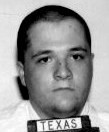
Justin Dickens
Homicide Jack Kevorkian
Homicide · USA · 1990
Jack Kevorkian (born May 26, 1928) was a controversial American pathologist. He…
130 victims
Jack Kevorkian
Homicide · USA · 1990
Jack Kevorkian (born May 26, 1928) was a controversial American pathologist. He…
130 victims
 David Koresh
Homicide · USA · 1993
David Koresh (born Vernon Wayne Howell; August 17, 1959 – April 19, 1993) led t…
79 victims
David Koresh
Homicide · USA · 1993
David Koresh (born Vernon Wayne Howell; August 17, 1959 – April 19, 1993) led t…
79 victims
 Todd Hall
Homicide · USA · 1996
Todd Hall was described by neighbors as "mentally slow" and was said to have su…
9 victims
Todd Hall
Homicide · USA · 1996
Todd Hall was described by neighbors as "mentally slow" and was said to have su…
9 victims
 Clinton Bankston
Homicide · USA · 1987
15 August 1987 — Ann Morris (63), her sister Sally Nicholson (59), and Sally’s…
5 victims
Clinton Bankston
Homicide · USA · 1987
15 August 1987 — Ann Morris (63), her sister Sally Nicholson (59), and Sally’s…
5 victims
 Joshua Jenkins
Homicide · USA · 1996
Joshua Jenkins was a 15-year-old American killer who killed five members of his…
5 victims
Joshua Jenkins
Homicide · USA · 1996
Joshua Jenkins was a 15-year-old American killer who killed five members of his…
5 victims
 Irina Gaidamachuk
Serial killer · Russia · 2002
Irina Viktorovna Gaidamachuk (Russian: Ирина Викторовна Гайдамачук) was born in…
17 victims
Irina Gaidamachuk
Serial killer · Russia · 2002
Irina Viktorovna Gaidamachuk (Russian: Ирина Викторовна Гайдамачук) was born in…
17 victims
 Marvallous Keene
Murderer · USA · 1992
Marvallous Keene was a Black male executed by lethal injection in Ohio on July…
5 victims
Marvallous Keene
Murderer · USA · 1992
Marvallous Keene was a Black male executed by lethal injection in Ohio on July…
5 victims
 David Gore
Serial killer · USA · 1981
David Alan Gore (also known as DAVID A GORE, DAVID ALAN GORE, DAVID ALLAN GORE)…
6 victims
David Gore
Serial killer · USA · 1981
David Alan Gore (also known as DAVID A GORE, DAVID ALAN GORE, DAVID ALLAN GORE)…
6 victims
 John Ronald Brown
Homicide · USA · 1998
John Ronald Brown (July 14, 1922 – May 16, 2010) was a former United States sur…
1 victim
John Ronald Brown
Homicide · USA · 1998
John Ronald Brown (July 14, 1922 – May 16, 2010) was a former United States sur…
1 victim
 Robert Peernock
Murderer · USA · 1987
Robert John Peernock (born c. 1937) was convicted of murdering his wife, Claire…
1 victim
Robert Peernock
Murderer · USA · 1987
Robert John Peernock (born c. 1937) was convicted of murdering his wife, Claire…
1 victim
 Oscar Franklin Smith
Murderer · USA · 1989
Oscar Franklin (Frank) Smith was the defendant. He was sentenced to death by a…
3 victims
Oscar Franklin Smith
Murderer · USA · 1989
Oscar Franklin (Frank) Smith was the defendant. He was sentenced to death by a…
3 victims
- Gender
- male
- Country
- USA
- Location
- Randall County, Texas, USA
- Date of birth
- J uly 28, 1976
- Age at first offence
- 18
- Characteristics
- juvenile (17), robbery, drug addict, drugs
- Victim profile
- Francis Allen Carter, 50
- Method of murder
- Shooting
- Date(s) of murder
- March 12, 1994
- Years active
- 1994
- Date of arrest
- —
- Status
-
Life imprisonment
Sentenced to death on May 17, 1995; commuted to life in prison in 2005
Case information
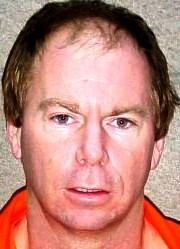
Justin Wiley Dickens (often referred to as “Chicken”) was convicted in the March 12, 1994, murder of 50-year-old Francis Allen Carter, a schoolteacher from Clayton, N.M.
Dickens was 17 years old at the time of the crime. He was sent to TDCJ on May 17, 1995. His education was not available.
The offence
On March 12, 1994, Dickens entered Mockingbird Jewelry and Pawn Shop in Amarillo while Carter was visiting with the owner of the shop. Dickens entered to rob the store and ordered Carter and the owner to the floor.
Carter was shot twice. After the shooting, the shop owner ran out the back door and alerted police.
Dickens was described as a junior-high dropout and the confrontation involved a loaded Smith & Wesson.
Dickens ordered: “Get on the floor,” and said: “Do what I tell you [or] I will kill you.”
Carter complied with the order. The owner of the pawnshop was able to flee and testified that he did not get a clear view of Dickens shooting Carter.
Timeline
- March 12, 1994 — Dickens entered Mockingbird Jewelry and Pawn Shop while Francis Allen Carter was visiting with the owner; Dickens ordered Carter and the owner to the floor and Carter was shot twice.
- March 12, 1994 — Francis Allen Carter died after being shot twice.
- May 17, 1995 — Dickens was sentenced to death and sent to TDCJ.
- 2005 — Dickens’s death sentence was commuted to life in prison.
- June (year not specified) — A federal court in Amarillo denied his most recent appeal.
- Wednesday, October 13, 2004 — A Dallas Morning News article about Dickens reported his death-row appeals were slowly exhausted and referenced his diagnosis with Hepatitis C.
Investigation and evidence
A prosecutor argued that physical evidence, including blood spatters, did not support Dickens’s account of what happened during the shooting and characterized it as a lie.
Trial
The prosecution framed the case as capital murder, with a key distinction depending on whether the shooting was accidental.
Dickens’s account
Dickens’s version of what happened after he ordered the parties to the floor was that Carter rushed him and began punching him, Dickens dropped into a fetal position against the wall, Carter grabbed for the gun and it went off, hitting Carter in the head.
Dickens later said: “I just felt an incredible sense of shame, and the only way to play it off was act like Mr. Bigshot.”
Prosecutor’s interpretation
Randall County District Attorney James Farren said: “It’s a lie.”
James Farren also said: “Justin Wiley Dickens would kill you and your family if you were between him and something he wanted.”
He added: “He wasn’t 'Little Chicken' anymore. He was finally a gangster.”
People involved
Victim
Francis Allen Carter was 50 years old. He was from Clayton, N.M., and taught English at Clayton High School.
The record described Carter as teaching there for 23 years, sponsoring the student newspaper, and being named teacher of the year in 1986. It said he once took out a personal loan to help a promising former student pay college tuition.
Carter was described by Clayton principal John Burgess as a teacher who worked with every student as much as necessary and as “He would not accept failure.” Burgess also said: “He would try to talk him out of it,” and: “But he would not try to physically overtake him. That would be out of character.”
A colleague, Barbalee Blair, was quoted as saying: “He really, really had a way with kids. He was a fierce, nail-'em-to-the-wall kind of guy who spoke to them in their language.”
Prosecutor
Randall County District Attorney James Farren was quoted saying: “Justin Wiley Dickens would kill you and your family if you were between him and something he wanted.”
Farren was also quoted about the teaching background: “He started working to help support his family when he was six years old.”
Shop and community figures
Clayton principal John Burgess was quoted.
Clayton principal Burgess and colleague Barbalee Blair were quoted regarding the impact on students after Carter’s death.
Barbalee Blair said: “The kids were crushed,” and: “We've had other bad things. But I've never seen them like this.”
Defense-related quotes and other witnesses (as presented)
Rus Bailey, described as an Amarillo lawyer, was quoted: “This kid,” and: “never stood a chance from the day he was born.”
A friend testified that Dickens bragged about what he had done, and the friend was quoted as saying: “He thought it was like kind of funny, I guess.”
Moore
The account described Dallas J. Moore as an ex-con and a “drug-dealing tattoo artist” who used LSD, and who sold drugs to children, according to prosecutors. Justin Dickens described Moore as acceptance and a mentor figure.
Moore was quoted as saying: “He was just a young kid, trying to step up to the plate and trying to impress people,” and: “He got caught.”
Moore’s advice was quoted as: “Take it easy. You're young; you'll be out in 15 years,” and: “They can't touch you.”
Family
Vicky Raelene James was quoted in connection with testimony about pregnancy and later described as being arrested many times and her children being in and out of foster homes.
James was quoted as saying: “I used methamphetamine to try to abort,” in relation to his 1995 trial.
She was described as trying to commit suicide by slashing her wrists with a broken mirror.
Justin Dickens said: “I don't blame her,” and: “She was a good mom when she wasn't high. But she had her own addictions.”
Justin Dickens also provided a childhood memory: “Me and my mom started shooting dope [cocaine]. My mom, she would run the streets, shoplifting from stores. She'd steal leather jackets, watches, Monistat, anything. I was basically a decoy. I'd walk around the store and be a distraction.”
Geary James was described as Dickens’s stepfather, who served as a doting dad except when “doping deadbeat.” Geary James was described as currently serving a prison sentence on drug charges.
The record said members of the Mexican Mafia delivered a death threat related to money owed for marijuana sales while Geary James was reading a story to Justin and his sister.
Justin Dickens was quoted saying: “I walked in on my stepdad shooting up in the garage.”
Sentencing
Dickens was sentenced to death on May 17, 1995.
In 2005, his death sentence was commuted to life in prison.
From death row, Dickens watched his appeals being slowly exhausted. A federal court in Amarillo denied his most recent appeal in June.
Appeals and current status
A federal court in Amarillo denied his most recent appeal in June (year not specified).
The case reported that Dickens had been diagnosed with Hepatitis C, connected in the narrative to years of needle drug abuse.
He said: “I feel a lot of shame and sorrow. It haunts me to know that I killed a man,” and: “I know in my heart I'm not a cold-blooded murderer. There are many people who share the blame.”
He said: “I wasn't a bad person,” and: “You may not believe that.”
He said about his feelings toward Moore: “I still love him,” and: “And I still hate him.”
Aftermath
After the murder, Dallas J. Moore moved to New Mexico, where the narrative said he committed burglary, kidnapping and jail escape.
The narrative stated that Moore was on parole when he gave only a brief interview about the teenager who idolized him.
Other details
The account described several aspects of Dickens’s background and behavior, including drug use and prior theft activity:
- The narrative said his father disappeared and his mother nurtured him by teaching him to shoplift.
- The account said he was mainly used heroin and cocaine, and that he huffed gasoline and used LSD.
- The account said his theft of marijuana from a motorcycle gang earned him a pistol-whipping.
- It said he met Moore and that Moore gave him a gratis tattoo on his torso, described as “a depiction of a skull wearing a derby decorated with a swastika.”
- It said Moore and his wife took Dickens along on their honeymoon in the bridal suite of an Amarillo motel.
The account included quotations about Dickens stealing Moore’s .357:
- Justin Dickens said: “The best friend I ever had in the world,” and: “I betrayed him and stole his gun.”
- The account said he had no pistol and returned to a great-grandfather’s house, ate “home-made sticky buns,” then secretly lifted a .357.
It also described the drinking and drug use before the robbery:
- The narrative said they had been drinking beer, taking Valium and doing coke.
- The song lyrics quoted were: “Here we come,” and: “reach for your gun.”
Spotted an error, or have more information about this case?