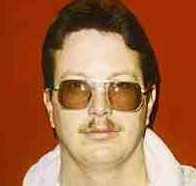
Dale Robert Yates
Murderer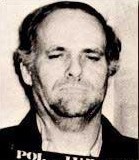 Ervil LeBaron
Murderer · USA · 1972
Ervil Morrell LeBaron (1925 to August 16, 1981) was the leader of a polygamous…
35 victims
Ervil LeBaron
Murderer · USA · 1972
Ervil Morrell LeBaron (1925 to August 16, 1981) was the leader of a polygamous…
35 victims
 Brian Kevin Rosenfeld
Murderer · USA · 1985
Brian Kevin Rosenfeld Brian Kevin Rosenfeld was sentenced to three concurrent l…
23 victims
Brian Kevin Rosenfeld
Murderer · USA · 1985
Brian Kevin Rosenfeld Brian Kevin Rosenfeld was sentenced to three concurrent l…
23 victims
 Marvin Gray
Murderer · USA · 1975
Marvin Gray was convicted killer who claimed responsibility for 23 slayings and…
23 victims
Marvin Gray
Murderer · USA · 1975
Marvin Gray was convicted killer who claimed responsibility for 23 slayings and…
23 victims
 Yahweh ben Yahweh
Murderer · USA · 1980
Yahweh ben Yahweh was born and legally named Hulon Mitchell Jr. (October 27, 19…
23 victims
Yahweh ben Yahweh
Murderer · USA · 1980
Yahweh ben Yahweh was born and legally named Hulon Mitchell Jr. (October 27, 19…
23 victims
 Russell Ellwood
Murderer · USA · 1991
Russell Ellwood was a former taxi driver. Authorities suspected him of killing…
20 victims
Russell Ellwood
Murderer · USA · 1991
Russell Ellwood was a former taxi driver. Authorities suspected him of killing…
20 victims
 Taylor Marks
Murderer · USA · 2009
Taylor Marks was an Akron woman who was accused of plotting to kill her mother,…
1 victim
Taylor Marks
Murderer · USA · 2009
Taylor Marks was an Akron woman who was accused of plotting to kill her mother,…
1 victim
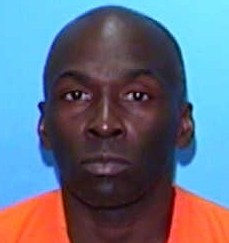 Stephen Todd Booker
Murderer · 1977
Stephen Todd Booker was convicted of first-degree murder, sexual battery, and b…
1 victim
Stephen Todd Booker
Murderer · 1977
Stephen Todd Booker was convicted of first-degree murder, sexual battery, and b…
1 victim
 William Edward Hickman
Murderer · USA · 1926
William Edward Hickman was a man who tried to solve his financial problems by k…
5 victims
William Edward Hickman
Murderer · USA · 1926
William Edward Hickman was a man who tried to solve his financial problems by k…
5 victims
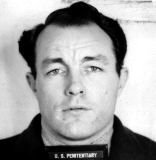 Miran Edgar Thompson
Murderer · USA · 1945
Miran Edgar Thompson (December 16, 1917 – December 3, 1948) was an inmate of Al…
3 victims
Miran Edgar Thompson
Murderer · USA · 1945
Miran Edgar Thompson (December 16, 1917 – December 3, 1948) was an inmate of Al…
3 victims
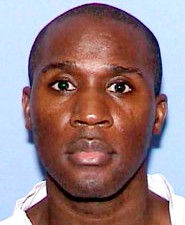 Curtis Moore
Murderer · USA · 1995
Curtis Moore was convicted of capital murder in Texas and was sentenced to deat…
3 victims
Curtis Moore
Murderer · USA · 1995
Curtis Moore was convicted of capital murder in Texas and was sentenced to deat…
3 victims
- Gender
- male
- Country
- USA
- Location
- Greenville County, South Carolina, USA
- Date of birth
- December 29, 1957
- Age at first offence
- 24
- Characteristics
- robbery, arsonist
- Victim profile
- Helen Wood (a postmistress)
- Method of murder
- Stabbing with knife
- Date(s) of murder
- February 12, 1981
- Years active
- 1981
- Date of arrest
- Same day
- Status
-
Life imprisonment
Sentenced to death; commuted to life in prison on August 9, 1991
Parties and identifiers
- Defendant: Dale Robert Yates
- Accomplice: Henry Davis
- Other man (third member of the group): unnamed in the case record
- Victim (store proprietor): Willie Wood
- Victim (postmistress): Helen Wood
- Relevant legal authority (in-appended law discussion): State v. Johnson, 291 S.C. 127
- U.S. Supreme Court case: Dale Robert Yates v. Parker Evatt, Commissioner, South Carolina Department of Corrections, et al., No. 89-7691
- U.S. Supreme Court procedural details shown in record:
- Argued: Jan. 8, 1991
- Decided: May 28, 1991
- Justice Souter delivered the opinion of the Court
- Justices listed as joining in parts: REHNQUIST, C.J.; WHITE; MARSHALL; STEVENS; O’CONNOR; KENNEDY (joined in all but Part III, in which BLACKMUN joined), and SCALIA (concurring in part and concurring in the judgment, in Part B of which BLACKMUN joined)
- SCALIA, J., filed an opinion concurring in part and concurring in the judgment
Timeline
- February 12, 1981 — Yates and his group planned to commit armed robbery
- 1981 — A country store in Greenville County was held up; Willie Wood was shot; Helen Wood was stabbed and died; Henry Davis was shot and died
- May 28, 1991 — U.S. Supreme Court decided Dale Robert Yates v. Parker Evatt, Commissioner, South Carolina Department of Corrections, et al.
- Aug. 9, 1991 — Yates’s death sentence was commuted to life in prison
Background
For several weeks before the robbery, Dale Robert Yates, Henry Davis, and another man drove around Greenville County, South Carolina, looking for a place to rob. At first, the group wanted to burglarize businesses “sell the stuff and get some money.” Yates testified at trial that they “weren’t having too much luck” at finding a place to burglarize because “a lot of the places had burglar alarms and . . . taped glasses and windows and such.”
The frustrated burglars decided that armed robbery was probably the way to go. The group firmed up their plans to commit armed robbery on Thursday, February 12, 1981.
Yates testified that Davis mentioned he had a knife, but Yates decided they would need a gun. Yates testified that he later procured a handgun from his brother.
The record describes that for most of the next day they looked for a suitable victim. The third man asked to be dropped off at a local mall where his girlfriend worked. He told Davis and Yates to return at about 5 p.m. They continued without the third man.
The offence
Robbery at Wood’s Grocery
Yates and Henry Davis happened upon Wood’s Grocery in Greenville, South Carolina. They entered the store and found Willie Wood standing behind the counter, apparently alone.
They confronted the storekeeper and demanded that he empty the cash register. Willie Wood emptied the register, placing approximately $3,000 cash on the counter. Davis demanded Willie bend over the counter; Willie refused and stepped back from the counter with his hands down at his side. Willie reached into his coat for his own handgun.
Davis yelled for Yates to shoot. Yates fired twice at Willie; one bullet pierced Willie Wood’s left hand and tore a flesh wound in his chest, while the other shot missed. Yates then screamed, “Let’s go,” and ran out of the store with the money.
Encounter in the aisle and stabbing of Helen Wood
Willie Wood heard the noise and Helen Wood, a postmistress, came out from an office adjoining the store. Helen Wood shouted, “What’s going on out there?”
After Yates ran out and got into the passenger side of the getaway car, Davis failed to emerge. Yates moved across the seat and drove off. Inside the store, Willie Wood, though wounded, ran around the counter pursued by Davis, who jumped on his back.
Helen Wood emerged from the adjacent office. The record includes Willie Wood’s testimony about Helen Wood reaching around and grabbing Davis:
“reached her left arm around and grabbed [Davis]. So, all three of us stumbled around the counter, out in the aisle.”
During the struggle, Helen Wood was stabbed once in the chest and died at the scene within minutes. A pathologist testified that Helen Wood died of “a penetrating wound of the chest that was narrow and penetrated the full thickness of the chest by probe examination. There were no other wounds that I noted on the external surface of the body.”
Shots fired by Willie Wood and death of Henry Davis
Willie Wood managed to remove the pistol from under his jacket and fired five shots at Henry Davis, killing him instantly.
The record includes Willie Wood testimony about Davis falling and the knife:
“started shooting [at Davis] and just pushing him on back until he couldn’t go no further against the shoe boxes there. The last shot I fired, he hollered and hit the floor and the knife fell out of his hand.”
As soon as Davis fell, Willie Wood noticed Helen Wood on her hands and knees. Helen Wood said, “I believe I am dying.” Helen Wood and Davis each died of their injuries.
Yates’s departure and alleged withdrawal
Yates testified that he ran out of the store and around the front of the car to the passenger side where he opened the door and got in. He testified that once moments passed and Davis did not come out, he thought:
“‘Well, he caught Henry. He grabbed Henry. No use me staying here and getting caught.’ So, I jumped over under the wheel, put the car in drive, and left.”
The record also describes a defense argument that Yates withdrew from the robbery scheme when he shouted to Davis, “Let’s go,” and ran out of the store. The prosecution relied on accomplice liability in the murder charge because South Carolina did not have a felony-murder statute.
Investigation and arrest
After Yates left the scene, his vehicle was noticed by officers of the Greenville County Sheriff’s Department. The officers stopped Yates after a high speed chase.
After stopping at the end of the high speed chase, Yates ran with the pistol and money in hand. He ran into nearby woods where he was apprehended.
Trial
Charges and jury verdicts
The record describes that Yates was arrested soon after the robbery and charged with multiple felonies. The record specifies that the prosecution charged him for murder as an accomplice, based on accomplice liability theory.
The record’s indictment-count detail is included in narrative form: the jury returned guilty verdicts on:
- the murder charge, and
- all the other counts in the indictment.
Yates challenged only his murder conviction in the U.S. Supreme Court proceedings.
Accomplice liability legal framework
The record includes the accomplice liability rule under South Carolina law:
- “where two persons combine to commit an unlawful act, and in execution of the criminal act, a homicide is committed by one of the actors as a probable or natural consequence of those acts [sic], all present participating in the unlawful act are as guilty as the one who committed the fatal act.”
- State v. Johnson, 291 S.C. 127 (also cited in the U.S. Supreme Court discussion)
Prosecutor’s closing argument excerpts
The record includes quoted remarks from the prosecutor in summation about intent and witness killing:
- The prosecutor asserted that Yates and Davis had planned to rob without leaving “any witnesses in the store.”
- The record includes the prosecutor’s further statement about stabbing:
“They entered the store ‘with the idea of stabbing the proprietor to death; a quiet killing, with the [petitioner's] pistol as a backup.’”
- The record includes the prosecutor’s concluding statement about culpability:
“[i]t makes no difference who actually struck the fatal blow, the hand of one is the hand of all.”
The record also includes quoted argument about malice:
- Yates was described as equally guilty:
“Mr. Yates,” he argued, “is equally guilty. The malice required was in his heart,” making him guilty of murder even though he did not actually kill the victim.
Trial judge’s instructions on malice and presumptions
The trial judge instructed the jury on malice, defining murder as requiring malice aforethought either express or implied. The record includes the trial judge’s instruction in quotation form, describing malice and presumptions:
“In order to convict one of murder, the State must not only prove the killing of the deceased by the Defendant, but that it was done with malice aforethought, and such proof must be beyond any reasonable doubt. Malice is defined in the law of homicide as a technical term, which imports wickedness and excludes any just cause or excuse for your action. It is something which springs from wickedness, from depravity, from a depraved spirit, from a heart devoid of social duty, and fatally bent on creating mischief. The words ‘express’ or ‘implied’ do not mean different kinds of malice, but they mean different ways in which the only kind of malice known to the law may be shown.
‘Malice may be expressed as where previous threats of vengeance have been made or is where someone lies in wait for someone else to come by so that they might attack them, or any other circumstances which show directly that an intent to kill was really and actually entertained.
Malice may also be implied as where, although no expressed intention to kill was proved by direct evidence, it is indirectly and necessarily inferred from facts and circumstances which are, themselves, proved. Malice is implied or presumed by the law from the willful, deliberate, and intentional doing of an unlawful act without any just cause or excuse. In its general signification, malice means the doing of a wrongful act, intentionally, without justification or excuse.
I tell you, however, that if the facts proven are sufficient to raise a presumption of malice, that presumption is rebuttable, that is, it is not conclusive on you, but it is rebuttable by the rest of the evidence. I tell you, also, that malice is implied or presumed from the use of a deadly weapon. I further tell you that when the circumstances surrounding the use of that deadly weapon have been put in evidence and testified to, the presumption is removed. And it ultimately remains the responsibility for you, ladies and gentlemen, under all the evidence to make a determination as to whether malice existed in the mind and heart of the killer at the time the fatal blow was struck.’”
The record includes additional instruction excerpts in the U.S. Supreme Court analysis about the two presumptions addressed to the jury:
- “malice is implied or presumed” from “the willful, deliberate, and intentional doing of an unlawful act”
- and “malice is implied or presumed from the use of a deadly weapon”
- including the qualifier that:
“when the circumstances surrounding the use of that deadly weapon have been put in evidence and testified to, the presumption is removed.”
Yates’s defenses to murder
The record describes two defenses:
- The primary defense to murder was that Helen Wood’s death was not the probable or natural consequence of the robbery he planned with Davis.
- Yates testified that he brought a weapon only to induce the store owner to empty the cash register and that neither he nor Davis intended to kill anyone during the robbery.
- A second defense argued withdrawal from the robbery scheme when Yates shouted “Let’s go” and ran out of the store; he contended he was not liable for the subsequent homicide by his former accomplice.
The record includes the quotation of Yates testifying about withdrawal timing as he ran out:
“Let’s go,” and ran out of the store.
Sentencing
The record states that Yates was sentenced to die in the electric chair. It further states that he remained on death row until the outcome described below.
The record includes the final status line that his death sentence was commuted to life in prison on August 9, 1991.
Appeals
South Carolina Supreme Court affirmations and state habeas attempts
The record describes that the Supreme Court of South Carolina affirmed the conviction and that Yates sought a writ of habeas corpus, asserting the jury instruction about malice was an unconstitutional burden-shifting instruction under state precedent and under Sandstrom v. Montana, 442 U.S. 510.
The record further describes that after Francis v. Franklin, the state habeas petition was denied without opinion, then the U.S. Supreme Court granted certiorari, vacated, and remanded for reconsideration in light of Francis.
After further proceedings:
- On remand, the state court found the jury instruction unconstitutional but denied relief based on non-retroactivity grounds tied to State v. Elmore.
- The U.S. Supreme Court again granted certiorari out of concern the state court did not comply with the mandate to reconsider in light of Francis v. Franklin; the U.S. Supreme Court held the state court had erred.
- On a second remand, the Supreme Court of South Carolina stated it was “acquiescing” in the conclusion that the trial judge’s charge on implied malice constituted an improper mandatory presumption.
- The state court again denied relief, after a majority of three justices found the instructions to have been harmless error.
The U.S. Supreme Court’s reversal identifies that the state Supreme Court employed a deficient standard in its harmless error analysis.
The U.S. Supreme Court analysis also includes state-court quotations and descriptions of its view:
- The record includes that the state court described the element of malice as the killer, Henry Davis.
- The state court described Davis’s actions as “lunged” and characterized Helen Wood’s death in terms of “brutal multiple stabbing,” and held beyond a reasonable doubt the jury would not have needed to rely on the erroneous presumptions.
The record also includes dissenting positions from the state Supreme Court:
- Dissenters disagreed the erroneous instructions were harmless.
- They found that the trial judge failed to articulate that the jury must find the killer acted with malicious intent.
- They concluded the jury could have inferred that the intent required for murder was Yates’s because he carried a gun, and that the unconstitutional instruction “would have eclipsed Yates’ defense of withdrawal, and prejudiced his right to a fair trial.”
U.S. Supreme Court decision
The U.S. Supreme Court decided to reverse after determining:
- the State Supreme Court employed a deficient standard of review,
- and the errors were not harmless.
The record includes the holding’s framing:
- “Because the Supreme Court of South Carolina appeared to have applied the wrong standard for determining whether the challenged instructions were harmless error, and to have misread the record to which the standard was applied, we granted certiorari to review this case a third time.”
- “The judgment of the Supreme Court of South Carolina is reversed and the case is remanded for further proceedings not inconsistent with this opinion.”
The concurring opinion by Justice Scalia disagreed concerning harmlessness as applied to the facts:
- Justice Scalia stated he found the “deadly weapon” presumption harmless and the “unlawful act” presumption not harmless, joining reversal.
Outcome
The U.S. Supreme Court reversed the Supreme Court of South Carolina’s judgment regarding the harmless-error determination of unconstitutional burden-shifting jury instructions and remanded for further proceedings not inconsistent with the opinion.
After the U.S. Supreme Court proceedings, Yates remained convicted of murder, attempted murder, and armed robbery. His death sentence was commuted to life in prison on August 9, 1991.
Other details
Facts about victims and evidence included in the record
- Willie Wood received a shot through his hand that grazed his chest.
- Helen Wood died from a single chest wound to the chest; the pathologist testified there were no other external wounds noted.
- Henry Davis was killed by five shots fired by Willie Wood.
Additional in-record citations and procedural references
- The record includes State v. Yates, 280 S.C. 29, 310 S.E.2d 805 (1982), and cert. denied, 462 U.S. 1124, 103 S.Ct. 3098, 77 L.Ed.2d 1356 (1983).
- The record includes habeas procedural citations: Yates v. Aiken, 474 U.S. 896 (1985); Yates v. Aiken, 480 U.S. 945 (1987); Yates v. Aiken, 484 U.S. 211 (1987).
- The record includes the discussion of Sandstrom v. Montana, 442 U.S. 510 (1979) and Francis v. Franklin, 471 U.S. 307 (1985).
- The record includes the discussion of Rose v. Clark, 478 U.S. 570 (1986), and the harmless error framework from Chapman v. California, 386 U.S. 18 (1967).
- The record also includes references to Richardson v. Marsh, 481 U.S. 200 (1987), and other harmless-error discussions within the opinion.


Spotted an error, or have more information about this case?