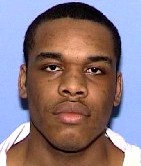
Christopher Anthony Young
Murderer Robert Martines Perez
Murderer · USA · 1994
Name: Robert Martines Perez · Other name used in proceedings: Robert Martinez P…
15 victims
Robert Martines Perez
Murderer · USA · 1994
Name: Robert Martines Perez · Other name used in proceedings: Robert Martinez P…
15 victims
 Robert Glen Jones
Murderer · USA · 1996
Defendant: Robert Glenn Jones (ADC#070566) · Co-defendant: Scott Nordstrom (ADC…
7 victims
Robert Glen Jones
Murderer · USA · 1996
Defendant: Robert Glenn Jones (ADC#070566) · Co-defendant: Scott Nordstrom (ADC…
7 victims
 Joshua Wayne Andrews
Murderer · USA · 2000
Joshua Wayne Andrews was a serial killer accused of killing several people in V…
5 victims
Joshua Wayne Andrews
Murderer · USA · 2000
Joshua Wayne Andrews was a serial killer accused of killing several people in V…
5 victims
 Juan Carlos Alvarez
Murderer · USA · 1998
Juan Carlos Alvarez, born on March 9, 1977, in San Luis, Mexico, was a Hispanic…
5 victims
Juan Carlos Alvarez
Murderer · USA · 1998
Juan Carlos Alvarez, born on March 9, 1977, in San Luis, Mexico, was a Hispanic…
5 victims
 David Burke
Mass murderer · USA · 1987
David Augustus Burke (May 18, 1952–December 7, 1987) was an employee of USAir,…
43 victims
David Burke
Mass murderer · USA · 1987
David Augustus Burke (May 18, 1952–December 7, 1987) was an employee of USAir,…
43 victims
 Patrick Tullis
Murderer · USA · 1987
Patrick Tullis was sentenced to 60 years in prison on April 21, 1989. Patrick T…
2 victims
Patrick Tullis
Murderer · USA · 1987
Patrick Tullis was sentenced to 60 years in prison on April 21, 1989. Patrick T…
2 victims
 David Lynn Simonsen
Murderer · USA · 1988
David Lynn Simonsen was sentenced to death on February 24, 1989. The judgment o…
2 victims
David Lynn Simonsen
Murderer · USA · 1988
David Lynn Simonsen was sentenced to death on February 24, 1989. The judgment o…
2 victims
 Eugene Robert Tucker
Murderer · USA · 1999
Eugene Robert Tucker had been dating a woman named AnnMarie Merchant. AnnMarie…
3 victims
Eugene Robert Tucker
Murderer · USA · 1999
Eugene Robert Tucker had been dating a woman named AnnMarie Merchant. AnnMarie…
3 victims
 Marcus Shrader
Serial killer · USA · 1974
Marcus Shrader was a Navy corpsman who was stationed at Camp Lejeune at the tim…
4 victims
Marcus Shrader
Serial killer · USA · 1974
Marcus Shrader was a Navy corpsman who was stationed at Camp Lejeune at the tim…
4 victims
- Gender
- male
- Country
- USA
- Location
- Bexar County, Texas, USA
- Date of birth
- September 24, 1983
- Age at first offence
- 21
- Characteristics
- robbery, rape, drug addict, kidnapping
- Victim profile
- Hasmukhbhai Patel, 55 (mini-mart/dry cleaners owner)
- Method of murder
- Shooting
- Date(s) of murder
- November 21, 2004
- Years active
- 2004
- Date of arrest
- Same day
- Status
-
Sentenced to death
Sentenced to death on March 31, 2006
Case information
- Name: Christopher Anthony Young
- TDCJ Number: 999508
- Date of Birth: 09/24/1983
- Age: 22
- County: Bexar County
- Race: Native
- Gender: Male
- Hair Color: Black
- Height: 6' 01''
- Weight: 216
- Eye Color: Brown
- Education Level: 03/31/2006
- Prior Prison Record: None
- Prior Occupation: Laborer
Timeline
- 11/21/2004 — Young fatally shot a fifty five year old Asian male while in the course of a robbery; Young stole a red Mazda Protégé from its owner at gunpoint; Young drove to the mini-mart/dry cleaners owned by Hasmukhbhai Patel, where he demanded money and shot Patel; Young was apprehended around 11:00 a.m. after officers spotted the red car parked at a house several miles away.
- February 2006 — A jury convicted Young of capital murder.
- 03/31/2006 — The trial judge sentenced Young to death based on the jury’s answers to the special issues.
- 04/22/2009 — The Court of Criminal Appeals delivered its opinion affirming the judgment and sentence of death.
The offence
On 11/21/2004 in Bexar County, Christopher Anthony Young, while in the course of a robbery, fatally shot a fifty five year old Asian male.
Robbery and shooting at Hasmukhbhai Patel’s store
The evidence at trial established that on 11/21/2004, within minutes of stealing a red Mazda Protégé from its owner at gunpoint, Young drove the stolen vehicle to the mini-mart/dry cleaners owned by Hasmukhbhai Patel. The store’s surveillance camera captured the following events:
- Young entered the store at 9:37 a.m., wearing a black shirt and light-colored shorts, and appeared to be holding something hidden within his left pocket.
- Young looked around the front of the store, then moved behind Patel, who was working in the rear of the store.
- Young asked Patel the cost of cleaning clothes at the store.
- Young’s voice changed to a lower tone, and Young stated: "Alright [sic], give up the money. I'm not playing. I'm not fucking playing."
- Patel came into view as he quickly moved behind the counter toward the cash register, and Young could be seen leaning over the front counter with his left arm completely extended, pointing a silver handgun at Patel.
- Young ordered Patel to “give up the money,” followed by Young firing his first shot toward Patel (Patel was now out of view behind the cash register).
- Young yelled: "You be fucking up. I'm not playing. Give it up!" and fired a second shot toward Patel.
- The alarm went off after Patel pushed the panic button.
- Young followed Patel as Patel fled to the opposite side of the front counter, and over the alarm Young shouted: "I said give up the money, right."
- Young was out of view for a few seconds before coming back into view and was then seen concealing the handgun under his shirt as he left the store.
Witnesses in the parking lot
Two of Patel’s regular customers, Raul Vasquez, Jr. and Hattie Helton, happened to be in the parking lot at the time:
- Vasquez had just pulled into a parking space in front of the store. Before he could exit his truck, he heard gunshots and looked up to see a black male leaning over the counter firing a gun at Patel. When the gunman left the store and got into a small red car, Vasquez called the police and then chased the gunman, but with no success. Vasquez told the police the car’s license plate had a “W” and that the perpetrator wore a black shirt and light-colored shorts. Vasquez identified Young as the perpetrator at trial.
- Helton exited the store moments earlier and was in her car checking her scratch-off lottery tickets. When she heard the store alarm go off, she looked up to see a black male exit the store and get into a small red car parked by the gas pumps. Once he was gone, Helton exited her car, called Patel, and when he did not answer she called the police on a payphone outside the store. Helton identified Young as the perpetrator at trial.
Apprehension and physical evidence
Young was apprehended at approximately 11:00 a.m. when an officer spotted the red car parked at a house several miles away. The car’s license plate began with a “W,” and Young was wearing a black shirt and light-colored shorts. His hands, shirt, and the steering wheel tested positive for gunshot residue. Patel’s blood was found on one of Young’s socks. Patel died from the gunshot wound to his chest. The murder weapon was never recovered.
Investigation and arrest
The appellant was apprehended at approximately 11:00 a.m. when an officer spotted the red car parked at a house several miles away. His hands, shirt, and the steering wheel of the car all tested positive for gunshot residue.
Motion to suppress statements/evidence following arrest
Young challenged the trial court’s denial of a general “Motion to Suppress” claiming he was arrested without a warrant in violation of Article 38.23 and Chapter 14 of the Texas Code of Criminal Procedure, the Fourth and Fourteenth Amendments to the United States Constitution, and Article I § 9 of the Texas Constitution. The motion stated he was arrested without “a valid warrant or probable cause or reasonable suspicion,” and claimed statements made after the arrest were “fruit of the poisonous tree.” No further argument or citations were made in the motion, pre-trial hearing, or at trial.
At the suppression hearing, the only evidence regarding the arrest came during cross-examination of Officer Richard Hodge. When asked how he came in contact with Young, Hodge testified they were looking for a vehicle used in the robbery-murder, the car was found parked at a house, the occupants were ordered out, Young was uncooperative, and Young was arrested. Hodge advised Young of his rights and explained why he was being arrested. The remainder of the questioning concerned whether Young was intoxicated and how certain items of clothing and other evidence were obtained. The State requested a ruling on the admissibility of the clothes taken from Young, and the trial judge stated that the “boxers, the socks and the rape kit” were admissible. The judge did not expressly rule on the warrantless-arrest claim, and Young did not request a ruling.
The appellate court held that Young failed to offer evidence that the arrest was warrantless and therefore the burden never shifted to the State to produce evidence of a warrant or reasonableness. The trial court did not err.
Motion to suppress slippers and socks
Young also complained that slippers and socks were illegally seized without a warrant. Young’s written motion made only a general statement that seizure of items, papers, and effects was effected without a valid warrant or probable cause or reasonable suspicion.
At the suppression hearing, evidence was elicited that Young’s socks and slippers were seized after arrest for use in a rape kit completion at Methodist Specialty Hospital:
- Officer Hodge testified he took Young’s slippers after Young removed them for the exam by the Sexual Assault Nurse Examiner (SANE).
- The socks were secured by the SANE nurse and then given to Officer Hodge.
- Evidence was elicited as to how evidence was secured, tagged, and preserved for testing.
The appellate court held that the warrantless seizure of clothing after a legal arrest was permissible and affirmed denial of the motion to suppress regarding socks and slippers.
Trial
Guilt-phase legal sufficiency
Young challenged the sufficiency of evidence that he committed capital murder “while in the course of committing or attempting to commit the offense of robbery.” He argued:
- The surveillance tape’s video sequence did not include conduct by Young implying that he was robbing or attempting to commit a robbery at Patel’s store.
- The tape’s sound was “muddled” and it was almost impossible to decipher recorded dialogue indicating that Young was in the course of committing robbery or attempting to commit robbery at the store.
Young also argued that eyewitness testimony from convenience store patrons Raul Vasquez, Jr. and Hattie Helton contributed little evidence that the murder occurred during a robbery.
The appellate court concluded there was ample evidence, including circumstantial and direct evidence of assaultive conduct characteristic of attempted robbery from the surveillance tape. It held the video supported the jury’s inference that Young murdered Patel in the course of an attempted robbery. The appellate court affirmed.
Future-dangerousness evidence at punishment
Young challenged evidence regarding future dangerousness at the punishment phase. The appellate court found sufficient evidence to support the jury’s affirmative finding.
The appellate court described the circumstances of the offense and the evidence presented:
- Immediately after stealing the red Mazda Protégé from a woman at gunpoint, Young drove to Patel’s store, demanded money, and shot Patel dead when Patel did not cooperate quickly enough.
- Young left the store, disposed of his weapon, and picked up a prostitute with whom he could do drugs.
- The State also presented evidence that immediately prior to the store offense, Young committed aggravated sexual assault on the woman from whom he stole the vehicle.
Aggravated sexual assault on Daphne Edwards
At about 8:45 a.m. on November 21, 2004, Daphne Edwards served breakfast to her three young girls, all under the age of eight, when she realized she was out of cigarettes. She drove to Patel’s store about one block away and was gone less than five minutes.
When Edwards returned, there was a knock on her door. She opened the door and found Young standing there pointing a silver revolver. Young put the gun to Edwards’ head, pushed his way in, and asked: "Where's the fucking money?" Young walked Edwards through the apartment at gunpoint to ensure only the children were home and that there was no access to a phone.
The three children were scared and crying. Edwards gave Young the money in her purse—$28—but Young told her she had to give him something else because it was not enough money. Young told Edwards to undress. He had Edwards’ girls go to the other room; however, as the apartment was an efficiency apartment, the children could still see and hear everything.
Young told Edwards that she was not disrobing quickly enough, so Young shot the gun into the floor next to her feet. Edwards disrobed. Young made Edwards sit in a chair and perform oral sex on him. Young then made Edwards walk to the bathroom where the children could not fully see what was happening but Young could see the children. Young made Edwards get on her knees and perform oral sex on him again.
Young decided he wanted Edwards to wear something “sexy” and took her back out of the bathroom to get her clothes. Edwards picked an outfit, but Young said it was too long. Edwards picked another outfit. Young made her put it on but did not allow underwear.
When Young decided he wanted to leave, Edwards protested she would not leave her children. Young told her: "You did it before. I saw you." Young walked to the children, kissed each on the cheek, and told them their mommy would be back.
Young forced Edwards, still at gunpoint, to leave the apartment and get into her red Mazda Protégé. He had Edwards drive to the front of the apartment complex. Young then decided he wanted to drive. As he got out of the car, Young told Edwards not to drive off or he would go back and kill her children. Young told her to move to the passenger seat.
Edwards took the opportunity to escape when Young left the passenger door open. Edwards ran screaming to her cousin’s apartment at the front of the complex where police were called, and then went to get the children. Young drove off in Edwards’ car.
The appellate court additionally stated: DNA tests confirmed the sexual assault by the appellant.
Prior convictions and additional evidence presented at punishment
The State presented Young’s previous convictions for possession of marijuana, evading arrest, and three assaults with bodily injury, including two involving injury to his mother when Young was a juvenile. The third assault occurred in September 2004 and involved his girlfriend Chala Riley, who was eight-months pregnant. Riley lied and told Young she was going into labor to stop the assault. The State also presented evidence that the night before the instant offense, Young accosted Riley after she informed him she was permanently breaking off their relationship; Young pulled her out of her car, beat her, and then took her car, purse, and cell phone.
The appellate court stated that other evidence showed Young shot at another person in a parking lot on May 9, 2004, but charges were never filed.
Defense mitigation evidence
Young presented evidence of a tumultuous childhood: when he was eight years old, his father was murdered and his sister was molested and impregnated by his stepfather. Young argued he never recovered emotionally as he never received counseling or the father figures he needed; he became angry and withdrawn and began using drugs.
Young’s mother, new stepfather, aunt, and grandmother testified to his good side and that they were shocked and surprised by the instant offense. The appellate court stated Young had just had two children—a daughter born in June and another in September—and Young had been attempting to get custody of one of the girls prior to the offense.
Young presented evidence he told a psychologist he had consumed fifteen to twenty beers and smoked marijuana the night before the instant offense and that he smoked crack cocaine the morning of the offense. Young also pointed out he committed no acts of violence or even infractions during his fourteen months of incarceration while waiting for trial.
The appellate court affirmed the jury’s affirmative future-dangerousness finding, holding that intoxication and good behavior in prison did not preclude future dangerousness.
Batson challenges to jury selection
Young claimed the trial court erred in overruling his Batson challenges regarding three African-American venire members: Geneva Johnson, Myrtlene Williams, and Paulette Childress.
The appellate court described the Batson process and held the trial court did not err in overruling each challenge.
Geneva Johnson
Juror number 27, Geneva Johnson, was the first African-American prospective juror struck by the State. After Young’s Batson challenge, the State stated it struck Johnson based on her questionnaire indicating:
- the defendant appeared about the age of her sons,
- she was not sure she could render a fair verdict,
- while she believed in capital punishment, she did not think she could make that decision herself.
The defense argued she should be questioned further and that her response bore out her questionnaire. The trial court denied the challenge. The appellate court rejected Young’s arguments that the State’s reasons were not race-neutral, including claims of disparate treatment compared to Hispanic venire members Jason Olivarri and Jaime Pena.
Myrtlene Williams
Juror number 38, Myrtlene Williams, was the second African-American prospective juror struck by the State. The State explained it chose to strike Williams because she participated in Outreach Ministries and because her daughter had a criminal history involving a larceny-type offense in North Carolina. The appellate court rejected claims of pretext and disparate treatment.
Paulette Bell
Paulette Bell, juror number 57, was the third African-American venire member peremptorily struck by the State. The State testified it struck her for multiple reasons:
- her husband and son were black men and felt they had been subject to racial profiling,
- she was on a criminal jury and found the defendant—on that jury—that reached a not guilty verdict,
- she spoke that she wanted the chance to go to jail, minister, and preach,
- though she indicated she could consider the death penalty, she opposed it under no circumstances in her questionnaire.
The appellate court held the trial court did not err in overruling the Batson challenges and that a remand was not necessary.
Evidence admitted or excluded
Autopsy identification photograph (State’s Exhibit 10)
Young challenged admission of State’s Exhibit 10, an autopsy identification photograph of the victim, at the guilt phase. He argued prejudicial nature substantially outweighed probative value and it was needlessly cumulative.
The appellate court held the trial court did not abuse its discretion. It described the photograph as:
- in color,
- 8 ½" x 11" in size,
- showing the victim unclothed from the chest up lying on a table,
- with a medical examiner placard showing the case number across the chest covering most of the chest and the entry gunshot wound.
The defense did not object when the photo was shown to the victim’s son Mitesh Patel for identification purposes. The State used the photo twice during the guilt phase, and the second use was during the medical examiner’s testimony. The appellate court held the photograph tied the victim to the autopsy case number and was relevant.
Lesser-included offense instruction (murder)
Young argued the trial court erred in denying a jury charge on the lesser-included offense of murder. He argued that a police officer testified the audio on the surveillance video was “unintelligible,” and alternatively that the appellant asks how much dry cleaning costs at the beginning of the video, suggesting he did not intend to rob.
The appellate court held Young was entitled to the first prong because murder is a lesser-included offense of capital murder, but he failed the second prong because there was no evidence in the record that he was guilty only of murder. The appellate court affirmed denial of the lesser-included instruction.
Extraneous shooting incident evidence at punishment
Young challenged admission at punishment of evidence regarding an extraneous shooting incident from May 9, 2004. He argued it was not relevant and that the probative value was substantially outweighed by prejudice, also claiming the State did not clearly prove he committed the extraneous offense.
The appellate court summarized evidence:
- Chala Riley testified she was sitting with Young on their front porch when an individual known as “C-Small” drove by. Young got “all hyped up,” said: "I'm going to go get C-Smalls. I'm going to shoot C-Small." Young then left with his older brother. Shortly thereafter Riley heard five or more gunshots nearby. Riley testified Young later told her he had shot at C-Small.
- Officer Joseph Briseno testified he was called to the scene of a shooting at an apartment complex next to Young’s house. He noticed two suspects fleeing; Young was one of them. As Briseno approached, Young reached into his waistband and threw a gun into the bushes. Briseno recovered a fully loaded weapon and testified Young told him he got the gun in self-defense and that he and C-Small were shooting at each other. Shell casings were recovered and found to have come from Young’s gun, and Young had gunshot residue on his hands.
The appellate court held the admissions, weapon possession, and forensic evidence established “clear proof” and that probative value was not substantially outweighed by unfair prejudice.
Motion for mistrial at punishment (stolen firearm reference)
Young moved for mistrial at punishment after Officer Briseno made a spontaneous statement that the weapon used in the May 2004 shooting was a “stolen firearm,” which Young argued caused incurable prejudice.
The appellate court described the exchange during re-direct:
- State asked: “Officer, what type of gun was it?”
- Briseno answered: it was a semi-automatic handgun and then stated: it was also a stolen firearm.
- Defense objected; the court sustained.
- The court instructed the jury to disregard the last question and answer.
The appellate court held the inadvertent reference was curable by instruction and affirmed denial of the mistrial, finding no abuse of discretion.
Mitigation special issue instruction
Young argued the trial court erred when it instructed the jury on the mitigation special issue by failing to give the instruction contained in Article 37.071, § 2(f)(3). He alleged violation of rights under the Eighth and Fourteenth Amendments and argued the omission removed the safeguard that jurors need not agree on particular mitigating evidence.
The appellate court noted that the trial court instructed:
The second issue is: State whether, taking into consideration all the evidence, including the circumstances of the offense, the defendant's character and background, and the personal moral culpability of the defendant, there is a sufficient mitigating circumstance or are sufficient mitigating circumstances to warrant that a sentence of life imprisonment rather than a death sentence be imposed.
The appellate court held that although the trial court erred in failing to give the statutory instruction, Young was not deprived of the constitutional guarantee of unanimous verdict and did not suffer egregious harm.
Appeals
Young appealed his conviction and sentence. The Court of Criminal Appeals addressed multiple points of error, including sufficiency of the evidence at both phases of trial, future dangerousness, Batson challenges, motions to suppress, evidentiary objections, denial of lesser-included offense instruction, admission of extraneous shooting evidence, denial of mistrial, and mitigation instruction error.
The appellate court overruled each point of error it addressed and affirmed the judgment of the trial court.
Outcome
The Court of Criminal Appeals affirmed Young’s February 2006 conviction and the trial judge’s sentence of death.
Quotations reproduced from the record
- Young stated during the store confrontation: "Alright [sic], give up the money. I'm not playing. I'm not fucking playing."
- Young shouted during the store shooting: "You be fucking up. I'm not playing. Give it up!"
- Young shouted over the alarm: "I said give up the money, right."
- Young asked Daphne Edwards at gunpoint: "Where's the fucking money?"
- Young told Edwards during mitigation-related dispute about leaving: "You did it before. I saw you."
- Riley testified Young said before going after C-Small: "I'm going to go get C-Smalls. I'm going to shoot C-Small."

Spotted an error, or have more information about this case?