William Hooper Young
Murderer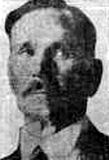 John S. Williams
Murderer · USA · 1910
John S. Williams was convicted of murder and sentenced to life imprisonment on…
18 victims
John S. Williams
Murderer · USA · 1910
John S. Williams was convicted of murder and sentenced to life imprisonment on…
18 victims
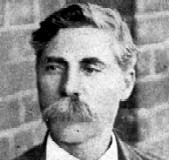 Floyd Allen
Murderer · USA · 1912
Floyd Allen (July 5, 1856 – March 28, 1913) was an American landowner and patri…
5 victims
Floyd Allen
Murderer · USA · 1912
Floyd Allen (July 5, 1856 – March 28, 1913) was an American landowner and patri…
5 victims
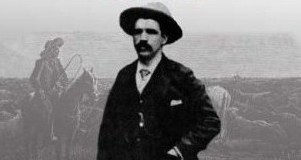 Jackson Lee Davis
Murderer · USA · 1896
Jackson Lee Davis, also known as Diamondfield Jack, was an inmate. · June 4, 18…
2 victims
Jackson Lee Davis
Murderer · USA · 1896
Jackson Lee Davis, also known as Diamondfield Jack, was an inmate. · June 4, 18…
2 victims
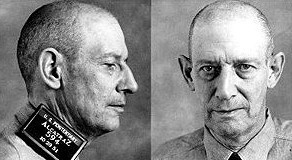 Robert Stroud
Murderer · USA · 1909
Robert Stroud, known to the public as the “Birdman of Alcatraz,” was a federal…
2 victims
Robert Stroud
Murderer · USA · 1909
Robert Stroud, known to the public as the “Birdman of Alcatraz,” was a federal…
2 victims
 Cindy Lou Beck
Murderer · USA · 2010
Cindy Lou Beck was 47 at the time of additional charges in Marion County. She w…
2 victims
Cindy Lou Beck
Murderer · USA · 2010
Cindy Lou Beck was 47 at the time of additional charges in Marion County. She w…
2 victims
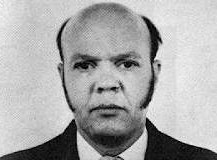 David Carpenter
Serial killer · USA · 1979
David Carpenter (born May 6, 1930), also known as the Trailside Killer, was an…
11 victims
David Carpenter
Serial killer · USA · 1979
David Carpenter (born May 6, 1930), also known as the Trailside Killer, was an…
11 victims
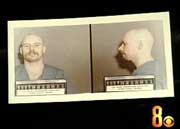 Wayne Donald Horton
Serial killer · USA · 1972
Wayne Donald Horton was a native of Las Vegas, born in 1956. He died in prison…
4 victims
Wayne Donald Horton
Serial killer · USA · 1972
Wayne Donald Horton was a native of Las Vegas, born in 1956. He died in prison…
4 victims
 Marie Fikácková
Murderer · Czech Republic · 1960
Marie Fikáčková (September 9, 1936 in Sušice - April 13, 1961) was a Czech seri…
2 victims
Marie Fikácková
Murderer · Czech Republic · 1960
Marie Fikáčková (September 9, 1936 in Sušice - April 13, 1961) was a Czech seri…
2 victims
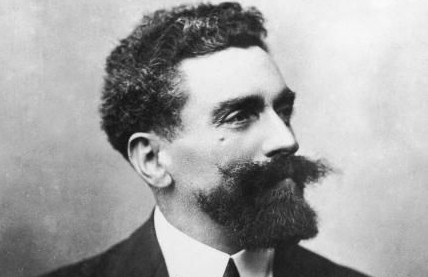 Jean-Pierre Vaquier
Murderer · United Kingdom · 1924
Jean-Pierre Vaquier was 45 years old when he was sentenced to death. Alfred Jon…
1 victim
Jean-Pierre Vaquier
Murderer · United Kingdom · 1924
Jean-Pierre Vaquier was 45 years old when he was sentenced to death. Alfred Jon…
1 victim
 Florence Rey
Murderer · France · 1994
Florence Rey was born August 25, 1975. She was 19 years old at the time of the…
4 victims
Florence Rey
Murderer · France · 1994
Florence Rey was born August 25, 1975. She was 19 years old at the time of the…
4 victims
- Gender
- male
- Country
- USA
- Location
- New York City, New York, USA
- Date of birth
- March 13, 1871
- Age at first offence
- 31
- Characteristics
- convicted rapist, drug addict, history of mental illness
- Victim profile
- Anna Pulitzer
- Method of murder
- St abbing with knife
- Date(s) of murder
- September 18, 1902
- Years active
- 1902
- Date of arrest
- Same
- Status
-
Released
Pleaded guilty to second degree murder on February 10, 1903; sentenced to hard labor in state prison for the duration of his natural life; paroled in early 1924
Case overview
William Hooper Young (March 13, 1871 – after 1928) was an American murderer and a convicted murderer.
Background
Young was born in Salt Lake City, Utah Territory. He was the son of John Willard Young, an apostle in The Church of Jesus Christ of Latter-day Saints (LDS Church). Young was a grandson of Brigham Young, president of the LDS Church and founder of Salt Lake City.
Young became an elder in the LDS Church. In 1891 and 1892, he worked as a Mormon missionary in the eastern United States. In 1893, he left Salt Lake City and moved from city to city and from job to job. His travels included living in Seattle; San Francisco; Portland, Oregon; Chicago; New York City; Washington, D.C.; and Hoboken, New Jersey.
Young drifted away from the LDS Church. Relatives in Utah Territory said he had become a morphine addict. There were also rumors that he had left Salt Lake City because he had killed someone.
Another account in the case material stated that Young had been “damaged by being sent out to a cattle ranch when he was a child” and that he was forced to work on the railroad when he was 18, leaving him homeless. It also stated that his brother was in jail for robbery. Relatives in Utah were described as not fond of him; they characterized him as weak-minded and deranged. The same account described him as living in a “double life” and as having possibly committed a murder in Salt Lake City in 1893, the year he left that city. It described him as a drifter who lived across the United States from Seattle to Chicago to New York after leaving Salt Lake City. It also stated that he worked sometimes as a newspaper writer, including in Washington, D.C. and in Hoboken, New Jersey. In Washington, he was described as being open about being Brigham Young’s grandson and as being strongly anti-Mormon.
The case material stated that the date and place of Young’s death were unknown. It also stated that Young was the grandson of Brigham Young, and that the actual motive for the murder was never determined.
The offence
Discovery of the victim
On September 19, 1902, the body of Anna Pulitzer was found in the Morris Canal just outside Jersey City, New Jersey. The material identified her name as Anna (Nilsen) Pulitzer.
The material stated that her abdomen had been stabbed and that there was bruising on her head. In an additional account included in the case material, it stated that a twenty-pound weight was attached to a leather strap around her waist, that her skull was fractured in two places, and that she had been stabbed in the abdomen as well.
Circumstances and evidence at the scene
The material stated that a motorman named Howell was the first person to see her; Howell ran the trolley car from Newark to Jersey City. It stated that the police saw that the culprit was not a local person who would have been aware of the tides, and it described that at low tide the water was about six inches deep.
It also stated that on the night of the 18th, men who tended the bridge saw two men in a rig drive by with the curtains drawn tightly closed.
Identifications and reporting
In New York City, a man reported his wife missing. Joseph Pulitzer, a tailor living at 160 West 46th Street, read about the discovery and went to the Hoboken police. The material stated that Joseph identified her immediately and that Joseph said she had gone out a few nights before to buy bread and had last been seen at the bakery. After questioning Joseph at length, the police were fairly sure of his innocence because Joseph had reported her missing the morning after she vanished and because Joseph had been at a public meeting with many witnesses.
The material stated that Anna was married but had been arrested a number of times for soliciting prostitution. It also stated that Anna was “well known in the Tenderloin district” and described her as “a very bad woman,” quoting Captain Titus, head of the New York police investigation.
In the additional account included in the case material, it stated that Joseph Pulitzer had married Anna Nilsen in Manhattan in November 1898. It further stated that Joseph was the son of August/Ignatz and Josephine (Meth) Pulitzer. It stated that Anna was the daughter of Radmus Nelson and Clara (Jacobson) Nilsen. It stated that Joseph and Anna were known around the neighborhood for their colorful ways.
Link to Young and the apartment
A New York cabman testified that he had taken Anna Pulitzer and the mystery man to 103 West 58th Street, an apartment building called the Clarence. The material stated that this was the home of John Willard Young, who was a promoter in Paris at the time of the murder.
The material stated that John Willard’s 31-year-old son, William Hooper Young, often used the Clarence apartment when his father was not there.
The material also stated that Mr. Anzer had visited the Jersey City police after following the case in the papers. Anzer was described as a friend of William Hooper Young, and it stated that they had worked together on a Hoboken newspaper called The Weekly Counselor. Anzer said that Young had been to his house on the previous Thursday. Young stated that he was returning a hired gig to Charles K. Evans’ livery stables, and Charles K. Evans identified Young and said Young made a special request wanting a weight along with the gig.
Items found in the apartment
In the apartment, the police found empty beer bottles, a bottle with chloral hydrate crystals in it, and a carving knife with blood on it. Blood was found on bedsheets, in a closet, under the kitchen sink, and on the floor and walls. The material stated that the words “blood atonement” were scrawled in a notebook and that underneath were several references to verses in the Bible that discussed atonement for crime.
In the additional account included in the case material, it stated that the police found one with crystals of what turned out to be chloral hydrate and a bloody carving knife, describing that there was blood everywhere.
Cause of death and timing of injuries
The material stated that it was determined Pulitzer died of a drug overdose from chloral poisoning and that the head bruising and abdomen stabbing occurred after her death. It also stated that Anna was found to have died of chloral poisoning and that the bottles at the Clarence with crystallized chloral hydrate and evidence of the autopsy proved this. The material stated that the mutilations of her body occurred after her death.
Investigation
The material stated that John Willard Young had been in France when Pulitzer had disappeared, but that Young’s son Hooper used the apartment when he was away.
It also stated that the police contacted shippers and checked records, and that the trunk had been sent to Chicago. The Chicago police were told to look out for a mysterious trunk addressed to C.S. Eiling that had been sent from New York on September 18th. Chicago police were unable to find anyone by the name of C.S. Eiling in that city.
When the trunk arrived in Chicago, the police opened it. They found women’s clothing, a knife, a pawn ticket for a Mr. Stiner, and a memorandum book with Hooper Young’s name in it. The items were smeared with blood.
The material stated that in the apartment, evidence included chloral hydrate crystals and a “blood atonement” notebook, and that the material later connected the chloral hydrate evidence and autopsy findings to chloral poisoning.
Arrest
Young was arrested in Derby, Connecticut, where he was found drunk and dressed like a hobo. The material stated that initially Young denied his identity but eventually admitted who he was.
The additional account included in the case material stated that he was spotted in Brooklyn just before being caught at a rooming house on Roebling Street. It described him as dressed like a tramp, drunk on whisky, and very upset and nervous. It stated that he did not admit he was Young until his old friend and ex-employer showed up. That friend was named Mac Levy. It stated that Levy told the New York Times that Hooper lived from March to May 1902 in Brooklyn and had trained with Levy during that time. It stated that Levy said Hooper did not drink but was “a cigarette fiend,” contradicting a barman in the saloon across from the Clarence. It stated that Levy did not see Young from May until August. It then stated that when Levy saw Young again in August, Young looked terrible and haggard and said he wanted to go “to the Rocky Mountains.” It stated that Young had no money, so Levy offered him a job and gave him a week’s pay in advance.
The same account stated that the next time Levy saw Hooper Young was in jail. It stated that Young was insisting that he was not Young but a “Bert Edwards.” It stated that Young made his first confession to Levy.
Trial
Start of trial and plea
Young’s murder trial began in New York City on February 4, 1903. Young pleaded not guilty.
On February 10, 1903, the material stated that Young told the court he was willing to plead guilty to second degree murder. The judge accepted the plea.
Sentencing
The judge sentenced Young to hard labor in state prison for the duration of his natural life. The material stated that the judge stated he was not willing to impose the death penalty because medical experts had suggested that Young was probably medically—though not legally—insane.
Because a full trial was not completed, the material stated that Young’s motive or the truth behind his claims about another man being involved were never fully examined in court.
Places of imprisonment
The material stated that Young served his sentence at Sing Sing in Ossining, New York.
Parole and later life
The material stated that in early 1924, Young was paroled. It stated that he was living with his father in New York City when his father died in February 1924.
The material stated that the last recorded location of Hooper Young was that he was in Fair Oaks, California in 1928 trying to locate one of his half-sisters.
Outcome
Young pleaded guilty to second degree murder on February 10, 1903. The judge accepted the plea and sentenced him to hard labor in state prison for the duration of his natural life. The material stated that Young was paroled in early 1924.
Aftermath
The material stated that much debate existed about the role the Mormon idea of blood atonement might have played in the Pulitzer murder.
It stated that there was speculation about motive after newspapers discovered that the prime suspect was the grandson of Brigham Young. The material stated that because of references to blood atonement found in the apartment, some speculated Pulitzer was killed in accordance with the Mormon principle of “blood atonement,” whereby a person atones for sinful behavior through the shedding of their own blood. It also stated that others suggested Young and Pulitzer had an illicit affair years earlier when Young was a Mormon missionary in Perth Amboy, New Jersey, which was Pulitzer’s hometown.
The material stated that the actual motive was never determined.
It further stated that Anna Pulitzer was taken to her old hometown of Perth Amboy, New Jersey, where she was buried. It stated that Anna’s family still lived there, and that Anna had once been “a belle of Perth Amboy.”
The additional account included in the case material stated that some people in Perth Amboy said Anna met Hooper nine years earlier when he was part of a Mormon proselytizing band that came through Perth Amboy and that villagers chased them out of town. It stated that Anna went to New York City a few weeks after this, and that some people thought she went there to join Hooper Young, but that this was never proven. It also stated that Joseph Pulitzer read of the discovery and went at once to the Hoboken police and that the police questioned Joseph at length.
Other details
Young’s claimed involvement
The material stated that Young claimed that he, Pulitzer, and a third person named Charles Simpson Eiling had been in the apartment on the night of Pulitzer’s death and that when he had temporarily left the apartment to purchase whiskey, he returned to find Pulitzer dead.
It stated that Young claimed Eiling had murdered Pulitzer and that Young decided to help Eiling hide the body because he was afraid of disgracing his father when the matter became public. Young claimed he tried to cut Pulitzer’s body up into small pieces but lost his nerve after making a cut to the abdomen and was not able to do it.
The material stated that Young did not admit to dumping Pulitzer’s body in the canal but indicated that he was aware of what had happened to the body. It stated that a search was made for Charles Eiling, but no one of that name could be located.
Confession to Levy
The additional account stated that Young made his first confession to Mac Levy. It stated that Young said Anna had been killed at his father’s apartment and that the following night she had been dumped in the Morris Canal.
It stated that Young said Charles Simpson Eiling had murdered Anna at the Clarence and that Young had been Eiling’s accomplice. It stated that Young said he went out to get whisky and that Eiling had killed Anna while he was out. It stated that Young said he wanted to go to the police but was afraid of “the disgrace” that would come to his father and himself. It stated that Young did admit to taking the body to New Jersey and putting it in the canal.
Names and relationships in the case material
The case material stated that John Willard Young was a promoter in Paris at the time of the murder. It stated that Howell was a motorman. It stated that Captain Titus was the head of the New York police investigation.
It stated that Mac Levy trained Young in Brooklyn from March to May 1902 and later met him in jail. It named Charles K. Evans as the livery stables identifier and Charles K. Evans stated that Young requested a weight along with the gig.
It named Mr. Stiner in the Chicago trunk contents as the person on a pawn ticket.
It named Charles Simpson Eiling as the third person Young claimed was involved.
It named Joseph Pulitzer, August/Ignatz Pulitzer, Josephine (Meth) Pulitzer, Radmus Nelson, Clara (Jacobson) Nilsen, and Anna’s surname as Nilsen.
Publication connected to the case
The case material stated that Brian Evenson, a former professor at Brigham Young University, wrote a novel in which protagonists researched the Pulitzer case in some detail called The Open Curtain (Coffee House Press, 2006).
Spotted an error, or have more information about this case?