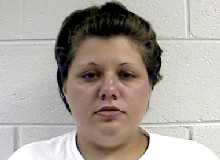
Rebecca Olenchock
Murderer Miranda Barbour
Murderer · USA · 2013
Miranda Barbour, 19, defendant. · Elytte Barbour, 22, defendant and husband of…
100 victims
Miranda Barbour
Murderer · USA · 2013
Miranda Barbour, 19, defendant. · Elytte Barbour, 22, defendant and husband of…
100 victims
 Tiffany Hall
Murderer · USA · 2006
Tiffany Hall was 24 when she was charged in September 2006. She later entered a…
5 victims
Tiffany Hall
Murderer · USA · 2006
Tiffany Hall was 24 when she was charged in September 2006. She later entered a…
5 victims
 Banita Jacks
Murderer · USA · 2007
Banita Jacks was a Washington, DC resident convicted of murdering her four daug…
4 victims
Banita Jacks
Murderer · USA · 2007
Banita Jacks was a Washington, DC resident convicted of murdering her four daug…
4 victims
 Holly Grigsby
Murderer · USA · 2011
Holly Grigsby was sentenced to life in prison without parole on July 15, 2014.…
4 victims
Holly Grigsby
Murderer · USA · 2011
Holly Grigsby was sentenced to life in prison without parole on July 15, 2014.…
4 victims
 Jessica Tata
Murderer · USA · 2011
Jessica Tata was a Houston home day care owner who fled to Nigeria after a fire…
4 victims
Jessica Tata
Murderer · USA · 2011
Jessica Tata was a Houston home day care owner who fled to Nigeria after a fire…
4 victims
 Amanda Bennett
Murderer · USA · 2011
Amanda Bennett was an Indiana woman who shot her three children and set the fam…
3 victims
Amanda Bennett
Murderer · USA · 2011
Amanda Bennett was an Indiana woman who shot her three children and set the fam…
3 victims
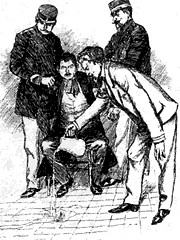 Pierre Voirbo
Murderer · France · 1868
Pierre Voirbo was a prime suspect after he had recently quarreled with the vict…
1 victim
Pierre Voirbo
Murderer · France · 1868
Pierre Voirbo was a prime suspect after he had recently quarreled with the vict…
1 victim
 Kenneth Foster
Murderer · USA · 1996
Kenneth Foster, Jr. (born October 22, 1976) was a prisoner formerly on death ro…
1 victim
Kenneth Foster
Murderer · USA · 1996
Kenneth Foster, Jr. (born October 22, 1976) was a prisoner formerly on death ro…
1 victim
 Mark Allen Pinnell
Murderer · USA · 1985
August 1985 — Mark Allen Pinnell contacted Randy Brown in response to an advert…
1 victim
Mark Allen Pinnell
Murderer · USA · 1985
August 1985 — Mark Allen Pinnell contacted Randy Brown in response to an advert…
1 victim
 James Edward Swann
Serial killer · USA · 1993
James Edward Swann, Jr., also known as “The Shotgun Stalker,” was an American s…
4 victims
James Edward Swann
Serial killer · USA · 1993
James Edward Swann, Jr., also known as “The Shotgun Stalker,” was an American s…
4 victims
 Melvin Rees
Serial killer · USA · 1957
Melvin David Rees, also known as the “Sex Beast”, was convicted and sentenced f…
9 victims
Melvin Rees
Serial killer · USA · 1957
Melvin David Rees, also known as the “Sex Beast”, was convicted and sentenced f…
9 victims
- Gender
- female
- Country
- USA
- Location
- Bristol Township, Bucks County, Pennsylvania, USA
- Date of birth
- March 12, 1986
- Age at first offence
- 24
- Characteristics
- parricide, arson, mentally ill
- Victim profile
- Kimberly Venose, 44 (her mother)
- Method of murder
- Beat her mother with a baseball bat and then poured kerosene around her and lit it
- Date(s) of murder
- October 17, 2010
- Years active
- 2010
- Date of arrest
- 2 days later
- Status
-
Imprisoned
Found guilty but mentally ill; sentenced to life in prison without parole (life term upheld with guilty but mentally ill designation) on October 12, 2011; also sentenced to 12½ to 25 years for arson and possessing an instrument of crime (served concurrently with the life term)
Case record: Rebecca Olenchock
Status / legal outcome
Rebecca Olenchock was found guilty but mentally ill and was sentenced to life in prison without parole on October 12, 2011. The sentence reflected the judge’s changed verdict to guilty but mentally ill, and it did not change the amount of time Olenchock would serve. The judge ensured the designation would result in therapy and other services while behind bars. The judge also sentenced Olenchock to 12½ to 25 years for arson and possessing an instrument of crime, with the separate sentence ordered to be served concurrently with the life term.
People involved
- Rebecca Olenchock — defendant; a homeless waitress.
- Kimberly Venose — victim; Olenchock’s mother (44).
- Albert Cepparulo — Bucks County Judge who conducted the non-jury trial and imposed sentence.
- Joseph Haag — senior public defender and Olenchock’s attorney.
- Daniel Sweeney — chief deputy district attorney and prosecutor.
- David Kemmerer — Bucks County Detective.
- Jack Slattery — Bristol Township Detective.
- Marlene Ritter — homeless advocate from Langhorne Terrace Ministries who testified for the defense and later related church ministry support.
- Sandra Mullican — homeless advocate who testified about shelter and saving money arrangements.
- Mark Kendall — boyfriend Olenchock drove to after the killing; testified that he did not know about the murder until police approached.
- Ryan Cummings — volunteer firefighter who asked the victim what had happened.
- Tom Smith — friend who testified about interactions at a nearby Friendly’s restaurant and described Venose sometimes babysitting his 5-year-old son.
- Debra McCormick — victim’s sister.
- Daniel (referred to as) Sweeney — prosecutor.
- Joseph Haag — public defender.
- Other described individuals — a man Olenchock attempted to blame for the killing, described by Olenchock as an African American man “who she said ‘looked like Mr. Clean’ and forced her at gunpoint to beat her mother with the bat,” and a “large African American man” referenced in testimony.
Timeline
- June 6, 2011 — Bucks County trial began for Olenchock in Bucks County Court.
- June 7, 2011 — Trial coverage continued; testimony and opening proceedings were described in connection with the expected testimony schedule.
- June 8, 2011 — Trial coverage described the life-in-homeless-camp context and the non-jury trial; sentencing was mandatory for first-degree murder.
- October 12, 2011 — Olenchock was sentenced to life in prison without parole with a guilty but mentally ill designation.
- October 13, 2011 — Additional reporting described the sentencing.
The offence
Rebecca Olenchock killed her mother, Kimberly Venose (44), during events occurring on Oct. 17, 2010, in a homeless encampment behind the Pathmark on Durham Road in Bristol Township.
The judge concluded that Olenchock beat Venose with a baseball bat while Venose was inside the plywood and tarpaper hut they had lived in for two years, then poured kerosene around her as she lay unconscious inside the hut. The judge concluded that Olenchock ignited the kerosene, snapped a padlock on the hut’s door trapping Venose inside, and drove away.
After the kerosene was ignited, Venose broke through a wall of the flaming shack and stumbled toward the road, crying for help. The victim later died of heart failure brought on by the blows and burns. Before she succumbed, Venose told a paramedic that her daughter had tried to kill her. In additional testimony coverage, volunteer firefighter Ryan Cummings asked what had happened and Venose responded: "My daughter [is] trying to kill me" before lapsing into cardiac arrest.
The accounts described that prosecutors said Olenchock beat her mother 10 to 15 times with a baseball bat as her sleeping mother was inside the hut near I-95. Prosecutors also said Olenchock burned her bloody clothes in the fire pit of their camp, spread kerosene on her bed, and set it ablaze, locking the makeshift door as she fled. In court coverage, it was also described that Olenchock admitted to police that she hit her mother in the head with a baseball bat “10 to 15 times” before setting her mattress on fire and fleeing.
Olenchock later told police she wanted a new life and claimed her mother refused to leave the woods. Olenchock described her plan as taking shape after she awakened early in the hut, and she told police she came up with the plan while looking at the baseball bat she kept near her bed.
Prosecutors portrayed the case as involving premeditation, and the judge stated that there was premeditation and that Olenchock’s actions were homicidal.
Verbatim statements and quoted remarks included the judge’s remarks at sentencing:
“I’m satisfied beyond any doubt with my verdict, because there was premeditation on your part,” the judge told Olenchock.
“Your actions on that day were, beyond any doubt, homicidal.”
Investigation
Detectives tracked Olenchock through her cellphone use, obtaining a court order to “ping” the location of her phone in Tennessee. Two days after the Oct. 17 slaying, Bucks County Detective David Kemmerer and Bristol Township Detective Jack Slattery located Olenchock in Johnson City, Tenn. in a Johnson City parking lot, where Kemmerer testified that Olenchock and her new boyfriend were seated in a white Mazda Miata convertible.
During initial questioning, Olenchock tried to pin the killing on a large African American man who she said forced her at gunpoint to beat her mother with the bat. When confronted with the victim’s dying statement, Kemmerer testified that Olenchock confessed and changed her story. In testimony, Kemmerer said Olenchock confessed that she had killed her mother because she felt trapped and said Venose repeatedly refused to move from the homeless camp where they lived together for two years. In handwritten confession descriptions, Olenchock complained that her mother refused to move with her to Tennessee and had stolen large sums of her savings to buy drugs, and that her mother was associated with a motorcycle gang and feared retaliation if she left.
Deputy District Attorney Daniel Sweeney described the confession in court and made a statement to the judge about the victim’s dying statement and efforts to save her own life:
“We may never have heard these words but for Kimberly Venose's extraordinary efforts to save her own life,” Sweeney told Judge Albert J. Cepparulo.
Sweeney also characterized Olenchock’s actions as violent in closing statements:
“Her actions that day were as violent as they were inexplicable. If she wanted a new life so badly, she could have just left,” Sweeney said.
Arrest / apprehension
Olenchock was found several days later in Johnson City, Tenn., driving with a man whom she had met on the Internet. She had purchased a used 2000 Kia sedan and drove to Johnson City after the killing. Prosecutors said she was without a driver’s license and drove so fast to join the boyfriend she had met on the Internet that she got pulled over for speeding in Virginia, forcing her beau to come fetch her.
In Tennessee, Olenchock was approached by police and was confronted with the victim’s dying statement. Her boyfriend testified that he did not know anything about the murder until police approached him and Olenchock while they were driving.
Trial
Court and procedure
Olenchock chose not to have a jury trial, and the case proceeded before Judge Albert J. Cepparulo.
A defense attorney Joseph Haag said the trial would proceed without a jury at Olenchock’s request and that opening statements were not given until the defense began. Prosecutors did not seek the death penalty.
Charges as described in proceedings
During the trial and related reporting, Olenchock was described as facing homicide and arson charges and other charges. Specifically discussed convictions included:
- first-degree murder
- arson
- possession of an instrument of crime
Defence theory and arguments
The defense conceded that Olenchock committed the crime but argued that it was not premeditated murder. Haag argued that the extreme conditions of homelessness led to the slaying, which could have resulted in a third-degree murder verdict or a manslaughter verdict.
Haag described “stressors,” including the deplorable conditions Olenchock and her mother lived in for two years and arguments over how to get out of their situation, as leading to the slaying. Haag also argued that Venose had lost spousal support, forcing Olenchock to work harder, and that over the previous nine days Venose had blown more than $500 of her daughter’s savings on nonessentials. Haag also argued that Venose feared moving would expose her to an arrest warrant for a probation violation from a shoplifting conviction.
Haag argued that pressure to get out of homelessness was put on Olenchock:
“All the pressure of getting out of homelessness was put on my client,” Haag said.
“This camp, it wasn’t a place similar to a camping expedition where you can just get in your car and go home when it rains. This was home.”
Haag also asked the judge to consider the pressure on Olenchock:
“What she carried with her the entire time she was in the woods was the burden of trying to get out,” Haag said.
The defense attorney argued that Venose “threatened to kill Ms. Olenchock if she went to Tennessee,” which Haag added in describing pressures leading to the slaying.
Prosecution theory and arguments
Prosecutor Daniel Sweeney argued Olenchock’s actions were not spontaneous and that she rejected options short of murder. Sweeney said:
“The choice wasn't staying or killing [her] mom,” Sweeney said.
“She could have done other things. She chose not to.”
Sweeney countered the defense about homelessness and desperation by emphasizing that no matter how desperate Olenchock was, she did not have to resort to murder. Sweeney also argued that Venose could have been a drag on her daughter but that did not give her the right to bludgeon her repeatedly:
“Maybe Kim Venose wasn’t the best mother. Maybe she was even a drag on her daughter. But that did not give her the right to bludgeon her with a baseball bat over and over and over and over and over and over and over and over and over and over and over again.”
Testimony and witnesses
Marlene Ritter testified for the defense and described primitive living conditions in the homeless camp behind the Pathmark store on Durham Road in Bristol Township. Ritter testified that the wooden shack was covered with plastic tarps and that inside would fill with water during heavy rains, drenching clothes and mattresses. Ritter described summer nights being so hot the women could not breathe, and that she helped them get a tent so they could drag mattresses outside to escape the heat.
Ritter described insects and vermin and gave a list of animals:
“There were raccoons, mice, rats, snakes, mosquitoes, gnats, flies, bees, hornets...,” Ritter said.
Ritter described the bathroom in the woods and washing with bottled water donated by the supermarket. She testified that Olenchock bought all their food and brought her mother meals from the pancake house, stating:
“Every night when she left work, she had a bag of food for her mother,” Ritter said.
Ritter testified that she never saw the women argue and described them as:
“They were more like two sisters who would finish each other’s sentences,” she said.
Sandra Mullican testified that Venose did not want to live in the Red Cross homeless shelter, and that Olenchock asked Mullican to help her save money earned waitressing. Mullican arranged for Olenchock to keep cash in a church safe because it had “gone missing” before. Mullican testified that in four months Olenchock saved $3,000 enough to buy a used 2000 Kia sedan.
Mark Kendall testified that he did not know anything about the alleged murder until police approached him and Olenchock while driving. Kendall testified that two weeks before the Oct. 17 events, Olenchock had text messaged him that her mother had died of a heart attack, and he described her apparent mood change on Oct. 17:
“She seemed aggravated. Pissed off.”
“She was joyful. Just excited to be there,” Kendall said.
Tom Smith testified that he was struck by Olenchock’s free spending and said she urged her mother “to order anything she wanted.” Smith testified that during supper at a nearby Friendly’s restaurant, Olenchock was on the phone texting all night, stating:
Smith testified that he was struck by Olenchock's free spending, saying she had urged her mother "to order anything she wanted."
During the meal, Smith said, Olenchock "was on the phone, texting all night."
Smith testified that when they parted, Olenchock made a casual remark and the women needed to stop on the way back to camp to get more kerosene. The record included:
The women needed to stop on the way back to camp, she told him. They needed more kerosene.
The record also included a friend who said Venose sometimes babysat his 5-year-old son.
Ryan Cummings testified about what Venose told him. Venose responded:
"My daughter [is] trying to kill me."
Debra McCormick testified about family estrangement and stated that the verdict brought little closure. McCormick was also quoted describing the family’s lack of answer and describing praying and hugging after the verdict:
“The main question has always been: Why didn't she just leave?” she said. She said Olenchock had offered no answer.
“The only thing we did was to hold each other, to hug and cry, and pray together.”
In another quoted remark attributed to McCormick in related coverage, she said:
“What she did was horrifically, absolutely terrible. Words can’t even describe. And it did not have to be. If she wanted a life of her own, she could have just left.”
Sentencing
Judge Albert Cepparulo did not set a sentencing date initially; a life term was mandatory under state law for first-degree murder.
After the verdict, the judge changed the verdict and found Olenchock guilty but mentally ill. The judge sentenced Olenchock to life in prison without parole, stating:
Cepparulo also sentenced Olenchock to 12½ to 25 years for arson and possessing an instrument of crime. The judge ruled the separate sentence would be served concurrently with her life term.
Appeals
Her attorney, senior public defender Joseph Haag, said an appeal was “a possibility.”
Other details
Circumstances of homelessness and living conditions
The case described a homeless encampment in Bristol Township behind a Pathmark on Durham Road. The women lived together in a plywood shack with no electricity or running water in a “tent city” homeless camp for two years. Witnesses described extreme weather conditions and rat attacks, with insects and vermin present.
Employment and money arrangements
Olenchock worked as a waitress at the Fairless Hills IHOP and saved tips to buy a used car and to gather money for an apartment. She was described as trying to gather money for an apartment while also attempting to free herself from the homeless existence.
Marlene Ritter testified that she drove Olenchock back and forth to her job at the IHOP in Fairless Hills and saw the living conditions firsthand. Ritter also described offering support to get a tent to drag mattresses outside.
Sandra Mullican testified that Olenchock did not want to keep cash in the shack because it had “gone missing,” and Mullican arranged for Olenchock to keep cash in a church safe. Mullican described the amount saved as $3,000 in four months to buy a used 2000 Kia sedan.
Relationships and dispute context
The reporting described a close but complicated relationship between Olenchock and her mother, Kimberly Venose. Family members said the women were estranged until a few months before Venose’s death, and McCormick said they had prayed together and hugged after the verdict.
Venose was described as unemployed and having numerous medical problems, and she was described as receiving some spousal support, which was expected to stop after a divorce finalized. Court records were described as showing Venose was wanted on shoplifting charges and had been court ordered to get mental health treatment.
The night before the slaying, the record described arguments between the women over Olenchock’s plan to move in with a man she met through an online dating site. The record also included a defense claim that Venose threatened to kill Olenchock if she went to Tennessee.
Attempts to blame another person
During initial police engagement in Johnson City, Olenchock attempted to pin the killing on a large African American man and said the man forced her at gunpoint to beat her mother with the bat. When confronted with Venose’s dying statement, she confessed and changed her story.
Where sentencing recommendation was made
The judge agreed to recommend that Olenchock serve her sentence at the state correctional facility for women in Muncy. The judge made the recommendation after hearing from homeless advocate Marlene Ritter, who told the judge about locating a church ministry group that promised to visit Olenchock. Cepparulo praised Ritter, and it was described that along with other homeless advocates from the Church of Living Hope in Langhorne, the group visited Olenchock in prison weekly since her arrest.
Defendant’s conduct during proceedings
Olenchock did not speak during the sentencing hearing and refused to comment as she left the courtroom. Before being taken to prison, she was permitted a private meeting with her aunt, during which McCormick said they held each other and wept and prayed together.
Prosecutor stance at sentencing
Daniel Sweeney said Olenchock deserved the life sentence and made the statement that her actions were violent and inexplicable and that she could have just left if she wanted a new life:
Spotted an error, or have more information about this case?