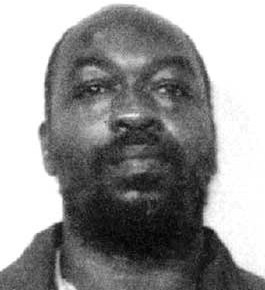
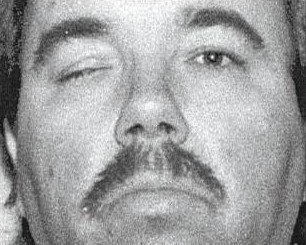
Durlin Eddmonds
Murderer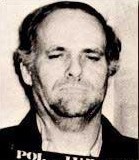 Ervil LeBaron
Murderer · USA · 1972
Ervil Morrell LeBaron (1925 to August 16, 1981) was the leader of a polygamous…
35 victims
Ervil LeBaron
Murderer · USA · 1972
Ervil Morrell LeBaron (1925 to August 16, 1981) was the leader of a polygamous…
35 victims
 Brian Kevin Rosenfeld
Murderer · USA · 1985
Brian Kevin Rosenfeld Brian Kevin Rosenfeld was sentenced to three concurrent l…
23 victims
Brian Kevin Rosenfeld
Murderer · USA · 1985
Brian Kevin Rosenfeld Brian Kevin Rosenfeld was sentenced to three concurrent l…
23 victims
 Marvin Gray
Murderer · USA · 1975
Marvin Gray was convicted killer who claimed responsibility for 23 slayings and…
23 victims
Marvin Gray
Murderer · USA · 1975
Marvin Gray was convicted killer who claimed responsibility for 23 slayings and…
23 victims
 Yahweh ben Yahweh
Murderer · USA · 1980
Yahweh ben Yahweh was born and legally named Hulon Mitchell Jr. (October 27, 19…
23 victims
Yahweh ben Yahweh
Murderer · USA · 1980
Yahweh ben Yahweh was born and legally named Hulon Mitchell Jr. (October 27, 19…
23 victims
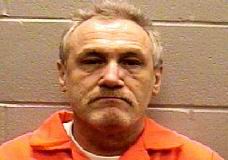 Donald Blom
Murderer · USA · 1999
Donald Blom (born 1949) was convicted of first-degree murder in the killing of…
1 victim
Donald Blom
Murderer · USA · 1999
Donald Blom (born 1949) was convicted of first-degree murder in the killing of…
1 victim
 Ronald Baquiran Bae
Mass murderer · Philippines · 2013
Ronald Baquiran Bae was born on November 9, 1971. He was a former member of the…
8 victims
Ronald Baquiran Bae
Mass murderer · Philippines · 2013
Ronald Baquiran Bae was born on November 9, 1971. He was a former member of the…
8 victims
 Roxalana Druse
Murderer · USA · 1884
Roxalana Druse (1847 – February 28, 1887) was the wife of William Druse and was…
1 victim
Roxalana Druse
Murderer · USA · 1884
Roxalana Druse (1847 – February 28, 1887) was the wife of William Druse and was…
1 victim
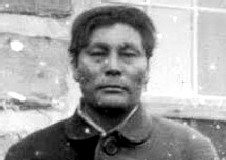 Swift Runner
Mass murderer · Canada · 1879
Swift Runner was a Cree Indian who lived in what is now central Alberta. As a y…
6 victims
Swift Runner
Mass murderer · Canada · 1879
Swift Runner was a Cree Indian who lived in what is now central Alberta. As a y…
6 victims
- Gender
- male
- Country
- USA
- Location
- Chicago, Illinois, USA
- Date of birth
- 1952
- Age at first offence
- 25
- Characteristics
- rape
- Victim profile
- Ricky Miller (9-year-old boy)
- Method of murder
- Suffocating with a pillow
- Date(s) of murder
- October 27, 1977
- Years active
- 1977
- Date of arrest
- —
- Status
-
Executed
Executed by lethal injection in Illinois on November 19, 1997
Case information
Name: Durlyn Eddmonds Legal status: Executed by lethal injection in Illinois on November 19, 1997
Timeline
- 1977 — Durlyn Eddmonds committed the murder of a nine-year-old boy and deviated sexual assault.
- October 27, 1977 — Eddmonds called down to the alley below his apartment and asked Richard Miller, age 9, to come upstairs; Richard was bleeding from his rectum.
- December 5, 1977 — Dr. Robert Reifman examined Eddmonds and concluded he was unable to assist in his own defense.
- October 9, 1984 — Petition for writ of certiorari was denied by the Supreme Court of the United States.
- Dec. 3, 1984 — Rehearing was denied by the Supreme Court of the United States.
- November 19, 1997 — Durlyn Eddmonds was executed by lethal injection in Illinois.
Background
Durlyn Eddmonds was diagnosed with schizophrenia and was found by a psychiatrist to be unable to assist in his own defense at the time of a December 5, 1977 examination. The evidence included that he had been diagnosed with schizophrenia and had been out of contact with reality, and he was found to have mental health issues over time.
Eddmonds was described as having mental illness and being under extreme mental and emotional distress at the time of the crime, and there was serious doubt as to his competency to stand trial that affected the case timeline. There were also references to his upbringing and family circumstances, including that his mother was a violent alcoholic and committed suicide when Eddmonds was only 16 years old.
The offence
Durlyn Eddmonds was found guilty of the deviate sexual assault and murder of a nine-year-old boy, Richard Miller.
A statement taken by an assistant State’s attorney and transcribed by a court reporter described Eddmonds, age 25, calling down to the alley below his apartment in the early morning of October 27, 1977, and asking Richard Miller, age 9, to come upstairs. The statement described Eddmonds seeing that the boy was bleeding from his rectum, telling Richard to undress, cleaning him with a wet cloth and toilet paper, laying a sheet of plastic on the bed, and beginning to sodomize him. During the act, Richard cried and asked Eddmonds to stop because he was hurting him. Eddmonds later told police he pushed Richard’s body face down into a pillow to silence him so that he would not awaken his grandmother in the next room. Richard stopped breathing during the act. After the act, Eddmonds noticed “that the boy wasn’t breathing properly.” Eddmonds tried to revive him, looked for a place to conceal the body, put the body in a garbage dumpster in the alley below his apartment, and threw the boy’s clothes and the materials used in cleaning him into a yellow garbage bag, scattering the bag and contents in a nearby alley.
Dr. Robert Stein, chief medical examiner of Cook County, testified that he performed an autopsy and that the “cause of [Richard Miller’s] death was suffocation in association with contusions and lacerations of the anus.”
At trial, despite his recorded confession, Eddmonds testified he did not rape Richard Miller. He testified that a friend, Jerome Williams, came to his apartment nervous, used plastic bags lying on his bed, asked Eddmonds to obtain heroin, and left. Eddmonds left, purchased a half ounce of heroin, and gave it to Williams. Williams returned shortly after midnight with a shopping bag, and both men left the apartment. Eddmonds returned at approximately 2:15 a.m., slept, and awoke to find the shopping bag contained a child’s clothing, shoes, and a yellow plastic bag. His grandmother then told him about the body of the boy found in the alley. Eddmonds said he left quickly with the shopping bag, met Williams, and Williams said he would get rid of the bag; they walked to an alley and Williams dumped the bag. Eddmonds also testified about a conversation in which Williams told of having sex with the dead boy and then drowning him in a bathtub so he could not carry out his threat to tell his mother. Eddmonds testified to an episode in which Williams prepared two syringes of heroin, one for himself and one for Eddmonds, and that Eddmonds switched syringes. Eddmonds testified that Williams “shot the heroin,” began to shake, and died the following day, apparently of an overdose of heroin. Eddmonds testified that the statements he made concerning the sexual assault and death of the boy were false and were made because the police “would not let him leave and told him what to say.” He denied each of the charges against him.
Investigation
A latent fingerprint examiner for the Chicago police department testified that there were in excess of 12 points of comparison between impressions found on a newspaper lying near the yellow garbage bag and Eddmonds’s right palm print. The examiner testified that the print on the newspaper was the same as Eddmonds’s right palm print.
A microanalyst from the Chicago police department testified that the garbage bag found in the alley and the bags retrieved from Eddmonds’s apartment produced similar results when subjected to scientific analysis. The analyst also testified that a sock found in the bag had the same fiber content as one found on the landing of the porch directly in front of Eddmonds’s apartment and above the garbage dumpster.
Arrest and interrogation
Eddmonds’s confession was taken by an assistant State’s attorney and transcribed by a court reporter, and it included details about how he contacted Richard Miller, how the assault occurred, how he attempted to revive Richard, and what he did to conceal the body and related items.
Trial
Eddmonds waived his right to a jury trial. A bench trial was held before the Honorable Judge John Crowley of the Circuit Court of Cook County, Illinois.
The court initially made findings that Eddmonds was over 18, that the murder occurred during the commission of the felony of deviate sexual assault, and that Eddmonds was eligible for the death penalty under § 9-1(b)(6). The court then heard evidence of mitigation and aggravation.
Fitness proceedings and evaluations
Eddmonds was charged with murder and deviate sexual assault on November 3, 1977.
His assigned counsel, assistant public defender Todd Musburger, thought Eddmonds incapable of assisting in his defense and requested a psychiatric examination. On December 5, 1977, Eddmonds was examined by psychiatrist Robert Reifman and psychologist Michael Rabin of the Psychiatric Institute of the Circuit Court of Cook County. Dr. Reifman concluded Eddmonds was unable to assist in his own defense. Dr. Rabin questioned his ability to cooperate with his attorney due to mental illness but found he was aware of court proceedings. Dr. Reifman referred Eddmonds to the Illinois State Psychiatric Institute for a two-week evaluation, and the court ordered a fitness hearing to be held on January 12, 1978.
At the outset, Dr. Jewett Goldsmith found Eddmonds chronically and severely depressed and felt there was nothing he could do to defend himself against the death penalty. Dr. Goldsmith initially thought Eddmonds was unfit due to depression and lack of interest in defending against a possible capital charge, reporting that Eddmonds considered himself capable of sitting in a courtroom and listening to what goes on and did not consider himself in need of mental treatment. After the two-week evaluation, Dr. Goldsmith changed his mind. On January 10, 1978, Dr. Goldsmith diagnosed chronic depression, found no evidence of psychotic behavior, and concluded Eddmonds was fit to stand trial and “not in need of mental treatment at this time.”
Dr. Rabin also found in later evaluations that Eddmonds understood court procedures and had “good orientation,” while considering his mental illness made his ability to cooperate “questionable.”
On January 17, 1978, Eddmonds was placed on Thorazine, an anti-psychotic, psychotropic medication, and stayed on Thorazine for approximately six months.
On January 25, 1978, Dr. Albert Stipes, a private psychiatrist, reported that although Eddmonds understood the murder charge, he did not understand the other charges, did not fully understand the proceedings, and felt hopeless about his defense; Dr. Stipes concluded, “I do not believe [ Eddmonds ] could cooperate with his attorney in defending himself because of his hopelessness.” Dr. Stipes was unable to make a determination of Eddmonds’s state of mind at the time of the crime.
On June 6, 1978, Dr. Reifman concluded Eddmonds was “fit to stand trial with medication,” understanding the nature of the charge, the purpose of the proceedings, and being able to assist counsel. On June 6, 1978, Dr. Rabin reexamined Eddmonds and found “good orientation.”
On July 14, 1978, Eddmonds was examined by Dr. Gerson Kaplan and again by Dr. Rabin. Dr. Rabin concluded Eddmonds was able to cooperate with counsel and was fit to stand trial. Dr. Kaplan evaluated sanity at the time of the crime but could not render an opinion because Eddmonds denied committing the crime and denied remembering activities around that time; Dr. Kaplan still found Eddmonds fit because he understood the charges and was able to cooperate in his own defense.
Eddmonds stopped taking Thorazine on approximately July 17, 1978.
On April 10, 1979, Dr. Kaplan again reported Eddmonds was fit to stand trial and made no mention of a need for medication. Dr. Kaplan stated Eddmonds “came across as being quite manipulative and trying to impress this examiner with how depressed and sick he is.” Dr. Kaplan questioned whether Eddmonds really heard voices and changed his diagnosis from schizophrenia to antisocial personality disorder with depressive features. Dr. Kaplan doubted Eddmonds felt hopeless about his trial because Eddmonds pointed out that his confession could not be valid because he was high on drugs when he gave it and denied remembering the crime.
Dr. Rabin maintained a schizophrenia diagnosis but concluded Eddmonds was “minimally fit for trial.”
On May 2, 1979, Eddmonds filed a pro se petition for substitution of counsel. As a result, Musburger withdrew and private defense counsel Thomas McGinnis took the case.
On September 26, 1979, Dr. Rabin again interviewed Eddmonds and concluded Eddmonds was manipulative and “seeking to gather sympathy for himself.” Dr. Rabin abandoned the schizophrenia diagnosis and concluded Eddmonds suffered from antisocial personality with depression, concluding he was fit to stand trial: “He is aware of the nature of the charges and proceedings pending against him and is capable of assisting counsel in his defense.”
On September 28, 1979, Dr. Kaplan again examined Eddmonds pursuant to a court order and concluded Eddmonds was legally sane at the time of the crime.
On November 26, 1979, Dr. Stipes reexamined Eddmonds and reported he was in much better contact with reality than at his prior examination, concluding he was sane at the time of the murder. Dr. Stipes did not render an opinion on fitness to stand trial at that time, but later testified that Eddmonds was able to cooperate with counsel and understand the nature of the charges.
Fitness hearings were ordered on December 19, 1977 and again on February 8, 1978, but the hearing was repeatedly continued and ultimately never held.
Sentencing
Because the State requested a death penalty hearing pursuant to section 9-1(d) of the Criminal Code of 1961 and Eddmonds waived a jury, the court conducted the sentencing process.
In aggravation, the State presented testimony that Eddmonds had committed four other rapes, three resulting in convictions.
In mitigation, the defense presented Dr. Robert Reifman, director of the Psychiatric Institute of the Circuit Court of Cook County. Dr. Reifman testified that, based on his examination of Eddmonds in December 1977 to determine fitness for trial, he concluded Eddmonds suffered from schizophrenia, undifferentiated type, causing him to be out of contact with reality and unfit for trial. Dr. Reifman’s diagnosis was based on Eddmonds’s reported hearing voices and emotional withdrawal, lethargy, depression, and inappropriate smiling. Dr. Reifman stated during cross-examination that he was unable to render a definitive opinion whether, at the time of the offense, Eddmonds was under the influence of an extreme mental or emotional disturbance.
The court reviewed the presentence investigation and found no mitigating factors sufficient to outweigh those in aggravation.
The court sentenced Eddmonds to death for the murder and to 40 to 80 years’ incarceration for the deviate sexual assault.
Appeals
United States Court of Appeals (Seventh Circuit)
After conviction and sentence were upheld on appeal and in state post-conviction proceedings, Eddmonds petitioned the district court for a writ of habeas corpus alleging he was denied effective assistance of counsel and due process at trial and sentencing and that the Illinois death penalty statute was unconstitutional. The district court denied the petition, and Eddmonds appealed only the ineffective assistance of counsel claims.
The United States Court of Appeals, Seventh Circuit, affirmed the district court’s denial. The court decided in a manner that addressed Eddmonds’s ineffective assistance claim regarding failure to request a fitness hearing and his ineffective assistance claim regarding mitigation at sentencing. The decision included detailed discussion of the fitness evaluations performed before trial and analysis under Strickland and related precedent.
The court also included discussion of sentencing procedures under Illinois law and the statutory mitigation concept of extreme mental or emotional disturbance, and it reviewed the mitigation evidence presented by Dr. Reifman, as well as other psychiatric evaluations indicating sanity at the time of the murder.
Supreme Court of the United States
The petition for a writ of certiorari was denied by the Supreme Court of the United States, with rehearing denied.
Quotations from the appellate analysis and related testimony
The appellate analysis quoted parts of an Eddmonds closing argument:
If the Court please, I realize your Honor that this has been a long and difficult trial for you to hear. I have only a few things to say. You must now decide whether or not to kill Durlyn Eddmonds . I submit to you that the facts in this case are not such that Durlyn Eddmonds should be killed. This is not a case, Your Honor, of murder by contract, this [is] not a case, Your Honor, of premeditation. Mr. Eddmonds did not sit down and say to himself I'm going out and kill Richard Miller and go do it. It is a case, Your Honor, where something happened [and] a boy died. I refer you to the court reporter's statement, your Honor, which is the most reliable piece of evidence of what was said by Mr. Eddmonds to the police. In that court reporter's statement, Mr. Eddmonds said by putting pressure on the boy I was smothering him without knowing it. I turned him over, felt his heartbeat and I gave him mouth-to-mouth resuscitation. He tried to save the child's life, Your Honor. I wish that the boy was not dead. Mr. Eddmonds wishes too the boy was not dead. Truly killing Mr. Eddmonds will not bring the boy back. I know, Your Honor, you are a good man and I also know you are a merciful man. You are faced with a very difficult decision, my heart goes out to you. I ask that you show Durlyn Eddmonds mercy. This is not gross incompetence under Strickland.
Outcome
Durlyn Eddmonds was executed by lethal injection in Illinois on November 19, 1997.
Other details
Trial-level facts from the appellate record (excerpts and named individuals)
Eddmonds’s statement described his actions and concealment of evidence, including that he cleaned Richard with a wet cloth and toilet paper, used a pillow to silence cries, tried to revive Richard after noticing he “wasn’t breathing properly,” and placed the body in a garbage dumpster in the alley below his apartment. The statement described scattering a yellow garbage bag and its contents in a nearby alley.
The appellate record described fingerprint and scientific analysis linking Eddmonds’s right palm print to a newspaper found near the yellow garbage bag and linking garbage bags and a sock by fiber content.
Mitigation/evidence context at sentencing
The appellate decision discussed Dr. Reifman’s testimony and the issue of whether Eddmonds was acting under extreme mental or emotional disturbance at the time of the murder. It also discussed later psychiatric evaluations by Dr. Kaplan and Dr. Stipes concluding sanity at the time of the murder.
Prior sexual offences referenced in sentencing aggravation
The appellate analysis described testimony and certified copies of Eddmonds’s convictions relating to three rapes and described an additional incident while incarcerated in the Cook County jail for armed robbery where Eddmonds used an ice-pick-type weapon to force Michael McArthur to submit to anal sex and then oral sex.
Other quoted material
The appellate record included Dr. Stipes’s hopelessness-based conclusion quoted during the fitness evaluation section: “I do not believe [ Eddmonds ] could cooperate with his attorney in defending himself because of his hopelessness.” It also included the autopsy causation phrasing: “cause of [Richard Miller’s] death was suffocation in association with contusions and lacerations of the anus.” It included the fitness-related conclusion: Eddmonds was “not in need of mental treatment at this time,” and it included Eddmonds-related statement: “not in need of mental treatment at this time.”
Spotted an error, or have more information about this case?