
Richard Zeitvogel
Murderer Ervil LeBaron
Murderer · USA · 1972
Ervil Morrell LeBaron (1925 to August 16, 1981) was the leader of a polygamous…
35 victims
Ervil LeBaron
Murderer · USA · 1972
Ervil Morrell LeBaron (1925 to August 16, 1981) was the leader of a polygamous…
35 victims
 Brian Kevin Rosenfeld
Murderer · USA · 1985
Brian Kevin Rosenfeld Brian Kevin Rosenfeld was sentenced to three concurrent l…
23 victims
Brian Kevin Rosenfeld
Murderer · USA · 1985
Brian Kevin Rosenfeld Brian Kevin Rosenfeld was sentenced to three concurrent l…
23 victims
 Marvin Gray
Murderer · USA · 1975
Marvin Gray was convicted killer who claimed responsibility for 23 slayings and…
23 victims
Marvin Gray
Murderer · USA · 1975
Marvin Gray was convicted killer who claimed responsibility for 23 slayings and…
23 victims
 Yahweh ben Yahweh
Murderer · USA · 1980
Yahweh ben Yahweh was born and legally named Hulon Mitchell Jr. (October 27, 19…
23 victims
Yahweh ben Yahweh
Murderer · USA · 1980
Yahweh ben Yahweh was born and legally named Hulon Mitchell Jr. (October 27, 19…
23 victims
 Russell Ellwood
Murderer · USA · 1991
Russell Ellwood was a former taxi driver. Authorities suspected him of killing…
20 victims
Russell Ellwood
Murderer · USA · 1991
Russell Ellwood was a former taxi driver. Authorities suspected him of killing…
20 victims
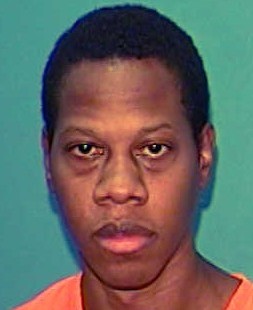 Anthony Spann
Murderer · USA · 1997
Anthony Spann was sentenced to death on June 23, 2000. Spann was indicted on mu…
1 victim
Anthony Spann
Murderer · USA · 1997
Anthony Spann was sentenced to death on June 23, 2000. Spann was indicted on mu…
1 victim
 Lena Baker
Homicide · USA · 1944
Lena Baker was born on June 8, 1901, and was executed on March 5, 1945. She was…
1 victim
Lena Baker
Homicide · USA · 1944
Lena Baker was born on June 8, 1901, and was executed on March 5, 1945. She was…
1 victim
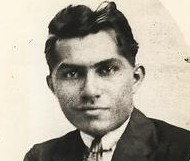 Buck Ruxton
Murderer · United Kingdom · 1935
Buck Ruxton (21 March 1899, Bombay – 12 May 1936, Manchester) was also known as…
2 victims
Buck Ruxton
Murderer · United Kingdom · 1935
Buck Ruxton (21 March 1899, Bombay – 12 May 1936, Manchester) was also known as…
2 victims
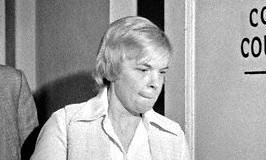 Marybeth Tinning
Murderer · USA · 1972
Marybeth Tinning (née Roe, born on September 11, 1942) was an American prisoner…
9 victims
Marybeth Tinning
Murderer · USA · 1972
Marybeth Tinning (née Roe, born on September 11, 1942) was an American prisoner…
9 victims
 Eric Robert
Murderer · USA · 2011
Eric Robert Eric Robert was sentenced to death and later executed by lethal inj…
1 victim
Eric Robert
Murderer · USA · 2011
Eric Robert Eric Robert was sentenced to death and later executed by lethal inj…
1 victim
- Gender
- male
- Country
- USA
- Location
- Missouri, USA
- Date of birth
- May 11, 1956
- Age at first offence
- 25
- Characteristics
- revenge, rape
- Victim profile
- John McBroom (fellow inmate) / Gary Wayne Dew (fellow inmate)
- Method of murder
- St abbing with homemade knife / Strangulation
- Date(s) of murder
- January 25, 1981 / March 25, 1984
- Years active
- 1981–1984
- Date of arrest
- —
- Status
-
Executed
Executed by lethal injection in Missouri on December 11, 1996
Case details
Richard Steven Zeitvogel was executed by lethal injection in Missouri on December 11, 1996.
Victim
Gary Wayne Dew was Zeitvogel’s cellmate at the Missouri State Penitentiary during the murder. Dew had been serving a seven year sentence for Burglary First Degree from St. Louis City. He received that sentence in the Missouri Department of Corrections on November 11, 1981.
Other involved person(s)
Frank Guinan was Zeitvogel’s co-defendant on a previous murder case at the Missouri State Penitentiary on January 25, 1981, and Guinan was executed at the Potosi Correctional Center on October 6, 1993 for that offense and a second death sentence he received in the murder of another inmate.
The offence
On March 25, 1984, at the Missouri State Penitentiary in Jefferson City, Missouri, between 12:00 p.m. and 1:00 p.m., Richard Zeitvogel strangled his cellmate, Gary Wayne Dew, with red double-strand wire, leaving a distinctive pattern around the victim’s neck. At 4:30 p.m., Zeitvogel called a correctional officer to his cell to report that he had strangled Dew.
Department of Corrections investigators found the murder weapon in a book belonging to Zeitvogel. The texture of the red wire matched the injury pattern around Dew’s neck. Investigators also determined that Dew had attempted to remove the wire during the struggle based on marks found on Dew’s neck.
Zeitvogel later told authorities that he strangled Dew because he wanted to receive a death sentence so that he could room with capital punishment inmate Frank Guinan on death row. At trial, the State of Missouri presented evidence that Zeitvogel strangled Dew from behind with a plastic-covered wire, then waited about three hours before activating the emergency light to summon help. Zeitvogel admitted killing Dew but attempted to show he choked Dew with a sheet in self-defense after Dew attacked him. The jury rejected Zeitvogel’s self-defense theory and convicted him of capital murder.
Investigation
A prison guard responding to a flashing emergency light over their cell found Dew dead on a mattress on the floor, and found Zeitvogel alone with the body in the locked cell. Zeitvogel told the guard, "I killed my cellie."
During Zeitvogel’s trial for murdering Dew, the State introduced certified copies of Zeitvogel’s earlier convictions for capital murder, rape, armed robbery, assault, and jail break and escape. State witnesses explained that Zeitvogel had received earlier murder and assault convictions for fatally stabbing a fellow inmate and threatening a prison guard.
Arrest and pretrial proceedings
On January 25, 1981, Zeitvogel was arrested at the Missouri State Penitentiary, Jefferson City, for capital murder and assault with intent to kill. On March 25, 1984, Zeitvogel was arrested for the murder of his cellmate at the Missouri State Penitentiary in Jefferson City.
Trial
Direct appeal and trial findings
On January 21, 1982, in the Cole County Circuit Court, Zeitvogel was found guilty and sentenced to Life (50 years without parole) for Capital Murder and 30 years for Assault with Intent to kill. These sentences were to be served concurrently; however, both sentences were to run consecutively to his other sentences from 1976.
On January 9, 1985, Zeitvogel was found guilty by a jury of Murder First Degree. The jury recommended a sentence of death. On April 15, Zeitvogel was formally sentenced to death.
During the penalty phase, the jury found the presence of three aggravating circumstances and returned a verdict recommending the death penalty. The district court denied posttrial motions and sentenced Zeitvogel to death.
Sentencing
At sentencing, Zeitvogel received a death sentence.
Appeals
Missouri Supreme Court and U.S. Supreme Court
On March 25, 1986, the Missouri Supreme Court affirmed Zeitvogel’s conviction. On October 6, 1993, Guinan was executed at the Potosi Correctional Center.
On October 6, 1985 or 1986 (as reflected in the chronology and the federal appellate materials), the United States Supreme Court denied certiorari. In the legal chronology provided: 10/6 is listed as the United States Supreme Court denial of certiorari.
Postconviction and federal habeas proceedings
On November 7, 1986, Zeitvogel filed a post-conviction motion in the Circuit Court of Cole County. On July 24, 1987, the Circuit Court of Cole County denied Zeitvogel’s post-conviction motion. On September 13, 1988, the Missouri Court of Appeals affirmed the denial of the post-conviction motion.
On May 15, 1989, the United States Supreme Court denied certiorari. On May 26, 1989, Zeitvogel filed a petition for writ of habeas corpus in the United States District Court for the Western District of Missouri. On February 18, 1994, the petition for writ of habeas corpus was denied by the U.S. District Court for the Western District of Missouri.
On February 28, 1996, the United States Court of Appeals for the Eighth Circuit affirmed the District Court’s decision to deny the motion for writ of habeas corpus. On October 21, 1996, the United States Supreme Court denied certiorari. On October 29, 1996, the Missouri State Supreme Court set December 11, 1996 as the date for Zeitvogel’s execution.
Federal appellate decision: first habeas petition
In the appeal with docket number 94-2976, the Eighth Circuit reviewed Zeitvogel’s petition for a writ of habeas corpus under 28 U.S.C. 2254 (1988) and affirmed the district court’s denial. The decision described that Zeitvogel:
- raised thirty-two grounds for relief in his federal habeas petition,
- argued that the State’s failure to disclose certain hospital and prison records violated Brady v. Maryland, and
- claimed trial counsel was ineffective for not obtaining and presenting evidence of mental deficiencies during the guilt and penalty phases.
The Eighth Circuit held that Zeitvogel failed to raise and preserve these contentions in state court as Missouri law required, and that he did not demonstrate cause for his procedural default. The court concluded the district court properly refused an evidentiary hearing and did not appoint experts or investigators to help present the claims.
The Eighth Circuit also addressed other contentions, including:
- alleged ineffective assistance based on failure to call additional inmates as witnesses for a self-defense theory,
- alleged due process violation from shackling,
- challenges to penalty-phase jury instructions,
- a claim that proportionality review of the sentence was inadequate, and concluded these contentions were either procedurally barred or meritless.
Federal appellate order: motion for authorization for a second habeas petition
Zeitvogel later applied for an order authorizing the district court to consider a second habeas petition. The Eighth Circuit denied the motion, under both the Antiterrorism and Effective Death Penalty Act of 1996 and pre-Act law. The court also denied a motion for a stay of execution and denied a motion for appointment of second habeas counsel as moot.
Federal appellate order: certificate of appealability related to Rule 60(b)
Zeitvogel applied for a certificate of appealability from the district court’s denial of his Fed.R.Civ.P. 60(b) motion for relief from the earlier denial of his first amended habeas petition. The Eighth Circuit denied the application and denied an accompanying motion for a stay of execution.
Outcome
Richard Zeitvogel was executed by lethal injection in Missouri on December 11, 1996.
Other details
Earlier criminal history and custody timeline
- 10/11 (year given as 1974): Zeitvogel was arrested for Armed Robbery and Rape in Pulaksi County, Missouri. While being held in the Phelps County jail, Zeitvogel attempted an escape.
- 05/29 (year given as 1975): Zeitvogel pleaded guilty to Escape in Phelps County, Missouri while being held on the Armed Robbery and Rape charges. He was sentenced to two years in the Missouri Department of Corrections for the escape charge.
- 05/06 (year given as 1976): Zeitvogel was convicted of Rape and Armed Robbery charges in Pulaski County. He was sentenced to 15 years for Rape and five years for Armed Robbery in the Missouri Department of Corrections to run concurrently.
- 11/11 (year given as 1981): Gary Wayne Dew was received in the Missouri Department of Corrections on November 11, 1981.
- 01/25 (year given as 1981): Zeitvogel was arrested at the Missouri State Penitentiary, Jefferson City, for Capital Murder and Assault with Intent to kill.
- 01/21 (year given as 1982): In the Cole County Circuit Court, Zeitvogel was found guilty and sentenced to Life (50 years without parole) for Capital Murder and 30 years for Assault with Intent to kill; these were served concurrently but were to run consecutively to his other sentences from 1976.
Statements and reported remarks
In his final statement, Zeitvogel said: "Keep the faith and rock on," said a spokesman for the Missouri Corrections Department.
Prison and trial-era descriptions included in the appellate materials
The appellate materials described that Zeitvogel was on death row in Missouri for murdering Gary Wayne Dew in 1984, and that Dew was found dead on a mattress on the floor while Zeitvogel was alone with the body in the locked cell after a prison guard saw an emergency light. The materials also described that Zeitvogel claimed self-defense after Dew attacked him.
Mentions of procedural posture and arguments
The Eighth Circuit decision recounted that Zeitvogel argued:
- failure to disclose hospital and prison records allegedly showing low intelligence, learning disabilities, and epilepsy caused by organic brain damage violated Brady v. Maryland,
- trial counsel was ineffective for not obtaining and presenting evidence of these mental deficiencies during the guilt and penalty phases,
- the State’s issuance of execution warrants during postconviction proceedings was cause for procedural default,
- additional inmate testimony should have been called to strengthen a self-defense claim,
- due process was violated by requiring Zeitvogel to remain shackled while in the courtroom,
- penalty-phase jury instructions improperly listed aggravating circumstances and that duplication violated the Eighth Amendment,
- proportionality review was inadequate.
The court concluded, among other holdings, that Zeitvogel failed to show cause for his procedural default and thus was not entitled to a federal evidentiary hearing on his main claims. The court also concluded the remaining claims were procedurally barred or meritless.
Spotted an error, or have more information about this case?