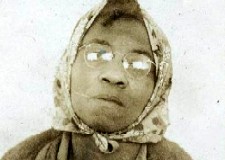
Lena Baker
Homicide Constance Fisher
Homicide · USA · 1954
Constance Fisher · 3 August 1954 — Constance Fisher drowned her three children…
6 victims
Constance Fisher
Homicide · USA · 1954
Constance Fisher · 3 August 1954 — Constance Fisher drowned her three children…
6 victims
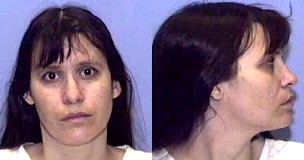 Andrea Yates
Homicide · USA · 2001
Andrea Pia Yates (born Andrea Pia Kennedy on July 2, 1964) was a former Houston…
5 victims
Andrea Yates
Homicide · USA · 2001
Andrea Pia Yates (born Andrea Pia Kennedy on July 2, 1964) was a former Houston…
5 victims
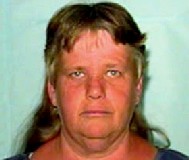 Christine Falling
Homicide · USA · 1980
Christine Falling (1980-1982) was a 17-year-old babysitter from Perry, Florida.…
5 victims
Christine Falling
Homicide · USA · 1980
Christine Falling (1980-1982) was a 17-year-old babysitter from Perry, Florida.…
5 victims
 Coleen Thompson
Homicide · USA · 2002
Coleen Thompson was a former intensive care nurse at Shady Grove Adventist Hosp…
5 victims
Coleen Thompson
Homicide · USA · 2002
Coleen Thompson was a former intensive care nurse at Shady Grove Adventist Hosp…
5 victims
 Maggie Young
Homicide · USA · 1965
Maggie Young was a despondent, mentally ill mother who had been treated for a m…
5 victims
Maggie Young
Homicide · USA · 1965
Maggie Young was a despondent, mentally ill mother who had been treated for a m…
5 victims
 Christine Paolilla
Homicide · USA · 2003
Christine Marie Paolilla was an American woman born on Long Island, New York on…
4 victims
Christine Paolilla
Homicide · USA · 2003
Christine Marie Paolilla was an American woman born on Long Island, New York on…
4 victims
 Jesse Pomeroy
Homicide · USA · 1874
Jesse Pomeroy was sentenced to death on two counts in 1876. His sentence was co…
10 victims
Jesse Pomeroy
Homicide · USA · 1874
Jesse Pomeroy was sentenced to death on two counts in 1876. His sentence was co…
10 victims
 Harry Charles Moore
Murderer · USA · 1992
Harry Charles Moore was an Oregon double murderer. Moore’s mother, a former min…
2 victims
Harry Charles Moore
Murderer · USA · 1992
Harry Charles Moore was an Oregon double murderer. Moore’s mother, a former min…
2 victims
- Gender
- female
- Country
- USA
- Location
- Cuthbert, Randolph County, Georgia, USA
- Date of birth
- June 8, 1901
- Age at first offence
- 43
- Characteristics
- alcohol, abuse, rape
- Victim profile
- Ernest Knight, 67 (her employer)
- Method of murder
- Shooting
- Date(s) of murder
- April 30, 1944
- Years active
- 1944
- Date of arrest
- Same day (surrenders)
- Status
-
Executed
Executed by electrocution at the Georgia State Prison in Reidsville on March 5, 1945
Case record: Lena Baker
Personal details
Lena Baker was born on June 8, 1901, and was executed on March 5, 1945. She was an African American maid. She worked as a maid for Ernest Knight. She was described as a mother of three. As a child, Baker and her family worked for a farmer named J. A. Cox chopping cotton, and the family was poor, including when they worked in a laundry.
Early life and background
Baker and her family worked for a farmer named J. A. Cox chopping cotton. They were not paid well and even working in a laundry, the family was poor. Baker was described as having been raised near Cuthbert, Georgia to a family of poor black sharecroppers, and worked for J. A. Cox chopping cotton.
At the age of 20, Baker and a black friend found they could make money by “entertaining gentlemen.” This came to attention of the Randolph County sheriff because their clientele were white and interracial relationships were illegal in Georgia. Baker and her black friend were arrested and spent several months in a workhouse. After release, she was ostracized by the black community, and she became an alcoholic.
The offence
In 1941, Baker was hired by Knight to care for him after a fall broke his leg. Knight was viewed as brutal and abusive in Cuthbert, Georgia. He was described as a failed farmer who ran a gristmill and as always having a pistol strapped to his chest. A relationship developed between Baker and Knight. Knight would provide Baker with alcohol in return for sex, and the whole town knew of it.
Knight’s oldest son persuaded Knight to move to Tallahassee, Florida in an effort to break up the pair, but Baker came with him. Knight’s oldest son gave Baker an ultimatum to leave. She did, but Knight followed her back to Cuthbert.
On the night of April 30, 1944, Baker went to the house of J. A. Cox, who was now the town coroner, and told Cox that she had shot Knight. Cox told Baker to go to the sheriff, while he would go to the gristmill where Baker said Knight’s body was. Baker did not go to the sheriff and instead went home. She was picked up by the sheriff later that night and was cooperative.
Baker told the sheriff that for months Knight had kept her as a virtual sex slave and that she shot him with his own pistol while trying to escape. She stated that Knight approached her house drunk and asked her to come to the mill. She did not want to, but knew better than to refuse the drunk man. She tried stalling him by asking for money to go buy some whiskey. He gave her money, and she went to the tavern but found it closed. She waited there for a while hoping Knight would leave her house. She returned but found he was still there. She was forced to accompany him to the mill, but escaped and hid in some bushes. She bought some whiskey and went to sleep at the nearby convict camp.
Baker said that on waking the next morning she decided to go to the mill and she believed this was the last place that Knight would go. However, Knight was there. She said Knight held her prisoner for several hours, including despite several hours of his absence. When he returned, he told Baker he would kill her before she would ever leave again. A struggle ensued. Baker was the only living witness and the details were described as sketchy at best. Baker managed to get hold of Knight’s pistol, which went off, hitting him in the head, instantly killing him.
A further account stated that Knight locked Baker in his gristmill for several days at a time when she attempted to extricate herself from their relationship, and kept her as his “slave woman.” Another account stated that Knight locked her in while he went to a “singing” with his son. Baker later informed Knight she was leaving. They “tussled over the pistol.” At her trial, when asked who pulled the trigger, she replied, “I don’t know.”
Arrest and police interaction
On May 1, 1944, Baker was arrested for the fatal shooting of Knight at his home. She told police that for months Knight had kept her as a virtual sex slave and that she shot him with his own pistol while trying to escape. She was cooperative when picked up later that night after speaking to J. A. Cox.
The sheriff gave Baker two days to sleep off the effects of the alcohol in her system.
Investigation and trial statements
Baker stated that Knight had imprisoned and threatened to shoot her should she attempt to leave, and that she took his gun and shot him. At her trial, she claimed Knight had held her against her will in a grist mill and had threatened to shoot her if she tried to leave. She said she grabbed Knight’s gun and shot him when he raised a metal bar to strike her.
Baker also explained that Knight was brandishing an iron bar used to secure the door to the gristmill and that she was afraid for her life.
Trial
Baker was charged with capital murder. She stood trial on August 14, 1944. The trial was presided over by Judge William “Two Gun” Worrill, who kept a pair of pistols on his judicial bench in plain view. The jury consisted of twelve white men. The jury convicted her by the end of the afternoon.
Baker had court-appointed counsel identified as W.L. Ferguson. Ferguson filed an appeal but later dropped Baker as a client. A separate description stated that her court-appointed attorney immediately resigned from the case, leaving her without counsel. Another account said that Baker’s lawyer asked for a new trial to be scheduled because “the verdict was contrary to the evidence and without evidence to support it ... and the verdict was contrary to law and the principles of justice and equity,” and that he then resigned as her lawyer.
A further account stated that Baker was not allowed to testify and that no witnesses were called to her defense. The jury delivered its guilty verdict in 20 minutes in that account.
At her trial, Baker also said: “I don’t know.”
Sentencing and clemency
After conviction, Worrill sentenced Baker to death in Georgia’s electric chair, nicknamed “Old Sparky.”
Governor Ellis Arnall granted Lena Baker a 60-day reprieve so that the Board of Pardons and Parole could review the case, but clemency was denied in January 1945. Baker was transferred to Reidsville State Prison on February 23, 1945.
Timeline
- 1941 — Baker was hired by Knight to care for him after a fall broke his leg.
- April 30, 1944 — On the night of April 30, 1944, Baker told J. A. Cox that she had shot Knight.
- May 1, 1944 — Baker was arrested for the fatal shooting of Knight at his home.
- August 14, 1944 — Baker stood trial for capital murder.
- January 1945 — Clemency was denied by the Board of Pardons and Parole.
- February 23, 1945 — Baker was transferred to Reidsville State Prison.
- March 5, 1945 — Baker was executed by electrocution at the Georgia State Prison in Reidsville.
Execution
Baker was executed by electrocution at the Georgia State Prison in Reidsville on March 5, 1945.
On entering the execution chamber, Baker sat in the electric chair calmly and called Old Sparky. She said:
- “What I done, I did in self-defense, or I would have been killed myself. Where I was I could not overcome it. God has forgiven me. I have nothing against anyone. I picked cotton for Mr. Pritchett, and he has been good to me. I am ready to go. I am one in the number. I am ready to meet my God. I have a very strong conscience.”
Another account recorded her last words as:
- “What I done, I did in self-defense. I have nothing against anyone. I'm ready to meet my God”.
A third account recorded:
- “I am ready to meet my God.”
- “What I done, I did in self-defence or I would have been killed myself.
- “God has forgiven me. I have nothing against anyone. I have nothing against anyone. I am ready to go. I am ready to meet my God.”
In one account, the prison doctor pronounced her dead after “six minutes and several shocks.” Another account described her execution as being reported with the headline, “Baker Burns.”
Burial and aftermath
Initially, Baker was buried in an unmarked grave behind Mount Vernon Baptist Church. After her pardoning, a simple head stone was placed above her grave. One account stated that since her pardoning, a simple head stone has been placed above her grave.
In the 2000s, members of Baker’s family petitioned to have a pardon granted by the Georgia Board of Pardons and Paroles, seeing the original verdict as racist. This was granted in 2005. In that decision, the Parole Board suggested that a verdict of manslaughter would have been more appropriate, which would have carried an average sentence of 15 years in prison in one account. Another account stated she was granted a full and unconditional pardon by the State of Georgia in 2005, about 60 years after her execution.
One account quoted parole board vice-chairman Garland Hunt saying:
- “We just felt that this was a situation that was unique,” he said.
- “We felt it was a good thing to do for the family.”
- “[We're] not saying she's innocent. As a matter of fact, the board does not find Lena Baker was innocent of this crime.”
A spokeswoman for Georgia Board of Pardons and Parole, Scheree Lipscomb, said:
- “was a grievous error, as this case called out for mercy”.
One account stated Baker was granted a posthumous pardon and described it as only the second in the state’s history. It contrasted with a first pardon for Leo Frank, lynched in 1915. Another account stated that the only woman executed by electrocution in Georgia.
In later years, members of Baker’s family commemorated the date of her execution at her graveside and held a Mothers Day ceremony there in 2003. Another account stated the congregation of Mount Vernon Baptist Church donated a concrete slab to mark her resting place and that relatives planned a reunion on Mothers Day, May 11.
Baker’s grandnephew Roosevelt Curry led the family’s efforts to clear her name. A quote attributed to Roosevelt Curry said:
- “Now we can all cry tears of joy,” Mr Curry, 61, told the Atlanta Journal-Constitution.
- “She had nothing and no one stood by her. It's late but it's on time. This case was passed to me. I can pass this on to my family.”
Another quote attributed to John Cole Vodicka said:
- “It's gratifying to see that this blatant instance of injustice has finally been recognised for what it was - a legal lynching”.
In 1996, author Lela Bond Phillips began investigating Baker’s story, tracking down surviving witnesses who confirmed Baker’s allegations of Knight’s abuse and determining the evidence against her supported a manslaughter conviction at best. Historians were described as saying that the lack of due process amounted to a “legal lynching.”
A book titled The Lena Baker Story by Lela Bond Phillips was published by Wings Publishers in 2001. Another film adaptation, “The Lena Baker Story,” was made in 2008.
Other details
Knight was described as a man Ernest Knight, 67. Baker was described as having been sentenced to death by an all-white, all-male jury after a trial lasting just one day in one account. Another account stated the trial lasted just one day and that the all-white, all-male jury delivered its guilty verdict in 20 minutes.
Baker’s relationship with Knight was described as having sparked animosity in the small southern town of Cuthbert during the segregation era. One account stated Knight’s son Eugene testified he had warned Baker to stay away from his father, and later testified he found the two together and said:
- “I took her and beat her until I just did leave life in her.”
Baker’s case became a local cause celebre in recent years in one account. One account mentioned she was described as the only woman executed in Georgia’s electric chair.
Another account stated that the Cuthbert Times reported the execution with the headline, “Baker Burns.” One account stated that Baker went to a solitary cell a few feet from the execution chamber shortly before execution.
A further account stated Baker was described as born in a former slave cabin about five miles southwest of Cuthbert in Randolph County, Georgia, and that she had chopped cotton, cleaned houses, and took in laundry to help support her mother and her three children. It also stated that Knight was heavy drinker and often carried a pistol strapped to his shoulder. Baker was described as having been warned by the county sheriff to stay away from Knight or that she was going to be thrown in jail.
Spotted an error, or have more information about this case?