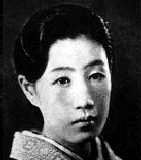
Sada Abe
Murderer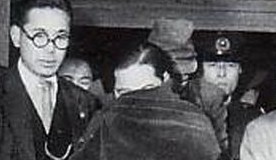 Miyuki Ishikawa
Murderer · Japan · 1944
Miyuki Ishikawa (石川 ミユキ, Ishikawa Miyuki; born 1897; date of death unknown) was…
169 victims
Miyuki Ishikawa
Murderer · Japan · 1944
Miyuki Ishikawa (石川 ミユキ, Ishikawa Miyuki; born 1897; date of death unknown) was…
169 victims
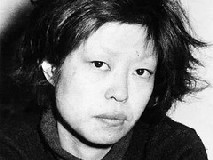 Hiroko Nagata
Murderer · Japan · 1972
Hiroko Nagata (Japanese leftist radical; also sometimes mistakenly referred to…
14 victims
Hiroko Nagata
Murderer · Japan · 1972
Hiroko Nagata (Japanese leftist radical; also sometimes mistakenly referred to…
14 victims
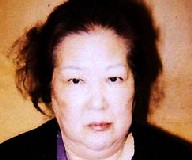 Kayoko Nakai
Murderer · Japan · 2000
Kayoko Nakai was 66 and ran a rival telephone dating club in Kobe at the time o…
4 victims
Kayoko Nakai
Murderer · Japan · 2000
Kayoko Nakai was 66 and ran a rival telephone dating club in Kobe at the time o…
4 victims
 Suzuka Hatakeyama
Murderer · Japan · 2006
Suzuka Hatakeyama was an Akita Prefecture woman who was sentenced to life in pr…
2 victims
Suzuka Hatakeyama
Murderer · Japan · 2006
Suzuka Hatakeyama was an Akita Prefecture woman who was sentenced to life in pr…
2 victims
 Zheng Yongshan
Murderer · Japan · 2006
Zheng Yongshan (鄭 永善, born 1972) also went by the name of Mie Taniguchi (谷口 充恵)…
2 victims
Zheng Yongshan
Murderer · Japan · 2006
Zheng Yongshan (鄭 永善, born 1972) also went by the name of Mie Taniguchi (谷口 充恵)…
2 victims
 Renee Kara O'Brien
Homicide · New Zealand · 2002
Renee Kara O'Brien was 14 years and nine months old when she beat Kenneth Pigot…
1 victim
Renee Kara O'Brien
Homicide · New Zealand · 2002
Renee Kara O'Brien was 14 years and nine months old when she beat Kenneth Pigot…
1 victim
 Kyriakos Papaxronis
Serial killer · Greece · 1981
Kyriakos Papaxronis (Κυριάκος Παπαχρόνης) was a serial rapist and murderer, kno…
3 victims
Kyriakos Papaxronis
Serial killer · Greece · 1981
Kyriakos Papaxronis (Κυριάκος Παπαχρόνης) was a serial rapist and murderer, kno…
3 victims
 Robert Allen Weitzel
Homicide? · USA · 1995
Robert Allen Weitzel was a psychiatrist charged in relation to the deaths of fi…
5 victims
Robert Allen Weitzel
Homicide? · USA · 1995
Robert Allen Weitzel was a psychiatrist charged in relation to the deaths of fi…
5 victims
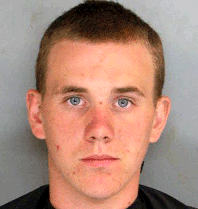 Nathaniel Dickson
Mass murderer · USA · 2008
Nathaniel Casey Dickson was 20 years old when he pleaded guilty and was sentenc…
4 victims
Nathaniel Dickson
Mass murderer · USA · 2008
Nathaniel Casey Dickson was 20 years old when he pleaded guilty and was sentenc…
4 victims
- Gender
- female
- Country
- Japan
- Location
- Tokyo, Japan
- Date of birth
- May 28, 1905
- Age at first offence
- 31
- Characteristics
- mutilation, rape
- Victim profile
- Kichizo Ishida, 42 (her lover)
- Method of murder
- Strangulation
- Date(s) of murder
- May 18, 1936
- Years active
- 1936
- Date of arrest
- 3 days after
- Status
-
Released
Sentenced to 6 years in prison for murder in the second degree and mutilation of a corpse on 21 December 1936; sentence commuted on 10 November 1940; released on 17 May 1941; died after 1970
Case overview
Sada Abe ( 阿部 定 , Abe Sada ) was a Japanese woman who erotically asphyxiated her lover, Kichizo Ishida ( 石田 吉蔵 , Ishida Kichizō ), and then cut off his penis and testicles. She carried the severed genitalia in her handbag. The case became known as the “Abe Sada Incident.”
Background
Sada Abe was the seventh of eight children of Shigeyoshi and Katsu Abe, an upper middle-class family of tatami mat makers in Tokyo’s Kanda neighborhood. Only four of the Abe children survived to adulthood, and of those Sada was the youngest.
Shigeyoshi Abe was originally from Chiba Prefecture. He had been adopted into the Abe family to help with the business, which he eventually inherited. His age was 52 at the time of Sada’s birth. Police described Shigeyoshi Abe as “an honest and upright man” who had no conspicuous vices, though some acquaintances reported him as somewhat self-centered, with a taste for extravagance.
Sada’s mother, Katsu Abe, likewise had no known legal or moral blemishes on her record.
Sada’s siblings and father behaved questionably. Her brother Shintaro was known as a womanizer and, after his marriage, ran away with his parents’ money. Her sister Teruko was known to have had several lovers.
Sada’s father sent Teruko to work in a brothel, then not an uncommon way to punish female sexual promiscuity in Japan, though he soon bought her back. Teruko’s past was not considered a hindrance to marriage for those of the Abes’ class at the time, and she soon married.
Early life
Sada Abe was born in 1905. Her mother doted on her youngest child and let her do as she wished. She encouraged Abe to take lessons in singing and playing the shamisen, activities associated with geisha and prostitutes rather than classical artistic endeavor. Geishas were considered glamorous celebrities, and Abe followed the image by skipping school for these lessons and wearing stylish make-up.
As family problems involving her siblings increased, Abe was often sent out of the house alone. She soon fell in with a group of similarly independent teenagers.
At the age of 15, during one of these outings, Abe was raped by one of her acquaintances. Although her parents defended and supported her, she became a difficult teenager.
As Abe became more irresponsible and uncontrollable, her parents sold her to a geisha house in Yokohama in 1922, hoping to give her structure. Toku Abe, Sada’s oldest sister, testified that Sada wished to become a geisha. Sada claimed that her father made her a geisha as punishment for her promiscuity.
Abe’s encounter with the geisha world proved frustrating. Becoming a true star among geisha required apprenticeship from childhood with years studying arts and music. She became a low-ranking geisha, with duties to provide sex. She worked for five years in this capacity and eventually contracted syphilis. Because syphilis required regular examinations like those for legally licensed prostitutes, Abe decided to enter that better-paying profession.
Prostitution career
Early 1930s Abe began work as a prostitute in Osaka’s Tobita brothel district and soon gained a reputation as a trouble-maker. She stole money from clients and attempted to leave the brothel several times, but she was tracked down by the organized legal prostitution system. After two years, she succeeded in escaping the licensed prostitution system and began working as a waitress.
Not satisfied with wages, she returned to prostitution as an unlicensed worker. She began working in Osaka’s unlicensed brothels in 1932.
Abe’s mother died in January 1933. Abe went to Tokyo to visit her father and her mother’s grave. She entered the prostitution market in Tokyo and became a mistress there for the first time.
When her father became seriously ill in January 1934, Abe nursed him for ten days until his death.
In October 1934 Abe was arrested in a police raid on the unlicensed brothel where she worked. Kinnosuke Kasahara, a well-connected friend of the brothel owner, arranged for the women’s release. Kasahara was attracted to Abe; finding she had no debts, he arranged an arrangement with Abe’s agreement to make her his mistress.
Kasahara set up a house for Abe on December 20, 1934, and provided her money. In his deposition to the police, Kasahara remembered:
“She was really strong, a real powerful one. Even though I am pretty jaded, she was enough to astound me. She wasn't satisfied unless we did it two, three, or four times a night. To her, it was unacceptable unless I had my hand on her private parts all night long... At first it was great, but after a couple of weeks I got a little exhausted.”
When Abe suggested Kasahara leave his wife to marry her, he refused. Abe asked him to let her take a lover, which he also refused. After that, their relationship ended, and to escape him Abe left for Nagoya.
Kasahara ended his testimony with an angry remark about Abe:
“She is a slut and a whore. And as what she has done makes clear, she is a woman whom men should fear.”
Abe remembered Kasahara in less flattering terms:
“He didn't love me and treated me like an animal. He was the kind of scum who would then plead with me when I said that we should break up.”
In Nagoya in 1935, intending again to leave the sex industry, Abe worked as a maid at a restaurant. She became romantically involved with a customer at the restaurant, Goro Omiya, a professor and banker who aspired to become a member of the Diet of Japan. Knowing the restaurant would not tolerate a maid having sexual relations with clients, and being bored with Nagoya, she returned to Tokyo in June.
Omiya met Abe in Tokyo. Finding she had contracted syphilis, he paid for her stay in a hot springs resort in Kusatsu from November until January 1936.
Acquaintance with Kichizo Ishida
In January, Omiya suggested Abe could become financially independent by opening a small restaurant and recommended that she start work in an apprentice position in such a business.
Back in Tokyo, Abe began work as an apprentice at the Yoshidaya on February 1, 1936. The owner of the establishment was Kichizo Ishida, 42 at the time. Ishida had worked his way up in business, starting as an apprentice at an eel restaurant. He opened the Yoshidaya in Tokyo’s Nakano neighborhood in 1920.
When Abe joined the restaurant, Ishida was known as a womanizer who did little running; the restaurant was managed mostly by his wife. Not long after she began work, Ishida began making advances towards Abe. Abe had not been satisfied sexually by Omiya; she gave in to Ishida.
In mid-April Ishida and Abe initiated their sexual relationship in the restaurant, accompanied by a romantic ballad sung by one of the restaurant’s geishas.
The relationship and events leading to the death
On April 23, 1936 Abe and Ishida met for a pre-arranged sexual encounter at a teahouse, or machiai, in the Shibuya neighborhood. They planned a short “fling” and remained in bed for four days.
On the night of April 27, 1936, they moved to another teahouse in the distant neighborhood of Futako Tamagawa and continued to drink and have sex, sometimes with the accompaniment of a geisha’s singing. They continued even as maids entered the room to serve sake.
They then moved their marathon love-making bout to the Ogu neighborhood. Ishida did not return to the restaurant until the morning of May 8, 1936.
After separation, Abe became agitated and began drinking excessively. She claimed that with Ishida she knew love for the first time in her life and that the thought of Ishida back with his wife made her jealous. Over a week before the murder, Abe began considering the act.
On May 9, 1936, she attended a play in which a geisha attacks her lover with a large knife. After seeing this, Abe decided to threaten Ishida with a knife at their next meeting.
On May 11, 1936 Abe pawned some of her clothing and used the money to buy some sushi and a kitchen knife. Abe later described meeting Ishida that night:
“I pulled the kitchen knife out of my bag and threatened him as had been done in the play I had seen, saying, 'Kichi, you wore that kimono just to please one of your favorite customers. You bastard, I'll kill you for that.' Ishida was startled and drew away a little, but he seemed delighted with it all...”
The killing
Ishida and Abe returned to Ogu, where they remained until Ishida’s death.
During their love-making, Abe put the knife to the base of Ishida’s penis and said she would make sure he would never play around with another woman. Ishida laughed at this.
Two nights into the sex bout, Abe began choking Ishida. Ishida told her to continue, saying it increased his pleasure. She had him do it to her as well.
On the evening of May 16, 1936, Abe used her obi sash to cut off Ishida’s breathing during orgasm, and they both enjoyed it. They repeated this for two more hours. Once Abe stopped the strangulation, Ishida’s face became distorted and would not return to its normal appearance.
Ishida took 30 tablets of a sedative called Calmotin to try to soothe his pain. According to Abe, as Ishida started to doze, he told her:
“You'll put the cord around my neck and squeeze it again while I'm sleeping, won't you... If you start to strangle me, don't stop, because it is so painful afterward.”
Abe commented that she wondered if he had wanted her to kill him, but on reflection decided he must have been joking.
About 2 a.m. on the morning of May 18, 1936, as Ishida was asleep, Abe wrapped her sash twice around his neck and strangled him to death. She later told police:
“After I had killed Ishida I felt totally at ease, as though a heavy burden had been lifted from my shoulders, and I felt a sense of clarity.”
After lying with Ishida’s body for a few hours, Abe severed his genitalia with the kitchen knife, wrapped them in a magazine cover, and kept them until her arrest three days later.
With the blood she wrote Sada, Kichi Futari-kiri (“Sada, Kichi together”) on Ishida’s left thigh and on a bed sheet. She carved 定 (“Sada”, the character for her name) into his left arm.
After putting on Ishida’s underwear, she left the inn at about 8 a.m., telling the staff not to disturb Ishida.
When asked why she had severed Ishida’s genitalia, Abe replied:
“Because I couldn't take his head or body with me. I wanted to take the part of him that brought back to me the most vivid memories.”
After the killing and arrest
After leaving the inn, Abe met Goro Omiya and repeatedly apologized to him. Omiya was unaware of the murder and assumed she apologized for having taken another lover. Abe’s apologies were for the damage to his political career that she knew his association with her would cause.
On May 19, 1936, newspapers picked up the story. Omiya’s career was ruined, and Abe’s life was under intense public scrutiny from that point onward.
The story became a national sensation, and the ensuing frenzy over her search was called “Abe Sada panic.” Police received reports of sightings of Abe from various cities. One false sighting nearly caused a stampede in the Ginza, resulting in a large traffic jam.
In a reference to the recent failed coup in Tokyo, the Ni Ni-Roku Incident (“2-26” or “February 26”), the crime was satirically dubbed the “Go Ichi-Hachi” Incident (“5-18” or “May 18”).
On May 19, 1936, Abe went shopping and saw a movie. She stayed in an inn in Shinagawa on May 20, where she had a massage and drank three bottles of beer. She spent the day writing farewell letters to Omiya, a friend, and Ishida.
Abe planned to commit suicide one week after the murder and practiced necrophilia. She said:
“I felt attached to Ishida's penis and thought that only after taking leave from it quietly could I then die. I unwrapped the paper holding them and gazed at his penis and scrotum. I put his penis in my mouth and even tried to insert it inside me... It didn't work however though I kept trying and trying. Then, I decided that I would flee to Osaka, staying with Ishida's penis all the while. In the end, I would jump from a cliff on Mount Ikoma while holding on to his penis.”
At 4:00 in the afternoon, police detectives came to her room suspicious of the alias under which Abe had registered. She told them:
“Don't be so formal,” she told them, “You're looking for Sada Abe, right? Well that's me. I am Sada Abe.”
When police were not convinced, she displayed Ishida’s genitalia as proof. Abe was arrested and interrogated over eight sessions.
The interrogating officer was struck by Abe’s demeanor when asked why she had killed Ishida. The officer was described as noticing that “Immediately she became excited and her eyes sparkled in a strange way.” Abe’s answer was:
“I loved him so much, I wanted him all to myself. But since we were not husband and wife, as long as he lived he could be embraced by other women. I knew that if I killed him no other woman could ever touch him again, so I killed him.....”
William Johnston suggested that the nation focused on that answer, and Mark Schreiber placed the incident in the context of the Japanese media being preoccupied with extreme political and military troubles, including the Ni Ni Roku incident and a looming full-scale war in China. The case also fit the ero-guro-nansensu (“erotic-grotesque-nonsense”) style popular at the time, and the “Sada Abe Incident” represented that genre for years.
Rumors circulated that Ishida’s penis was of extraordinary size. The police officer who interrogated Abe denied this, stating:
“Ishida's was just average. [Abe] told me, 'Size doesn't make a man in bed. Technique and his desire to please me were what I liked about Ishida.'”
After her arrest, Ishida’s penis and testicles were moved to Tokyo University Medical School’s pathology museum. They were put on public display soon after the end of World War II, but later disappeared.
Trial
The first day of Abe’s trial was November 25, 1936, and by 5 a.m. crowds were already gathering to attend. The judge presiding over the trial admitted to being sexually aroused by some of the details involved but ensured the trial was held with utmost seriousness.
Before receiving sentencing, Abe’s statement began with regret about being misunderstood:
“The thing I regret most about this incident is that I have come to be misunderstood as some kind of sexual pervert... There had never been a man in my life like Ishida. There were men I liked, and with whom I slept without accepting money, but none made me feel the way I did toward him.”
Abe was convicted on December 21, 1936.
Sentencing
On December 21, 1936 Abe was convicted of murder in the second degree and mutilation of a corpse. The prosecution demanded ten years. Abe claimed that she desired the death penalty, but she was sentenced to six years in prison.
She was confined in Tochigi women’s penitentiary, where she was prisoner No. 11.
Her sentence was commuted on November 10, 1940, on the occasion of the 2,600th anniversary celebrations of the mythical founding of Japan, when Emperor Jimmu came to the throne.
Abe was released exactly five years after the murder on May 17, 1941.
Appeals
Outcome
Abe’s case remained a national sensation. After her release, she assumed an alias. She became the mistress of a “serious man” referred to in her memoirs as “Y,” and moved first to Ibaraki Prefecture and then to Saitama Prefecture. When her true identity became known to Y’s friends and family, she broke off their relationship.
A “3-S” policy (“sports, screen and sex”) encouraged a shift away from strict pre-war censorship of materials labeled obscene or immoral and helped enable a change in the tone of writing about her.
In 1937 The Psychological Diagnosis of Abe Sada depicted her as an example of the dangers of unbridled female sexuality and as a threat to the patriarchal system. In the postwar era she was treated as a critic of totalitarianism and a symbol of freedom from oppressive political ideologies.
A June 1949 article noted that she had recently tried to clear her name after it had been used in a “mountain” of erotic books.
In 1946 the writer Ango Sakaguchi interviewed Abe and called her a “tender, warm figure of salvation for future generations.”
In 1947 The Erotic Confessions of Abe Sada became a national best-seller, with over 100,000 copies sold. The book was in the form of an interview with Abe but was based on police interrogation records. Abe sued the author, Ichiro Kimura, for libel and defamation of character, and the result was not known but assumed settled out of court. Abe wrote her own autobiography, Memoirs of Abe Sada, stressing her love for Ishida.
A January 1948 issue of True Story ( 実話 , Jitsuwa ) featured previously unpublished photos of the incident under the headline “Ero-guro of the Century! First Public Release. Pictorial of the Abe Sada Incident.”
In June 1949 Monthly Reader called her a “Heroine of That Time,” describing her as following her own desires in a time of “false morality” and oppression.
Abe capitalized on notoriety by sitting for an interview in a popular magazine and appearing for several years in a traveling stage production called Showa Ichidai Onna ( A Woman of the Showa Period ).
In 1952 Abe began working at the Hoshikikusui, a working-class pub in Inari-cho, downtown Tokyo. She lived a low-profile life in Tokyo’s Shitaya neighborhood for the next 20 years. Her neighborhood restaurant association gave her a “model employee” award.
During the 1960s film-critic Donald Richie visited the Hoshikikusui more than once. Richie described her entrance into a group of drinkers in Japanese Portraits: she descended a long staircase and fixed a haughty gaze on individuals. The men responded by putting hands over their crotches and shouting things like “Hide the knives!” and “I'm afraid to go and pee!” She slapped the banister in anger, stared the crowd into silence, and then continued her entrance, chatting and pouring drinks. Richie commented:
“...she had actually choked a man to death and then cut off his member. There was a consequent frisson when Sada Abe slapped your back.”
In 1969 Abe appeared in the “Sada Abe Incident” section of director Teruo Ishii’s dramatized documentary History of Bizarre Crimes by Women in the Meiji Taisho and Showa Eras ( 明治大正昭和 猟奇女犯罪史 , Meiji Taisho Showa Ryoki Onna Hanzaishi ). The last known photograph of Abe was taken in August of that year. She disappeared from the public eye for good in 1970. Nothing else was known about her life after that, and her death date was not known.
Other biographies and cultural depictions included a 1983 film Sexy Doll: Abe Sada Sansei. In 1998 a 438-page biography of Abe was published in Japan. William Johnston’s Geisha, Harlot, Strangler, Star: A Woman, Sex, and Morality in Modern Japan was published in 2005. Japanese Noise musician Merzbow adopted the alias Abe Sada for an early musical project and released one record under that name: the 1994 7" Original Body Kingdom/Gala Abe Sada 1936.
In March 2007 a four bass noise band from Perth, Western Australia named Abe Sada won a Contemporary Music Grant from the Australian Department of Culture and the Arts to tour Japan in June and July 2007.
The Abe Sada Incident (crime narrative)
On May 18, 1936, Sada Abe strangled her lover, Kichizo Ishida, to death. After laying with the body for several hours, she severed his genitals with a kitchen knife. She wrapped them in a magazine cover and used his blood to write Sada, Kichi Futari-kiri (“Sada, Kichi together”) on his left thigh and on a bed sheet. She carved her name on his left arm, got dressed, and walked out of the room in the Tokyo inn where they had been staying.
Sada instructed the staff not to disturb Ishida and left the inn. Shortly afterward, she went to see politically prominent former lover Goro Amiya (Omiya in other parts of the record) and apologized to him repeatedly. He had no idea what she was talking about but she knew that his career would be ruined by adverse publicity due to his association with her. After her capture, news was reported nationwide and even announced in Japan’s National Diet.
Ishida’s severed genitals, still wrapped in the magazine cover, were found in her handbag.
Other details
Personal relationships and later life accounts
Abe assumed an alias after prison. She lived under an alias and worked under the name Yoshii Masako as a maid. She was fired when her employers learned her true identity. A “serious man” then asked her to become his mistress; the relationship ended after his family learned her true identity. Wartime rationing forced her to support herself at times, and she lived with her sister and brother-in-law for a period.
Abe sued Ichiro Kimura for libel and defamation of character over a scandalous book based on supposed interviews. The result was not known but assumed settled out of court.
After years of semi-anonymity and work in pubs and restaurants, she dropped out of sight. Last seen in 1970, there were occasional rumors of her committing suicide or entering a convent, but nothing was confirmed, and there was no known death date.
Cultural legacy
The incident continued to generate public interest decades later. Documentary in which Abe appeared shortly before she disappeared from public view existed. At least three successful films had been made based on the story. The 1976 erotic classic The Realm of the Senses was referenced as being banned or censored in countries around the world due to explicit sex scenes and a gruesome ending.
The film In the Realm of the Senses was planned in the mid 1970s, and director Nagisa Oshima apparently sought out Abe and, after a long search, found her with her hair shorn in a Kansai nunnery.
Quotations included in the record
Abe described Ishida as:
“It is hard to say exactly what was so good about Ishida. But it was impossible to say anything bad about his looks, his attitude, his skill as a lover, the way he expressed his feelings. I had never met such a sexy man.”
Kasahara testified:
Kasahara said:
Abe said:
Abe described her earlier threat:
Ishida told her:
Abe told police:
When asked why she had severed genitalia:
In interrogation about why she killed Ishida:
Abe described necrophilia and suicide planning:
Abe’s statement before sentencing began:
One note in the record described Richie’s comment:
Spotted an error, or have more information about this case?