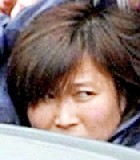
Zheng Yongshan
Murderer Kayoko Nakai
Murderer · Japan · 2000
Kayoko Nakai was 66 and ran a rival telephone dating club in Kobe at the time o…
4 victims
Kayoko Nakai
Murderer · Japan · 2000
Kayoko Nakai was 66 and ran a rival telephone dating club in Kobe at the time o…
4 victims
 Suzuka Hatakeyama
Murderer · Japan · 2006
Suzuka Hatakeyama was an Akita Prefecture woman who was sentenced to life in pr…
2 victims
Suzuka Hatakeyama
Murderer · Japan · 2006
Suzuka Hatakeyama was an Akita Prefecture woman who was sentenced to life in pr…
2 victims
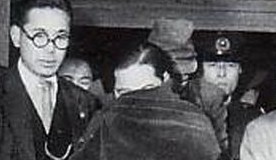 Miyuki Ishikawa
Murderer · Japan · 1944
Miyuki Ishikawa (石川 ミユキ, Ishikawa Miyuki; born 1897; date of death unknown) was…
169 victims
Miyuki Ishikawa
Murderer · Japan · 1944
Miyuki Ishikawa (石川 ミユキ, Ishikawa Miyuki; born 1897; date of death unknown) was…
169 victims
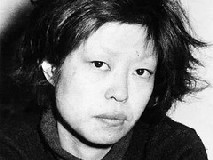 Hiroko Nagata
Murderer · Japan · 1972
Hiroko Nagata (Japanese leftist radical; also sometimes mistakenly referred to…
14 victims
Hiroko Nagata
Murderer · Japan · 1972
Hiroko Nagata (Japanese leftist radical; also sometimes mistakenly referred to…
14 victims
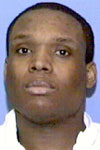 Lamont Reese
Murderer · USA · 1999
Lamont D. “Mont” Reese was a 28-year-old black male. He was scheduled to be exe…
3 victims
Lamont Reese
Murderer · USA · 1999
Lamont D. “Mont” Reese was a 28-year-old black male. He was scheduled to be exe…
3 victims
 Michael James Hayward
Murderer · USA · 1994
Michael James Hayward was sentenced to death in 1996. Hayward was involved in c…
1 victim
Michael James Hayward
Murderer · USA · 1994
Michael James Hayward was sentenced to death in 1996. Hayward was involved in c…
1 victim
 Larry Ralston
Serial killer · USA · 1975
Larry Ralston was convicted of the murders of four young women in the 1970s and…
5 victims
Larry Ralston
Serial killer · USA · 1975
Larry Ralston was convicted of the murders of four young women in the 1970s and…
5 victims
 Eugen Weidmann
Serial killer · France · 1937
Eugen Weidmann was executed by guillotine in Versailles, outside the prison Sai…
6 victims
Eugen Weidmann
Serial killer · France · 1937
Eugen Weidmann was executed by guillotine in Versailles, outside the prison Sai…
6 victims
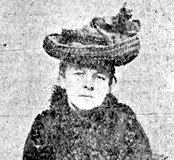 Emily Swann
Murderer · United Kingdom · 1903
Emily Swann (42-year-old mother of 11 children; defendant; convicted of murderi…
1 victim
Emily Swann
Murderer · United Kingdom · 1903
Emily Swann (42-year-old mother of 11 children; defendant; convicted of murderi…
1 victim
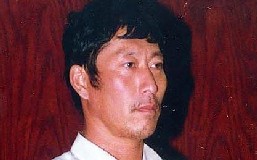 Bai Baoshan
Serial killer · China · 1996
Bai Baoshan was executed by shot in the head on May 6, 1998. · October 16, 1997…
14 victims
Bai Baoshan
Serial killer · China · 1996
Bai Baoshan was executed by shot in the head on May 6, 1998. · October 16, 1997…
14 victims
- Gender
- female
- Country
- Japan
- Location
- Nagahama, Shiga Prefecture, Japan
- Date of birth
- 1972
- Age at first offence
- 34
- Characteristics
- convicted rapist, mentally ill
- Victim profile
- Wakana Taketomo and Jin Sano, both age 5
- Method of murder
- Stabbing with a sashimi knife
- Date(s) of murder
- February 17, 2006
- Years active
- 2006
- Date of arrest
- Same day
- Status
-
Life imprisonment
Sentenced to life imprisonment on October 16, 2007, after she was diagnosed with schizophrenia; the Osaka High Court upheld the life prison sentence (with appeals from Zheng Yongshan and prosecutors) and the Otsu District Court previously found her in a state of diminished capacity at the time of the crime
Case record: Zheng Yongshan
Background
Zheng Yongshan (鄭 永善, born 1972) also went by the name of Mie Taniguchi (谷口 充恵). She was a Chinese immigrant who lived near Tokyo, Japan.
She moved to Japan in 2004 and married a Japanese man. She came to Japan in 1999 to marry a Japanese man.
The offence
On February 17, 2006, Zheng was supposed to drive her child and two of her child’s classmates to school as part of a carpool arrangement.
She stabbed the two classmates in the stomach and back with a 20-centimeter thin fish-cutting blade.
- A girl, Wakana Taketomo, was stabbed 19 times. She was five years old.
- A boy, Jin Sano, was stabbed 13 times. He was five years old.
After the stabbing, Zheng dumped the bodies in Nagahama, Shiga Prefecture, a small town 300 kilometers southwest of Tokyo.
After dumping the bodies, Zheng parked the car 56 kilometers away from the crime scene. She still had the knife used in the killings in her possession.
Investigation
A passer-by discovered the body of Taketomo on a rural road.
Sano’s body was recovered in an irrigation stream.
Taketomo was declared dead at 9:45am shortly after she was taken to the hospital. Sano died around noon at the same hospital.
Zheng said to investigators that her daughter had been bullied by the victims, but the judge dismissed that claim as groundless.
Zheng also said: “I took a sashimi knife and stabbed them in the car.”
Zheng said: “She has not yet talked about what motivated her to kill the children,” as described by a police officer.
A neighbor recalled that Taniguchi would complain she could not get along with the mothers of her daughter’s classmates.
Arrest
After the killing, police found Zheng and her own child in a parked car 56km away from the crime site.
Police found that she had a knife with blood on it.
Trial
Zheng was convicted of fatally stabbing Wakana Taketomo and Jin Sano.
She pleaded not guilty when her trial opened Feb. 2.
Zheng said: “I stabbed sand dolls, not humans,” when her trial opened.
On Sept. 11, Zheng offered an apology, saying during questioning in court: “I regret (what happened). I'm sorry.”
Chiefly at issue during the trial was her mental state.
Prosecutors demanded death, arguing that the crimes were deliberate and that she was of sound mind, considering that she chose a sharp kitchen knife for the stabbings and drove the children to a rarely used agricultural path.
Zheng’s counsel called for acquittal or punishment lighter than the death penalty, arguing she was either mentally incompetent or only partly competent at the time of the crimes.
A mental exam had been conducted at the request of her lawyers. The results, adopted by the court as evidence at the end of August, found that Zheng suffered from schizophrenia and was “in a state of diminished responsibility.”
The court determined that Zheng had “a strong intent to kill” the two children as she stabbed deep into their backs and chests numerous times.
Judge Hidenori Nagai of the Otsu District court said: “One can only shudder at how the defendant treated people's lives so lightly,”.
Prosecutors appealed the results and asked the court to conduct another exam, but the demand was rejected.
Sentencing
The Otsu District Court found Zheng was in a state of diminished capacity at the time of the crime and gave the lighter punishment.
On October 16, 2007, Zheng was sentenced to life imprisonment.
Judge Hidenori Nagai said Zheng was “in a state of diminished responsibility” at the time of the crime.
Appeals
The Osaka High Court upheld on Friday a life prison sentence given to Zheng for stabbing two children to death while driving them to kindergarten with her own daughter in the lakeside city of Nagahama, Shiga Prefecture, in 2006.
The judge, Yasuhiro Morioka, turned down appeals both from defendant Zheng Yongshan and prosecutors against a lower court decision that rejected prosecutors’ demand for the death penalty and instead sentenced her to life in prison.
Prosecutors had demanded the death sentence, but the lower court rejected that and imposed life in prison.
Zheng’s lawyers appealed to a higher court, saying the punishment was too severe.
Outcome
Zheng’s life prison sentence was upheld by the Osaka High Court.
Other details
Zheng and the victims’ parents made car-pool arrangements.
After the killing, the children’s red and pink schoolbags were dumped away from their bodies in the town of Nagahama, as shown in TV footage.
Zheng was quoted as being 34 at the time of the incident, and she was described as 35-year-old in another report and 37 in an Osaka High Court appeal report.
A passer-by discovered the body of Taketomo on a rural road; Sano’s body was recovered in an irrigation stream.
A police officer said: “She has not yet talked about what motivated her to kill the children,”.
A quote from the judge at sentencing was “One can only shudder at how the defendant treated people's lives so lightly,”.
In October 2007, the Otsu District Court found Zheng was in a state of diminished capacity at the time of the crime and gave her the lighter punishment.
The Otsu District court previously rejected prosecutors’ demand for the death penalty and instead sentenced her to life in prison.


Spotted an error, or have more information about this case?