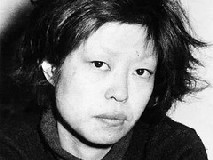
Hiroko Nagata
Murderer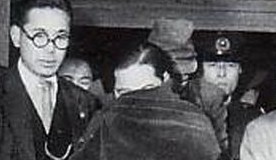 Miyuki Ishikawa
Murderer · Japan · 1944
Miyuki Ishikawa (石川 ミユキ, Ishikawa Miyuki; born 1897; date of death unknown) was…
169 victims
Miyuki Ishikawa
Murderer · Japan · 1944
Miyuki Ishikawa (石川 ミユキ, Ishikawa Miyuki; born 1897; date of death unknown) was…
169 victims
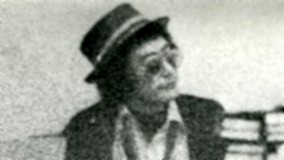 Akiyoshi Umekawa
Murderer · Japan · 1963
Akiyoshi Umekawa ( 梅川 昭美 , Umekawa Akiyoshi , March 1, 1948 - January 28, 1979)…
5 victims
Akiyoshi Umekawa
Murderer · Japan · 1963
Akiyoshi Umekawa ( 梅川 昭美 , Umekawa Akiyoshi , March 1, 1948 - January 28, 1979)…
5 victims
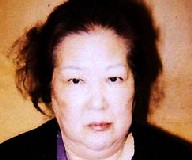 Kayoko Nakai
Murderer · Japan · 2000
Kayoko Nakai was 66 and ran a rival telephone dating club in Kobe at the time o…
4 victims
Kayoko Nakai
Murderer · Japan · 2000
Kayoko Nakai was 66 and ran a rival telephone dating club in Kobe at the time o…
4 victims
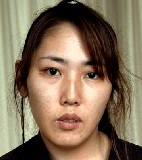 Suzuka Hatakeyama
Murderer · Japan · 2006
Suzuka Hatakeyama was an Akita Prefecture woman who was sentenced to life in pr…
2 victims
Suzuka Hatakeyama
Murderer · Japan · 2006
Suzuka Hatakeyama was an Akita Prefecture woman who was sentenced to life in pr…
2 victims
 Zheng Yongshan
Murderer · Japan · 2006
Zheng Yongshan (鄭 永善, born 1972) also went by the name of Mie Taniguchi (谷口 充恵)…
2 victims
Zheng Yongshan
Murderer · Japan · 2006
Zheng Yongshan (鄭 永善, born 1972) also went by the name of Mie Taniguchi (谷口 充恵)…
2 victims
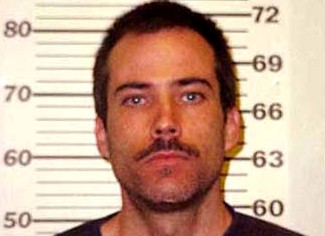 Eric Rudolph
Murderer · USA · 1996
Eric Robert Rudolph (born September 19, 1966), also known as the “Olympic Park…
2 victims
Eric Rudolph
Murderer · USA · 1996
Eric Robert Rudolph (born September 19, 1966), also known as the “Olympic Park…
2 victims
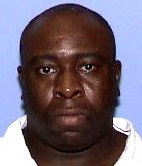 Gregory Ruseau
Murderer · USA · 2001
Gregory Russeau (Gregory Lynn Russeau, “Gregory Russeau, Appellant”) was receiv…
1 victim
Gregory Ruseau
Murderer · USA · 2001
Gregory Russeau (Gregory Lynn Russeau, “Gregory Russeau, Appellant”) was receiv…
1 victim
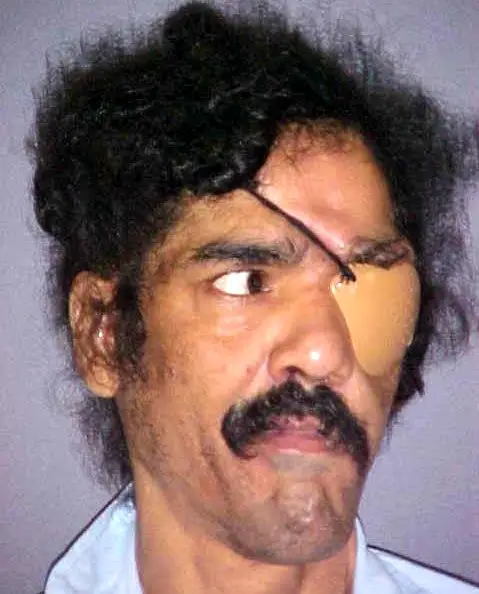 Garry Thomas Allen
Murderer · USA · 1986
Garry Thomas Allen was convicted in Oklahoma County of murder in the first degr…
1 victim
Garry Thomas Allen
Murderer · USA · 1986
Garry Thomas Allen was convicted in Oklahoma County of murder in the first degr…
1 victim
 Ernest Martin
Murderer · USA · 1983
Ernest Martin was convicted of the aggravated murder of Robert Robinson during…
1 victim
Ernest Martin
Murderer · USA · 1983
Ernest Martin was convicted of the aggravated murder of Robert Robinson during…
1 victim
 Christopher Lee Simmons
Homicide · USA · 1993
Christopher Lee Simmons was 17 years old at the time of his arrest for the Sept…
1 victim
Christopher Lee Simmons
Homicide · USA · 1993
Christopher Lee Simmons was 17 years old at the time of his arrest for the Sept…
1 victim
 Luis Ramirez
Murderer · USA · 1998
Luis Ramirez was a Hispanic male executed by lethal injection in Texas on Octob…
1 victim
Luis Ramirez
Murderer · USA · 1998
Luis Ramirez was a Hispanic male executed by lethal injection in Texas on Octob…
1 victim
- Gender
- female
- Country
- Japan
- Location
- Gunma prefecture, Japan
- Date of birth
- February 8, 1945
- Age at first offence
- 27
- Characteristics
- history of mental illness
- Victim profile
- Fellow members of the United Red Army (URA)
- Method of murder
- By beatings or by forced exposure to frigid winter air temperatures
- Date(s) of murder
- February 1972
- Years active
- 1972
- Date of arrest
- February 16, 1972
- Status
-
Sentenced to death
Sentenced to death in the Tokyo District Court on June 18, 1982; died from brain cancer on February 5, 2011 at the Tokyo Detention House.
Case identification
Hiroko Nagata (Japanese leftist radical; also sometimes mistakenly referred to as Yōko Nagata) was born on February 8, 1945, and died on February 5, 2011. She was convicted of murder and sentenced to death in Japan.
Background
Nagata was born in Tokyo. After graduation from Chofu Gakuen High School, she entered Kyoritsu College of Pharmacy to receive training to be a pharmacist. Kyoritsu College of Pharmacy later became defunct in 2008 and merged into Keio University.
During her time in college, Nagata became involved full-time in left-wing politics and eventually became vice-chairman of the United Red Army. She was described as having a “hysterical rage” when excited, usually over political issues.
Nagata was described as physically unattractive. She was infertile from Basedow syndrome, using the standard of medicine of that time. She was described as being particularly harsh with other female members.
The offence
Nagata was convicted of murdering, or participating in the murder, of fellow members of the United Red Army during a group purge in Gunma prefecture, Japan in February 1972.
During the purge, Nagata, acting as vice-chairman of the United Red Army, directed the killing of 14 members of the group by beatings or by forced exposure to frigid winter air temperatures. A URA non-member who was present during the purge was also killed.
Nagata especially targeted group members who, in her opinion, “took too much interest in relations with women and did not devote enough ardour to the revolution.”
During the purge:
- Nagata and Tsuneo Mori directed the beating deaths of eight members and one non-member who happened to be present.
- Six other members were tied to trees outside and subsequently froze to death in the extremely cold weather.
- A few were killed for “attempting to escape.”
- One member was killed for asking for some tissue paper while inside his sleeping bag; Nagata apparently construed the act as having a sexual significance.
Investigation and police action
Japan’s national police agency cracked down on leftist student groups. After a series of incidents in which leftist student groups attacked and injured or killed law enforcement officials as well as the general public, police raided hideouts and arrested dozens in 1971 and 1972.
Attempting to escape from the police, a core group of radicals from the United Red Army, including Nagata, retreated to a compound in the mountains of Gunma Prefecture during the winter of 1972.
In the second week of February 1972 at the compound, URA’s chairman Tsuneo Mori and Nagata initiated a violent purge of the group’s members.
Five others, armed with rifles and shotguns, managed to escape. They fled on foot through the mountains towards Karuizawa in nearby Nagano prefecture and eventually took refuge in a mountain guest lodge, initiating the Asama-Sansō incident.
Arrest
On February 16, 1972, police arrested Mori, Nagata, and six other URA members at the compound or at a nearby village.
Trial
Hiroko Nagata was sentenced to death in the Tokyo District Court on June 18, 1982.
On September 26, 1986, the Tokyo High Court upheld her death sentence.
On February 19, 1993, the Supreme Court of Japan upheld her death sentence.
Nagata submitted a plea for a retrial, which was declined by the courts on November 28, 2006.
Sentencing and illness
While awaiting execution, Nagata died from brain cancer on 5 February 2011 at the Tokyo Detention House.
During her imprisonment, Nagata wrote several books and attracted the attention of a support group. Nagata’s supporters reported that she had suffered from declining health, including a brain tumor, for several years which had gone untreated.
Nagata underwent surgery for a brain tumor in 1984. She collapsed from brain atrophy in 2006 and was transferred to a medical prison in Hachioji. She returned to the Tokyo Detention House in 2007 but was bedridden.
On October 11, 2008, it was revealed that Nagata had fallen into a critical condition due to the tumor, so her family was called for visitation to the Tokyo Detention Center.
Outcome
Hiroko Nagata died on February 5, 2011.
Other details
Nagata was described as sometimes mistakenly referred to as Yōko Nagata.
A separate article included additional quotations and discussion. Mark Schreiber, author of the 1996 non-fiction book Shocking Crimes of Postwar Japan, said:
“Hiroko Nagata’s punishment for her Red Army activities — the most extreme of which was committing or instigating the killings of a dozen of her own organization’s members — was nearly 40 years of legal purgatory, in a solitary cell on death row, in a country that last executed a female in 1965,”
Andrew Horvat, Japan Expert and former Japan Representative of the Asia Foundation, said:
“I think one reason why the authorities have been disinclined to consider amnesty to Nagata and her colleagues is that for several decades the Japanese Red Army engaged in guerrilla attacks, hijackings and other terrorist acts on five continents, creating a huge international embarrassment for Japan.”
Andrew Horvat also said:
“Not surprisingly media portrayals of Nagata were uniformly negative,”
And:
“While she is described often as going into a ‘hysterical rage’ when excited, there were other members of the group who probably acted no better or worse.”
Andrew Horvat is quoted discussing “hysterical rage” and media portrayals.
Harumi Setouchi, a Buddhist nun and novelist who exchanged letters with Nagata, said:
“Killing fellow members like that was wrong no matter what. In 1911, anarchist Sugako Kanno (whose biography she wrote) was hanged after having been found guilty of conspiring to assassinate Emperor Meiji. “
And:
“All they wanted was to make the country and the world a better place. Nagata and Kanno had acted not out of greed. They had passion for their ideal world. I feel sympathetic towards people like them.”
Setouchi also called Nagata courageous for fighting her battle with a cancerous tumor.
The article stated that Takeda Guntaro, who ran a bar in Ikebukuro, said:
“Back then, it didn’t matter what you believed just as long as you believed it absolutely.”
The article included a quotation attributed to Atsuyuki Sassa, a former elite police officer who led the siege of the mountain lodge in 1972. Sassa said, to Jiji Press:
“She criticized Japan’s justice system for keeping her alive for nearly four decades after her crimes.”
Sassa also said:
“Death row inmates with ideological motives are usually kept alive in Japan, where the justice minister must order executions individually.”
And:
“So much tax money was spent on Nagata, who received operations and kept alive,” he said.
And:
“No one thinks about the police officers who were killed in the line of duty.”
The article also stated that Nagata was bedridden for the last few years of her life and died of multiple organ failure.

Spotted an error, or have more information about this case?