Khalil Sumpter
Homicide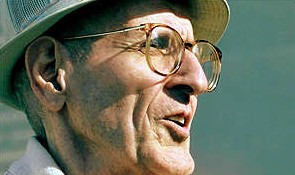 Jack Kevorkian
Homicide · USA · 1990
Jack Kevorkian (born May 26, 1928) was a controversial American pathologist. He…
130 victims
Jack Kevorkian
Homicide · USA · 1990
Jack Kevorkian (born May 26, 1928) was a controversial American pathologist. He…
130 victims
 David Koresh
Homicide · USA · 1993
David Koresh (born Vernon Wayne Howell; August 17, 1959 – April 19, 1993) led t…
79 victims
David Koresh
Homicide · USA · 1993
David Koresh (born Vernon Wayne Howell; August 17, 1959 – April 19, 1993) led t…
79 victims
 Todd Hall
Homicide · USA · 1996
Todd Hall was described by neighbors as "mentally slow" and was said to have su…
9 victims
Todd Hall
Homicide · USA · 1996
Todd Hall was described by neighbors as "mentally slow" and was said to have su…
9 victims
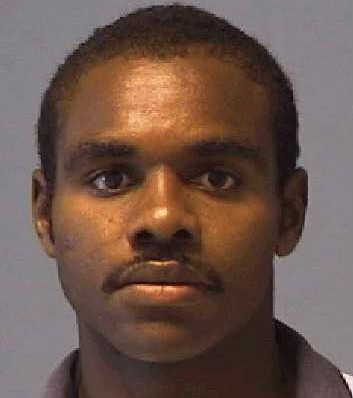 Clinton Bankston
Homicide · USA · 1987
15 August 1987 — Ann Morris (63), her sister Sally Nicholson (59), and Sally’s…
5 victims
Clinton Bankston
Homicide · USA · 1987
15 August 1987 — Ann Morris (63), her sister Sally Nicholson (59), and Sally’s…
5 victims
 Joshua Jenkins
Homicide · USA · 1996
Joshua Jenkins was a 15-year-old American killer who killed five members of his…
5 victims
Joshua Jenkins
Homicide · USA · 1996
Joshua Jenkins was a 15-year-old American killer who killed five members of his…
5 victims
 Baekuni
Serial killer · Indonesia · 2010
Baekuni was a street vendor who sheltered street children at a rented house. He…
14 victims
Baekuni
Serial killer · Indonesia · 2010
Baekuni was a street vendor who sheltered street children at a rented house. He…
14 victims
 Charlotte Corday
Murderer · France · 1793
Marie-Anne Charlotte Corday d'Armont (July 27, 1768 – July 17, 1793), known by…
1 victim
Charlotte Corday
Murderer · France · 1793
Marie-Anne Charlotte Corday d'Armont (July 27, 1768 – July 17, 1793), known by…
1 victim
 Cheryl Gasper
Murderer · USA · 1994
Cheryl Gasper was accused in the murder of her husband, Andie Gasper. She consp…
1 victim
Cheryl Gasper
Murderer · USA · 1994
Cheryl Gasper was accused in the murder of her husband, Andie Gasper. She consp…
1 victim
 Johnny Paul Penry
Murderer · USA · 1979
Johnny Paul Penry (born May 5, 1956) was a Texas Death Row convict. He was sent…
1 victim
Johnny Paul Penry
Murderer · USA · 1979
Johnny Paul Penry (born May 5, 1956) was a Texas Death Row convict. He was sent…
1 victim
 Sailson Jose das Graças
Serial killer · Brazil · 2005
Sailson Jose das Graças was a 26-year-old Brazilian man in prison awaiting tria…
43 victims
Sailson Jose das Graças
Serial killer · Brazil · 2005
Sailson Jose das Graças was a 26-year-old Brazilian man in prison awaiting tria…
43 victims
 Albert Edward Matheson
Murderer · United Kingdom · 1957
Albert Edward Matheson was employed as a handyman at a hall in Newcastle, where…
1 victim
Albert Edward Matheson
Murderer · United Kingdom · 1957
Albert Edward Matheson was employed as a handyman at a hall in Newcastle, where…
1 victim
- Gender
- male
- Country
- USA
- Location
- New York City, New York, USA
- Date of birth
- 1976
- Age at first offence
- 16
- Characteristics
- juvenile, school shooting, revenge
- Victim profile
- Ian Moore, 17, and Tyrone Sinkler, 26 (his classmates)
- Method of murder
- Shooting
- Date(s) of murder
- February 26, 1992
- Years active
- 1992
- Date of arrest
- Same day
- Status
-
Imprisoned
Sentenced to 6 to 20 years in prison on September 7, 1993
Case record: Khalil Sumpter
Background
Khalil Sumpter was 15 when he shot and killed two fellow students at Thomas Jefferson High School in New York City, New York.
Police believed the shooting grew out of a festering feud over a gold bracelet dating back to Christmas of 1991 and a deep grudge against Khalil by Tyrone Sinkler.
Police said Tyrone and Khalil had mugged a junior high school student in 1990. Tyrone was sentenced to probation, which he violated and served time in a juvenile center.
Khalil’s family refused to comment on their lives. They resided a few blocks from Linden Houses on a tree-lined strip of neat row houses, and family members said they had received death threats and had been afforded police protection. Friends said Khalil had got into several fights, and usually lost.
A woman who lived on his block, who insisted on anonymity, said Khalil “messed around” but was “soft.” The woman said: “The boys were picking at him and picking at him,” and that “They intimidated him.”
Four girls, who refused to give their names, said Khalil was known as a “punk” who wanted to prove himself. All three youths went to junior high together and were friends then. That friendship fractured in April 1990 when Mr. Sinkler and Mr. Sumpter, along with a classmate named Anthony Barr, tried to rob a student of his lunch money. The police called it a “kiddie robbery.” The group took the student’s baseball cap and beat him. Neither Mr. Sumpter nor Mr. Barr was prosecuted, but Mr. Sinkler was convicted of assault. Mr. Sinkler had a prior arrest in June 1989 for pickpocketing. For that crime, he received probation and, after he violated it, had to serve six months at a juvenile center.
For the new crime, a year later, Mr. Sumpter was arrested for a street robbery, to which he pleaded guilty and received two years’ probation.
Ian Moore and Tyrone Sinkler were inseparable best friends. Khalil’s best friend probably was Dupre Bolling, who lived near Linden Houses in a project called Fairfield Towers. Dupre was described by classmates as the tougher of the two, and they were described as “props.”
Around September, Khalil transferred from a graphic arts school to Thomas Jefferson High School, where Dupre went. Ian was also at Jefferson. Classmates said that shortly before Christmas Ian tried to steal a gold nugget bracelet from Dupre and was foiled. The next day, Khalil wore the bracelet and flaunted it in front of Ian, as if to rub in his inability to get it.
Since discharge from jail, Tyrone had attended George Westinghouse High School, a vocational school in downtown Brooklyn. His family said he was harassed there and bothered by the fact that a youth was killed on a stairway last November. He wanted to transfer, and his family said the only immediate possibility was Jefferson High. His mother warned him it was a “death trap,” but he wanted out of Westinghouse.
In February, Tyrone began attending classes at Jefferson, bringing him into frequent contact with Khalil Sumpter. Friends said the bracelet skirmish intensified the icy relations, with sneers and minor scuffles at school.
Friends said Khalil was afraid to confront the burly Tyrone, but Khalil and Dupre were brazen with Ian, especially since Ian had lost weight from an operation last November to remove a kidney tumor.
In the days leading up to the killings, Khalil told the police that Tyrone threatened him several times, including a statement that Tyrone was going to slash and kill his mother. On Tuesday, Khalil told police that Tyrone fired shots at him on Linden Boulevard. The narrative stated there was no other evidence that either Tyrone or Ian carried guns.
Police said Khalil told them that after the escapade he borrowed a .38-caliber gun. Police said the gun had originally been stolen in 1989 from an off-duty campus police officer at the University of Medicine and Dentistry of New Jersey in Plainfield, N.J.
Last Tuesday, according to friends of Tyrone and Ian, Khalil warned Ian he was “going to get him” the next day.
Khalil’s lawyer, John Russell, gave his client’s account of the day of the killings.
The offence
On Wednesday, February 26, 1992, Khalil Sumpter, 15, walked up to Tyrone Sinkler, 16, and Ian Moore, 17, and shot them dead in the second-floor hallway of Thomas Jefferson High School.
Police said Khalil pulled out his gun and shot and killed Tyrone and Ian without a word. The accounts described that the shots were at point-blank range: Tyrone was shot in the chest, and Ian was shot in the head. Both shots were on the school’s second-floor hallway.
As he fled the building, he was apprehended by school security guards.
The narrative included the account that Khalil told police he had seen Tyrone threaten him and that Tyrone fired shots at him on Linden Boulevard. The police said they did not think that the murders were planned, and the narrative included that they tried to talk to Dupre Bolling without success.
Lawyer’s account of the day of the killings
Khalil Sumpter’s lawyer, John Russell, gave his client’s account of the day of the killings:
Not long after 8 A.M., Khalil and Dupre arrived at school and, fearful, ducked in a different entrance than usual.
There, Khalil saw a classmate who told him that he had seen Tyrone, Ian and several others near the main entrance that Khalil usually took. The classmate said, "Oh, you're the kid who's going to get jumped."
The three went to the second floor, where they began striding down the hallway. As they came to a bend where the hallway joined with another, they encountered Tyrone, Ian and six or seven others.
According to this account, Tyrone reached into his jacket pocket, Ian put his hand under his coat toward his waist and a third classmate reached behind his back.
Without a word, the police said, Khalil pulled out his gun and shot and killed Tyrone and Ian.
Friends of the victims said they thought Khalil deliberately set out to gun them down, but police said they did not think that the murders were planned.
Investigation
At the time of the shooting, police were unable to trace the many hands the gun had passed through on its way to Khalil.
Police tried to talk to Dupre Bolling without success.
Trial
Khalil Sumpter was tried as an adult in State Supreme Court in Brooklyn rather than Family Court. Family members, students, and teachers spoke about the morning of February 26 and the young men’s brief but deadly encounter as Khalil Sumpter’s murder trial began.
In opening arguments in State Supreme Court in Brooklyn, prosecutors portrayed the shooting as a cold-blooded murder. Ann Gutman, an assistant district attorney, told the jurors that Mr. Sumpter killed his fellow students “without fear or hesitation.”
William M. Kunstler, one of two lawyers for Mr. Sumpter (then 17), countered that the act was one of self-defense and that the two victims had threatened to kill Mr. Sumpter and his mother the day before.
Mr. Sumpter had been at Spofford Juvenile Detention Center since the day of the shootings, when he was caught running from the building. The narrative stated that if he was found guilty, he could be given a lighter sentence because of his youth at the time of the crime.
Witness accounts
Mr. Sinkler slowly recounted his tale of giving his son, Tyrone, the bus money. Mrs. Moore spoke of identifying her dead son at the hospital. Both a teacher’s aide and a 17-year-old student who had witnessed the shooting provided detailed accounts.
Legal outcome referenced in the narrative
The narrative stated that Khalil was convicted of manslaughter and is in a state prison.
Sentencing
Khalil Sumpter was sentenced to 6 to 20 years in prison on September 7, 1993.
Aftermath
In the aftermath of the killings, the Linden Houses received a dose of neglected housekeeping, which residents believed reflected the influx of journalists.
J. J. Sinkler, Mr. Sinkler’s 20-year-old brother, said: “For years the elevator here has smelled of urine,” and “I rode it this morning and it smelled like roses.”
Ian Moore was to be buried on Tuesday in Brooklyn. The same day, Tyrone Sinkler’s body was to be flown to Manning, S.C., to be buried among relatives in the state that his parents said they wish they had never left.
A year later, by June 24, 1993, it was stated that more than a year had passed since the February morning when Khalil Sumpter pulled a gun from under his jacket, fatally shot two fellow students, and turned Thomas Jefferson High School into a symbol of the ruthless penetration of street violence into the lives of young people and the places once considered safe havens.
The narrative stated that there had been marches for peace, congressional hearings on youth violence, and efforts to lobby for gun control and added security measures, including extra guards and metal detectors at New York City public schools. It also stated that Thomas Jefferson had made peace with itself, with changes including a metal-detector system and added programs.
The narrative described that for the families of Mr. Sumpter and his two victims, the aftermath had not been as easy: Donna Sumpter said she could not walk alone outside for fear she would be killed by the victims’ avengers. Linda Moore moved out of the East New York housing project where her son had fallen in with a tough crowd. James Sinkler replayed his last encounter with his son in which he gave him 60 cents for the bus to school.
In East New York, students said shootings had served as a catalyst for peace and forged unity among other students and teachers. Dehala Summers, 17, said: “Everything has changed,” and “There are hardly any fights in the school now. Everybody got tired of hearing Jeff was a bad school.” Lensley O’Connor, 16, said the metal-detector system made a big difference and that “It is safer than before.”
Mr. O’Connor said he had been friends with Darryl Sharpe, a 16-year-old student who was shot at the school in November 1991. After that shooting, Mr. O’Connor said his parents had asked him to transfer, but he refused: “I realized that could happen anywhere,” he said. “Now the students cite improvements not only in security, but also in the school’s academic and athletic programs,” and they cited a memorial garden adjacent to the school where an empty lot once stood.
The narrative described that last week, two teachers exchanged wedding vows in the school’s auditorium after hundreds of their students requested wedding invitations. It stated that students filled the 1,800-seat auditorium and cheered wildly.
Susan Amlung, a spokeswoman for the United Federation of Teachers, said: “Morale has improved, security is much better,” and “while the academic performance has not really improved, they are working on that.”
The narrative stated that during the last school year, only three weapons had been found in the school, with two confiscated by a weapons-screening team at the door and another found by a teacher patrolling the halls.
Credit for many of the improvements was attributed in the narrative to Carol A. Beck, Jefferson’s principal, who called assemblies sometimes twice a week and reminded students: “Violence doesn’t get you anywhere.” Mrs. Beck said: “It was devastating,” and “I feel that I failed families that wanted their children to be in a safe environment. But I think it helped our young people understand the importance of life.” It stated she was retiring that year.
The narrative also described that in the neighborhoods where Mr. Sumpter, Mr. Moore, and Mr. Sinkler lived, friends and residents said that while violence may have subsided at Thomas Jefferson, it continued in the street.
Continued street tensions described
A 22-year-old man on a corner near the two-family house in East New York where Mr. Sumpter lived with his parents said nothing had changed on streets where gunshots were as common as honking horns. The man said he had known Mr. Sumpter growing up and echoed the police’s version of the original dispute that Mr. Sumpter and Mr. Sinkler had been arrested together in April 1991 for robbery and that Mr. Sinkler had accused Mr. Sumpter of “ratting” on him.
The man said the dispute spilled over into school when both boys transferred to Thomas Jefferson: “They were fighting a lot,” he said, “They thought he snitched. He used to be scared and not come outside.”
Another friend, Gregory Harrison, 19, said: “The metal detectors will make a difference in school, but not on the outside.” Gregory Harrison said he was a student at Prince George’s County Community College in Capitol Heights, Md., and he was back in East New York visiting family for the summer. He said the shooting and attention by news media and local officials that followed felt surreal: “It wasn’t what it seemed,” he said. He said: “Ian and I, we always wanted to do good. Work. Grow up. Whatever. We both wanted that.” He added: “It affected me,” and “I still hurt. But I just got to go on, like everybody else”.

Spotted an error, or have more information about this case?