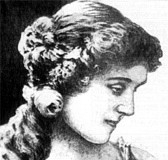
Louise Masset
Murderer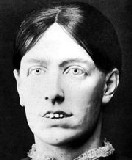 Mary Pearcey
Murderer · United Kingdom · 1890
Mary Pearcey (Mary Eleanor Wheeler; also known as Mary Eleanor) was born in 186…
2 victims
Mary Pearcey
Murderer · United Kingdom · 1890
Mary Pearcey (Mary Eleanor Wheeler; also known as Mary Eleanor) was born in 186…
2 victims
 Ada Chard Williams
Murderer · United Kingdom · 1899
Ada Chard Williams (also referred to as Ada Chard-Williams and Mrs. Hewetson in…
1 victim
Ada Chard Williams
Murderer · United Kingdom · 1899
Ada Chard Williams (also referred to as Ada Chard-Williams and Mrs. Hewetson in…
1 victim
 Emily Swann
Murderer · United Kingdom · 1903
Emily Swann (42-year-old mother of 11 children; defendant; convicted of murderi…
1 victim
Emily Swann
Murderer · United Kingdom · 1903
Emily Swann (42-year-old mother of 11 children; defendant; convicted of murderi…
1 victim
 Mary Agnes Leider
Murderer · USA · 2012
Mary Agnes Leider was 25 years old, from Saint Xavier, on the Crow Indian Reser…
1 victim
Mary Agnes Leider
Murderer · USA · 2012
Mary Agnes Leider was 25 years old, from Saint Xavier, on the Crow Indian Reser…
1 victim
 David Funches
Murderer · USA · 1974
David Livingston Funchess was the petitioner and appellant in federal habeas co…
2 victims
David Funches
Murderer · USA · 1974
David Livingston Funchess was the petitioner and appellant in federal habeas co…
2 victims
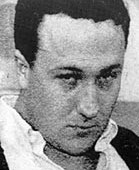 Steven Oken
Spree killer · USA · 1987
Steven Oken (defendant) Steven Oken was adopted at birth and was raised in a st…
3 victims
Steven Oken
Spree killer · USA · 1987
Steven Oken (defendant) Steven Oken was adopted at birth and was raised in a st…
3 victims
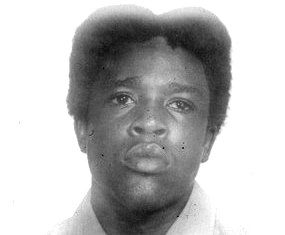 James Dupree Henry
Murderer · USA · 1974
James Dupree Henry was sentenced by Florida state courts to be executed for the…
1 victim
James Dupree Henry
Murderer · USA · 1974
James Dupree Henry was sentenced by Florida state courts to be executed for the…
1 victim
 Linda Henning
Murderer · USA · 1999
Linda Henning was convicted of felony murder and kidnapping in connection with…
1 victim
Linda Henning
Murderer · USA · 1999
Linda Henning was convicted of felony murder and kidnapping in connection with…
1 victim
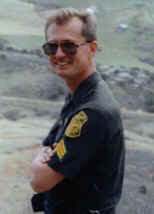 Albert Petrosky
Murderer · USA · 1995
Albert Petrosky was sentenced to life in prison without parole. He was awaiting…
3 victims
Albert Petrosky
Murderer · USA · 1995
Albert Petrosky was sentenced to life in prison without parole. He was awaiting…
3 victims
- Gender
- female
- Country
- United Kingdom
- Location
- London, England, United Kingdom
- Date of birth
- 1866
- Age at first offence
- 33
- Characteristics
- parricide
- Victim profile
- Manfred Louis Masset, 3 (her illegitimate son)
- Method of murder
- Suffocation
- Date(s) of murder
- October 27, 1899
- Years active
- 1899
- Date of arrest
- 3 days after
- Status
-
Executed
Executed by hanging at Newgate prison on January 9, 1900
Case overview
Louise Masset was convicted of murdering her son, Manfred Louis Masset, and was executed by hanging at Newgate prison on January 9, 1900.
Background
Louise Masset was 33 years old and was half-French and half-English. She lived at 29, Bethune Road, Stoke Newington, London, with her married sister, Leonie Cadisch, and Leonie’s husband, Richard.
She worked as a day-governess and piano teacher. She had an illegitimate son, Manfred, born on April 24th, 1896.
Manfred’s foster care was arranged with Miss Helen Eliza Gentle. Miss Gentle lived at 210 Clyde Road, Tottenham, and received payment of thirty seven shillings per month. Louise visited Manfred every Wednesday and sometimes took him for trips to the park; Helen Gentle accompanied her on some occasions.
Louise took on a lover, Endor Lucas (also given as Eudore Lucas and Eudor Lucas), a nineteen-year-old Frenchman who lived next door. Louise and Lucas booked rooms in Brighton and spent a weekend away together.
The offence
On October 27th, 1899, the battered, naked body of a three-year-old boy was found at 6pm on 27th October 1899. The body was found wrapped in a shawl in the women’s toilet at Dalston Junction station.
The boy had been beaten with a brick and suffocated before being dumped in the ladies’ toilet at Dalston Junction station. The brick remained near the body. The boy’s head and face had been battered and the black shawl covered his midriff; he was naked except for the black shawl.
The child was identified as Manfred Louis Masset, Louise Masset’s illegitimate son. Miss Helen Eliza Gentle positively identified the body as Manfred. A doctor, Dr. J. P. Fennell, examined the still warm body. After a subsequent post-mortem examination, Dr Fennell revised the time of death and said the boy had died between 2.55pm and 5.55pm, with death most likely between 3.55pm and 4.55pm.
Investigation
Discovery at Dalston Junction station
Mary Teahan and her friend, Margaret Biggs, entered the ladies waiting room on platform three of Dalston Junction station. Mary Teahan went into the lavatory and found something that looked like a child’s face. After returning to the waiting room, the women spoke to station staff. Joseph John Standing, a porter, passed the information to Mr Cotterell, the foreman porter, and the men investigated.
The men found a small boy lying behind the door, covered by a dark-coloured shawl. Standing fetched the station inspector, David Bundy. Dr James Patrick Fennell was called. By 6.55pm, he made his examination, initially stating that the time of death was at least two hours before, later revising his opinion after a post-mortem.
Identification and corroboration
Miss Helen Eliza Gentle contacted the police after seeing newspaper reports about the dead child. She was escorted to the mortuary and positively identified the body as that of Manfred Louis Masset.
The case included identification of clothing and the shawl:
- A bundle of child’s clothes was found at Brighton station in a left luggage office, and Miss Gentle identified them as belonging to Manfred.
- The parcel was wrapped in paper with tears that matched exactly a torn piece at Miss Gentle’s house.
- A draper identified the shawl used to wrap the boy’s body as similar to one he had sold to Louise Masset on October 24th.
- The brick found near the body could have come from a rockery in the garden of 29, Bethune Road.
Letters and communications
Miss Gentle received a letter from Louise dated October 18th. Louise wrote that Manfred’s father wanted the boy returned to him and that Louise would take Manfred to be brought up with his cousin in France.
On October 30th, Miss Gentle received another letter from Louise stating that Manfred had cried all the way to London Bridge and had been poorly on the boat from Newhaven to France. Miss Gentle was suspicious after reading about the discovery of the dead child and formally identified the body.
After Louise’s arrest, a letter dated December 26th was delivered to Newgate prison. It stated:
"The women of Chelsea must keep out of sight but they are not anxious to hang you. If the porter (a porter) at Dalston Junction would speak he could tell who he saw at 4.45 there. Anyhow, put this in your lawyer's hands - it may save you."
The letter was never passed on by the authorities.
Arrest and pre-trial events
Police interviewed Louise at her home at 29 Bethune Road, Stoke Newington, where her sister’s household included Leonie Cadisch and Richard Cadisch.
Police later saw a man arrive at 29 Bethune Road, go inside, and come out with Mr Cadisch. Police followed them to Streatham Road, Croydon. The man was identified as George Richard Symes, married to another of Louise’s sisters. When police knocked at Symes’s front door, they found Louise distressed and talking to her two brothers-in-law.
Louise denied involvement and claimed someone else had killed Manfred. Police saw that she had told a story about a trip to France which they treated as false; she later confessed that the story of the trip to France was false, stating she had spent the weekend in Brighton with her lover Endor Lucas and had handed Manfred over to two women described as starting a private school.
Mrs. Rees, the waiting room attendant, picked Louise out at an identity parade. Louise was charged with murder and was committed for trial at the Old Bailey in December 1899.
Trial
Court and dates
Louise Masset was tried at the Old Bailey before Mr. Justice Bruce between the 13th and 18th December 1899.
The prosecution was represented by Mr Charles Matthews and Mr Richard D Muir. Lord Coleridge and Mr Arthur Hutton defended her.
Defence
The defence, led by Lord Coleridge, claimed Louise had entered into an agreement with two women called Browning. The defence alleged that the women were going to look after Manfred for a fee of £18.00 a year and that Louise had given them a £12.00 deposit before handing Manfred over. The defence argued that the Brownings must have murdered him.
The two Mrs. Brownings could not be found and no receipt for the £12 deposit could be produced. The jury did not believe Louise’s story.
Evidence
The prosecution argued that Louise and Manfred had travelled to London Bridge station and that witnesses saw them there:
- Thomas Bonner was the conductor on a horse-drawn omnibus from Stamford Hill. He said the vehicle left Stamford Hill at 12.48pm and that he saw a woman and child who got off at London Bridge at approximately 1.35pm.
- Georgina Worley, an attendant in a waiting-room at London Bridge, placed the couple in the waiting room at 1.42pm and said they remained until around 2.30pm.
- Ellen Rees was the attendant in the first-class waiting room and said she had only come on duty at 2.30pm. She said that at about 2.40pm a woman and child came into her room; she noted the child crying and the woman said he would be four next April. Ellen Rees said she saw the woman and child later leave towards the refreshment room, and she gave subsequent testimony that she saw Louise alone later in the evening.
At Dalston Junction station, Mary Teahan and Margaret Biggs discovered the body at 6pm.
Evidence also included sightings and identification at Brighton:
- Louise checked in at Findlay’s Hotel at 9.45pm on Saturday (booking under the name Miss Brooks) and reserved a second room for her brother to arrive.
- Hotel proprietor John Findlay confirmed it was quarter to ten when she arrived.
- The attendant Annie Skeats at Brighton found a brown paper parcel and took it to the cloakroom; when not claimed, it was forwarded to London Bridge station and opened. The parcel contained a child’s jacket and frock identified by Miss Gentle as the items Manfred had been wearing when handed over.
- The wrapping paper matched torn pieces at Miss Gentle’s home.
Identification of the shawl involved Maud Clifford and Ernest Hopkins Mooney of a draper’s shop in Stoke Newington. Maud Clifford testified she sold a black shawl to a lady fitting Louise’s description on October 24th. Mooney testified that on October 16th he purchased fifteen woollen shawls and that only one black shawl had been sold; he produced the two remaining shawls in court that matched exactly the one found on Manfred’s body.
The cause of death was suffocation. Medical testimony said the clinker brick had been used to stun the child before suffocation by hand over the mouth and nose. Dr Thomas Bond estimated the most probable time of death as around two hours before discovery, placing it at around 4.30pm.
Verdict
The jury found Louise Masset guilty. She collapsed in the dock on hearing the verdict and had to be revived.
Sentencing
Mr Justice Bruce sentenced Louise Masset to death by the words of the sentence:
"be hanged by the neck until she was dead."
After sentencing, she was taken from court to Newgate Prison and placed in the condemned cell. She spent Christmas and New Year 1900 guarded around the clock by pairs of female warders.
A petition was sent to Queen Victoria and was ignored.
Outcome and execution
There was to be no reprieve. At 9.00 a.m. on January 9, 1900, Louise faced execution.
James Billington, the hangman from Bolton, executed her. Louise wore a long dress. She was attended by the chaplain, two male warders, and the assistant executioner. Billington placed a body belt around her waist, pinioned her wrists, led her to the execution shed, and onto the trap of the large gallows at Newgate which could accommodate three prisoners at a time. Her legs were pinioned by a leather strap, the noose was placed around her neck, and the white hood was placed over her head before the lever was pulled. After the required hanging time, her body was removed from the rope and buried in an unmarked grave within the prison.
Other details
Names and relationships
Manfred Louis Masset was Louise Masset’s son and was described as illegitimate. The boy was linked with France through correspondence and statements about his father living in France.
Louise Masset had a relationship with Endor Lucas. Leonie Cadisch and Richard Cadisch were Louise’s family in the household at 29 Bethune Road, Stoke Newington.
Accounts of alleged travel and alleged handover
Helen Gentle said she agreed to meet Louise outside the Birdcage public house on Stamford Hill at 12.45pm on October 27th. Gentle said Louise kept this appointment and that the last time she saw Manfred alive was when he boarded an omnibus with his mother to go to London Bridge for the train towards Newhaven and the ferry to France.
Louise’s defence claimed she handed Manfred over to women called Browning at London Bridge station, along with a parcel of clothes and money. Police investigations reported that an address associated with the children’s home was occupied by Henry Willis, a dairyman who had never heard of Louise or the Brownings.
Louise maintained she was in Brighton at the relevant times and claimed she had caught the 4.07pm train to Brighton and arrived at about 6.55pm.
Statements attributed to Louise
Louise said in the condemned cell:
"I can only win peace by meeting my death bravely."
Louise was also described as having said:
"Louise had done her best to face, with becoming courage, that fate from which the very bravest might shrink."
The narrative also recorded a reported statement attributed to Louise:
"I'm hunted for murder, but I didn't do it"
and described disputed language around what Louise said before execution, including:
"What I am about to suffer is just, and now my conscience is clear."
and another version described as:
"What I suffer is just."
Trial participants and other witnesses mentioned
Witnesses named in the trial material included:
- Ellen Rees and Georgina Worley (London Bridge waiting-room attendants)
- Thomas Bonner (bus conductor)
- Ellen Rees was said to have performed an identity parade and picked out Louise
- Maud Clifford and Ernest Hopkins Mooney (draper’s shop staff)
- Alice Rial and John Findlay (hotel staff)
- Annie Skeats (Brighton waiting-room attendant)
- Henry James Streeter and Mr Mutton were mentioned in relation to a potential identification at Mutton’s restaurant
- David Taylor, John Hughes-Ellis, and a time/location description of bus sightings were included in the narrative about witness observations.

Spotted an error, or have more information about this case?