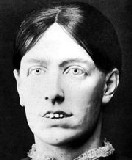
Mary Pearcey
Murderer Jessie King
Murderer · United Kingdom · 1887
Jessie King was executed in Edinburgh on March 11, 1889, and she was described…
2 victims
Jessie King
Murderer · United Kingdom · 1887
Jessie King was executed in Edinburgh on March 11, 1889, and she was described…
2 victims
 Ada Chard Williams
Murderer · United Kingdom · 1899
Ada Chard Williams (also referred to as Ada Chard-Williams and Mrs. Hewetson in…
1 victim
Ada Chard Williams
Murderer · United Kingdom · 1899
Ada Chard Williams (also referred to as Ada Chard-Williams and Mrs. Hewetson in…
1 victim
 Catherine Flannagan
Murderer · United Kingdom · 1883
Catherine Flannagan and her sister Margaret Higgins used arsenic to poison peop…
1 victim
Catherine Flannagan
Murderer · United Kingdom · 1883
Catherine Flannagan and her sister Margaret Higgins used arsenic to poison peop…
1 victim
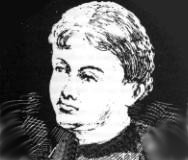 Louisa Jane Taylor
Murderer · United Kingdom · 1882
Louisa Jane Taylor was widowed in 1882 and had a small pension to survive on. S…
1 victim
Louisa Jane Taylor
Murderer · United Kingdom · 1882
Louisa Jane Taylor was widowed in 1882 and had a small pension to survive on. S…
1 victim
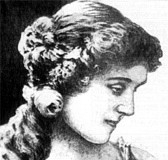 Louise Masset
Murderer · United Kingdom · 1899
Louise Masset was convicted of murdering her son, Manfred Louis Masset, and was…
1 victim
Louise Masset
Murderer · United Kingdom · 1899
Louise Masset was convicted of murdering her son, Manfred Louis Masset, and was…
1 victim
 Robert South
Murderer · USA · 1983
Robert South was executed in South Carolina on May 31, 1996. He was aged 51 at…
1 victim
Robert South
Murderer · USA · 1983
Robert South was executed in South Carolina on May 31, 1996. He was aged 51 at…
1 victim
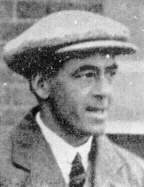 Thomas Henry Allaway
Murderer · United Kingdom · 1921
On 22 December 1921, an advertisement appeared in the “Morning Post” from Miss…
1 victim
Thomas Henry Allaway
Murderer · United Kingdom · 1921
On 22 December 1921, an advertisement appeared in the “Morning Post” from Miss…
1 victim
 Carlos Santana
Murderer · USA · 1981
Carlos Santana was a 40-year-old Dominican who was executed by lethal injection…
1 victim
Carlos Santana
Murderer · USA · 1981
Carlos Santana was a 40-year-old Dominican who was executed by lethal injection…
1 victim
- Gender
- female
- Country
- United Kingdom
- Location
- London, England, United Kingdom
- Date of birth
- 1866
- Age at first offence
- 24
- Characteristics
- love triangle
- Victim profile
- Her lover's wife, Phoebe Hogg, 32, and her 18-month-old baby
- Method of murder
- Stabbing with knife - Suffocation
- Date(s) of murder
- October 24, 1890
- Years active
- 1890
- Date of arrest
- 3 days after
- Status
-
Executed
Executed by hanging on December 23, 1890
Case details
Mary Pearcey (Mary Eleanor Wheeler; also known as Mary Eleanor) was born in 1866. At the time of her arrest she was 24, and she was described as being five feet six inches tall with “lovely russet hair and fine blue eyes”. She was of normal build and had nice shapely hands. Her face was not overly pretty but she seemed to have no difficulty in attracting men.
She was an English woman convicted of murdering her lover’s wife, Mrs. Phoebe Hogg, and child, Phoebe, and she was executed for the crime on 23 December 1890.
Timeline
- 24 October 1890 — A policeman found the corpse of a woman in Crossfield Road, Hampstead, with the head almost severed; a bloodstained pram was found nearby.
- Next day after 24 October 1890 — The body of an 18-month-old baby was discovered on waste ground near Finchley Road; suffocation was the cause of death; it was identified as being Phoebe Hannalope.
- December 1890 — Mary Pearcey was tried at the Central Criminal Court of the Old Bailey; her trial was described as a three day trial starting on December 1st 1890; she was found guilty after just 52 minutes on the lunchtime of the third day; she was sentenced to death.
- 23 December 1890 — Mary Pearcey was hanged at Newgate Prison.
Background
Mary Eleanor Wheeler took the name “Pearcey” from John Charles Pearcey, a carpenter with whom she had lived. He left her because of her infidelity.
Mary later took up residence with a furniture remover, Frank Hogg, who impressed Mary by having printed business cards and whose printed business cards were described as some sort of status symbol. Frank Hogg had been married before to Phoebe, whom he had married because she had become pregnant. Their marriage was described as not a happy marriage but it had been the decent thing to do.
Mary lived in Kentish Town in London. It was stated that she associated with better off men and had never worked or ever needed to. One of her several admirers, Charles Creighton, had rented rooms for her at 2 Priory Street, Kentish Town in North London around 1888.
Mary was known to suffer from depression and had only her aged mother and an older sister as relatives. She also drank quite heavily. The relationship with Frank Hogg was described as a long-term intense and clandestine love affair. It was described as being known to and accepted by Phoebe, at least until Mary invited Phoebe to visit her.
Mary and Frank Hogg were described as having had other men and affairs as part of their wider circumstances, and it was also stated that Hogg had at least one other lover, Phoebe Styles.
Styles became pregnant and Hogg married her at Pearcey’s urging. Styles gave birth to a daughter also named Phoebe Hogg. Mary Pearcey’s relationship with the carpenter John Charles Pearcey and her later relationship with Frank Hogg were described in connection with the later murders.
Mary’s father, Thomas Wheeler, was executed by William Marwood at St. Albans prison in Hertfordshire on the 29th November 1880 for the murder of a local farmer, Edward Anstee. It was stated that in the condemned cell Thomas had written a letter to the farmer’s widow apologising for what he had done and asking her forgiveness and prayers that his sins should not be visited on his wife or then fourteen year old daughter. It was also stated that there was an asserted lack of connection between Thomas Wheeler and another claim tying her father to the murder of Edward Anstee; author Sarah Beth Hopton was unable to find evidence of a connection between two people and found a retraction of the newspaper article in which misinformation was first printed.
The offence
On 24 October 1890, Mrs. Hogg, with her baby, called on Pearcey at her invitation. Neighbours heard the sound of breaking glass coming from Mary’s house at about 4.00 p.m. and Charlotte Priddington called over the fence to check that she was okay but received no reply.
At 7.00 p.m., a woman’s body was discovered lying on a pavement in Crossfield Road by a man returning from work, who reported it to a policeman. The woman’s head was wrapped in a cardigan which was removed to yield the blood-stained face of Phoebe Hogg with a huge gash in her throat. It was found that the deceased had a fractured skull and that the throat had been cut so violently as to nearly sever the head. There were bruises on the head and arms consistent with her having tried to defend herself. Examination of the place where the body was found indicated that the murder had taken place elsewhere.
Later that evening, a constable on the beat discovered a heavily blood stained pram in Hamilton Terrace, about a mile from where the woman’s body was found.
The following morning, an eighteen-month-old child was discovered dead. The cause of death was suffocation and she was otherwise unmarked except for a few scratches.
The deceased were identified as Phoebe Hogg and her child, Phoebe. The pram was described as a bloodstained black perambulator. It was also stated that Mary had been seen pushing baby Phoebe’s perambulator around the streets of north London after dark.
In one account, it was possible the baby had either been suffocated during or after the murder of her mother, or alternatively been placed in the pram alive with her mother’s body on top of her and that the weight of her mother’s corpse suffocated the baby. Evidence in the overall narrative established that the child had been placed in the pram, with only minor injuries, and that her mother’s body was placed on top, suffocating the baby.
After ascertaining that Phoebe was dead, Mary put the body on top of the baby in the pram, with a raincoat or cardigan-like covering described as part of the disposal, and pushed the pram out of the house. Neighbours were described as having been passed as she headed through the streets, and it was described that she first deposited Phoebe’s body where it was found and continued to the wasteland where she abandoned the baby and the pram.
It was also stated that a written invite to Mrs. Hogg to come to tea was used by the prosecution as evidence of premeditation, and blinds being drawn in Mary’s house were described as alleged steps taken during the attack.
Investigation and arrest
Frank Hogg and his sister Clara reported Phoebe missing after reading about the discovery of the woman's body in the Saturday evening paper. Frank sent Clara to Mary’s to ask if she had seen Phoebe, and Mary denied seeing her but agreed to accompany Clara to the mortuary to see if it was Phoebe’s body. Clara Hogg was summoned to identify the body at the mortuary and asked Mary to accompany her.
At the mortuary Mary drew attention to herself by her hysterical behaviour when she viewed the body. Mary was described as attempting to prevent Clara identifying the body and becoming almost hysterical when the full extent of Phoebe’s injuries became apparent.
The police asked Mary and Clara to view the pram, and Clara identified it as belonging to Phoebe. A neighbour stated that she had seen Mary wheeling the pram with a large object in it on the evening of the 24 and had heard screams coming from the house.
Frank Hogg was informed of the positive identification and as a possible suspect himself was searched. Frank confessed to having the affair with Mary when the key to her house was found. The police decided to interview Mary next, and they carried out a thorough search of her home in Priory Street.
In the kitchen, the police found obvious signs of violence with broken furniture and glass. The room was described as covered with bloodstains. Officers discovered an axe, two bloody knives, and bloodstained clothing, as well as a number of love letters between the pair. Mary was described as playing the piano and singing loudly while the police searched the house.
In the account that described the search in detail, blood spatters were found on walls and ceiling and on clothing including a skirt and an apron, as well as blood stains on a poker and a carving knife. There were clear signs of struggle including two broken windows in the kitchen. A rug showing blood stains smelt strongly of paraffin where an attempt had been made to clean it. Mary attempted to explain away the blood by saying that she had been “killing mice, killing mice” and this was not believed.
A detective inspector, Banister, decided to arrest Mary and charge her with the murders of both mother and child. When Mary was searched, blood stains were found on her clothes, scratches on her hands, and two wedding rings on her fingers, one of which was later identified as Phoebe Hogg's.
It was stated that Mary maintained her innocence throughout the trial and declined to confess even when questioned by her solicitor.
Trial
Mary was tried at the Central Criminal Court of the Old Bailey before Mr. Justice Denman. It was described as a three day trial opening on December 1st 1890. The prosecution was led by Mr. Forrest Fulton, assisted by Mr. C.F. Gill, and the defence was by Mr. Arthur Hutton.
Mary entered a formal plea of not guilty. The prosecution outlined its case and read out various letters Mary had written to Frank Hogg which were described as showing the depth of her passion for him prior to his marriage to Phoebe, which was said to have been forced upon him by Phoebe’s pregnancy. Mary was said to have told Frank that even if he had to marry Phoebe she did not want him to leave her and that she would treat Phoebe as a friend for a time.
The suggested motive for the murder was jealousy of Phoebe. Evidence was given regarding the place of the crime and the nature and method of infliction of Phoebe's injuries. It was also stated that John Pearcey identified the cardigan found round Phoebe's head as one he had given to Mary, and evidence was given of the blinds being drawn in Mary's house on the afternoon of the murder.
Arthur Hutton questioned the circumstantial evidence and whether a woman of her size and build would have been capable of inflicting such injuries on the deceased. Mary gave no evidence at the trial and remained impassive throughout.
Mary was found guilty after just 52 minutes on the lunchtime of the third day. She was asked if she had anything to say why the Court should not give her judgement of death in accordance with the law and she replied: “I say I am innocent of this charge”.
Mr. Justice Denman then donned the black cap and sentenced her to hang.
It was stated that her defence at trial was one of insanity, but it failed. It was also stated that her solicitor made considerable effort to save her by alleging that she was not in control of herself at the time of the killing due to epileptic fits she had suffered since birth. The Home Office were not swayed by this argument, and her case papers were marked with the fatal words: “the law must take its course”.
Sentencing
Mary was sentenced to death by hanging.
Appeals
There was no appeal in those days; it was stated to be 1907 before the Court of Criminal Appeal was set up.
Execution and aftermath
Mary was hanged on 23 December 1890 at London’s Newgate prison by James Berry. She was to be hanged two days before Christmas 1890 (three clear Sundays after sentence).
On arrival back at Newgate from the Old Bailey she was described as being made to take a bath and be given prison uniform: a plain grey shift dress. She was then taken to the condemned cell where she was guarded round the clock by three warderesses. The Sheriff of London, Sir James Whitehead, had decided to exclude newspaper reporters from her hanging.
The execution took place on Tuesday 23rd December. Berry arrived at the prison on the Saturday. Mary noticed him looking at her through the judas (peep) hole in her cell door and remarked to the women guarding her: “Oh, was that the executioner.? He’s in good time isn’t he? Is it usual for him to arrive on the Saturday for the Monday? (Home Office regulations required the hangman to be at the prison by 4.00 p.m. on the afternoon prior to the hanging.)”
On the night before her execution, her fortitude was described as remarkable.
Berry entered the condemned cell a few moments before 8.00 a.m. and said to Mary: “Good morning, madam” and shook hands with her. He then said: “If you’re ready madam I will get these straps round you” to which Mary replied: “I am quite ready, Mr Berry.” Berry then placed a leather body belt around her waist and secured her wrists to it in front of her.
The Sheriff asked if she had any final statement. Berry reported that Mary told the assembled party: “My sentence is a just one but a good deal of the evidence against me is false.” In another account, she was described as telling Berry: “The sentence was just, but some of the evidence was false.”
Two warderesses were positioned one on each side of Mary. Mary told them she didn’t need assistance and would be able to walk by herself. One of the women said she would accompany Mary, and Mary replied: “Oh well, if you don’t mind going with me I am pleased” and then kissed all three women before the procession started out from the cell along the corridor and across the yard to the execution shed.
The gallows at Newgate were described as a large structure constructed in 1881, capable of taking up to four prisoners side by side although only a single noose dangled on this occasion. Mary weighed 9 stone and Berry set a drop of 9 feet for her. Once the trap doors opened, Mary disappeared from view. She died without a struggle and her neck was broken instantly by the length of the drop and the position of the brass eyelet.
Outside the prison, some 300 people including many women gathered to witness the sounds of St. Sepulchre’s Church bell tolling and the black flag flying above the prison to denote that the execution had been carried out. There was described to be a cheer from the crowd as the flag was hoisted. Her body was left dangling on the rope for about an hour in the brick-lined pit beneath the trap and then removed and buried later in the day in an unmarked grave within Newgate.
Madame Tussaud’s wax museum of London made a wax model of her for the Chamber of Horrors exhibit, and it also purchased the pram used in the murder along with contents of Pearcey’s kitchen. When the Tussaud exhibit of these items opened, it attracted a crowd of 30,000 people. The noose used to hang Pearcey was described as being on display at the Black Museum of Scotland Yard.
Mary’s solicitor, Mr. Freke Palmer, visited her on her final evening. Mary asked him to deal with certain bequests and to place a personal advert for her in Madrid newspapers. The advert was said to read: “MECP Last wish of MEW. Have not betrayed. MEW (Mary Eleanor Wheeler)”. Mary refused to elaborate on the meaning of this message and refused point blank to confess despite persistent questioning, with the promise that Palmer would put relevant facts before the Home Secretary in a last attempt to get a reprieve. Mary also refused to confess to her mother or her solicitor prior to the execution.
Other personal interaction details included that at Mary’s request, Frank Hogg was given permission to visit her on the Monday afternoon in Newgate but did not show up, which greatly upset Mary and she wept inconsolably on her bed when she realized he was not going to come.
While in custody, it was stated that Mary told Sarah Sawhill, the woman looking after her, that Mrs. Hogg had come to tea that afternoon, that Mrs. Hogg had made a remark that offended Mary, and that an argument developed. Mary then realized she was incriminating herself and declined to say anymore.
Notes on legal responsibility and mental condition (as stated)
Mary’s defence was insanity at trial, but it failed and she was sentenced to death. It was stated that her solicitor alleged she was not in control due to epileptic fits she had suffered since birth. The Home Office were not swayed.
A legal discussion of insanity under the McNaughten Rule was included, explaining that in that rule a person would not be guilty if, at the time of the act, they did not know what they were doing or did not know it was wrong. It also described Daniel McNaughten’s attempted killing of Sir Robert Peel and the subsequent finding of not guilty by reason of insanity. It was also stated that the McNaughten Rule was interpreted very strictly in Mary’s days and there was little scope for the defence to succeed.
It was also stated that Mary had been an epileptic since childhood and had two suicide attempts, which her solicitor suggested indicated she was less than sane. The narrative also described epilepsy and seizures and noted that, at the time, none of this amounted to a legal defence of insanity.
Related discussion: Jack the Ripper
Mary Pearcey was suggested as a suspect in the Jack the Ripper slayings. It was described that she was apparently the only female suspect mentioned at the time. Sir Arthur Conan Doyle speculated at the time that the Ripper might have been female, and the theory was later expanded in 1939 by William Stewart in his book Jack the Ripper: A New Theory, which specifically named Pearcey. The narrative stated that all evidence given was circumstantial and that there was no physical evidence or eyewitness reports linking Pearcey to the Ripper crimes.
F. Tennyson Jesse explained the theory in her study of Pearcey’s case, and the quoted passage was: “It was no wonder that, simultaneously with the discovery of the crime, legends should have sprung up around her figure. The rumour even arose that the notorious Jack the Ripper had been at work in the locality, and though this was quickly disproved, yet the violence and horror associated with the crime was such as to make it understandable how the rumour arose in the first place. Even in the earliest paragraphs which announced the discovery of the crime, several false statements were suggested.”
In May 2006, DNA testing of saliva on stamps affixed to letters allegedly sent by Jack the Ripper to London newspapers, and thought by some modern writers to be genuine, was described as appearing to come from a woman, which led to extensive discussion of Pearcey and her crime in global press.
Other details
Mary was said to have been visited by Mr. Freke Palmer, her solicitor, and she asked him to place a personal advert in the Madrid newspapers.
It was stated that Mary maintained her innocence throughout the trial and remained impassive throughout the trial. She was also described as refusing to elaborate on the meaning of her message and refusing to confess.
A statement attributed to Sir Melville Macnaghten described Mary as later responding by chanting, “Killing mice, killing mice, killing mice!”.
When Berry arrived at the prison on the Saturday and Mary noticed him, she remarked about the executioner’s timing and said it was usual for him to arrive on the Saturday for the Monday.
The Wheeler family detail was described as unique in having the father and daughter both hanged for two separate murders, with reference to Mary’s father Thomas Wheeler being executed for the murder of Edward Anstee.
A discrepancy about Mary Pearcey’s father’s identity and an assertion about a wrong connection to the murder of Edward Anstee were discussed, including that Sarah Beth Hopton found no evidence of the connection and found a retraction of a newspaper article in which the misinformation was first printed.
It was also described that Mary’s solicitor caused a message to be published in a Spanish newspaper reading: ‘M.E.C.P. Last wish of M.E.W. Have not betrayed.’ The narrative also stated that she refused to explain what “M.E.C.P” meant or why Spain was chosen.
Mary’s executioner, James Berry, was described as having walked past her cell and quickly glanced in, at which she said: “Oh, was that the executioner? He’s in good time, isn’t he – is it usual for him to arrive on the Saturday for the Monday?” When Berry came to collect his prisoner on 23 December 1890, Mary shook hands with him.


Spotted an error, or have more information about this case?