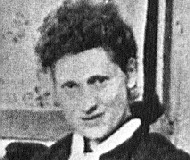
Ada Chard Williams
Murderer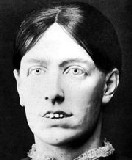 Mary Pearcey
Murderer · United Kingdom · 1890
Mary Pearcey (Mary Eleanor Wheeler; also known as Mary Eleanor) was born in 186…
2 victims
Mary Pearcey
Murderer · United Kingdom · 1890
Mary Pearcey (Mary Eleanor Wheeler; also known as Mary Eleanor) was born in 186…
2 victims
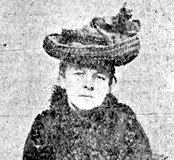 Emily Swann
Murderer · United Kingdom · 1903
Emily Swann (42-year-old mother of 11 children; defendant; convicted of murderi…
1 victim
Emily Swann
Murderer · United Kingdom · 1903
Emily Swann (42-year-old mother of 11 children; defendant; convicted of murderi…
1 victim
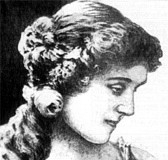 Louise Masset
Murderer · United Kingdom · 1899
Louise Masset was convicted of murdering her son, Manfred Louis Masset, and was…
1 victim
Louise Masset
Murderer · United Kingdom · 1899
Louise Masset was convicted of murdering her son, Manfred Louis Masset, and was…
1 victim
 Robert Lee Willie
Murderer · USA · 1980
Robert Lee Willie (died December 28, 1984) was a man convicted in Louisiana of…
1 victim
Robert Lee Willie
Murderer · USA · 1980
Robert Lee Willie (died December 28, 1984) was a man convicted in Louisiana of…
1 victim
 Vlado Taneski
Serial killer · Macedonia · 2005
Vlado Taneski (1952 - June 23, 2008) was a Macedonian crime reporter turned ser…
3 victims
Vlado Taneski
Serial killer · Macedonia · 2005
Vlado Taneski (1952 - June 23, 2008) was a Macedonian crime reporter turned ser…
3 victims
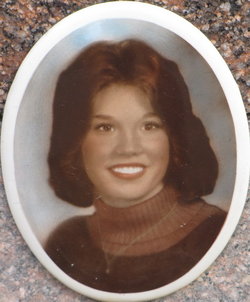 Janice Buttrum
Homicide · USA · 1980
Janice Buttrum was a seventeen-year-old caucasian woman. Demetra Faye Parker wa…
1 victim
Janice Buttrum
Homicide · USA · 1980
Janice Buttrum was a seventeen-year-old caucasian woman. Demetra Faye Parker wa…
1 victim
 Michael James Hayward
Murderer · USA · 1994
Michael James Hayward was sentenced to death in 1996. Hayward was involved in c…
1 victim
Michael James Hayward
Murderer · USA · 1994
Michael James Hayward was sentenced to death in 1996. Hayward was involved in c…
1 victim
 Jessie Joe Patrick
Murderer · USA · 1989
Jessie Joe Patrick was convicted of capital murder and was executed by lethal i…
1 victim
Jessie Joe Patrick
Murderer · USA · 1989
Jessie Joe Patrick was convicted of capital murder and was executed by lethal i…
1 victim
- Gender
- female
- Country
- United Kingdom
- Location
- Barnes, London, England, United Kingdom
- Date of birth
- 1875
- Age at first offence
- 24
- Characteristics
- child killer
- Victim profile
- Selina Ellen Jones, 21 month old
- Method of murder
- Strangulation
- Date(s) of murder
- September 27, 1899
- Years active
- 1899
- Date of arrest
- —
- Status
-
Executed
Executed by hanging at Newgate prison on March 8, 1900
Case identification
Ada Chard Williams (also referred to as Ada Chard-Williams and Mrs. Hewetson in parts of the proceedings) was convicted of the wilful murder of Selina Ellen Jones. She was executed by hanging at Newgate prison on March 8, 1900.
Timeline
- September 1899 — Ada Chard Williams, using the assumed name “Mrs. Hewetson” (4, Bradmore Lane, Hammersmith), advertised to adopt a child.
- August 18, 1899 — Miss Jones saw the advertisement in the Woolwich Herald.
- August 24, 1899 — Florence Jones met the female prisoner at Woolwich Station.
- August 31, 1899 — Florence Jones took the child to Charing Cross Station and handed over money to “Mrs. Hewetson”; the child was left with the prisoner.
- September 3, 1899 — Florence Jones found the address at the Grove occupied by other people.
- September 4, 1899 — Florence Jones made a complaint at a Police-station and afterwards to the West London Police-court.
- September 23, 1899 — Dagmar Loughborough heard Lily crying and later described Mrs. Williams saying the mother had taken the child home.
- September 27, 1899 — The body of Selina Ellen Jones was recovered on the fore-shore of the Thames at Battersea; it was recovered in a parcel with the child bound.
- December 5, 1899 — A letter was received at New Scotland Yard in this envelope.
- December 8, 1899 — Inspector Scott arrested the male prisoner at 26, Gainsborough Road, and discussed the charge; officers also took custody actions involving the child’s clothing earlier that day.
- December 8, 1899 — Police custody actions took place at Gainsborough Road, Hackney; Joseph Gough told the male prisoner he would be arrested for being concerned in the wilful murder of Selina Ellen Jones.
- October 2, 1899 — The first hearing of the inquest was held.
- November 27, 1899 — The inquest concluded.
- February 16, 1900 — The trial at the Old Bailey was held on the 16th and 17th of February 1900.
- February 17, 1900 — The jury found Mrs. Williams guilty of willful murder; the trial concluded with subsequent actions regarding the husband’s verdict.
- March 8, 1900 — Ada Chard Williams was executed by hanging at Newgate prison.
Background
Florence Jones lived at 16, Spicer Road, Finch Road, Battersea. In December 1897, she was confined in a Home at Clapham. A female child was named Selina Ellen Jones. Miss Jones paid weekly for the care of the child: she paid 5s. a week from March to July 1898 and then half-a-crown a week from July 1898. She later saw an advertisement in the Woolwich Herald on August 18, 1899:
- “Adoption.—A young married couple would adopt healthy baby; every care and comfort; good references given; very small premium. Write first to Mrs. Hewetson, 4, Bradmore Lane, Hammersmith”
Ada Chard Williams used the name “Mrs. Hewetson” in the advertisement and in dealings with Florence Jones.
The offence
Ada Chard Williams was convicted of strangling to death 21 month old Selina Ellen Jones in Barnes in London in September 1899.
During post-mortem evidence at trial, Dr. Kempster concluded that the child died from suffocation by strangulation. Dr. Kempster described a bruise on the left side of the head extending from the temple to the back of the head, covering about the size of the palm of one’s hand, and stated it was given with considerable violence. Dr. Kempster said the child had constriction marks all round the neck corresponding to the tape and that the condition of the heart was proof positive of suffocation. He said the child was about 18 months old, weighed 19 1/2 lb., and was 31 in. in length.
Injury and disposal described in testimony
The body was recovered on September 27 on the fore-shore of the Thames at Battersea. Witness David Voice described the parcel and the binding:
- the head was covered up with a white cotton bag, tied round the neck with cotton stuff
- the body was wrapped and the child’s limbs were positioned with the heels drawn up over the chest and the arms secured between the body and legs
- the binding included a sash-cord or blind-cord and knots including what David Voice described as fisherman's bend and half-hitch knots
David Voice testified:
- “I am familiar with knots and the making of them—I was in Her Majesty's Navy for just over 12 years, and there we learned to tie all knots which are required in the Navy—in the blind cord there are knots which are well known to those familiar with knots—there are three knots here known as the fisherman's bend, and here is another known as the half-hitch”
Dr. Kempster testified that the child was found dead and tied up and that there was no appearance of any goose skin, froth, or foreign body in air passages, and that clotted blood was found between the skin and skull.
Investigation
No direct evidence of the murder was forthcoming at trial.
Circumstantial evidence involved the cords and knots. Constable David Voice testified that fishermen’s bends were learned in the Navy and that similar knots were found in Mrs. Hewetson’s house, which she had abandoned hurriedly. The defence addressed the fishermen’s bend as an expert topic discussed by the presiding judge.
Thomas Henry Guerrin examined handwriting and compared writings including:
- a letter to the Secretary, Criminal Investigation Department, New Scotland Yard (read aloud in evidence)
- other numbered letters, including one to Miss Jones and others to the Woolwich Herald
A letter from Ada Chard Williams was read aloud verbatim. The letter began:
- “To the Secretary, Criminal Investigation Department, New Scotland Yard, W. Sir,—I must apologise taking this liberty, but I see by the papers that I, in conjunction with my husband, are suspected of murdering the little female child found at Battersea on September 27th. The accusation is positively false. The facts of the case are these: I, much against my husband's wish, in August last advertised for a child, thinking to make a little money, the result of which was the adoption of this little child, with whom I received the sum £3.”
The letter continued describing a system of “baby-farm” arrangements and denied the murder:
- “I have, it is true, been carrying on a sort of baby-farm; that is to say, I have adopted babies, and then advertised and got them re-adopted for about half the amount I had previously received. I have had five in this way; two died while in my care, but I can prove that every attention and kindness was shown them; no money was grudged over their illness.” It said: It stated:
- “You will say, 'If innocent, why not come forward?' There have been innocent people hanged before now, and I must admit that at the present things look very much against me, but it is not fair to go entirely on circumstantial evidence.” It also said she tried to find the woman to whom she gave up the child:
- “I am trying to find the woman to whom I gave up the child, but, unfortunately for me, I destroyed her letters, and if I came forward there would be no possibility of clearing myself unless I could find some clue about her.” She wrote:
- “In conclusion, I must tell you that my husband is not to blame in any way whatever; he has always looked upon the whole matter with the greatest abhorrence, but only gave way to me because he was, through illness, out of employment; he never, however, once touched any of the money I made by these means.—Yours truly, (Signed) M. HEWETSON”
At the end of the letter the “P.S.” read:
- “P.S.—We left Barnes simply because we were unable to meet the rent, and some time before we heard of this lamentable affair. The shop in Warwick Road is a newspaper shop, the Hammersmith Road end, and only a few doors down on the right hand side.”
Arrest
After conviction and related proceedings, the male prisoner’s verdict situation led to further steps involving a fraud warrant. The record stated that after the proceedings, the husband was immediately re-arrested by a City officer on a warrant charging him with fraud.
On December 8, Joseph Gough told the male prisoner:
- “We are guilty of fraud, but innocent of murder”
Inspector James Scott described taking custody of the female prisoner at 26, Gainsborough Road, where she was kneeling apparently packing a trunk and said:
- “I am Inspector Scott” and then the female prisoner said:
- “I know, you have come about the Battersea job; I knew it was you as soon as I heard your step on the stairs” Scott stated:
- “Mrs. Williams, I arrest you for the wilful murder of Selina Ellen Jones, and anything yon may say to me will be given in evidence against you” She replied:
- “Have you got my letter?” Scott said he had it, and she stated:
- “That letter is God's truth; but I know I cannot clear myself; my husband was not in the house when I took the child away”
Trial
Court proceedings and parties
William Chard Williams and Ada Chard Williams were indicted for and charged with the wilful murder of Selina Ellen Jones. The proceedings included prosecution by Messrs. Charles Mathews and Bodkin, and defence by Messrs. Wild and Macmahon. The presiding judge was Mr. Justice Ridley. The trial took place at the Old Bailey and concluded on Saturday evening under remarkable circumstances.
The indictment related to Selina Ellen Jones, described as an illegitimate child of eighteen months.
Evidence presented
The trial included testimony from Florence Jones regarding the advertisement, dealings, payments, and the later discovery of the dead body at Battersea Mortuary.
Martha Wetherall testified to taking charge of the child from about March 1898 to August 31, 1899, including details about vaccination on the left arm and an accident to the child’s face caused by thumb contact while taking it to be vaccinated.
Charles Allen Hopper testified about receiving a letter and draft advertisement for insertion into the Woolwich Herald:
- “4, Bradmore Lane, Hammersmith, August 16th, 1899. Sir,—Will you please insert the following advertisement in the next issues of your four papers. Enclosed is 1 s . 4 d . in halfpenny stamps, and oblige.—Yours truly, M. Hewetson.”
William Thomas Canning testified that the male prisoner came to his premises at 4, Bradmore Lane, Hammersmith to take in letters addressed to “Hewetson.”
Audrey Woolmer testified about renting a room for “me and my baby,” the name “Hewetson,” and that the male prisoner was present on the mat while arrangements were made. Woolmer described events on the day of the arrival with the baby and parcel and that after tea they all went out and later the prisoner left immediately with the baby and parcel.
Dagmar Loughborough described living in Grove Villas, Grove Road, Barnes, noting houses including No. 3 occupied by the two prisoners. Loughborough testified about seeing a little boy Freddy and later a little girl Lily described as being about two years old. She described alleged punishment and described hearing Mr. Williams and Mrs. Williams exchanges, including:
- Mr. Williams said to Mrs. Williams, “Don't do that,”
- Mrs. Williams replied, “You mind your own damned business, or I will serve you the same” She testified that Mrs. Williams told her she had beaten Lily with a stick and that Lily was left lying in it, and later that she showed “weals” on the child’s back.
Defence position
The defence called no evidence. Much was said about the “fishermen’s bend,” which the presiding judge discussed as an expert due to experience with this knot “while salmon fishing.”
Verdicts
After half an hour’s deliberation, the jury found Mrs. Williams guilty of willful murder. As regards her husband, the jury declared him “accessory after the fact.”
The sentence imposed was death, and the record states that Mrs. Williams was removed from the dock saying:
- “Thank you, my lord,”
Mr. Justice Ridley doubted the weight of the husband verdict under the murder indictment. After discussion with counsel in his private room, an arrangement was made to disregard the verdict entered and enter one of not guilty. The jury acquitted the husband under the judge’s discretion and he was liberated, but then re-arrested by a City officer on a warrant charging fraud.
Sentencing
Ada Chard Williams was accordingly sentenced to death.
Appeals
No appeals were described.
Outcome
Ada Chard Williams was executed by hanging at Newgate prison on March 8, 1900. She was described as the last woman to be hanged at Newgate.
The trial verdict also reflected that William Chard Williams was “NOT GUILTY,” while Ada Chard Williams was “GUILTY .— DEATH.”
Additional suspicion mentioned
Ada Chard Williams was suspected of killing other children although no further allegations were proceeded with.
Aftermath
A police officer eventually discovered that “Mrs. Hewetson” was really Ada Chard Williams. The record states there was no body available at first to prove murder until little Selina’s corpse was washed up on the bank of the Thames at Battersea. The knot described as “Fisherman’s bend” was described as a crucial piece of evidence at her trial.
Other details
Addresses and names used in evidence
- “Mrs. Hewetson, 4, Bradmore Lane, Hammersmith” appeared in the Woolwich Herald advertisement.
- Florence Jones said she paid premiums and arranged payments including £3 and £5 in total, with only £3 initially on the day.
- The record stated that “Hewetson” or Williams and her husband had been living since July in No. 3, Grove-villas, Grove-road, Barnes.
- Dagmar Loughborough said No. 3 was occupied by the two prisoners; she said there was also a little boy Freddy (about 10 months old) and later Lily (about two years old).
Individuals identified in testimony
The record included testimony from:
- Florence Jones (mother of Selina Ellen Jones)
- Martha Wetherall
- Charles Allen Hopper (manager of the Woolwich Herald)
- William Thomas Canning
- Audrey Woolmer
- Beatrice Boswell
- Dagmar Loughborough
- Emily Gertrude Perkins
- James Sale (builder and agent for owner of Grove Villas)
- Alexander Clyde (Sergeant 63 V) produced and proved the plant of locality of 3, Grove Road, Barnes
- William Stokes (waterman)
- David Voice (451 V)
- Felix Charles Kempster (Divisional Surgeon of Police)
- Jane Davidson (wardress at Her Majesty’s Prison, Holloway)
- Thomas Henry Guerrin (handwriting examiner)
- George Saunders, Elizabeth Sheffield, Ellen Ethel Smith, Charles Epton, Edward Davy Smith, Percy Smith, John Duplane, and John Windsor (Sergeant, V)
- James Scott (Detective Inspector)
Letter contents connected to handwriting evidence
Thomas Henry Guerrin stated in his opinion that multiple items were written by the same person, including the letter from Ada Chard Williams to the Secretary, Criminal Investigation Department, New Scotland Yard.
Knot evidence details
David Voice testified about knots in the cord and blind cord:
- “there are three knots here known as the fisherman's bend, and here is another known as the half-hitch” He also later testified in response to questions:
- “there are 11 of those in the string round the brown paper; there were six half-hitches in the blind cord” and further:
- “I find one in the cord round the body, and only one of that kind—” and about reef and other knot types:
- “A reef knot is well known to me, it is used for reefing sails”
- “overhand” knots known to him were also listed in counts.
Finally, the record described Dr. Kempster’s opinion that the child was strangled and placed into the water when dead, and that the bruise and constriction marks were consistent with intentional violence.

Spotted an error, or have more information about this case?