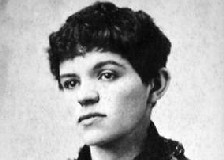
Adelaide Bartlett
Murderer?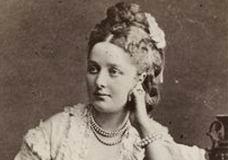 Florence Bravo
Murderer? · United Kingdom · 1876
Florence Bravo was a Victorian heiress and young widow at 26. She met and marri…
1 victim
Florence Bravo
Murderer? · United Kingdom · 1876
Florence Bravo was a Victorian heiress and young widow at 26. She met and marri…
1 victim
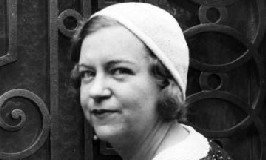 Elvira Barney
Murderer? · United Kingdom · 1932
Elvira Barney Elvira Barney was found not guilty on July 5, 1932. Michael Scott…
1 victim
Elvira Barney
Murderer? · United Kingdom · 1932
Elvira Barney Elvira Barney was found not guilty on July 5, 1932. Michael Scott…
1 victim
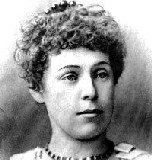 Florence Maybrick
Murderer? · United Kingdom · 1899
Florence Elizabeth Maybrick (Florence Maybrick) was an American woman convicted…
1 victim
Florence Maybrick
Murderer? · United Kingdom · 1899
Florence Elizabeth Maybrick (Florence Maybrick) was an American woman convicted…
1 victim
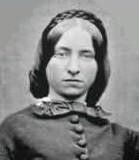 Madeleine Smith
Murderer? · United Kingdom · 1857
Madeleine Smith received a verdict of "not proven" on July 9, 1857. She died on…
1 victim
Madeleine Smith
Murderer? · United Kingdom · 1857
Madeleine Smith received a verdict of "not proven" on July 9, 1857. She died on…
1 victim
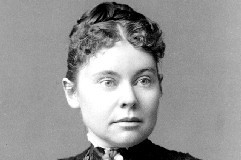 Lizzie Borden
Murderer? · USA · 1892
Lizzie Andrew Borden (July 19, 1860 – June 1, 1927) was an American woman who w…
2 victims
Lizzie Borden
Murderer? · USA · 1892
Lizzie Andrew Borden (July 19, 1860 – June 1, 1927) was an American woman who w…
2 victims
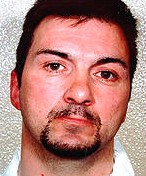 Barry George
Murderer? · United Kingdom · 1999
Barry George was also known as Barry Bulsara. He was born on 15 April 1960 in H…
1 victim
Barry George
Murderer? · United Kingdom · 1999
Barry George was also known as Barry Bulsara. He was born on 15 April 1960 in H…
1 victim
 Jeremy Steinke
Murderer · Canada · 2006
Jeremy Allan Steinke was sentenced to three life sentences on December 15, 2008…
3 victims
Jeremy Steinke
Murderer · Canada · 2006
Jeremy Allan Steinke was sentenced to three life sentences on December 15, 2008…
3 victims
 Roger Dean
Mass murderer · Australia · 2011
Roger Kingsley Dean was an aged-care nurse and worked at Quakers Hill Nursing H…
11 victims
Roger Dean
Mass murderer · Australia · 2011
Roger Kingsley Dean was an aged-care nurse and worked at Quakers Hill Nursing H…
11 victims
 Paul Stephen Osborne
Murderer · Australia · 1995
Paul Stephen Osborne was a 36-year-old man formerly of Wurtulla on the Sunshine…
2 victims
Paul Stephen Osborne
Murderer · Australia · 1995
Paul Stephen Osborne was a 36-year-old man formerly of Wurtulla on the Sunshine…
2 victims
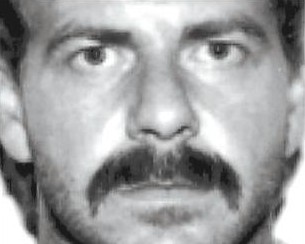 Tommy David Strickler
Murderer · USA · 1989
Tommy David Strickler was executed by lethal injection in Virginia on July 21,…
1 victim
Tommy David Strickler
Murderer · USA · 1989
Tommy David Strickler was executed by lethal injection in Virginia on July 21,…
1 victim
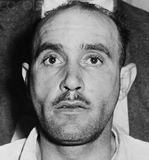 Raymond Fernandez
Serial killer · USA · 1947
Raymond Martinez Fernandez was executed by electrocution at Sing Sing prison in…
17 victims
Raymond Fernandez
Serial killer · USA · 1947
Raymond Martinez Fernandez was executed by electrocution at Sing Sing prison in…
17 victims
- Gender
- female
- Country
- United Kingdom
- Location
- London, England, United Kingdom
- Date of birth
- 1856
- Age at first offence
- 30
- Characteristics
- parricide, poisoner
- Victim profile
- Thomas Edwin Bartlett, 40 (her husband)
- Method of murder
- Poisoning ( chloroform)
- Date(s) of murder
- January 1, 1886
- Years active
- 1886
- Date of arrest
- —
- Status
-
Acquitted / overturned
Found not guilty on April 17, 1886
Case information
Adelaide Bartlett was tried for the murder of her husband, Thomas Edwin Bartlett, in connection with his death in the Pimlico district of London in 1886. She was found not guilty on April 17, 1886.
Background
Adelaide Blanche Bartlett was French-born and married Thomas Edwin Bartlett in 1875, when she was nineteen and he was twenty-nine. Thomas Edwin Bartlett came from a close-knit family of prosperous grocers, and Adelaide resented the closeness that she had married into. Thomas Edwin Bartlett had no interest in satisfying his young wife sexually. Within a year of their marriage, she had begun an affair with her brother-in-law.
In 1885 Adelaide Bartlett became friendly with Reverend George Dyson, a Wesleyan minister. Edwin approved of the relationship and made a will leaving everything to Adelaide, with Dyson as the executor.
The Bartletts moved to Pimlico in October 1885. Within weeks, Edwin became ill, and a doctor diagnosed subacute gastritis.
Edwin and Adelaide had a child that was born and died during their period of housekeeping at Herne Hill, a suburb of London. After the death of their child, the Bartletts agreed to occupy a wholly platonic relationship towards one another. In the last months of his life, Edwin seemed moved to regain his abandoned privileges as a husband.
Adelaide’s father was rumoured to be a wealthy and possibly titled member of Queen Victoria’s entourage, which had visited France in 1855, possibly Adolphe Collot de la Tremouille, Comte de Thouars d’Escury. Adelaide was sometimes recorded as being born illegitimately in Orléans in 1855. The marriage of a Clara Chamberlain and Adolphe Collot de Thomas (sic) d’Escury was recorded in the BMD index March quarter 1853, lending weight to the supposition that Adelaide was not illegitimate. BMD records Adolphe’s death (under the surname De Escury) in the Pancras district of London in the June quarter of 1860.
In the 1861 census, Clara was a widow and was living with children Henry (7), Adelaide (5), Frederick (3) and Clara (1), as well as her unmarried sister Ellen Chamberlain (17) at RG9/163 Folio 97 Page 10 Havelock Road, South Hackney, where the three elder children were recorded as being born in France. BMD listed Clara’s death at the age of 33 in the Pancras district in the December quarter of 1866.
In the 1871 census, the orphaned Adelaide (surname enumerated as de Thours) was adopted daughter to William H and Ann Wellbeloved, with William being a confectioner. Her brother Frederick (as Freddy) was a boarder in the same household at High Street, Hampton Wick, Middlesex RG10/866 Folio 7 Page 5. Adelaide was listed as an assistant to the confectioner and born in St Cloud, a district of Paris, rather than Orleans, as was her brother Freddy.
Edwin and Adelaide were married in 1875. According to Adelaide, it was intended to be a platonic marriage. In 1881, Adelaide had a stillborn baby by Edwin. Edwin refused her female nurse’s advice to call a male doctor during a difficult labour because he didn’t want another man “to interfere with her”.
Early in 1885, they met Dyson as the local Wesleyan minister and he became a frequent visitor. Edwin made Dyson executor of his will, in which he left his entire estate to Adelaide on condition that she didn’t remarry. Later Edwin redrew the will four months before his death, removing the bar on Adelaide remarrying.
Towards the end of 1885 Adelaide asked Dyson to get some chloroform that was prescribed by Dr. Alfred Leach, the doctor treating Edwin. Leach later admitted that he prescribed it reluctantly, but at the insistence of his patient. Under the laws of the day regarding purchasing large amounts of potential medical poisons, one had to sign a book at chemist’s pharmacy as a record, but not if the amounts purchased were small. Dyson bought four small bottles of chloroform instead of one large bottle, and bought them in several shops, claiming that he needed it to remove grease stains. Only after Edwin’s death did Dyson claim to suddenly realize how suspicious his actions were.
The offence
Thomas Edwin Bartlett died in the Bartletts’ Pimlico flat. Liquid chloroform was found in his stomach. Doctors found about a sixteenth of an ounce of chloroform in the dead man’s stomach and deduced that a large dose must have been swallowed. Although chloroform is a corrosive poison, no traces were found in his mouth or throat. The issue in court was how the poison got into Edwin’s stomach without burning him internally in the throat and larynx.
On the last evening of his life, Edwin Bartlett told his maid to have a sumptuous dinner prepared for him on the next day, which was presented as hardly the action of a man contemplating suicide.
Adelaide admitted that she used chloroform, sprinkled on a handkerchief, to help her husband to sleep during the period of his illness.
In later narration of the events, the defence position was that Edwin had drunk the chloroform to commit suicide, and there was no evidence to show how the poison had been administered.
Investigation and inquest
On 1st January 1886, Adelaide called her landlord and asked him to, “Come down; I think Mr Bartlett is dead.”
Before the post-mortem examination, Thomas Edwin Bartlett’s father became suspicious and insisted on a post-mortem examination. One was held following the father’s request. The examination found the body healthy and a strong smell of chloroform in the stomach. Government experts were called in, and the experts reported death by an excessive dose of chloroform.
An inquest returned a verdict of wilful murder by Adelaide Bartlett, with George Dyson being an accessory before the fact, and both were arrested.
Dyson later gave evidence that he had bought chloroform for Adelaide and that he had claimed it was to remove grease stains. After suspicions arose, he told the story to a mutual acquaintance and to the Coroner’s jury.
A quip attributed to surgeon Sir James Paget was given in connection with the internal burns issue: “Now that she has been acquitted for murder and cannot be tried again, she should tell us in the interest of science how she did it!”
Arrest
After the inquest verdict of wilful murder, Adelaide Bartlett and George Dyson were arrested. The prosecution initially charged both with the murder of Edwin, though the case against Dyson was withdrawn before it came to trial.
Trial
The trial opened on 12 April 1886 and attracted great press coverage both in the UK and abroad.
At the opening of the trial, charges were read out against both George Dyson and Adelaide. The prosecution immediately asked for the charges against Dyson to be dropped and he was formally acquitted. This enabled the prosecution to call Dyson as a prosecution witness, and it also made it possible for the defence to take advantage of his testimony.
Adelaide Bartlett was extremely fortunate in her choice of barrister: Sir Edward Clarke. His handling of the case was described as showing sufficient ambiguities against the deceased to make the suicide theory barely possible, and his tactics with Dr. Leach, the elder Bartlett (described as having a mercenary, ulterior motive towards his son’s estate), and Reverend Dyson were described as sufficient to gain her an acquittal.
Adelaide was not able to testify in her own defence, and the defence called no witnesses, though it gave a six hour closing statement to the court.
Forensic evidence and disputed mechanism
The main forensic aid described was that liquid chloroform burns and cannot pass down to the stomach without burning the sides of the throat and the larynx. It was said that Edwin did not have such burns, suggesting he was actually able, somehow, to gulp the chloroform down quickly. It was said that this bolstered the suicide theory by suggesting rapid drinking and rushing the poisoned drink down.
When the jury returned to court after considering its verdict, the foreman said: “although we think grave suspicion is attached to the prisoner, we do not think there is sufficient evidence to show how or by whom the chloroform was administered.”
The foreman then confirmed that the verdict was not guilty. The verdict was greeted with “rapturous applause”, and public opinion was described as having moved in Adelaide’s favour during the course of the trial.
The verdict was also described as being partly secured because the prosecution could not prove how Mrs Bartlett could have committed the crime.
Sentencing
Adelaide Bartlett received no sentence because the jury returned a verdict of not guilty.
Outcome
Adelaide Bartlett was acquitted. The acquittal occurred in connection with the jury’s statement that there was not sufficient evidence to show how or by whom the chloroform was administered.
After the trial, both Adelaide Bartlett and Reverend George Dyson vanished from public notice.
A post-trial account included that Adelaide Bartlett later married George Dyson, though it also included a theory that the two never met again. Another account suggested Adelaide emigrated to the U.S., settled in Connecticut, and died there some time after 1933, while others regarded her post-trial life as mysterious.
For Dyson, one reported claim in 1939 said that Dyson had come to New York, U.S., changed his name, and as a fortune hunter had married and murdered a young bride, her sister, for her estate in 1916. Another account said that Methodist church records indicated Dyson emigrated to Australia.
The Bartlett case was dramatized on the BBC radio series The Black Museum in 1952 under the title of “Four Small Bottles.” It was also dramatized in a four-part TV series, A Question of Guilt, in 1980.
Other details
Relationship and testimony details mentioned
Edwin Bartlett invited Dyson to assist Adelaide in her studies. The friendship between the two men became demonstrative.
A letter from Edwin Bartlett to Dyson was quoted verbatim: “14 St James Street, Dover, Monday: Dear George – Permit me to say I feel great pleasure in thus addressing you for the first time. To me it is a privilege to think that I am allowed feel towards you as a brother, and hope our friendship may ripen as time goes on, without anything arising to mar its future brightness. Would that I could find words to express thankfulness to you for the very beautiful, loving letter you sent Adelaide today. It would have done anyone good to see her overflowing with joy as she read it when walking along the street, and afterward as she read it to me. I felt my heart going out to you. I long to tell you how proud I feel at the thought that I should soon be able to clasp the hand of the man who could from his heart pen such noble thoughts. Who can help loving you? I feel I must say to you two words “Thank you”, and my desire to do so is my excuse for troubling you with this. Looking toward the future with joyfulness, I am, yours affectionately, Edwin.”
It was also described that when the Bartletts moved into London, the husband secured a continuance of the intimacy by buying a season railway ticket for Dyson.
Day-of-death events mentioned
On New Year’s Eve, December 31, 1885, Edwin Bartlett returned from a visit to the dentist and went to sleep alongside Adelaide in their Pimlico flat. Just before 4am the next morning, Adelaide asked their maid to fetch Dr Leach, fearing Edwin was dead, before rousing the landlady. Edwin’s stomach was filled with liquid chloroform.
The father had earlier accused Adelaide of having an affair with Edwin’s younger brother and was described as detesting Adelaide. He had come to London some three weeks before the tragical climax to visit his son on hearing of his illness. He saw his son once, but the following day the wife refused to allow him to go to the sick room. The old man went off furious at this, declaring indignation. He later returned and seemed to have been pleasantly received, while the son told him he was much better but had snakes crawling up inside him. After the son’s death, the father went at once to the house and was put in a rage by being kept waiting 26 minutes in the smoking room. Adelaide then came, put her arms around his neck and said: “Dear father, don’t fret. I will never see you want. It shall be just the same as if Edwin was alive.”
The father went upstairs to the corpse and gave his testimony in quoted form: “I leaned over him and kissed him passionately, and smelt his corpse for prussic acid!”
Quoted remarks about Dyson and chloroform
Dyson appeared as a witness against the woman and his story was described as strange. It was said that on the 27th of December, Mrs Bartlett asked him if he could get some chloroform and explained she had used it before in nursing her husband as a means of inducing sleep. It was said that Dyson devoted the next two days to procuring chloroform, going to four different druggists and getting a little from each, on the pretense that he wanted it to remove stains from clothes, and got four ounces which he put in one bottle and gave to her on the 19th.
It was also described that on the day of the post-mortem examination, before Dyson learned there were suspicions of foul play, he asked Mrs Bartlett what she had done with the chloroform. She answered: “I have never used it: the bottle lies there full and uncorked. This is a very critical time for me, and you mustn’t worry me with questions. Put away from your mind the fact that you ever gave me the chloroform.
Two days later, after he learned suspicions was rife, he asked again what she had done with the chloroform, and she stamped her foot angrily and said: “Oh, damn the Chloroform!”
It was also described that Dyson claimed he had thrown away his four little drug bottles while he was walking over Wandsworth Common on his way to preach at Tooting. It was said that she later told him she had thrown the big bottle away, contents and all, out of a railway carriage the previous day.
It was also said that she answered: “If you don’t incriminate me, I don’t’ incriminate you.
Judge and jury comments mentioned
A note at the end described the judge’s summing up as saying that Dyson had taken advantage of the husband’s peculiar state of mind to supplant him in the affections of Mrs Bartlett, and advised that no part of that gentleman’s testimony be trustworthy. The note also described defence testimony as saying Mrs Bartlett retained the chloroform bottle for a long time after her husband’s death, and she was extremely anxious for a post-mortem examination to ascertain the exact cause of death. The note also stated that another point weighed heavily by the jury was made by the judge in his summing up.
Media and publication references mentioned
The media section included that “My Letter to George,” or “Mesmerized,” with Jodie Foster, was “... loosely based on that of Adelaide Bartlett, who, in 1886, went on trial for the chloroform poisoning of her husband.”
The New York Times account included details naming Adelaide Bartlett as aged 30 and accused of having murdered her husband, Frederick Bartlett, aged 40, by administering to him a huge dose of chloroform. The Rev. George Dyson, a Wesleyan Minister, was described as aged 27. The New York Times account stated that Adelaide married Edwin Bartlett 14 years ago, that he was a grocer 10 years her senior with considerable money, a large business and a religo-metaphysical mind, that immediately after their marriage he yielded to her desire for deep education and sent her to school, and that her schooling ended and the two began housekeeping at Herne Hill for some five years, during which period a child was born and died. The account also described the Rev George Dyson’s appearance, his preaching in the Wesleyan Chapel in Merton Abbey in January 1885, and that the friendship ripened swiftly to intimacy, including that Dyson had a BA of Dublin University and was invited to assist Mrs Bartlett in her studies.
The New York Times account also described the meal and door-rapping events, and the father’s involvement, including the post-mortem held the following day, Jan 7.
A BBC radio series appearance was mentioned as The Black Museum in 1952 titled “Four Small Bottles,” and a TV series appearance as A Question of Guilt in 1980.
Final acquittal description mentioned
A note at the end described: “The result of the trial of Mrs Bartlett was given in THE TIMES’ cable news yesterday. The jury acquitted her after being out only a short time, and the verdict was applauded by the spectators.”
Spotted an error, or have more information about this case?