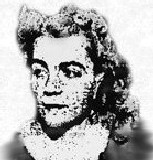
Violet Berling
Murderer Marie Noe
Murderer · USA · 1949
Marie Noe was convicted in June 1999 of murdering eight of her children. Betwee…
8 victims
Marie Noe
Murderer · USA · 1949
Marie Noe was convicted in June 1999 of murdering eight of her children. Betwee…
8 victims
 Earle Dennison
Murderer · USA · 1952
Earle Dennison was a widow and worked as a surgical nurse. She worked at the We…
2 victims
Earle Dennison
Murderer · USA · 1952
Earle Dennison was a widow and worked as a surgical nurse. She worked at the We…
2 victims
 Barbara Graham
Murderer · USA · 1953
Barbara Graham (June 26, 1923 – June 3, 1955) was an American criminal and conv…
1 victim
Barbara Graham
Murderer · USA · 1953
Barbara Graham (June 26, 1923 – June 3, 1955) was an American criminal and conv…
1 victim
 Betty Butler
Murderer · USA · 1952
Betty Butler was executed on June 11, 1954. She was 26 years old and was of the…
1 victim
Betty Butler
Murderer · USA · 1952
Betty Butler was executed on June 11, 1954. She was 26 years old and was of the…
1 victim
 Earl Frederick
Murderer · USA · 1989
Earl Frederick was executed by lethal injection in Oklahoma on July 30, 2002. ·…
2 victims
Earl Frederick
Murderer · USA · 1989
Earl Frederick was executed by lethal injection in Oklahoma on July 30, 2002. ·…
2 victims
 Armin Meiwes
Murderer · Germany · 2001
Armin Meiwes was a German man who became known as the “Rotenburg Cannibal” or “…
1 victim
Armin Meiwes
Murderer · Germany · 2001
Armin Meiwes was a German man who became known as the “Rotenburg Cannibal” or “…
1 victim
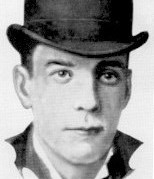 Marion Hedgepeth
Murderer · USA · 1870
Name: Marion Hedgepeth · Also known as: “Handsome Bandit,” “Debonair Bandit,” “…
2 victims
Marion Hedgepeth
Murderer · USA · 1870
Name: Marion Hedgepeth · Also known as: “Handsome Bandit,” “Debonair Bandit,” “…
2 victims
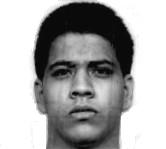 Andrew Cantu
Murderer · USA · 1990
Andrew Cantu was convicted for the capital offense of murdering Mandell Eugene…
3 victims
Andrew Cantu
Murderer · USA · 1990
Andrew Cantu was convicted for the capital offense of murdering Mandell Eugene…
3 victims
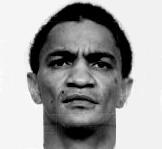 Dwight Adanandus
Murderer · USA · 1988
Dwight Adanandus (offender #940) was executed by lethal injection in Texas on O…
1 victim
Dwight Adanandus
Murderer · USA · 1988
Dwight Adanandus (offender #940) was executed by lethal injection in Texas on O…
1 victim
- Gender
- female
- Country
- USA
- Location
- Long Beach, California, USA
- Date of birth
- 1928
- Age at first offence
- 22
- Characteristics
- torture, sexual abuse, mentally ill
- Victim profile
- Katherine (Kay) Frances Erickson, 10
- Method of murder
- " Aspiration of food" (defined by Dr. Cefalu to mean "the drawing down of food into the air passages due to multiple injuries")
- Date(s) of murder
- October 12, 1950
- Years active
- 1950
- Date of arrest
- Same day
- Status
-
Life imprisonment
Sentenced to life in prison on April 28, 1951
Case details
Violet John Berling was an accordion teacher. The deceased child was Kay Frances Erickson, a 10-year-old girl.
The offence
Berling’s pupil Kay Frances Erickson died after injuries and restraints associated with Berling’s studio and instruction. An autopsy determined that the cause of death was “aspiration of food,” defined as “the drawing down of food into the air passages due to multiple injuries.” The medical examiner opined that none of the wounds were self-inflicted, that some were apparently of recent origin and others were superimposed on older wounds, and that the wounds in the aggregate would have ultimately resulted in the girl’s death. The examiner also described marks compatible with tying straps tightly around wrists and ankle, a state of lividity in feet and legs consistent with death while strapped in a chair, and a vaginal tear with dilation of both vagina and anus, with an opinion that these conditions indicated a frequent stretching of the parts over some period of time and the introduction of an object “of considerable resistance.”
Berling contended that the injuries were self-inflicted, that Kay Frances had a habit of inflicting similar injuries and of masturbation, and that Berling had never “laid a hand on the child in any way,” and had not fastened the girl to a chair.
Investigation and discovery
On the morning of October 12, 1950, in answer to a telephone call, the fire department ambulance went to Berling’s studio at about 6:30–6:40 a.m. The ambulance attendant found the body of Kay Frances Erickson lying on a studio couch. Although apparently dead, the body was removed to the ambulance and a resuscitator was applied with negative results. Upon arrival at Seaside Hospital, the girl was pronounced dead. Later that morning, the body was taken to the Los Angeles County morgue for an autopsy performed by Dr. Victor Cefalu, Assistant Chief Autopsy Surgeon.
The autopsy showed the body was covered with multiple cuts, burns, abrasions, and contusions. The examiner opined that the injuries were not self-inflicted, described the presence of numerous slicing wounds from a sharp instrument such as a razor blade, burning wounds produced only a few minutes or a few hours before death, and a triangular area of abrasion in the pubic region, along with the vaginal tear and dilation described above.
Background
Kay Frances was born on April 22, 1940, at San Pedro. She entered kindergarten there and, at the age of five, took dancing and piano lessons for eight or nine months. The family moved to Long Beach in July, 1947, and Kay resumed dancing lessons. Mrs. Erickson took Kay out of school in May because of a nervous stomach condition and because the teacher had advised that Kay would not pass.
School teachers testified that Kay was apparently a normal child in school, but somewhat immature, and had an I.Q. of 88, somewhat below normal. The school record noted that Kay was “Artistic in singing and dancing.” Kay continued accordion lessons without payment after March 1949 because of the parents’ inability to pay. Some other students were also given free lessons.
After about June 28, 1948, Mrs. Erickson conferred with Miguel Verdugo, an accordion teacher, and was referred to Berling for weekly lessons at Berling’s studio in Long Beach. Verdugo had a home in Long Beach but shared a studio with Berling, using the studio on Mondays. Berling took Verdugo’s phone calls and arranged appointments, while Verdugo paid bills connected with the studio.
At first, Mrs. Erickson accompanied Kay to the studio and waited until the lesson was completed. Later the daughter was left there, sometimes all day until as late as 10:30 p.m. Much of the time Mr. Erickson was unemployed and Mrs. Erickson worked to support the family. Sometimes one or more children stayed all night with Berling at the studio, sleeping on the studio couch. Berling bought the children gifts of clothing and toys, including gold wrist watches for Kay Frances and another pupil. The children were washed and generally taken care of, and were taken individually or as a group to places of amusement, usually accompanied by Mr. Verdugo and Berling. On some occasions the children were taken out to eat; at other times food was brought to the studio.
A children’s accordion quartet was formed consisting of Kay Frances and three other children, aged nine, eight, and six, respectively. The quartet came to the studio to practice several times a week after school hours and spent the balance of the day and evening there.
Berling stated that Mrs. Erickson expressed dissatisfaction with Mr. Erickson, that a separation was imminent, and that she asked Berling to take care of Kay Frances day and night for a period of time. On July 17, 1950, Berling found that Kay had been left at the studio where Verdugo was teaching on that day. Thereafter Kay lived with Berling at the studio until death occurred on October 12, 1950.
Berling had an apartment at 32 Orange Street in Long Beach, but preferred living at the studio because of inconvenience of transportation and the existence of a telephone at the studio. Berling stated that the mother visited only once and that there was no indication of affection between the two.
Berling contended that she frequently tied Kay Frances to a straight-backed chair when she practiced the accordion while also restraining her left arm to ensure proper position for accordion playing. She claimed accordion players frequently tied themselves to chairs while practicing to help relieve the pressure of holding the heavy instrument.
Arrest
Berling was arrested in mid-October 1950 after making a frantic call to a doctor stating that Kay Frances was desperately ill after “abusing herself.”
Trial
The trial commenced January 3, 1951, and ended April 20, 1951. During the trial, Berling was often unconscious or only semiconscious and repeatedly experienced fainting spells and other episodes of illness. The trial record contained 47 separate references to Berling’s mental and physical condition between March 8 and April 12, 1951, including recesses granted for this reason extending from a few minutes to five days.
On March 8, the trial court excused the jury after observing that Berling appeared ill with “a severe tremor and she is sitting now at the counsel table with her head down and her eyes closed part of the time.” When asked, Berling gave “no answer,” which the court stated “doesn’t show an alertness that is necessary for a defendant in her position.” A physician was called. The physician opined that Berling’s condition was functional and an emotional and nervous upset from strain, and that she believed Berling was capable of understanding a wire recording or understanding questions and answers, adding: “I think that with an emotional disturbance such as she has, some inattention to her surroundings is apt to result.” The physician also stated it was “largely up to her” whether the trial should proceed without detriment to her interests.
On March 28, the judge described an appearance of being tired and of not being able to look after her interests well, stating: “Now you are closing your eyes. Your are practically dropped over as though you were in a poor physical and mental state.” Berling indicated the trial could proceed. Shortly thereafter, Berling fainted.
On April 3, Berling resumed the witness stand but about 11 a.m. fainted again and fell out of the witness box. On April 4, the court found her condition worse, and counsel agreed the trial could not go on, resulting in adjournment.
After multiple adjournments and continuances, cross-examination of Berling was resumed on April 9, but required repetition due to her episodes. On April 12, Berling again fainted. The trial court stated: “I have been informed by the Deputy Sheriff, Mrs. Baust, that the defendant did [115 Cal. App. 2d 267] not lose consciousness during this last partial fainting and loss of strength to go ahead, but that she was in a state of collapse.” Reexamination was concluded by stipulations as to matters Berling would have testified to, due to her condition. The appellate record included discussion that there was no charge that Berling was malingering.
A juror-related contention later alleged that Juror No. 3 mingled with a hostile crowd after the trial had recessed for the day and had answered a material voir dire question falsely about studying psychology, but the trial judge concluded: “I can’t find that that conduct is anything at all that would entitle the defendant to a new trial.”
On the first trial, after eight days of deliberation, a jury returned a verdict of murder in the first degree with recommendation of life imprisonment. A motion for new trial was argued and denied.
Sentencing
After the first trial, Berling was sentenced to life in prison. Her sentencing date was April 28, 1951.
Appeals
Berling appealed, and the California Court of Appeals reversed and remanded for a new trial. The court held that the trial court’s continuation violated Berling’s fundamental right to be physically and mentally present and fully conscious during all stages of trial proceedings.
The court explained that the rule under California law required a defendant in a felony case to be present during the whole of the trial, interpreting the requirement as both physical and mental presence. It stated that mere physical presence without mental realization would be of no value because a defendant unable to confer with or assist counsel and unable to understand the nature of the accusation or the mechanics or consequences of trial would not receive the protections designed by law.
The court described the trial record as repeatedly indicating that Berling was not in a condition to look after her interests or to proceed, and noted there appeared to be no safe procedure short of stopping the trial. The court rejected harmlessness arguments, stating the fundamental error could not be cured by the existence of substantial evidence.
The judgment denying the motion for new trial was reversed, and the cause was remanded for a new trial.
Outcome
At the new trial, Berling opted to be tried before a judge. She was convicted of second-degree murder and sentenced to life with a minimum seven year term. At a hearing before the California Parole Board, the board recommended that she serve at least 50 years.
Other details
Kay Frances had injuries and restraints documented by the autopsy and supported by testimony from other children. Lora Carpenter, aged 9, testified that she had taken accordion lessons from Berling for two and one-half years and that two or three days before the death Berling had tied Kay Frances in a standing position to a filing cabinet while Verdugo and Berling went out to dinner for about one and one-half hours; that Kay had been tied to the filing cabinet at least two or three times; that Carpenter had seen Berling strap Kay in a chair several times; and that on one occasion Berling had left Kay on the floor with hands tied. Carpenter also described bandages tied all over Kay’s face except the eyes and nose at least three or four times, scarves covering Kay’s eyes during an entire movie, and that Kay was kicked and hit, including that Berling directed Kay to “pull her pants down,” stand about two feet in front of the children, and “play with herself,” with Kay continuing until other children looked away and then stopping when ordered.
Carpenter testified that Berling told the children: “something dreadful would happen to us” if they told their parents and that bruises and cuts were seen, including blood dripping on the floor at times. Carpenter testified that Berling used “cream cake makeup” to cover marks on Kay’s head and face. Carpenter also testified she had seen Verdugo spank Kay Frances with a strap, and that Carpenter had seen Berling hit another pupil, JoAnn, in the face.
Another pupil, Mary Jo Furey, aged 14, testified she saw Berling slap Kay’s face and that Berling said: “I am not scared to beat you in front of her,” and that Kay was required to stare at Mary Jo and was kicked in the shin to enforce the order.
Thelma Watts testified she took lessons from Verdugo and saw Kay Frances in September 1950 with blackened eyes described as purplish and puffy and barely open; she also described a bandaged finger and other injuries described as black and blue.
Dr. Victor Cefalu performed the autopsy, and Dr. Hanson and Dr. Crahan were referenced in trial proceedings. The record also included discussion of evidence such as wire recordings, including references to sections of the Penal Code and to instructions given to the jury about expert psychiatric testimony and about the weight to be given to expert opinions.
There was a discussion of an anonymous letter accusing Kay Frances’ mother of partial responsibility for the murder, using derogatory epithets in reference to the mother and Berling, and reading portions of a district attorney’s transcript of a wire recording of an interview with Berling to the jury. The court’s decision addressed multiple alleged trial errors, while ultimately reversing the conviction for the fundamental right violation connected to Berling’s mental and physical presence during trial stages.


Spotted an error, or have more information about this case?