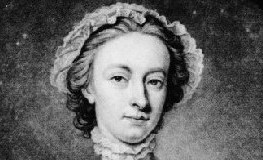
Mary Blandy
Murderer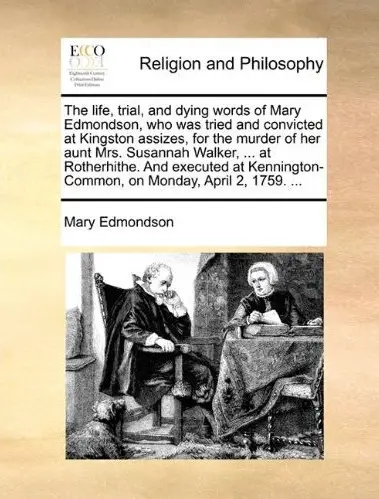 Mary Edmondson
Murderer · United Kingdom · 1759
Mary Edmondson Mary Edmondson was the daughter of a farmer who lived near Leeds…
1 victim
Mary Edmondson
Murderer · United Kingdom · 1759
Mary Edmondson Mary Edmondson was the daughter of a farmer who lived near Leeds…
1 victim
 Margaret Waters
Murderer · United Kingdom · 1866
Margaret Waters was an English murderess who was hanged by executioner William…
19 victims
Margaret Waters
Murderer · United Kingdom · 1866
Margaret Waters was an English murderess who was hanged by executioner William…
19 victims
 Catherine Wilson
Murderer · United Kingdom · 1854
Catherine Wilson was a British nurse who poisoned victims after befriending the…
7 victims
Catherine Wilson
Murderer · United Kingdom · 1854
Catherine Wilson was a British nurse who poisoned victims after befriending the…
7 victims
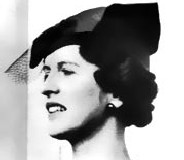 Florence Ransom
Murderer · United Kingdom · 1940
Florence Ransom was a middle-aged woman who was described as physically beautif…
3 victims
Florence Ransom
Murderer · United Kingdom · 1940
Florence Ransom was a middle-aged woman who was described as physically beautif…
3 victims
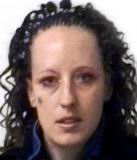 Joanna Dennehy
Murderer · United Kingdom · 2013
Name: Joanna Dennehy · March 2013 — Three murders were carried out in the Unite…
3 victims
Joanna Dennehy
Murderer · United Kingdom · 2013
Name: Joanna Dennehy · March 2013 — Three murders were carried out in the Unite…
3 victims
 Walter Kelbach
Spree killer · USA · 1966
Walter Kelbach was 28 years old. Myron Lance was 25 years old. Kelbach and Lanc…
6 victims
Walter Kelbach
Spree killer · USA · 1966
Walter Kelbach was 28 years old. Myron Lance was 25 years old. Kelbach and Lanc…
6 victims
 John Parish
Mass murderer · USA · 1982
John Parish (July 4, 1933 – August 9, 1982) was an American mass murderer. He s…
6 victims
John Parish
Mass murderer · USA · 1982
John Parish (July 4, 1933 – August 9, 1982) was an American mass murderer. He s…
6 victims
 Russel William Burket
Murderer · USA · 1993
Russel William Burket was executed by lethal injection in Virginia on August 30…
2 victims
Russel William Burket
Murderer · USA · 1993
Russel William Burket was executed by lethal injection in Virginia on August 30…
2 victims
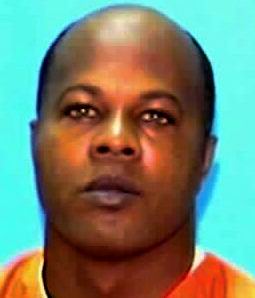 Anthony Neal Washington
Murderer · USA · 1989
Name: Anthony Neal Washington · Date of birth: 09/27/56 · Court (opinion): Supr…
1 victim
Anthony Neal Washington
Murderer · USA · 1989
Name: Anthony Neal Washington · Date of birth: 09/27/56 · Court (opinion): Supr…
1 victim
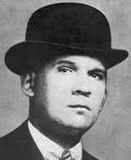 Harry Dobkin
Murderer · United Kingdom · 1941
January 7, 1943 — Harry Dobkin was hanged behind the walls of Wandsworth Prison…
1 victim
Harry Dobkin
Murderer · United Kingdom · 1941
January 7, 1943 — Harry Dobkin was hanged behind the walls of Wandsworth Prison…
1 victim
- Gender
- female
- Country
- United Kingdom
- Location
- Henley-upon-Thames, Oxfordshire, England, United Kingdom
- Date of birth
- 1719
- Age at first offence
- 32
- Characteristics
- parricide, poisoner
- Victim profile
- Her father, Francis Blandy
- Method of murder
- Poisoning (arsenic)
- Date(s) of murder
- August 14, 1751
- Years active
- 1751
- Date of arrest
- Same day
- Status
-
Executed
Executed by hanging outside Oxford Castle prison on November 30, 1752
Case overview
Mary Blandy (1719–November 30, 1752) was executed by hanging outside Oxford Castle prison on November 30, 1752. She was described as having poisoned her father at the behest of her suitor.
Background
Mary was raised as an intelligent, articulate Anglican woman. Her reputation in Henley, where she lived her entire life, was described as that of a well-respected, well-mannered, and well-educated young woman. She was also described as a well-born, middle-class, well-educated young woman. Her father, Francis Blandy, was a lawyer and town clerk of Henley on Thames in Oxfordshire.
Mary was Francis Blandy’s only daughter. Her dowry was proclaimed by her father Francis Blandy to be £10,000. Multiple accounts describe Francis Blandy as prosperous at the time of the killing.
Mary was presented as beginning to consider an advantageous marriage by the age of twenty-six, despite the promise of a £10,000 dowry. At some point, Mary met Captain William Henry Cranstoun. The two intended to marry in 1751. They were described as lovers for six years, meeting often along “Miss Blandy’s Walk” at Park Place across the Thames in Remenham.
Crans toun was described as the son of a Scottish peer and as being on the recruiting service for a foot regiment. He was described as having been forty-six years of age while Mary was twenty years his junior, and as having formed a liaison with her despite being described as devoid of personal attractions.
Francis Blandy suspected Cranstoun to be already married and objected to the match. Cranstoun was said to have married a woman in Scotland named Murray/Anne Murray in 1745. Mary’s parents were described as repelling insinuations made against Cranstoun at times, and as later being influenced by Cranstoun’s claims about his legal situation.
The alleged motive and claimed explanation
Mary claimed that Cranstoun sent her a powder which he said was a love potion to make her father approve of her relationship with Cranstoun. She put the powder in her father’s tea and gruel. Another account described the powders as an “ancient ‘love philtre’” and said Cranstoun told her they would make Francis more compliant. At the trial and at her death, Mary asserted she had not administered poison with guilty intention and that she believed the powders were intended for the purpose of winning her father’s favour to the match.
The offence
Francis Blandy became ill after Mary administered the powder to his tea and gruel (and in another description, after a servant prepared water-gruel and Mary placed powder in it). A servant who had eaten some of the poisoned food became ill as well. Francis Blandy died after a period during which symptoms progressed and medical attendants feared death would be the outcome. In one account, Francis died on 14th August 1751.
Mary was arrested after the death of her father and was later indicted for the wilful murder of her father by poisoning, described as parricide. One account stated that a form of evidence used at trial was expert testimony about arsenic poisoning presented by Dr. Anthony Addington, who tested for traces of arsenic using methods described as rudimentary by later standards. The powders were later found to be arsenic in at least one account.
Investigation and evidence
The trial was described as having forensic interest because there was expert testimony regarding the arsenic poisoning. Dr. Anthony Addington was described as having done testing based on residue for traces of arsenic. Another account described that analysis of organs for traces of arsenic was not possible with contemporary technology, but Dr. Addington convinced the court based on observed comparison that the powder Mary had put in her father’s food was arsenic.
Mary was described as having disposed of Cranstoun’s love letters and as having disposed of the rest of the powders, though servants saw her while she was burning them. In one account, a housemaid named Susan Gunnel rescued some of the powder from the fire, took it to a chemist for analysis, and arsenic was found.
Arrest and pre-trial events
Mary was detained in custody and was later brought to trial at Oxford. One account described her walking around Henley after a detention, being chased by townsfolk over the bridge into Remenham, taking refuge with her friend Mrs. Davis, the landlady of the ‘Little Angel’, before being taken back into custody.
Trial
Mary came to trial at Oxford Assizes on 3rd March 1752. Another account stated she came to trial on 29th of February 1752 and later described her being tried at Oxford on 3rd March 1752.
Mary was indicted for the wilful murder of her father. She was found guilty of murder. One account stated she was convicted after eleven hours, after which she received the mandatory death sentence. The trial was described as notable for being the first time detailed medical evidence was presented in court on a charge of murder by poisoning.
Mary defended herself without a lawyer and was described as making an impassioned speech in which she denied administering poison while admitting she had put a powder into her father’s food and stated it “had been given me with another intent”. The servants gave evidence that they had seen her administering powders to her father’s food and drink and trying to destroy evidence.
Sentencing and timing of execution
After conviction, a sentence of death was passed. Mary was allowed six weeks between sentence and execution in one account. The trial judge’s recommendation to the Secretary of State was described, with mention of consideration by the King and Privy Council at a “Hanging Cabinet.” In one account, Mary was hanged on Monday the 6th April 1752; another account stated execution outside Oxford Castle prison on November 30, 1752.
Mary was described as being given a hearty meal of mutton chops and apple pie on arrival back at Oxford Castle, where she had been imprisoned awaiting trial and execution. In July 1752, the Murder Act was described as being passed, stipulating that persons convicted of murder were to be fed only on bread and water, hanged within two days of sentence, and dissected afterwards; Mary was described as having missed this law and being able to be buried in a proper grave.
Prison life and correspondence
Mary was described as writing in the condemned cell, including “Miss Mary Blandy’s Own Account of the Affair between her and Mr. Cranstoun,” which was described by one legal authority as the “most famous apologia in criminal literature”.
Mary was described as being allowed to correspond with Elizabeth Jefferies, who was convicted with her lover John Swann and hanged at Epping Forest in Essex on 28th March 1751 for the murder of her master and his uncle. A middle class lady visiting Mary was described as being shocked that Mary was sympathetic to Jefferies. Mary’s recorded remark was: “I can't bear these over virtuous women. I believe that if ever the devil picks a bone it is one of theirs.”
Mary was described as asking to be given decency as her execution approached.
Execution
Mary was publicly executed by hanging.
In one account, she was executed in the Castle Yard at Oxford on Monday, 6th April 1752, from a gallows consisting of a wooden beam placed between two trees. She was led out habited in a black bombasine dress, with her arms bound with black ribands. She begged that she might not be hanged high: “for the sake of decency”; she was later described as fearing she would fall when asked to go a little higher. After the rope was put round her neck, she pulled her handkerchief over her face. She was turned off while holding out a book of devotions she had been reading. She was described as “died without a struggle” and as passing into unconsciousness very quickly.
In another account, Mary was executed by hanging outside Oxford Castle prison on November 30, 1752.
Other details
Mary was described as having been detained immediately in her room after her father fell ill, then going for a walk before being recaptured.
Crans toun disappeared and spent the rest of his days in France. One account described him fleeing to France on hearing of Mary’s arrest and joining a monastery, where he died on 30th November 1752. Another account stated that Cranstoun escaped and died in late 1752 in France.
Mary was described as behaving with bravery and penitence to the end, and as being unusual among women executed.
Quotes
Mary said while ascending the gallows: “Gentlemen, don't hang me high, for the sake of decency.” Mary was recorded as saying of her sympathy for Elizabeth Jefferies: “I can't bear these over virtuous women.
Spotted an error, or have more information about this case?