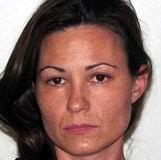
Linsey Blansett
Murderer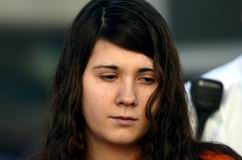 Miranda Barbour
Murderer · USA · 2013
Miranda Barbour, 19, defendant. · Elytte Barbour, 22, defendant and husband of…
100 victims
Miranda Barbour
Murderer · USA · 2013
Miranda Barbour, 19, defendant. · Elytte Barbour, 22, defendant and husband of…
100 victims
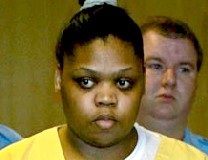 Tiffany Hall
Murderer · USA · 2006
Tiffany Hall was 24 when she was charged in September 2006. She later entered a…
5 victims
Tiffany Hall
Murderer · USA · 2006
Tiffany Hall was 24 when she was charged in September 2006. She later entered a…
5 victims
 Banita Jacks
Murderer · USA · 2007
Banita Jacks was a Washington, DC resident convicted of murdering her four daug…
4 victims
Banita Jacks
Murderer · USA · 2007
Banita Jacks was a Washington, DC resident convicted of murdering her four daug…
4 victims
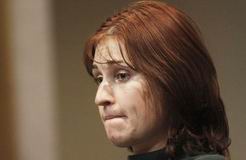 Holly Grigsby
Murderer · USA · 2011
Holly Grigsby was sentenced to life in prison without parole on July 15, 2014.…
4 victims
Holly Grigsby
Murderer · USA · 2011
Holly Grigsby was sentenced to life in prison without parole on July 15, 2014.…
4 victims
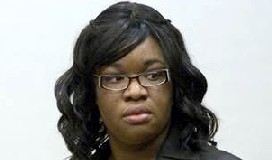 Jessica Tata
Murderer · USA · 2011
Jessica Tata was a Houston home day care owner who fled to Nigeria after a fire…
4 victims
Jessica Tata
Murderer · USA · 2011
Jessica Tata was a Houston home day care owner who fled to Nigeria after a fire…
4 victims
 Amanda Bennett
Murderer · USA · 2011
Amanda Bennett was an Indiana woman who shot her three children and set the fam…
3 victims
Amanda Bennett
Murderer · USA · 2011
Amanda Bennett was an Indiana woman who shot her three children and set the fam…
3 victims
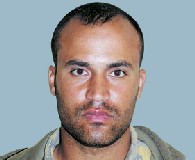 Hicham Raoui
Serial killer · M orocco · 2007
Hicham Raoui was born in 1976 in the region of Aïn Darbane, province of Settat.…
3 victims
Hicham Raoui
Serial killer · M orocco · 2007
Hicham Raoui was born in 1976 in the region of Aïn Darbane, province of Settat.…
3 victims
 Terry Borgia
Murderer · USA · 2010
Terry Borgia was a grandmother in a case involving the death of her grandson, D…
1 victim
Terry Borgia
Murderer · USA · 2010
Terry Borgia was a grandmother in a case involving the death of her grandson, D…
1 victim
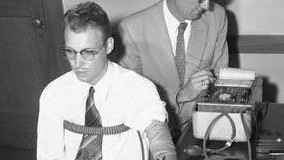 Burton Abbott
Murderer · USA · 1955
28 April 1955 — Stephanie Bryan, a 14-year-old girl, did not come home from sch…
1 victim
Burton Abbott
Murderer · USA · 1955
28 April 1955 — Stephanie Bryan, a 14-year-old girl, did not come home from sch…
1 victim
- Gender
- female
- Country
- USA
- Location
- Wellington, Sumner County, Kansas, USA
- Date of birth
- 1982
- Age at first offence
- 32
- Characteristics
- parricide, child killer, child abuse, history of mental illness
- Victim profile
- Her 10-year-old son, Caleb
- Method of murder
- Stabbing with knife
- Date(s) of murder
- December 14, 2014
- Years active
- 2014
- Date of arrest
- Same day
- Status
-
Life imprisonment
Sentenced to 25 years to life in prison on December 3, 2015
Case details
Lindsey Nicole Blansett was accused of killing her 10-year-old son, Caleb, in Wellington. She was also convicted of one count of aggravated battery for the beating of her son.
Timeline
- Dec. 9 — The Kansas Department for Children and Families received a report of non-abuse neglect with regard to the family.
- May 1 — The Kansas Department for Children and Families received a report of Caleb being neglected; the next day a case worker did not find Caleb at his school and learned he was in Wichita.
- June 21, 2012 — The Kansas Department for Children and Families received allegations of family neglect; background checks were conducted and the case was closed the next day.
- Dec. 13 — Blansett stayed overnight at a house in Belle Plaine.
- Dec. 14 — Blansett’s 911 call was made at 11:51 p.m.; she told the dispatcher she had stabbed her son and said she was saving him from the pain that was coming. She was later charged and held in the Sumner County Jail on a $500,000 bond.
- Jan. 8, 2015 — Blansett’s competency evaluation was ordered to take place at Larned State Hospital.
- Jan. 29, 2015 — A competency evaluation at Larned State Hospital was discussed as likely within 90 days; Blansett’s next hearing was scheduled for Feb. 26.
- Oct. 22, 2015 — Day one of the murder trial proceeded at the Sumner County Courthouse in Wellington.
- Oct. 23, 2015 — Day two of the trial proceeded; the state rested at 3:34 p.m. and the jury was dismissed for the weekend.
- Oct. 26, 2015 — The defense and prosecution presented additional testimony and the jury was given options on the counts including first-degree murder, second-degree murder, and aggravated assault, with a mental illness question if guilty of second-degree murder.
- Oct. 27, 2015 — A Sumner County jury found Blansett guilty of first-degree, premeditated murder.
- Dec. 3, 2015 — Blansett was sentenced to 25 years to life; the appeal bond was set at $2 million.
Background
Blansett was 33 years old and of Wellington. She went by “Nicole.” She was unemployed and attending college in the summer. The criminal complaint alleged that she decided Caleb’s “life would be full of suffering and it would be better for him to go to heaven tonight.”
Blansett and Clint Blansett were divorced about a year before the sentencing; he was the children’s father. In the divorce filings, he was identified as Christopher C. Blansett, although he went by Clint. Blansett had residential custody of her children and Clint had parenting time as agreed. A divorce decree dated Dec. 20, 2013 stated the couple didn’t own any real estate.
In the months leading up to the killing, the Kansas Department for Children and Families had received multiple reports regarding the family:
- A report of non-abuse neglect was received on Dec. 9 (five days before Blansett allegedly killed her son Sunday night at their home). The DCF said those allegations were not against the mother but warranted further investigation.
- The agency received a report on May 1 of Caleb being neglected; a case worker didn’t find Caleb at his school the next day and learned he was in Wichita. The mother was offered services but declined, and the report concluded that allegations of medical neglect were unsubstantiated.
- On June 21, 2012, the DCF received allegations of family neglect and conducted background checks, then closed the case the next day.
The offence
Blansett was accused of beating Caleb with a rock and stabbing him with a knife. The prosecution and the criminal complaint described the killing as occurring shortly before midnight on Dec. 14 at their Wellington home, after Caleb went to bed.
The criminal complaint said Blansett went into Caleb’s bedroom, struck him with a rock, and stabbed him multiple times with a knife until he was dead. Prosecutors said the incident involved seven stab wounds to Caleb’s chest. The defense addressed Blansett’s state of mind and mental illness.
During the 911 call and other statements, Blansett said Caleb woke up and told her, “Mom, stop,” after she struck him with the rock, and that she then stabbed him multiple times until he was dead.
Blansett also was convicted of aggravated battery for the beating of her son. Prosecutor Kerwin Spencer said prosecutors had to prove Blansett “knowingly caused her son to be in fear from a deadly weapon.”
The judge later stated that Blansett’s lack of prior criminal history, her mental illness, and acceptance of responsibility were mitigating circumstances that led to the lesser sentence rather than the hard 50 sentence.
Investigation
A Wellington police detective, Bobby Wilson, described the scene in a court document written in the first person, stating he wanted to “bag the mother’s hands and get her socks off her feet and into evidence.” He added: “The socks were soaked in blood,” and said he did not want her walking around with them.
Blansett called 911 to report she had stabbed Caleb. In a recorded tape of the call, she told the dispatcher, “I thought someone was coming in to get us.” She also said: “I’m never going to get out of jail. Never.” The criminal complaint said Blansett decided Caleb’s “life would be full of suffering and it would be better for him to go to heaven tonight.”
The court proceedings included testimony about evidence and police interviews:
- Lieutenant Dan Thompson displayed the rock and the knife allegedly used in the incident for the jury to see.
- Lieutenant Dan Thompson stated the rock used to hit Caleb weighed 11.2 pounds.
- James Newman, a forensic scientist for the KBI, provided DNA analysis from the scene.
- An approximately 30-minute video of three interviews Blansett did with police investigators was shown to jurors. Prosecutor Spencer said:
- In the first interview, Blansett confessed to using a knife.
- In the second interview, she mentioned the rock.
- In the final interview, she said her son woke up after she hit him with a rock and said, “Mom, stop,” before Blansett stabbed him.
Arrest and custody
Blansett was taken into custody after police responded to the 911 call. She was held in the Sumner County Jail on a $500,000 bond.
Funeral services for Caleb were planned for 3 p.m. Saturday at First Christian Church in Wellington, and visitation was scheduled for 1 to 8 p.m. Friday at Day Funeral Home. Sheriff Darren Chambers said Blansett would not be attending the funeral unless served a court order mandating she attend, and said: “She will not be attending the funeral unless I’m served a court order mandating she attend,” and “What I can say is that she is not in the general population and is under 24 hours video observation,” adding: “as well as regular physical checks.” The sheriff also said he could not say whether she was on suicide watch.
Trial
Charges and pleas at trial
Blansett was charged with first-degree murder in the stabbing death of her son, Caleb, on Dec. 14 at their Wellington home. During the trial, jury instructions presented choices including:
- First degree murder: guilty or not guilty.
- Second degree murder: guilty or not guilty.
- Aggravated assault: guilty or not guilty.
If the jury found Blansett guilty of murder in the second degree, it was required to answer a question as to whether she was guilty because of a mental illness.
Prosecution witnesses and evidence
Prosecutor Kerwin Spencer told the jury that Blansett formulated a plan, including a backup plan, and acted intentionally to kill her son. Spencer also referenced premeditation, saying Blansett carried around a knife and stabbed Caleb multiple times, with Spencer reminding the jury: “The best evidence of premeditation? She stabbed Caleb not one, not two or three, but seven times. She had to use two hands to plunge the knife in each time.”
Prosecutor Spencer said the jury reached a verdict at around 4 p.m. on Tuesday after deliberating for roughly 6.5 hours since Monday.
Prosecutor Spencer said jurors concluded that shortly before midnight on Dec. 14, Blansett entered her son’s room with a knife and a rock, hit him over the head with the rock, Caleb woke up and said, “Mom, stop,” and then she stabbed him multiple times until he was dead.
The trial included testimony about mental health evaluations:
- Dr. Jared Steffen testified for the defense that Blansett suffers from a mental illness and was mentally ill at the time of the attack. Steffen interviewed Blansett for a total of six to seven hours, made observations, and performed five psychological tests. Steffen stated she did not appear evasive and that the possibility that Blansett was making up her symptoms was “highly unlikely.”
- Steffen testified: “It was unclear to me whether she was actually sexually abused as a child,” and said of Blansett: “She flatly believes she doesn’t have a mental illness,” while his diagnosis was that her behavior was consistent with bipolar disorder, saying: “Her behavior is consistent with bipolar disorder,” he said.
- The defense rested its case after Steffen’s testimony and would be followed by a rebuttal witness for the prosecution after the lunch recess.
- Dr. Roy Daum, a psychologist at Larned State Hospital, testified for the prosecution. Daum testified that Blansett scored a perfect 30 of 30 on one evaluation on Sept. 23. He said: “It is apparent to me that Ms. Blansett had a brief psychotic episode,” and stated: “She showed no erratic behaviors in eight hours of interviews,” and: “She showed no difficulty understanding interview questions.”
- On cross-examination, Daum acknowledged that his diagnosis of a “brief psychotic episode” would have been different if it had lasted longer than 30 days and said: “since he didn’t interview her until months later, it was not apparent then.” Daum also testified she exhibited no self-harming behaviors.
Prosecutor Spencer said a good portion of the testimony and deliberations dealt with whether Blansett suffered from mental illness and whether it kept her from acting intentionally. Spencer said the jurors concluded that even if she was mentally ill, that did not keep her from acting intentionally and that she acted with premeditation, stating: “They obviously came to the conclusion ... even if she was mentally ill, that did not keep her from acting intentionally – she acted with premeditation.”
Spencer also addressed aggravated assault and said prosecutors had to prove Blansett “knowingly caused her son to be in fear from a deadly weapon.”
Officer Sara Owens was referenced during opening statements, with defense counsel stating that Blansett was “in a daze” on the night in question.
Defense witnesses and arguments
Defense attorney Michael Brown presented mental health testimony and closing arguments focused on Blansett’s mental illness. Brown asked the jury to consider Blansett’s state of mind during opening statements, saying: “I can’t stand up here and tell you this didn’t happen,” and: “You’re going to have to wrestle with the question ‘Why would anyone in their right mind do this to their child?’”
Brown used Steffen’s testimony and said in closing argument that Blansett felt like she was “in a hypnotized state,” saying: “She felt like she was in a hypnotized state,” Brown said.
Brown also pointed to a note Blansett wrote on Dec. 12 in an attempt to give away her children. The note stated: “Please love them with all your heart and don’t let them forget me,” Blansett wrote in the note, two days before killing her 10-year old son, Caleb.
During the trial, Brown questioned Lieutenant Dan Thompson, and multiple defense objections were raised during Detective Bobby Wilson’s testimony, as Wilson’s testimony included video recordings and cross-examination. Wilson testified that Blansett had visited Cowley County Mental Health in the past, though no official evaluation was done. During the trial, jurors viewed videos and photos, including images of Blansett’s bloody hands and socks. Blansett did not react during testimony, did not look up at the screen when video and photos were shown, and did not speak.
At 11:20 a.m. prior to lunch on Oct. 26, Blansett spoke aloud for the first time during proceedings and told Judge R. Scott McQuin when asked if she wanted to testify: “I don’t want to.”
Verbatim 911-call statements presented at trial
During the 911 call played in court, Blansett stated: “I’m never going to get out of jail; never,” and also said she thought someone was coming in to get them and that she was saving Caleb from the pain that was coming, saying: “Because I thought I was saving him from the pain that was coming.” In the call she also spelled her last name and said “Oh God, why? Why?”
Verdict
On Oct. 27, 2015, a Sumner County jury found Blansett guilty of first-degree, premeditated murder.
Prosecutor Spencer said the jury found Blansett guilty of aggravated assault as well, and Blansett was later sentenced accordingly to serve 11 months in prison for the assault charge.
Sentencing
On Dec. 3, 2015, Blansett was sentenced to 25 years to life in prison. The sentencing judge ruled that Blansett’s lack of prior criminal history, her mental illness, and acceptance of responsibility for the crime were mitigating circumstances that led to the lesser sentence.
Blansett was eligible for a hard 50 sentence, which would have required her to serve at least 50 years before being eligible for parole. Prosecutor Kerwin Spencer argued for a hard 50 sentence but the judge did not impose it.
Spencer also argued that Blansett’s aggravated battery sentence should run consecutively to the life sentence due to the fear Blansett inflicted on her son. The judge sentenced Blansett to serve 11 months in prison for the assault charge to run concurrently to her life sentence.
Blansett received credit for time served and had been in jail since the murder. Spencer said Blansett would be transferred to the Kansas Department of Corrections within the next two to three weeks to begin serving her sentence.
Prosecutor Spencer said he was disappointed the judge did not impose the hard 50 sentence, but stated: “I’ve done my job,” and also described the sentence as “still a significant sentence.”
Before sentencing, the judge heard motions for a new trial, a mistrial, and a judgment for an acquittal based on lack of evidence, and denied all three motions.
The judge set an appeal bond at $2 million, and Blansett’s attorney, Mike Brown, informed the court of his intent to file an appeal.
Appeals and outcome
Blansett filed or was stated to intend to file an appeal following sentencing, with an appeal bond set at $2 million.


Spotted an error, or have more information about this case?