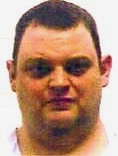
Russel William Burket
Murderer Brian Kevin Rosenfeld
Murderer · USA · 1985
Brian Kevin Rosenfeld Brian Kevin Rosenfeld was sentenced to three concurrent l…
23 victims
Brian Kevin Rosenfeld
Murderer · USA · 1985
Brian Kevin Rosenfeld Brian Kevin Rosenfeld was sentenced to three concurrent l…
23 victims
 Russell Ellwood
Murderer · USA · 1991
Russell Ellwood was a former taxi driver. Authorities suspected him of killing…
20 victims
Russell Ellwood
Murderer · USA · 1991
Russell Ellwood was a former taxi driver. Authorities suspected him of killing…
20 victims
 Robert Martines Perez
Murderer · USA · 1994
Name: Robert Martines Perez · Other name used in proceedings: Robert Martinez P…
15 victims
Robert Martines Perez
Murderer · USA · 1994
Name: Robert Martines Perez · Other name used in proceedings: Robert Martinez P…
15 victims
 Billy Frank Vickers
Murderer · USA · 1993
Billy Frank Vickers Vickers was executed by lethal injection in Texas on Januar…
14 victims
Billy Frank Vickers
Murderer · USA · 1993
Billy Frank Vickers Vickers was executed by lethal injection in Texas on Januar…
14 victims
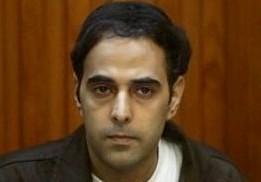 Yigal Amir
Murderer · Israel · 1995
Yigal Amir (born May 23, 1970) was the Israeli assassin of the Prime Minister o…
1 victim
Yigal Amir
Murderer · Israel · 1995
Yigal Amir (born May 23, 1970) was the Israeli assassin of the Prime Minister o…
1 victim
 Luis Aguilar Perez
Murderer · USA · 1984
Luis Aguilar Perez was convicted of sexually assaulting and attempting to murde…
2 victims
Luis Aguilar Perez
Murderer · USA · 1984
Luis Aguilar Perez was convicted of sexually assaulting and attempting to murde…
2 victims
 Mario Centobie
Murderer · USA · 1998
Mario Centobie was executed by lethal injection in Alabama on April 28, 2005. C…
1 victim
Mario Centobie
Murderer · USA · 1998
Mario Centobie was executed by lethal injection in Alabama on April 28, 2005. C…
1 victim
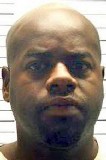 Andre Bland
Murderer · USA · 1992
Andre S. Bland was convicted in the shooting death of Ontrain Sanders in the pa…
1 victim
Andre Bland
Murderer · USA · 1992
Andre S. Bland was convicted in the shooting death of Ontrain Sanders in the pa…
1 victim
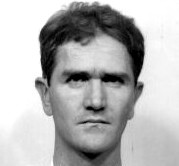 Ricky Eugene Morris
Murderer · USA · 1982
Ricky Eugene Morris was the offender. Linda Morrow was Morris’s girlfriend and…
1 victim
Ricky Eugene Morris
Murderer · USA · 1982
Ricky Eugene Morris was the offender. Linda Morrow was Morris’s girlfriend and…
1 victim
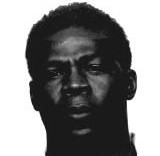 Kenneth Granviel
Mass murderer · USA · 1974
Kenneth Granviel was executed by lethal injection in Texas on February 27, 1996…
7 victims
Kenneth Granviel
Mass murderer · USA · 1974
Kenneth Granviel was executed by lethal injection in Texas on February 27, 1996…
7 victims
- Gender
- male
- Country
- USA
- Location
- Virginia Beach, Virginia, USA
- Date of birth
- 1968
- Age at first offence
- 25
- Characteristics
- rape
- Victim profile
- Katherine Tafelski and her 5 year old daughter, Ashley
- Method of murder
- Beating with a rusty crowbar
- Date(s) of murder
- January 14, 1993
- Years active
- 1993
- Date of arrest
- 6 days after
- Status
-
Executed
Executed by lethal injection in Virginia on August 30, 2000
Case record
Russel William Burket was executed by lethal injection in Virginia on August 30, 2000.
Background
Russel Burket lived next door to the Tafelski residence. Burket and his parents had several large dogs in their backyard that frequently peered over a privacy fence surrounding their property.
Burket had no prior criminal record before this charge. He had a history of mental problems including attempting to commit suicide twice. He had also been described as having intellectual and academic limitations. Two clinical psychologists testified on Burket’s behalf: Dr. Thomas Ryan and Dr. Gary Hawk. Under oath Dr. Ryan stated that Burket had "intellectual abililties`in a low average to average range." Dr. Ryan also testified that Burket could not perform well in several academic areas including reading, writing and math. Dr. Hawk opined that Burket had a severe form of dyslexia and suffered from dysthymia, described as a form of persistent mild to moderate depression.
At sentencing, the judge found the Commonwealth's psychiatrist, Dr. Mansheim, more credible and agreed that the only mitigating factor in the case was that Burket held no previous criminal record. The judge agreed with Dr. Mansheim that Burket's mental condition did not effect the case and sentenced Burket to death.
Burket raised challenges including an argument that Dr. Mansheim lied under oath regarding whether he read over several documents pertaining to the Burket case before interviewing Burket. The appellate court disagreed and upheld the sentence.
Burket also contended that his confession was taken illegally. Before confessing to the crimes, Burket stated, in the presence of detectives, "I'm gonna need a lawyer." He felt that at that moments he should have been read his Miranda rights and a lawyer.
Burket was described as having difficulty reading and writing. He was considered 100 % disabled by Social Security. He was also said to have refused to cooperate with a court-appointed psychiatrist examination, stating he did not trust the psychiatrist.
A Norfolk judge ordered Burket examined by a court-appointed psychiatrist to answer the question: Is Burket competent enough to drop his appeals, against his lawyers' advice? Burket refused to cooperate, saying he did not trust the psychiatrist. The judge replied that Burket could not choose his own psychiatrist, so the legal appeals continued. It was stated that the legal appeals continued because the court did not decide that Burket could make that choice.
The offence
On January 14, 1993, about 2:00 p.m., Terry Cain placed a telephone call to Barbara Pullman, who was Katherine Tafelski's mother. Cain informed Pullman that Cain's three-year-old daughter, Chelsea Brothers, had spent the night with Katherine Tafelski and her children. Mrs. Tafelski had agreed to take Chelsea to school on the morning of January 14, but had failed to do so.
Pullman placed a telephone call to her daughter's home, but she received an answering machine recording, "which was not normal." Pullman decided to go to her daughter's residence to ascertain why she had not taken Chelsea to school. When Pullman arrived at her daughter's home, she was unable to gain entry because the front door was locked. Joan Poillon, who lived in the neighborhood, began to help Pullman gain access to the residence.
As they tried to enter the front door, they heard Chelsea crying. Chelsea was inside the home but was unable to open the front door because of her age and diminutive stature. Pullman and Poillon went to the rear of the house and discovered that the back door was open. When they entered the house, Chelsea ran to them crying. They observed that Chelsea had suffered a facial injury.
Pullman and Poillon searched the house to locate Katherine Tafelski; her daughter, Ashley Tafelski, age five; and her son, Andrew J. Tafelski, Jr., age three. Pullman and Poillon found Katherine Tafelski's partially nude body, covered in blood, lying on her bed. It was apparent that she had been struck numerous times in the head and sexually assaulted with some type of object. The white sweatshirt that she had been wearing was ripped in several places and soaked with blood.
Pullman ran to the kitchen area of the residence and placed a telephone call to the police. Poillon continued to search for the children. Poillon entered Ashley Tafelski's bedroom and discovered Ashley's body lying in her bed with her hand hanging over the side of the bed and a large pool of blood beneath her. It appeared that Ashley had been struck several times in the head with a hard object. A small piece of bone fragment, "coupled with hair and blood," was near the foot of Ashley's bed.
Poillon found Andrew Tafelski, Jr., in his bedroom, lying in the top bunk bed. He was suffering from numerous head and facial injuries but was still conscious. After the police arrived, Detective Shawn Hoffman and another officer conducted a search of the area surrounding the residence. A trained dog located a track that extended from the rear utility room of the house to a wooded area behind the home. An officer found an old double-barreled shotgun in the woods. The shotgun had been removed from the Tafelski's residence.
The intruder's apparent point of entry was a door located in the back of the Tafelskis' residence. The door contained numerous fresh tool marks. These tool marks were of a similar pattern and shape as marks found on the bodies of Katherine and Ashley Tafelski.
Investigation
The bodies of Katherine and Ashley Tafelski were taken to the Norfolk Crime Lab for autopsies and forensic examination. Dr. Leah Linda Elizabeth Bush, assistant chief medical examiner, performed the autopsies.
Autopsy findings: Katherine Tafelski
The autopsy of Katherine Tafelski's body revealed that her head had been struck six or seven times with an object of significant weight, and that the skull was completely crushed with massive force applied. The autopsy noted marks on her right upper inner thigh that appeared to resemble a belt buckle. She had suffered vaginal and anal penetration by an inanimate object. The vaginal penetration was made with an object ranging in diameter from one-half to two inches and penetrating to a length of 21 inches. The object, later identified as an automotive tool (rusted metal pry bar) about 30 inches long and containing a "screwdriver tip," perforated the victim's posterior vaginal wall, the left iliac artery, the left iliopsoas muscle, the small bowel mesentery, the omentum, the stomach, the left posterior hemidiaphragm, and the left periaortic soft tissue with intimal and medial aortic transection. A gray substance with a greasy consistency was found at the entrance of the victim's anal cavity. Dr. Bush found a small piece of "bark/wood" while examining the victim's internal organs. Four or five abrasions, two of which contained small lacerations, were present on the victim's right side.
Dr. Bush noted that either the blunt force trauma to the victim's head or the injury to her vaginal area and its related perforations would have been sufficient to cause death.
Autopsy findings: Ashley Tafelski
The autopsy of Ashley Tafelski's body revealed massive head injuries inflicted by the same object used to kill her mother. She had four or five lacerations to her head. Two of the head wounds evidenced a "knurled" pattern on the skin. One of the wounds to Ashley's head did not break the skin but crushed the skull underneath. Two of the wounds to Ashley's head evidenced markings consistent with the tool marks found at the point of entry at the residence. Dr. Bush determined that the cause of Ashley's death was blunt force trauma to her head.
Injuries to other children
Andrew Tafelski, Jr., suffered a double break in his jaw, at the joint and at the tip, and also had a wound above one of his eyes. Chelsea Brothers suffered bruises to her head, face, and body.
Forensic evidence: washcloth semen and DNA
A blue washcloth was found in the room near Katherine Tafelski's body. Lynn S. Baird, a forensic scientist, examined the washcloth and determined that spermatozoa were present. Robert W. Scanlon, a forensic scientist, determined by using DNA tests that the spermatozoa found on the washcloth stain were consistent with Russel Burket's DNA profile. Approximately 7.8% of the Caucasian population possessed the same HLA DQa type as found in the examined stain.
Chelsea Brothers told Officer M.C. Stewart that "the bad man had a gun and a dog." Chelsea stated, while being transported to the ambulance for treatment of her injuries, that she was afraid of "the dog, the big dog. There is a dog out there." Chelsea added that the dog was "out there on the house, on the roof."
Observations linking Burket to the scene
Numerous police personnel observed the dogs sitting on the roofs of their pens. As several officers began to search the Tafelski residence for physical evidence, they noticed that a man, later identified as Burket, looked at them for several minutes before entering his residence. This occurred several times. On one occasion, Burket began to walk towards two of the police officers, and he was advised to return to his home.
Later that day, Detective K.P. Rexroad spoke with Burket in his home. During this discussion, Burket said that he was frequently in Mrs. Tafelski's home to perform odd jobs for the family whenever her husband was out of town. Burket stated that he was outside of his residence around midnight on January 13, 1993, but that he had not seen anything unusual.
Arrest
On Jan. 20, police arrested next-door neighbor Russel W. Burket. Burket confessed after five hours of questioning but could not explain why he committed the crime. Burket said, "Maybe I flipped out and didn't know what I was doing," to police.
Trial
Burket was indicted by a Virginia Beach grand jury for the capital murder of Katherine A. Tafelski and Ashley Tafelski as part of the same act or transaction, under Code §§ 18.2-31 and 18.2-10. He was also indicted for sexual penetration with an inanimate object of Katherine Tafelski, malicious wounding of Andrew J. Tafelski, Jr., malicious wounding of Chelsea Brothers, and statutory burglary.
Burket pled guilty to all the charges against him, reserving his right to challenge on appeal the admissibility of his confession. Before accepting the guilty pleas, the trial court questioned Burket and made a determination that his pleas were made voluntarily, intelligently, and knowingly.
Burket and the Commonwealth submitted to the trial court a stipulation of fact that recited evidence that would have been adduced had the case been tried. The trial court held a separate hearing to consider evidence before fixing punishments. The trial court received the probation officer's report in the manner prescribed by law. Upon consideration of the evidence and stipulated facts, the trial court fixed Burket's punishment at death for the capital murder, premised upon findings of both the "vileness" and the "future dangerousness" predicates under Code § 19.2-264.2.
The trial court fixed Burket's punishment at a term of life imprisonment for the crime of statutory burglary, a term of life imprisonment for the crime of sexual penetration with an inanimate object, and terms of 20 years imprisonment on each charge of malicious wounding.
It was stated that the automatic review of Burket's death penalty was consolidated with his appeal of his capital murder conviction under Code § 17-110.1(A) and (F), and were given priority on the docket under Code § 17-110.2. Burket did not appeal his non-capital convictions.
In court in 1994, Virginia Beach Judge Alan E. Rosenblatt said he was impressed with Burket's faculties as he watched Burket's videotaped confession, stating:
"Frankly, the defendant on the tape was not who I expected to see," Rosenblatt said at the time. "It does not at all fit the person the defense attorney led me to expect....He was alert, composed, even knowledgeable about legal matters. He never appeared confused, and his verbal ability was quite impressive."
Burket's conviction was described as: Burket pleaded guilty in 1994 to the capital murders of Katherine Tafelski and her five-year-old daughter, Ashley Tafelski.
As the sentence was pronounced, Burket smiled, applauded, and said, "Thank you, sir. Thank you."
Sentencing
The trial court sentenced Burket to death for the capital murder of Katherine Tafelski and Ashley Tafelski, based on findings of both the "vileness" and the "future dangerousness" predicates under Code § 19.2-264.2.
The trial court sentenced Burket to life imprisonment for statutory burglary and to life imprisonment for sexual penetration with an inanimate object. The trial court sentenced Burket to terms of 20 years imprisonment on each charge of malicious wounding.
Appeals
Burket appealed the judge's ruling that Dr. Mansheim was a more credible witness than Burket's two experts. Burket claimed Dr. Mansheim lied under oath about whether he read several documents pertaining to Burket's case before interviewing Burket.
Burket v. Commonwealth, 450 S.E.2d 124 (Va. 1994), cert denied 514 U.S. 1053 (1995) was included.
Burket also challenged whether his confession was taken illegally. It was also stated that Burket contended he was denied adequate representation by his trial lawyers in seeking to halt the execution.
Later proceedings included a request by Burket's lawyers for a new trial considered by a federal magistrate judge in Norfolk, with further steps described as going to the U.S. Court of Appeals and then the U.S. Supreme Court if unsuccessful.
Outcome
Anthony A. Protogyrou, Burket's lawyer, sent Gov. Jim Gilmore a letter seeking clemency. Protogyrou said Burket was mentally disabled and wasn't thinking correctly when he pleaded guilty, stating:
"That was when he was still seeing monsters in his cell,"
Gilmore denied the request for clemency.
A request involving retesting evidence was described. Burket's lawyers asked for a retest of a blue washcloth found at the crime scene containing traces of semen.
Lester Burket Jr. was questioned by police about the 1993 slaying but was never charged.
Gilmore said further DNA testing was unnecessary, given the previous testing, Burket's continuing admission of guilt, and Burket's "insistence that no one else was involved."
Aftermath
On August 30, 2000, Russel W. Burket was executed by lethal injection in Virginia at the Greensville Correctional Center. He was pronounced dead at 9:07 p.m.
Burket was asked if he had a final statement and he shook his head and said nothing.
Burket's execution originally was set for June 21, but the U.S. Supreme Court granted him a stay 75 minutes before he was scheduled to die. Eight days later, the court refused to hear his appeal.
It was stated that Burket's execution date was postponed and that he opted for the electric chair over lethal injection because it was "his way of ending a life he hasn't wanted," as Protogyrou said in June.
Burket's parents visited with him twice a day since he was moved from Sussex I state prison to Greensville Correctional Center on Saturday.
The Rev. Bobby West, a Roanoke minister who had been counseling Burket, said the condemned man was in a "good frame of mind" and understood what was about to happen, stating:
"There's nothing else to do to prepare," said West. "He has repented all his sins."
West said Burket was relieved when Gilmore denied the clemency request, and he quoted Burket as saying, "That's what I wanted," he quoted Burket as saying.
It was also stated that Burket had attempted suicide several times.
Former Virginia Beach Commonwealth's Attorney Robert Humphreys said he never thought Burket was mentally ill, stating:
"I always thought he was pretty cagey for someone who's supposed to be substandard,'' Humphreys, now a judge, said in a 1998 interview.
Other details
Burket's execution was described as the 5th condemned inmate to be put to death that year in Virginia and the 78th overall since the state resumed capital punishment in 1982.
It was stated that only Texas, with 231 executions, had put more condemned inmates to death in the USA since the re-legalization of the death penalty on July 2, 1976.
Burket was described as the 66th condemned inmate to be put to death that year in the USA and the 664th overall since America resumed executions on January 17, 1977.
During the investigation and legal proceedings, remarks included:
"It's pointless. It's frivolous," Burket said during an interview last week at Mecklenburg. "What? Am I going to sit here 6, 7, 8 years, and then get executed?" Burket said. "I just pretty much get tired of the lawyers lying to me and the court ignoring me," Burket says. "I committed the crime," Burket says.
Burket stated:
"Petitioner has no right to select the psychiatrist the court appoints to evaluate him," Jackson ruled.
During one dispute over competence, Andrew A. Protogyrou stated:
"Rusty is not competent enough to make that decision," says his local attorney, Andrew A. Protogyrou. "Therefore, the court should allow all his appeals to be heard and to make sure they are done properly and completely..."
Spotted an error, or have more information about this case?