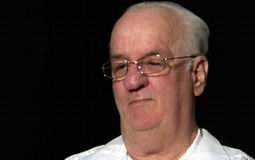
Arthur Shawcross
Serial killer Donald Henry Gaskins
Serial killer · USA · 1969
Donald Henry Gaskins, also known as Donald “Pee Wee” Gaskins, was a serial kill…
200 victims
Donald Henry Gaskins
Serial killer · USA · 1969
Donald Henry Gaskins, also known as Donald “Pee Wee” Gaskins, was a serial kill…
200 victims
 Carl Eugene Watts
Serial killer · USA · 1974
Carl Eugene Watts (born November 7, 1953; died September 21, 2007), also known…
100 victims
Carl Eugene Watts
Serial killer · USA · 1974
Carl Eugene Watts (born November 7, 1953; died September 21, 2007), also known…
100 victims
 Rodney Alcala
Serial killer · USA · 1977
Rodney James Alcala (born August 23, 1943) was also known as Rodrigo Jacques Al…
100 victims
Rodney Alcala
Serial killer · USA · 1977
Rodney James Alcala (born August 23, 1943) was also known as Rodrigo Jacques Al…
100 victims
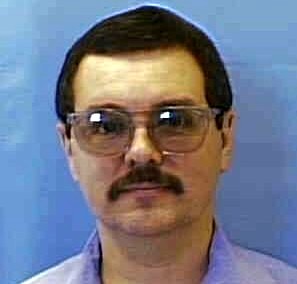 Donald Harvey
Serial killer · USA · 1970
Donald Harvey was known as an American serial killer and a self-professed “Ange…
87 victims
Donald Harvey
Serial killer · USA · 1970
Donald Harvey was known as an American serial killer and a self-professed “Ange…
87 victims
 Donald Leroy Evans
Serial killer · USA · 1975
Donald Leroy Evans (born July 5, 1957) was an American serial killer who murder…
60 victims
Donald Leroy Evans
Serial killer · USA · 1975
Donald Leroy Evans (born July 5, 1957) was an American serial killer who murder…
60 victims
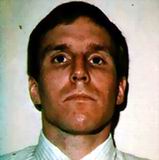 Michael Swango
Serial killer · USA · 1981
Michael Swango (Joseph Michael Swango) was a physician and American serial kill…
60 victims
Michael Swango
Serial killer · USA · 1981
Michael Swango (Joseph Michael Swango) was a physician and American serial kill…
60 victims
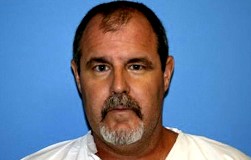 Scott Dekraai
Mass murderer · USA · 2011
Scott Dekraai was arrested after the Seal Beach shooting at the Salon Meritage…
8 victims
Scott Dekraai
Mass murderer · USA · 2011
Scott Dekraai was arrested after the Seal Beach shooting at the Salon Meritage…
8 victims
 Michael Tenneson
Murderer · USA · 1987
Michael Tenneson was born in 1960 and was a native of Holmen, Wisconsin. He was…
5 victims
Michael Tenneson
Murderer · USA · 1987
Michael Tenneson was born in 1960 and was a native of Holmen, Wisconsin. He was…
5 victims
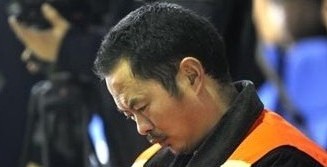 Xiong Zhenlin
Spree killer · China · 2009
Xiong Zhenlin was a Chinese junk dealer and the owner of a junkyard in Suizhou,…
8 victims
Xiong Zhenlin
Spree killer · China · 2009
Xiong Zhenlin was a Chinese junk dealer and the owner of a junkyard in Suizhou,…
8 victims
 Lynn Turner
Murderer · USA · 1995
Name: Lynn Turner · Also known as / birth name: Julia Lynn Womack Turner · Life…
2 victims
Lynn Turner
Murderer · USA · 1995
Name: Lynn Turner · Also known as / birth name: Julia Lynn Womack Turner · Life…
2 victims
- Gender
- male
- Country
- USA
- Location
- Monroe/Wayne Counties, New York, USA
- Date of birth
- J une 6, 1945
- Age at first offence
- 27
- Characteristics
- cannibalism, mutilation
- Victim profile
- Jake Blake, 10 / Karen Ann Hill, 8 /// Patricia Ives, 25 / Frances Brown, 22 / June Cicero, 34 / Darlene Trippi, 32 / Anne Marie Steffen, 28 / Dorothy Blackburn, 27 / Kimberly Logan / June Stotts, 30 / Marie Welch, 22 / Elizabeth Gibson / Dorothy Keller, 59
- Method of murder
- Strangulation / Suffocation / Beating
- Date(s) of murder
- 1972 / 1988 - 1990
- Years active
- 1972–1990
- Date of arrest
- January 5, 1990
- Status
-
Died in custody
Died in prison on November 10, 2008
Case record: Arthur Shawcross
Other details
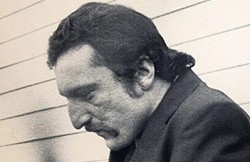
Arthur Shawcross (born June 6, 1945) was an American serial killer, also known as "The Genesee River Killer".
He was born in Maine and his family moved to Watertown in New York State when he was young. Shawcross dropped out of school in the ninth grade. When he was 19, he enlisted in the army. He fought in the Vietnam War, where he later confessed he had murdered and cannibalized two young Vietnamese girls, although there was nothing to back up that claim.
Back in civilian life, he lived in Watertown once more. He married four times; his wives invariably left him after a short time because of his violent and erratic behavior.
Shawcross served in the Vietnam War as a dispatch clerk, responsible for flying out to the various war-zones with the ammuniation via helicopter. He said that he later started going out on "fire missions" with various forward companies. He claimed that he encountered two Vietnamese women hiding in a hollow tree and said he shot one of them, cut off the other woman's head after she was still breathing, and took a slice from her thigh that he cooked and ate. He also claimed that he made the other woman perform oral sex, then raped her before shooting her in the head and butchering her body.
He described using a silencer made out of a rubber nipple from a baby's bottle. He also said that he attacked several Asian prostitutes, including one who was only eleven years old.
He later experienced being highly agitated and found it difficult to relax after returning home. He began to beat his wife and was incredibly aggressive. A psychiatriast told his wife Linda that he needed to be committed for treatment and rest, but Linda, being a Christian Scientist, refused to sign the papers for his commital. Without therapy, his mental state declined and he became increasingly irritated with Linda and her family, usually over their adherence to their religion, which he saw as nothing more than witchcraft. He believed that the spirit of a thirteenth-century cannibal "Ariemes" possessed his body and drove him to rape, murder and cannibalism.
In 1972, he murdered 10-year-old Jake Blake after luring him to woods where he assaulted and strangled him. He later confessed to both murders (including Karen Ann Hill). He later admitted to removing the boy's heart and genitals and eating them, and he told prison psychiatrists that he returned to the gravesite on several occasions to have sex with the corpse.
Four months after the Jake Blake murder, he raped and killed an eight-year-old girl named Karen Ann Hill, and he was later arrested for these crimes. After a plea bargain, he pleaded guilty to killing just Karen Ann Hill on a charge of manslaughter instead of first-degree murder, and the charge of killing Jake Blake was dropped. He was sentenced to 25 years in prison.
He served 15 years before he was released on parole in March 1987. After release, he had difficulty settling down as he was chased out of homes and fired from workplaces as neighbors and employers found out about his criminal record.
He eventually settled in Rochester, New York, and lived with Clara. Starting in March 1988, he began murdering prostitutes in the area and claimed 11 victims before his capture less than two years later. The victims were:
- Patricia Ives, 25
- Frances Brown, 22
- June Cicero, 34
- Darlene Trippi, 32
- Anne Marie Steffen, 28
- Dorothy Blackburn, 27
- Kimberly Logan
- June Stotts, 30
- Marie Welch, 22
- Elizabeth Gibson, 59
- Dorothy Keller
They were usually strangled and battered to death, and were often mutilated as well. Most of them were found near the Genesee River. All the victims were murdered in Monroe County, except Gibson, who was killed in neighboring Wayne County.
After the last victim's body was found in January 1990, police decided not to remove it and instead keep surveillance on the area, based on a psychological profile that suggested the killer would return to the scene.
He was spotted masturbating as he sat in his car on a bridge over the creek in which the body of his final victim was floating. He was arrested and eventually confessed in custody.
Timeline
- March 1987 — He was released on parole.
- March 1988 — He began murdering prostitutes in the area.
- January 1990 — The last victim's body was found; police began surveillance on the area.
- November 1990 — He was tried for the 10 murders in Monroe County.
- December 1990 — A jury convicted him.
- 1991 — He was sentenced to 250 years' imprisonment on 10 counts; he began serving the term.
- February 1991 — He was sent to the Sullivan Correctional Institute in Fallsburg, NY, to serve a 250-year sentence.
- July 10, 1997 — He married Clara D. Neal in a Sullivan County Correctional Facility ceremony.
- September 19, 1999 — He was punished with two years in solitary confinement and lost his art privileges for five years for having agents sell his paintings on the Internet auction site eBay.
- November 10, 2008 — He died in prison.
Background
Shawcross was born on June 6, 1945 at the U.S. Naval hospital in Kittery, Maine. He was born two months premature. His father was Arthur Roy Shawcross, a corporal in the army. His mother, Bessie, moved the tiny infant to her sister-in-law's in Watertown, New York until Arthur Snr. had completed his military service.
During his time near Watertown, many other related families of Shawcross moved in; the area became known as "Shawcross Corner" due to the family's congregation.
His behavior as a child included talking like a baby at six, chronically wetting the bed, running away from home, teasing other children, and carrying an iron bar to school. His grades fell behind by the eighth grade. He fled to his grandmother's house to avoid conflicts at home.
He was described as being preoccupied with sex from about age eight, including claims of frequent masturbation and oral sex with male and female friends. He claimed sexual acts with animals, including cows, sheep, a horse, and killing a chicken while having intercourse with it. He claimed initiation into sex by his "Aunt" Tina, who he said made him perform cunilingus on her. He claimed having oral sex with his sister Jeannie and his cousin Linda by age fourteen, and he claimed another relationship with a young girl who was allegedly caught by her brother while performing oral sex on her; he said the brother threatened to tell parents unless he performed oral sex on him as well.
He described being picked up by a man who held a knife to the boy's throat while he performed fellatio. He said he was unable to reach orgasm, and that the man turned him over and sodomised him and dropped him off at his house. He claimed he could not reach orgasm without pain being involved afterward.
For the next few years, he went from job to job and mingled with petty theft for which he was sometimes caught. In 1964, he married and the marriage lasted nearly four years and produced a son. In 1968, he was conscripted into the army and began a tour of duty in Vietnam.
He married again for the second time to Linda Neary after a brief courtship just before being shipped to Vietnam. In Vietnam, he had duties as a dispatch clerk and claimed to go on "fire missions." After his return, he became agitated, beat his wife, and experienced violent flashbacks and nightmares. He began beating Linda, and an Army psychiatrist suggested therapy and a period in a mental hospital, but Linda refused to sign the commitment papers.
In April 1969, he set fire to a local paper mill and later set fire to a cheese factory where he was employed. He was arrested and convicted on two counts of arson and sentenced to five years in prison. He served the first six months of his sentence at Attica prison where three black inmates allegedly raped him. He claimed revenge by beating and raping each of his attackers in separate incidents and was transferred to Auburn prison.
In 1971, he received early release after saving the life of a prison guard who had been clubbed during a prison riot sparked by racial tensions within the prison. He returned to Watertown to start a new life, having been divorced by Linda while he was in jail.
He took a job at the Watertown Public Works Department as a handyman and married a third time. His new wife, Penny Nichol, was a school friend of his sister Jeannie and had two children from a former relationship. Shawcross claimed that Penny's father accused Arthur of sexually assaulting Penny's younger sister. He claimed he denied the allegation.
He also spent spare time fishing in creeks and rivers around Watertown, and knew many of the town's children. He asked ten-year-old Jack Blake's mother Mary if Jack could go fishing with him, and she refused. Four months later, Jack went out to play near the Cloverdale apartment block and never came home. Mary Blake later knocked on Arthur's door to ask where Jack was; he told her he hadn't seen him since that morning. Shawcross had taken Jack into the woods, stripped him naked, forced him to run through the woods, sexually molested him, and then strangled him and battered him about the head. He later removed the boy's heart and genitals and ate them, and he later returned to the gravesite on several occasions to have sex with the corpse.
Three months after that, while police were still searching for Jack Blake, eight-year-old Karen Ann Hill was found dead under a bridge near Black River. She had been raped, mutilated and strangled. After police discovered Hill and Shawcross were seen together earlier that day, Shawcross became a suspect. After a report that he was seen eating an ice cream at the bridge near where the body was found, police picked him up and took him in for questioning. He was interrogated for a full day before asking in front of his defense attorney, "What's going to happen to me if I tell you something?" After further interviews and plea-bargaining, he pleaded guilty to the manslaughter of Karen Ann Hill and was later convicted and sentenced to 25 years in prison.
He later denied ever being charged with the murder of Jack Blake despite later admitting to the rape and murder and showing police where he had dumped the body.
Investigation
Police surveillance on the area was initiated after the last victim's body was found in January 1990, with the aim of waiting for a return visit. Shawcross was later spotted in his car on a bridge over the creek where the body was floating, masturbating.
In January 3 1990, he drove to Salmon Creek in Northampton Park to visit Jean Cicero's body, prepared a salad at work, and ate it. A police helicopter had been checking the Salmon River and saw his car parked on the bridge along with the outline of the body under the ice. He drove along Highway 31, turned left at Route 259 toward the town of Spencerport, and the helicopter followed. The helicopter crew called in two patrol cars to follow and intercept his car. Shawcross got out and entered the Wedgewood Adult Home where his wife worked. Police entered the home, asked an attendant about the man who had entered, and were told he had gone down into the basement. Police followed and approached Shawcross in the basement and asked for identification. He produced a photo I.D. and asked what police wanted. Police asked him to step outside to answer questions.
Later, Detective DeCillis questioned Arthur Shawcross extensively about his movements that morning and found his story convincing. During the questioning he voluntarily discussed his earlier conviction for the child murders. DeCillis asked him questions about his wives, jobs, sexual habits, and also asked him details of the attacks on Jack Blake and Karen Hill.
Later that night he was released and returned home, unaware that his house was under constant surveillance. The following morning, detectives picked him up again to clarify inconsistencies in his story. He was taken to an area near a golf course where he was said to have had a liaison with a prostitute who had testified he frequented the Lake Avenue area to pick up prostitutes. He was asked to accompany detectives to their office for interrogation, and later that same evening he positively identified photographs of the eleven victims and confessed to their murders. He accompanied police to the various gravesites, and late that night after twelve straight hours of interrogation he was officially charged with the Genesee River killings.
Trial
In November 1990, Shawcross was tried for the 10 murders in Monroe County. The trial was televised and drew high ratings. He pleaded not guilty by reason of insanity, and the jury found him sane and guilty. The jury deliberated only 6 1/2 hours before convicting him in December 1990.
In November 1990, he was sentenced to 250 years' imprisonment. After that, he was taken to Wayne County to be tried for Gibson's murder. He pleaded guilty and was given a life sentence.
He did not testify during his trial. Jurors watched videotapes of him being interviewed under hypnosis by defense psychiatrist Dr. Dorothy Lewis. He switched in and out of a high-pitched woman's voice and told Lewis he had once been a cannibal in medieval England. He described incestuous relations with his sister as a child and wartime atrocities and cannibalism in Vietnam. In the most dramatic passage, he appeared to relive an episode in which he was sexually abused by his mother. He told Lewis his mother's voice told him to kill his victims, and that she "helped him" strangle and mutilate one of the women.
In videotaped interviews with prosecution psychiatrist Dr. Park Dietz, Shawcross said he never heard voices or had different personalities. Dietz argued that Shawcross was faking mental illness to avoid being sent to prison.
The prosecutor in the Monroe County trial was then First Assistant District Attorney Charles Siragusa, who was later described as a federal judge. Siragusa said, "By the time the trial came around, I probably knew more about Arthur Shawcross than he knew."
Shawcross followed his court-appointed attorneys advice and pleaded innocent on all charges at arraignment. For the next several months, he underwent tests by numerous psychiatrists, and one report compiled by Dr. Kraus described him as:
"an emotionally unstable, learning disabled, genetically impaired, biochemically disordered, neurologically damaged individual, psychologically alienated from significant others during his entire life, venting his frustration and rage, mixed with fear and defiance in a lifetime of ever more violent and destructive aggression, which ultimately turned to overpowering murderous fury."
The only defense witness was Dr Dorothy Otnow Lewis. She testified that Shawcross had been "hideously traumatised" as a child, which had left him with a multiple personality disorder. She cited post-traumatic stress disorder caused by his war experiences as a root cause for his behavior.
Sentencing
In May 1972, he murdered 10-year-old Jake Blake and later was sentenced for the manslaughter plea related to Karen Ann Hill, receiving a 25-year sentence.
He was sentenced to 25 years in prison in 1972. He was released on parole in March 1987.
For the Monroe County murders, after the televised trial in November 1990 with a guilty verdict in December 1990, the judge sentenced him to 250 years' imprisonment.
He later pleaded guilty in Wayne County to Gibson's murder and was given a life sentence.
A separate disciplinary matter in September 1999 included two years in solitary confinement and the loss of art privileges for five years.
He was serving a sentence of 250 years to life for the murders, and it was stated that he was not eligible for parole until January 10, 2240.
Appeals
No appeal details were provided beyond that the jury verdict and sentencing were given, and that he later pleaded guilty in Wayne County. The description also included that after he appealed, the solitary confinement time was reduced to nine months.
Outcome
Shawcross was convicted of 10 murders in Monroe County and was sentenced to 250 years' imprisonment. He later pleaded guilty in Wayne County for Gibson's murder and received a life sentence. He was also convicted in 1972 for manslaughter related to Karen Ann Hill and received a 25-year sentence. He was paroled in March 1987 and later died in prison.
Aftermath
Shawcross was held at Sullivan Correctional Facility. In 2003, he was interviewed by British reporter Katherine English for a documentary on cannibalism. He said in the interview that he bragged about slicing out and eating the vaginas of three victims and also eating the genitals of the boy he killed in 1972. Some criminologists doubted the stories and suggested he embellished his crimes.
In 1990, he received ten write-in votes during New York's gubernatorial race.
He was discussed as being received into the state prison system on February 1, 1991 and as being an inmate at the maximum-security Sullivan prison since March 22, 1991.
On July 10, 1997, he married his longtime sweetheart Clara D. Neal in a simple ceremony in the prison's visiting room. It was stated that "It was nice and all," said Clara. Clara said, "It took 10 years to make the grade, but I finally made it."
Rose died in the spring, and under Department of Correctional Services policy Shawcross and Neal were eligible for conjugal visits. Neal said she loved him and stood by him "no matter what". The text also stated that Shawcross used Neal's car to pick up, have sex with, and then kill his victims.
On September 19, 1999, the Department of Correctional Services suspended Shawcross' arts and crafts privileges after learning that his autographs and artwork were being sold on the Internet auction site eBay. Officials stated that he mailed autographs and artworks from the Sullivan Correctional Facility to others and received a fee for items that appeared for public auction. The Department's rule book prohibited inmates from conducting any type of business activity while incarcerated.
The text stated that he was charged with two rule book violations: soliciting goods or services (money) and selling personal articles without approval (artwork and signature). It stated that a formal hearing was tentatively scheduled for Thursday at Sullivan so he could defend himself. If found guilty, he could lose additional privileges and be subjected to Special Housing Unit (SHU) or "keeplock" time, and a Hearing Officer would decide the length of time privileges would be revoked. It stated that he could also be transferred to another facility.
It included Commissioner Glenn S. Goord's statement:
"We will not tolerate any inmates engaging in any type of business activity while they are in our custody,"
"Those inmates who chose to operate a business and capitalize on their heinous crimes and notoriety can be assured that they will face swift and severe disciplinary action, and a corresponding loss of privileges, following due process on the charges."
He was punished with two years in solitary confinement and lost his art privileges for five years for having agents sell his paintings on eBay. He was described as being confined to a cell for 23 hours a day at Fallsburg's Sullivan Correctional Facility. Officials said he had been mailing drawings and oil paintings of Marilyn Monroe and stock-car driver Dale Earnhardt to dealers, and in return, they sent him gifts like clothes and shoes instead of cash. Prison officials said he did not violate the state's "Son of Sam" law because he was not accused of benefiting from the actual crimes that led to his arrest.
Two books were written about his crimes, including "The Arthur Shawcross Story: Sins of the Flesh" by Patrick Bellamy and "Arthur Shawcross: The Genesee River Killer" by Dr. Joel Norris. It was stated that the paperback came with a tape containing "the live confessions of Arthur Shawcross and his hideous crimes!" and that this drew criticism.
He died in prison on November 10, 2008. He was described as having been convicted of murdering 11 women in New York state between 1988 and 1990, with ten victims from Monroe County and the 11th killed in Wayne County. The text described his three-month trial as the biggest and most complicated murder trial in county history and that the trial was televised gavel-to-gavel.
Spotted an error, or have more information about this case?