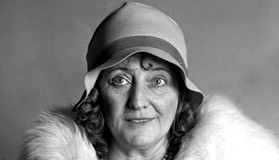
Walburga Oesterreich
Murderer? Patricia Allanson
Murderer? · USA · 1974
Patricia Taylor Allanson Patricia Allanson was born in 1937. She grew up as “Pa…
3 victims
Patricia Allanson
Murderer? · USA · 1974
Patricia Taylor Allanson Patricia Allanson was born in 1937. She grew up as “Pa…
3 victims
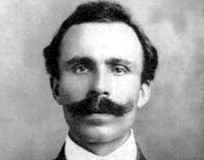 Bartolomeo Vanzetti
Murderer? · USA · 1920
Bartolomeo Vanzetti (June 11, 1888–August 23, 1927) was an anarchist who was co…
2 victims
Bartolomeo Vanzetti
Murderer? · USA · 1920
Bartolomeo Vanzetti (June 11, 1888–August 23, 1927) was an anarchist who was co…
2 victims
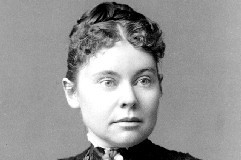 Lizzie Borden
Murderer? · USA · 1892
Lizzie Andrew Borden (July 19, 1860 – June 1, 1927) was an American woman who w…
2 victims
Lizzie Borden
Murderer? · USA · 1892
Lizzie Andrew Borden (July 19, 1860 – June 1, 1927) was an American woman who w…
2 victims
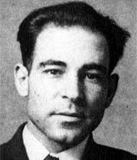 Nicola Sacco
Murderer? · USA · 1920
Nicola Sacco Nicola Sacco and Bartolomeo Vanzetti were convicted of murdering t…
2 victims
Nicola Sacco
Murderer? · USA · 1920
Nicola Sacco Nicola Sacco and Bartolomeo Vanzetti were convicted of murdering t…
2 victims
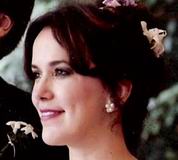 Sandra Bridewell
Murderer? · USA · 1982
Sandra Bridewell used multiple names and aliases, including Sandra Camille (Pow…
2 victims
Sandra Bridewell
Murderer? · USA · 1982
Sandra Bridewell used multiple names and aliases, including Sandra Camille (Pow…
2 victims
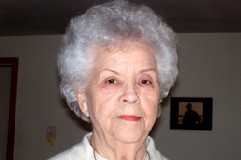 Betty Neumar
Murderer? · USA · 1986
Betty Neumar (November 1931 – June 13, 2011) was an American woman charged with…
1 victim
Betty Neumar
Murderer? · USA · 1986
Betty Neumar (November 1931 – June 13, 2011) was an American woman charged with…
1 victim
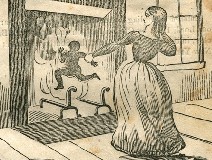 Patty Cannon
Murderer · USA · 1821
Martha “Patty” Cannon (circa 1760 – May 11, 1829) led a gang in the early 19th…
11 victims
Patty Cannon
Murderer · USA · 1821
Martha “Patty” Cannon (circa 1760 – May 11, 1829) led a gang in the early 19th…
11 victims
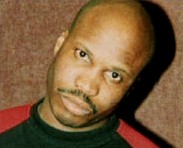 Maury Troy Travis
Serial killer · USA · 2001
Maury Troy Travis (born October 25, 1965; died June 10, 2002) was an American s…
17 victims
Maury Troy Travis
Serial killer · USA · 2001
Maury Troy Travis (born October 25, 1965; died June 10, 2002) was an American s…
17 victims
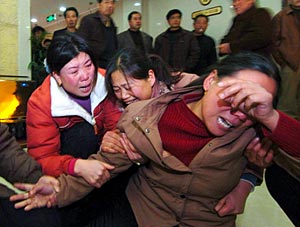 Yan Yanming
Mass murderer · China · 2004
Yan Yanming (b. 1983 in Ruzhou, Henan, China) was a Chinese mass murderer who k…
9 victims
Yan Yanming
Mass murderer · China · 2004
Yan Yanming (b. 1983 in Ruzhou, Henan, China) was a Chinese mass murderer who k…
9 victims
 Landon May
Murderer · USA · 2001
Landon May was convicted of killing Lucy Smith and Terry Smith in their Ephrata…
2 victims
Landon May
Murderer · USA · 2001
Landon May was convicted of killing Lucy Smith and Terry Smith in their Ephrata…
2 victims
- Gender
- female
- Country
- USA
- Location
- Los Angeles, Los Angeles County, California, USA
- Date of birth
- 1880
- Age at first offence
- 42
- Characteristics
- disputes, kidnapping
- Victim profile
- Fred Oesterreich (her husband)
- Method of murder
- Shooting ( .25 caliber pistol)
- Date(s) of murder
- August 22, 1922
- Years active
- 1922
- Date of arrest
- July 12, 1923
- Status
-
Died in custody
Her trial ended in a hung jury; the jury was unable to reach a verdict. In 1936, the indictment against her was dismissed. Died in 1961
Background
Walburga “Dolly” Oesterreich was an American homemaker and the wife of a wealthy textile manufacturer. She gained notoriety for a bizarre 10-year affair with Otto Sanhuber (also known as Otto Weir and Walter Klein), which culminated in the shooting death of her husband.
Dolly Oesterreich first became friendly with 17-year-old Otto Sanhuber around 1913 and described him as her “vagabond half-brother.” The two became lovers and met clandestinely at Sanhuber’s boarding room or at a nearby hotel. They arranged trysts at Dolly’s home as well.
The Oesterreichs moved to Los Angeles in 1918. Dolly had already sent Sanhuber on ahead to await their arrival. Dolly deliberately chose a new house with an attic. Otto moved in to resume their affair.
Dolly Oesterreich remained in Los Angeles until her death in 1961.
The offence
On August 22, 1922, after overhearing a loud argument between the Oesterreichs and believing Dolly to be in danger of physical harm, Sanhuber came rushing down from the attic with two .25 caliber pistols in hand.
In the ensuing struggle, Sanhuber shot Fred Oesterreich three times, killing him.
After the killing, the two lovers hastily staged the scene to look like a botched burglary. Sanhuber pocketed Fred’s diamond watch while Dolly hid herself in a closet. Sanhuber locked the closet door from the outside and tossed the key aside before returning to his attic refuge.
Investigation
Police were alerted by neighbors who had heard the gunfire.
Detectives were suspicious for a time, including because Fred Oesterreich had been killed by a .25-caliber handgun, a petite weapon that few armed robbers would choose.
Police also faced difficulties pressing murder charges against Dolly because, without knowledge of Otto Sanhuber’s long-time presence in the house, it was hard to explain how Dolly could have killed her husband while locked in a closet.
Investigators struggled to identify a motive and more evidence and also sought an explanation for how Dolly could have locked herself in her bedroom closet while still depositing the key outside the door.
Both guns were described as rusted and damaged, making it impossible to prove that either one was the murder weapon.
Chief of Detectives Herman Cline questioned Dolly at the scene. When he asked, “Did you and your husband ever quarrel?” she instantly replied, “Never.” When he pressed, “Not even a little bit?” she remained “oddly firm” and insisted there had been no arguments between herself and the late Fred.
Chief of Detectives Herman Cline described Dolly as the “toughest dame I ever saw.”
Cline later described the .25-caliber handgun as something he believed no burglar would use: “No burglar uses a .25-caliber gun,” he said. “Why, that’s a woman’s gun.”
A key issue was how Dolly could have locked herself in the closet from the outside.
Fred Oesterreich’s close friend and business associate, Fred Keune, said he was certain a burglar had killed Fred Oesterreich. Keune commented to the Los Angeles Times: “He was one of the most loved men I have ever known.” Keune also said, “As far as I know, he didn’t have an enemy in the world.”
Keune further told the Los Angeles Times that, “Mr. Oesterreich was probably the cause of me moving here and now that he is gone it seems everything worthwhile that was here when he was alive has faded away. . . . It was the greatest blow of our lives when we learned last night he had been killed. I’m sure it is a case of burglary.”
Over time, Dolly tried to settle her late husband’s estate and hired attorney Herman Shapiro.
Dolly gave Shapiro a diamond watch. The watch was recognized as Fred Oesterreich’s diamond watch. Dolly explained she had found it under a window seat cushion, later saying she had found it under a seat cushion in the house.
Dolly sought to dispose of guns. She asked Roy H. Klumb for help disposing of an old gun similar enough to the one used to kill her husband that it might be embarrassing if police found it. Klumb threw the gun into the La Brea Tar Pits. Dolly also asked a neighbor to bury another gun under a rose bush in his backyard.
Subsequently, police learned Shapiro had the watch and learned Klumb had told police about disposing of one of her guns. Police retrieved the first gun from the tar pits, and recovered the other gun from under the rose bush.
Police arrested Dolly for murder after the recovered guns were connected to her.
Arrest
Dolly Oesterreich was arrested for murder.
In jail, Dolly begged Shapiro to take food to the still-hidden Sanhuber. When Shapiro did, and the two men began talking, Shapiro learned of Sanhuber’s ten-year presence in the house. Shapiro threw him out of the house.
After seven years, in 1930, Shapiro moved out and revealed what he knew. A second warrant was issued for Dolly’s arrest. She was charged with conspiracy while Sanhuber was charged with murder.
Trial
Sanhuber was arrested and convicted of manslaughter, but later released because the statute of limitations had run out.
Dolly was also arrested and faced a trial on conspiracy. Her trial ended in a hung jury. The jury was unable to reach a verdict, with most jurors leaning towards acquittal.
At a separate trial, prosecuted by Deputy District Attorney James Costello, Dolly was saved by a hung jury.
Jerry Giesler defended Dolly. His representation resulted in a hung jury.
Otto Sanhuber’s defence included a plea of not guilty by reason of insanity. Earl Seeley Wakeman defended Otto.
The jury found Sanhuber guilty of manslaughter.
Sanhuber remained free because the statute of limitations had expired for the manslaughter conviction.
Dolly’s trial ended without a verdict, and she was not retried.
A judge granted a dismissal of the murder charge. The dismissal was described as resulting from no weapon being linked to the killing, a lack of eyewitnesses, and no confession.
Sentencing
No sentencing for Dolly appeared in the material because her trial ended in a hung jury and the indictment against her was later dismissed.
Appeals
No appeal outcome was described for Dolly. Her indictment was dismissed in 1936.
Outcome
Dolly Oesterreich’s trial ended in a hung jury, and the indictment against her was dismissed in 1936.
Sanhuber was convicted of manslaughter, but he was released because the statute of limitations had run out.
Aftermath
After the case, Shapiro moved into Oesterreich’s house, and they lived together in a tumultuous relationship for the next seven years.
In 1961, Dolly died in Los Angeles.
In the material, it was stated she married her second husband and 30-year companion, Ray Bert Hedrick, less than two weeks before her death. Her estate went to Hedrick because of a will drawn up in 1953, and the will made no mention of Otto Sanhuber.
The material also stated that nothing more was known about Otto Sanhuber’s life after his release from custody.
Other details
Dolly Oesterreich described Otto Sanhuber as her “vagabond half-brother.”
It was stated that Sanhuber described himself as Dolly’s “sex slave.”
A quote attributed to Fred Oesterreich included: “Goddamn it!” and “I knew somebody was up in that attic. I just saw something moving at the window!”
Dolly reportedly told Fred to promise to see a doctor and later said: “You’re imagining things.”
When Fred asked, “What was that?” Dolly replied, “You’re imagining things,” and then added: “It’s only a rat or a mouse. If you want to know something, you’re drinking too much.”
Dolly also reportedly said, “Oh, you never know who might hear us and it would be embarrassing.” Fred asked, “Who the hell can hear us?” and Dolly replied, “Oh, nobody I guess,” Dolly relented.
After her arrest and the case investigations, the material stated that Dolly continued to date Shapiro. She also later struck up an affair with attorney Herman S. Shapiro, and a further relationship with Roy H. Klumb was described in the material.
When Otto pleaded, the material reported him telling the court that refusing to eat was “sort of defense” and that “I had no other weapon.” He said: “Maybe it was foolish of me, but I did not – that was my best way of doing it – and she would begin to feel sorry for me, I think, and talk softly to me and bring me food, set it there.”
It was also stated that Otto testified: “Yes, sir,” when asked if doing so meant he did what she wanted. The material said: “And did that have anything to do with sex?” and Otto replied: “Yes, sir, as a rule.”
On film
The case inspired a made-for-TV movie titled The Man in the Attic. The material stated the movie was directed by Graeme Campbell and used the names Krista and Joseph Heldmann for the older couple, played by Anne Archer and Len Cariou. Neil Patrick Harris played Edward Broder.
The case also inspired a comedy titled The Bliss of Mrs. Blossom, which debuted in 1968 starring Shirley MacLaine as Dolly, Richard Attenborough as Fred, and James Booth as Otto.


Spotted an error, or have more information about this case?